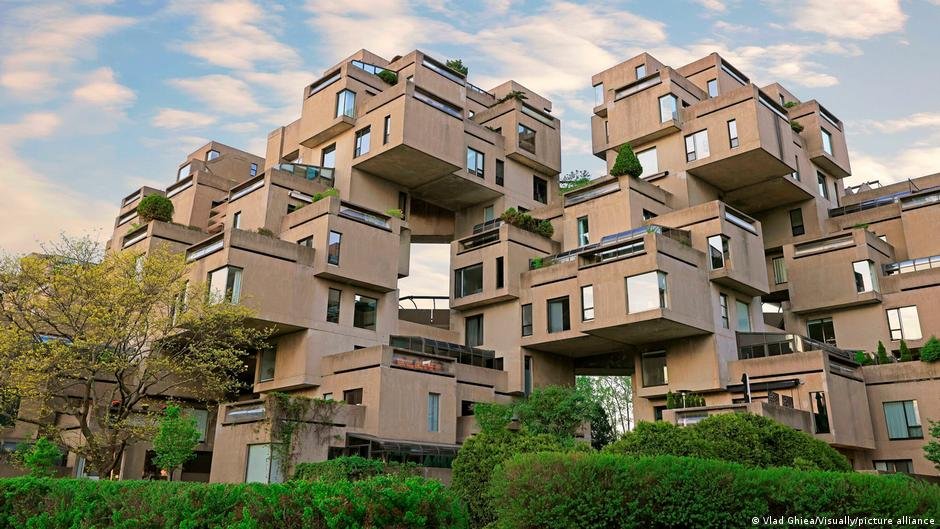
Prices for housing and energy are going through the roof, leaving many people looking for alternatives to cut costs. Here are some solutions that also have environmental credentials.
Image: Vlad Ghiea/Visually/picture alliance
Looking to build a home? Prefabricated modular homes can reduce costs for people and the planet. Fewer deliveries and efficient on-site assembly can mean lower CO2 emissions, while the modular setup helps cut down on excess material. Some parts are even reusable. Many houses come with solar panels and heat pumps which help keep energy costs down.
Image: DW
If downsizing is your thing, a tiny house designed with a minimal carbon footprint in mind could be an option. In Germany’s Sauerland region, two siblings are taking a very sustainable approach to mini homes. They are building them with timber from dead trees (so-called calamity wood) sourced from their family forest that was devastated by drought and bark beetle infestations.
Image: Henning Kaiser/dpa/picture alliance
The market for tiny houses is expected to grow further in the coming years to reach a market size of about $8.5 billion (€7.5 billion) by 2034. A well-insulated mini version that runs on renewables can cut energy costs and boast an ecological footprint 45% lower than that of a traditional home. Tiny houses have also sprung up as vacation rentals in recent years.
Image: Andreas Friedrichs/IMAGO
Earthship homes are self-sufficient structures built to generate their own energy, gather rainwater and keep inside temperatures comfortable. The brainchild of US architect Michael Reynolds, about 3,000 have been built around the world. Reynolds tested these principles of passive solar in New Mexico in the 1970s, using discarded car tires, aluminum cans and glass bottles, among other things.
Image: Ron Yue/Visually/picture alliance
In keeping with their name, these homes use bales of straw for insulation, as structural load-bearing components or a combination of the two. Such houses have about three times the fire resistance of regular homes, since tightly compressed straw leaves very little oxygen within the bale. These buildings can save up to 75% on heating and cooling costs.
Image: Andia.fr/imageBROKER/picture alliance
Houses from old shipping containers can be eco-friendly solutions, if designed with low energy consumption in mind. Critics say one flaw is that many such homes are built with new or single-trip containers, rather than with recycled ones. Critics say it would make more environmental sense to use the materials from unused containers to build something new.
Image: David Potter/Construction Photography/Photoshot/picture alliance
Heat pumps and solar panels are a good way to save on energy bills and can be easily installed for homeowners. In many places, renters with a balcony can use small plug-and-play solar systems or portable panels to generate some of their own power. Another option may be to take part in a local solar project that provides participants with credits to make electricity bills cheaper.
Image: Udo Herrmann/CHROMORANGE/picture alliance7 images1 | 77 imageshttps://p.dw.com/p/5NqKg
Edited by: Tamsin Walker