Beijing and Washington promised to expand dialogue on AI safety and between the countries’ militaries while also cutting tariffs on about $30 billion (€26.3 billion) of “non-sensitive goods.”
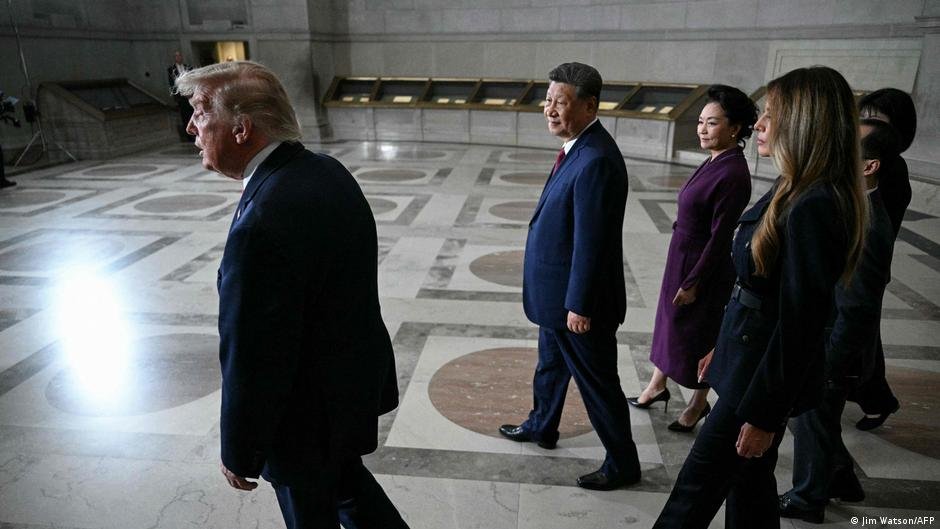
The pledges follow the three-day summit between Donald Trump and Xi Jinping in the US.
US President Trump described the summit in an online post as “one of Friendship, Strength, and Success” for both nations.
To view this video please enable JavaScript, and consider upgrading to a web browser that supports HTML5 video
China’s President Xi was more constrained, saying the two sides agree on “strategic stability on the basis of respect, fairness, and reciprocity.”
Beijing and Washington to improve military communication
On Saturday, with Xi back in Beijing, China said the two sides agreed to a mutual tariff reduction on roughly $30 billion of “non-essential” goods. This applies to exports such as agricultural products or holiday decorations.
The Chinese statement also confirmed that the two side will be setting up a “communication channel” for AI incidents.
“Artificial intelligence technologies are continuously developing, all parties can strengthen exchanges, discuss in-depth and seek consensus in light of the latest situation,” the Chinese Foreign Ministry said.
A new round of AI-focused dialogue is due to be held in November.
The two nations will also accelerate their work on military crisis communications, Beijing said, without providing details.
Xi to travel to the US again in December
The US had previously announced that Beijing and Washington agreed to extend their “trade truce” agreed by Trump and Xi in Busan last October. The agreement, which saw China suspending its controls on rare earths and the US cutting back on some of its tariffs, was due to expire on November 10. According to US Treasury Secretary Scott Bessent, the deal will remain in effect until January.
To view this video please enable JavaScript, and consider upgrading to a web browser that supports HTML5 video
The White House also said the two sides addressed American concerns about rare earths supply “with the goal of ensuring shipment levels return to appropriate levels.” China also agreed to import at least 10 million metric tons of coal from the US in 2027 and 2028, according to the Trump administration.
While Donald Trump confirmed the Iran war was also on the agenda during the US talks, no major breakthroughs were reported on the issue. However, the Chinese Foreign Ministry said both sides agreed that Iran should not have nuclear weapons, and no country should impose transit tolls on international waterways, in reference to the Strait of Hormuz.
Trump and Xi are due to meet twice more by the end of the year, with Trump expected to attend the Asia-Pacific Economic Cooperation summit in China in November and Xi expected back in the US for a G20 summit in December, which is due to be hosted in Trump’s National Doral Miami golf club.
Edited by: Wesley Dockery
If you rely on our team for trusted reporting, please take a moment to select us as your Preferred Source on Google so you’ll always see our verified news first.