


China’s durian dream: Can Hainan nurture a homegrown industry for the king of fruits?
Faced with typhoons, long growing cycles and limited scale, Hainan’s durian growers are betting on technology and premium fruit rather than trying to match Southeast Asia on volume.
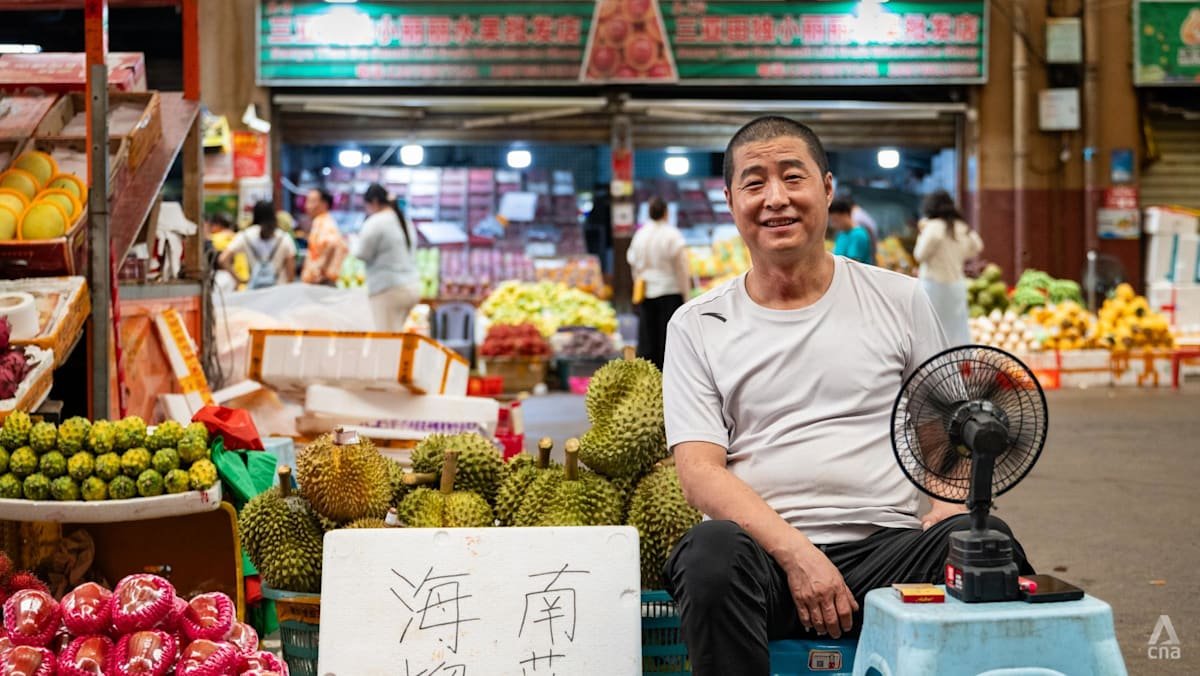
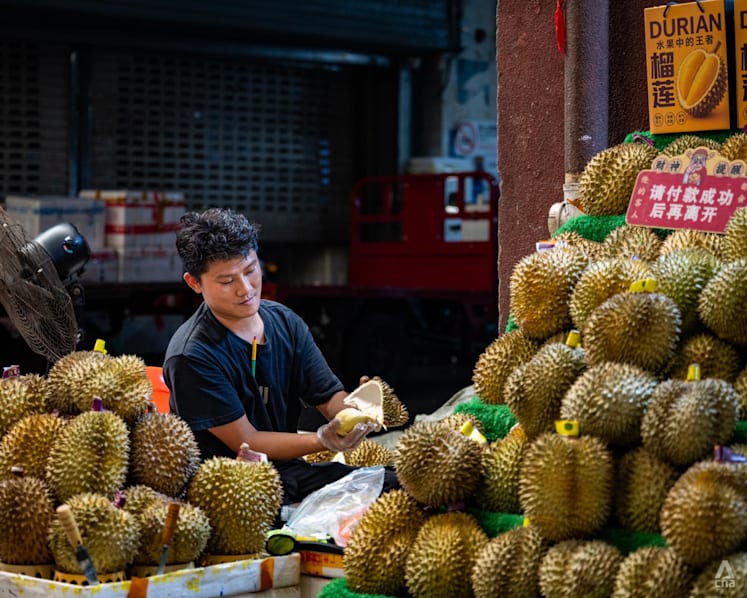
Fruit seller Qin Chunchang at his stall in Hongxingang Fruit Wholesale Market, Sanya, China, on Aug 5, 2026. (Photo: CNA/Lan Yu)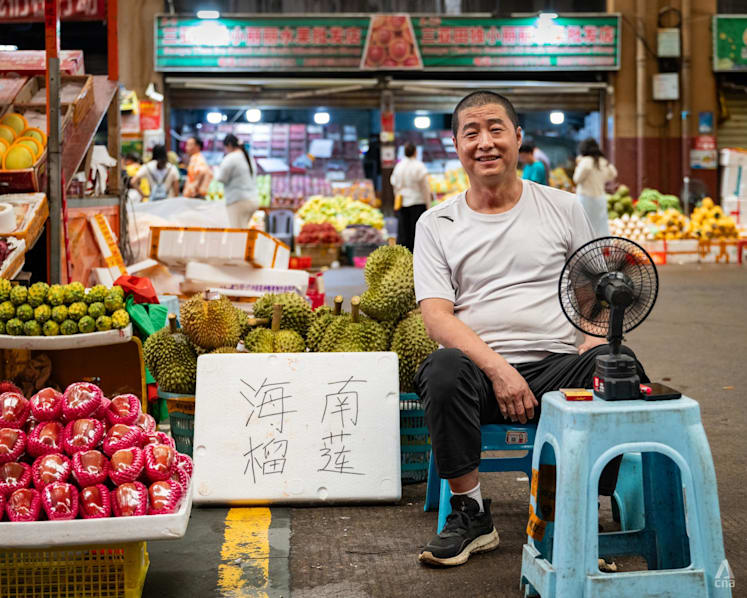
New: You can now listen to articles.

This audio is generated by an AI tool.

Read a summary of this article on FAST.
Get bite-sized news via a new
cards interface. Give it a try.
Click here to return to FAST
Tap here to return to FAST
FAST
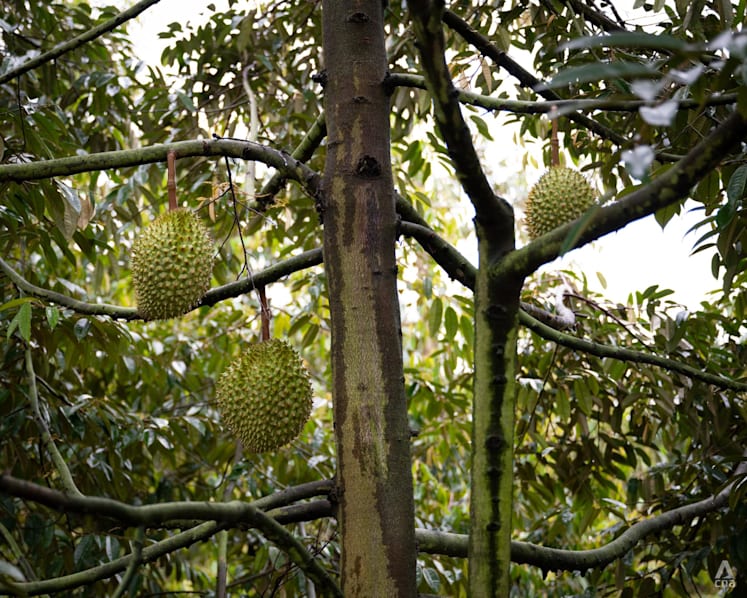
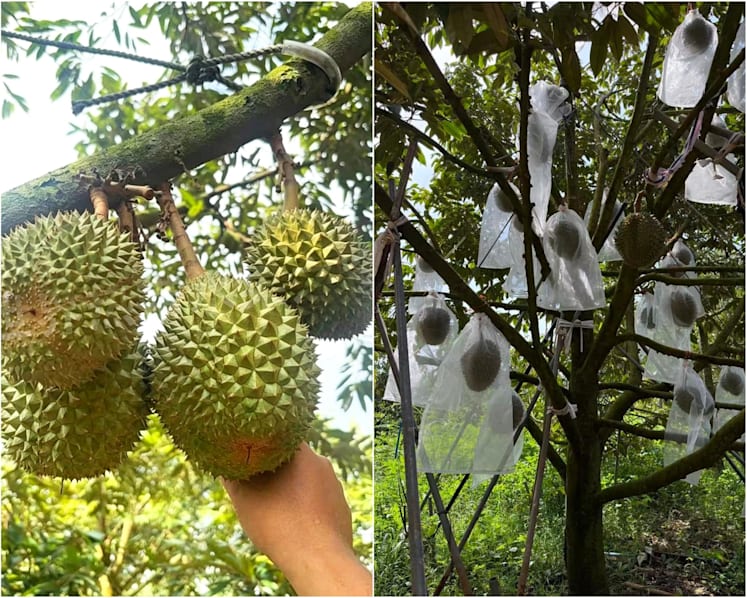
SANYA, Hainan: A spiky green durian hangs from a tree on a plantation.
The setting could easily be in Thailand, Vietnam or Malaysia.
But the fruit is growing in Hainan, China’s southernmost province – better known for its beaches and tropical resorts.
Its warm climate has made the island a testing ground for growing durians, as Hainan pushes to build a homegrown industry around one of China’s most coveted imports.

Guess Word
Crack the word, one row at a time

Buzzword
Create words using the given letters

Mini Sudoku
Tiny puzzle, mighty brain teaser

Mini Crossword
Small grid, big challenge

Word Search
Spot as many words as you can
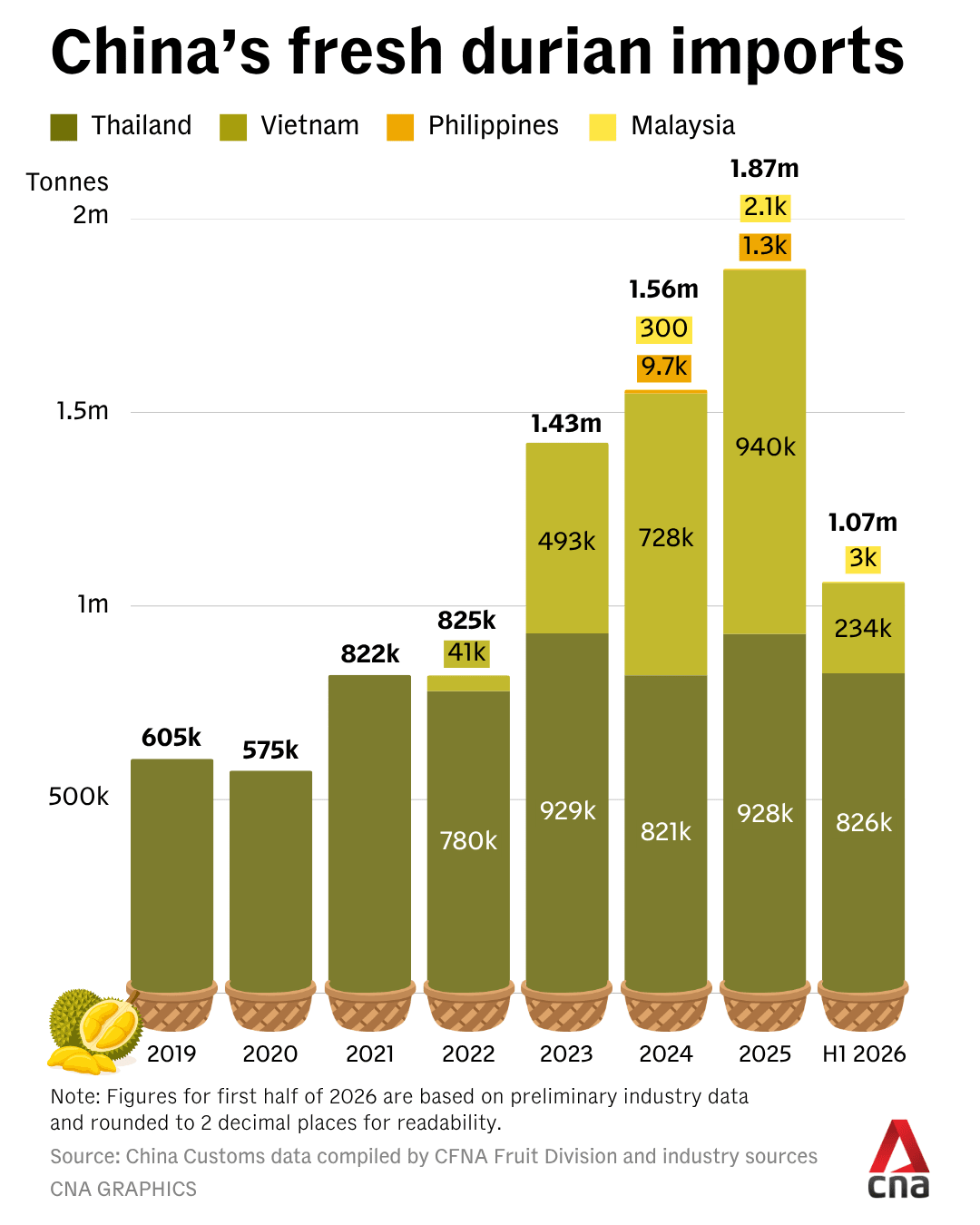
China imported a record 1.87 million tonnes of fresh durians in 2025, worth about US$7.5 billion – more than six times the volume it imported a decade earlier. Nearly all came from Southeast Asia.
Imports have surged since 2018, helped by faster trade and transport links and rising consumer spending power, according to China’s Agricultural Trade Promotion Centre.
The fruit’s luxury image and popularity among Chinese influencers have also helped drive up demand, said HSBC senior ASEAN economist Aris Dacanay.
“There was this huge, huge durian boom where at one point it was growing at around 300 per cent year on year,” he told CNA.
Now Hainan wants a share of that market.
But growing durians reliably and at scale remains a challenge, experts said.
Trees take years to bear fruit and typhoons are a huge risk. Farmers are also still testing new techniques and technology to cultivate the fruit locally.
ACCIDENTAL START?
Durian trees have been planted sporadically on Hainan island since the 1950s, noted Feng Xuejie, director of the Tropical Fruit Research Institute at the Hainan Academy of Agricultural Sciences, a provincial agricultural research institute.
But it never developed into a commercial industry.
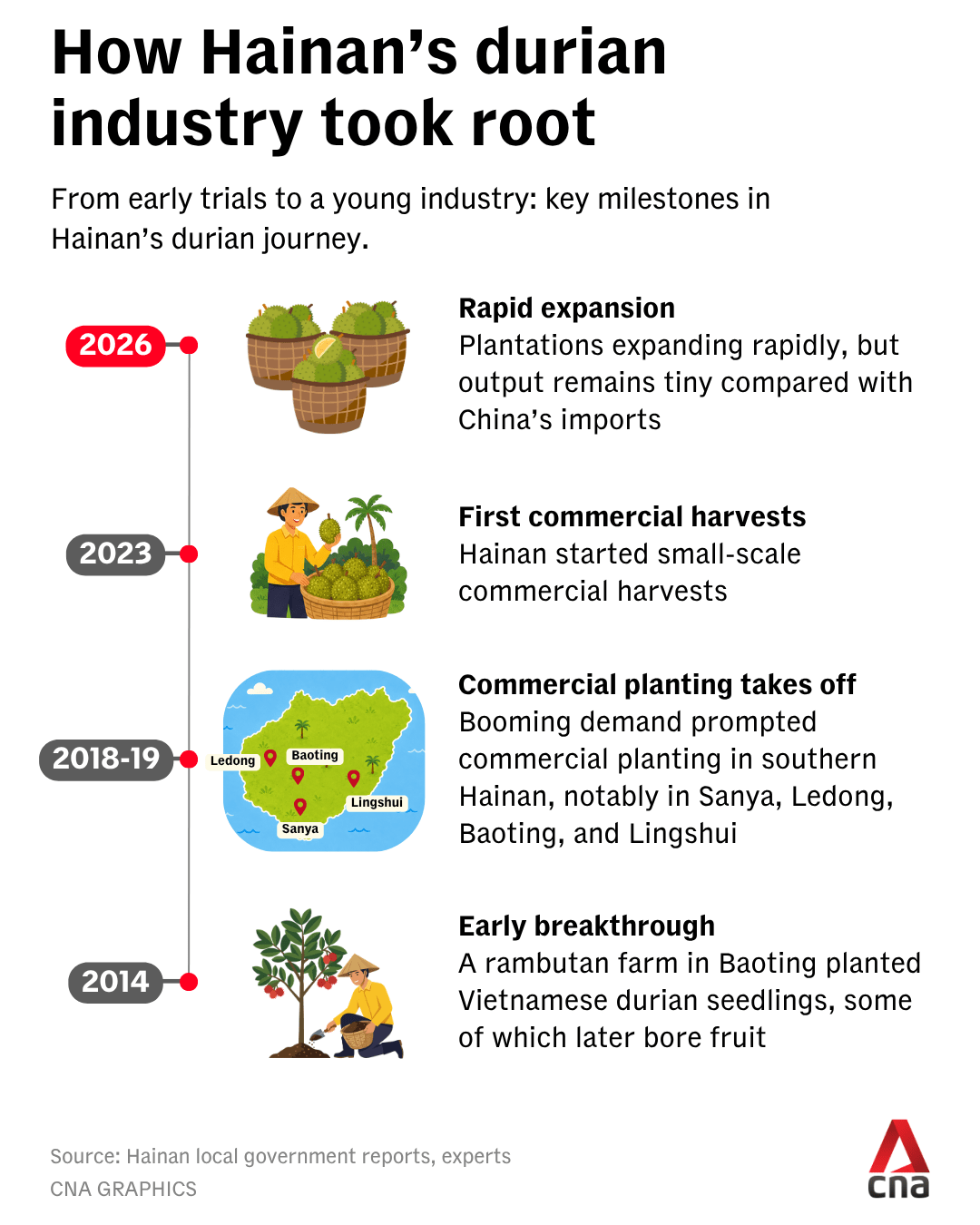
The turning point came almost by accident back in 2014 – when the owner of a rambutan farm in Baoting county travelled to Vietnam in search of mangosteen seedlings, Feng said.
A generous nursery owner gave them 100 durian seedlings, hoping to cultivate a market for the fruit in China.
Back in Hainan, the seedlings were planted along roads. Several years later, around 40 of the trees bore fruit.
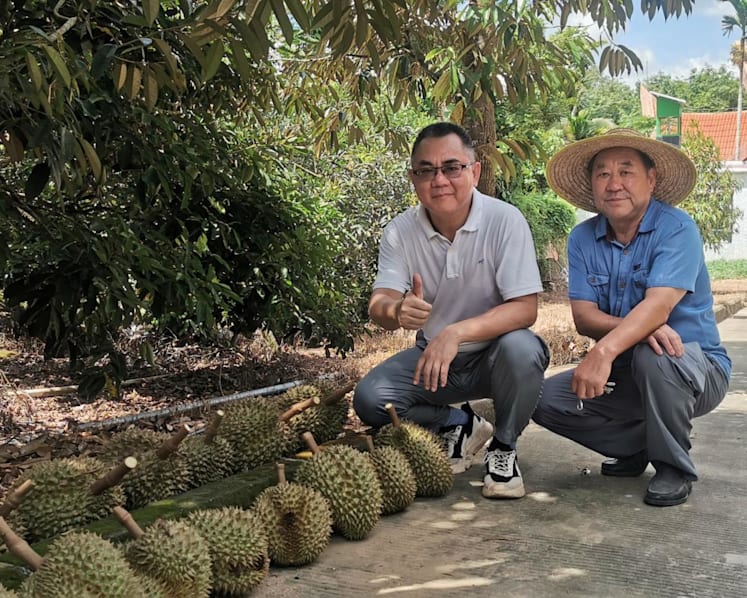
The success caught the attention of other growers like Hainan Youqi Agricultural Company.
“We thought: if they can grow it, then we can definitely grow it too,” deputy general manager Zhang Xilai told CNA.
The company began large-scale cultivation in Sanya city the following year and now has more than 1,000ha of durian plantations across Hainan.
“The domestic market demand for durians is very large,” Zhang said.
“We felt this industry had potential, and that it could create a new industry.”
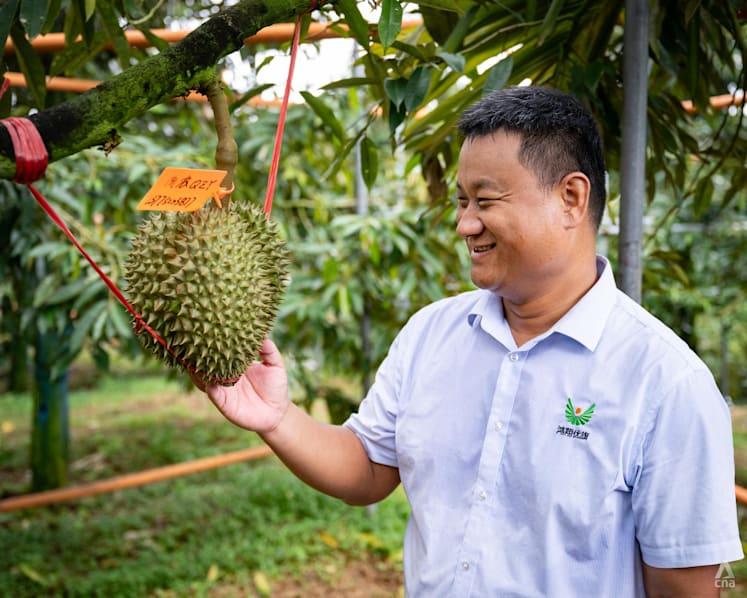
Yang Guoping, 44, worked in construction for years before deciding to switch tracks.
With no agricultural background, Yang spent the next few years learning first-hand from growers and experts before deciding to set up his own durian plantation under Hainan Ningnong Agricultural Technology, where he is general manager.
“I discovered that China’s durian sales were so large – and that this place could grow durians,” Yang said.
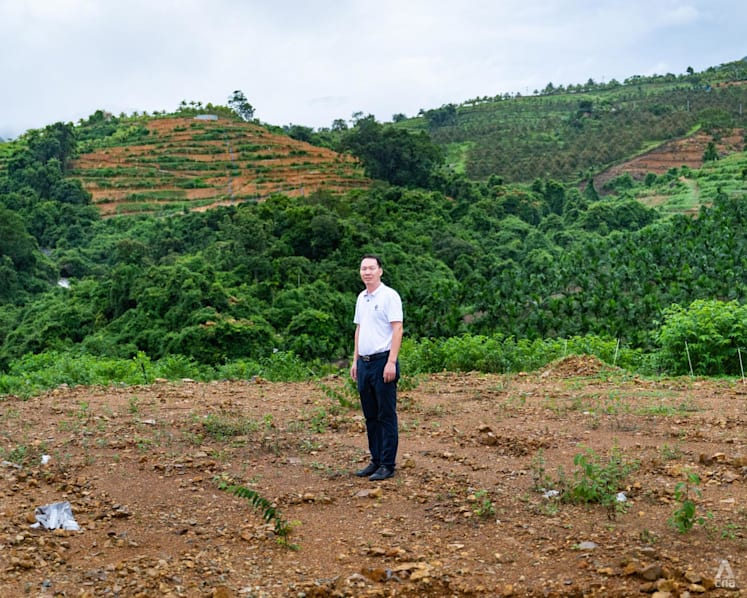
He also wanted to cultivate “high-end durians”.
“I set my mind on finding somewhere with good scenery, water resources and no pollution,” he said.
After years of trial and error, Hainan began growing durians commercially on a small scale in 2023, Feng said.
“Even though the overall volume was still very small, it (marked) a zero-to-one breakthrough,” he added.
The island province now has around 3,300ha planted with durian – an area roughly the size of 4,600 football fields – though only 30 per cent have been bearing fruit.
Sanya alone has more than 50 durian growers and companies while the neighbouring Ledong county has 18, according to local industry associations.
Durian farms and plantations have also been expanding in Lingshui and Baoting counties.
GROWING PAINS
Among rows upon rows of durian trees at Youqi Agricultural Company’s plantation in Sanya, one stands out – leaning conspicuously to one side.
Zhang Xilai, the company’s deputy general manager, said a typhoon had left it that way – a visible reminder of one of the biggest challenges facing Hainan’s fledgling durian industry.
“You can grow a durian tree for more than 10 years and one typhoon could knock it down,” he said.
“Or you could have a year’s worth of fruit and a (single) typhoon could cause all of it to fall.”
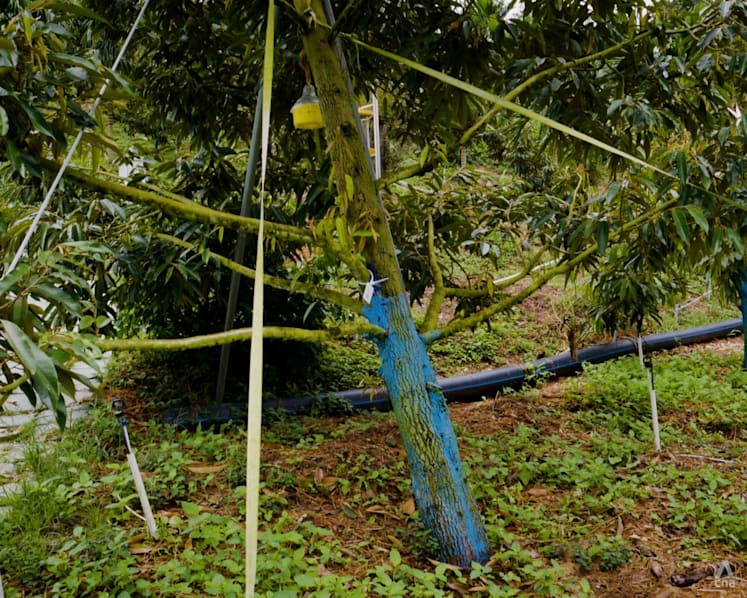
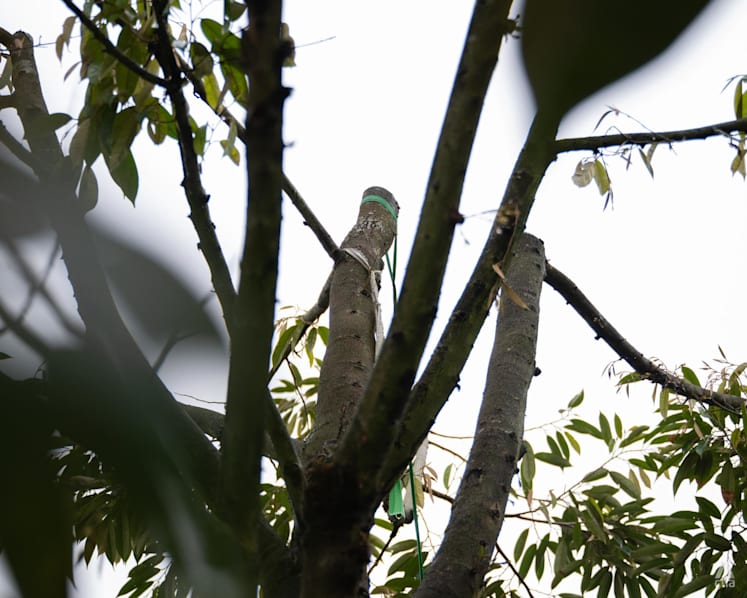
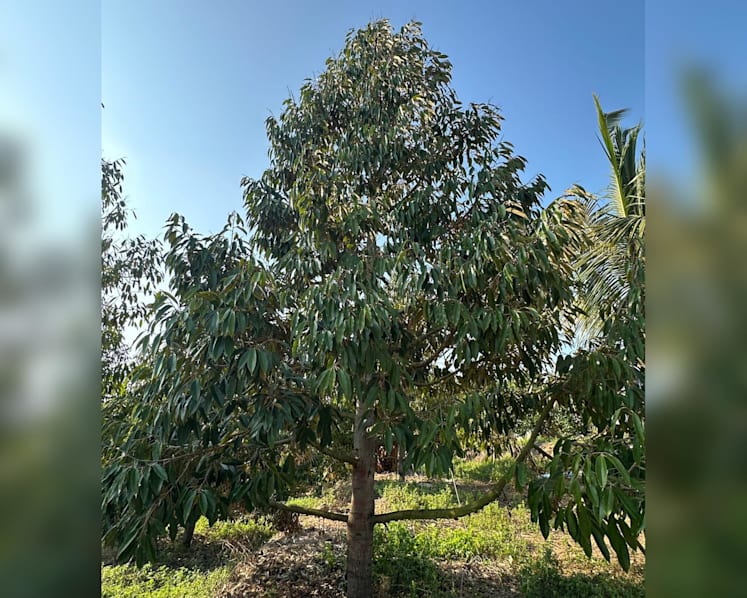
Unlike towering durian trees in Southeast Asia – which can grow to around 20m high in commercial plantations – Chinese growers deliberately keep their trees shorter.
“Once they reach six or seven metres, we top them,” Zhang said, referring to a pruning method in which the top of the tree is cut off.
Some trees are also surrounded by protective tarps to help shield them from strong winds, Zhang said.
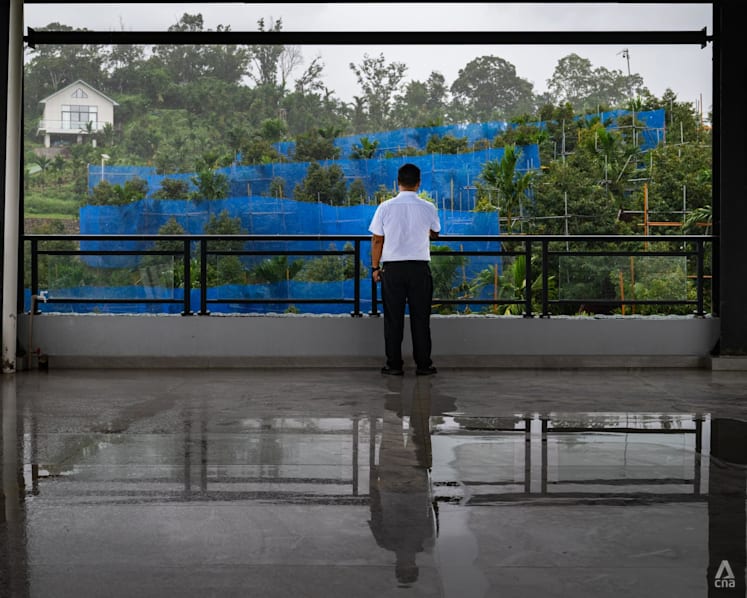
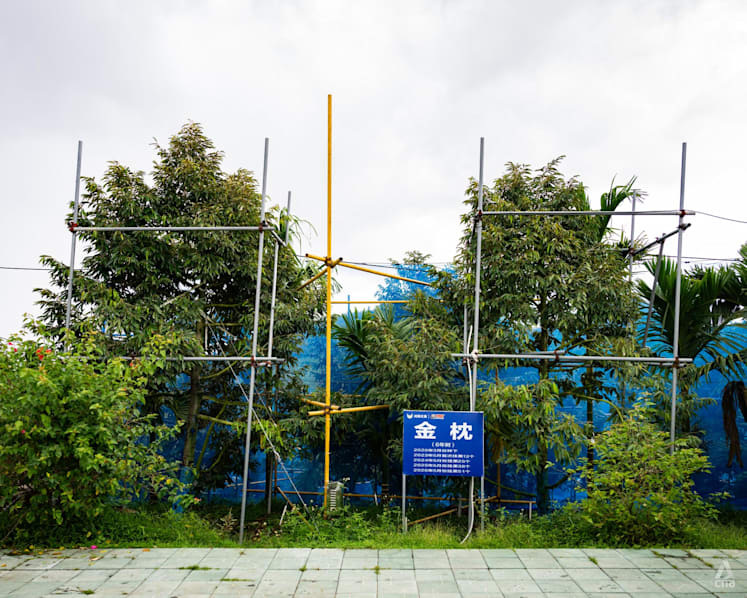
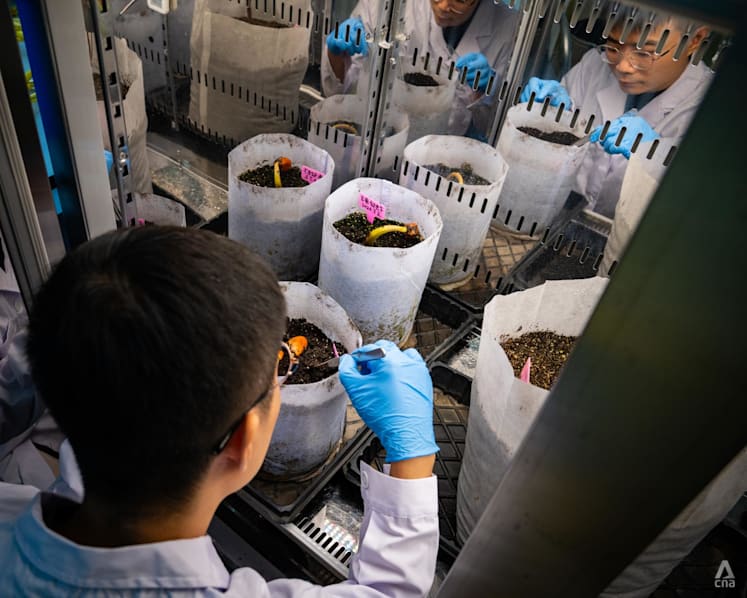
The company is working with researchers from China Agricultural University to adapt traditional durian cultivation methods for Hainan.
Cao Shanzhi, 26, is part of a nine-member research team conducting experiments on more than 200 trees at Youqi’s durian plantation in Sanya.
Differences in soil and climate mean cultivation methods used elsewhere cannot simply be replicated in Hainan.
Testing solutions takes time, Cao said. Sometimes experiments will need at least two years because of the durian tree’s long growth cycle.
And when one batch of postgraduate researchers graduates, the next continues from where they left off.

Managing water is another challenge, experts said. Durian trees need moist soil to thrive – but too much water can leave roots waterlogged and cause them to rot.
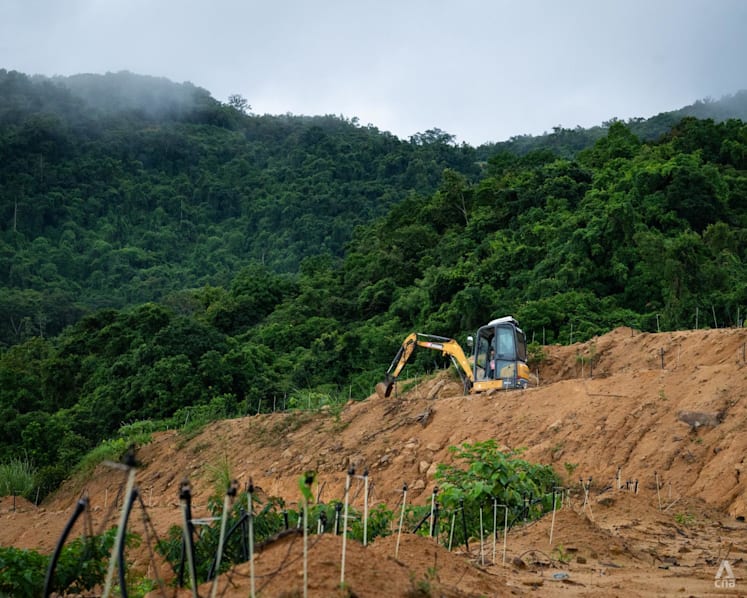
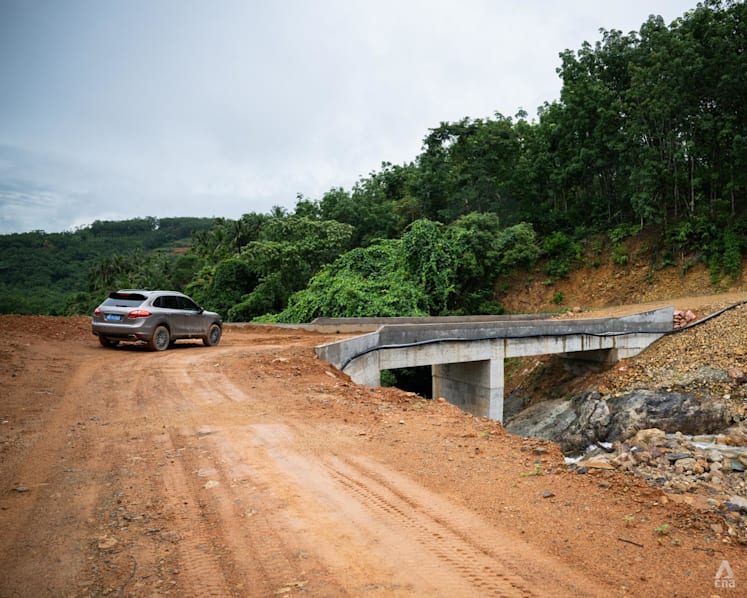
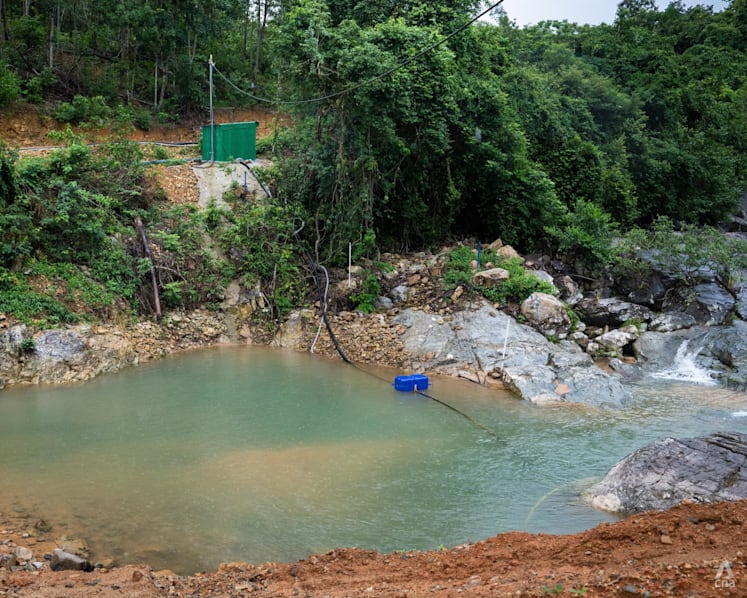
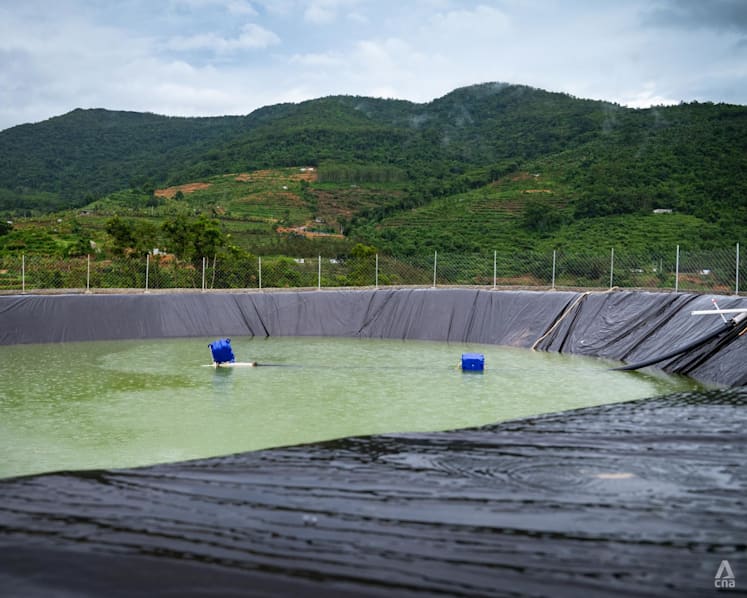
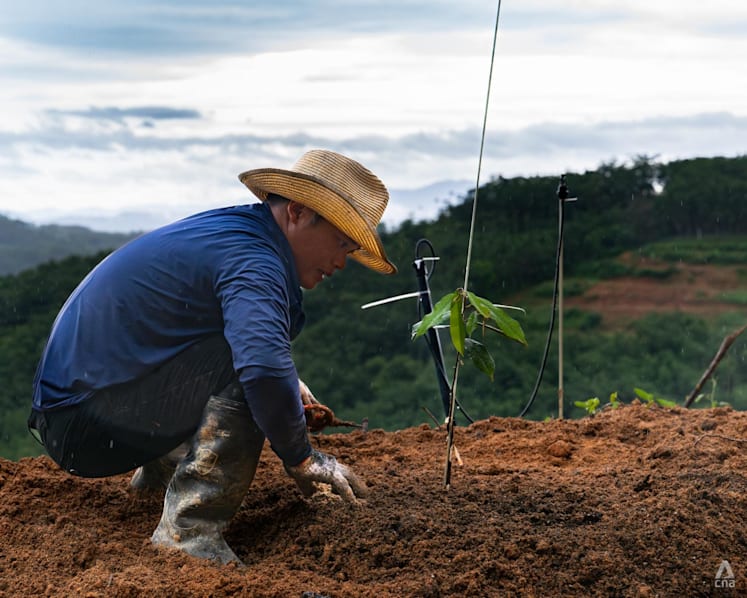
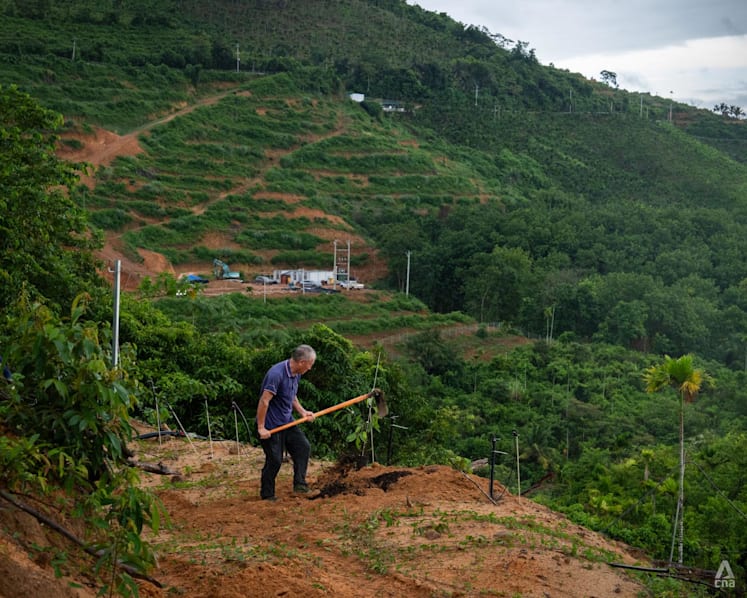
At Yang Guoping’s new hillside plantation in Lingshui county, CNA observed water being pumped from the bottom of the slope to a reservoir above the plantation.
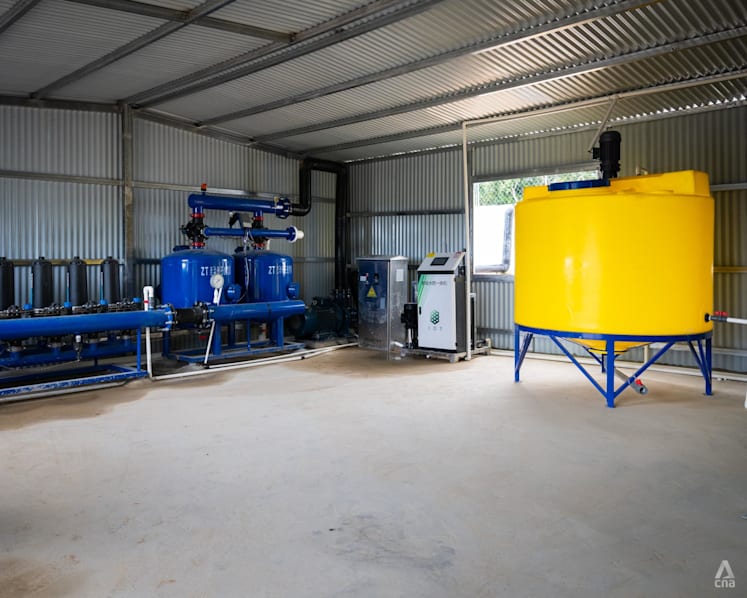
From there, it flows through a system that mixes in fertiliser before being piped to the durian seedlings across the hillside.
“One person is enough to run the whole system,” Yang said. “I can even control it from my phone.”
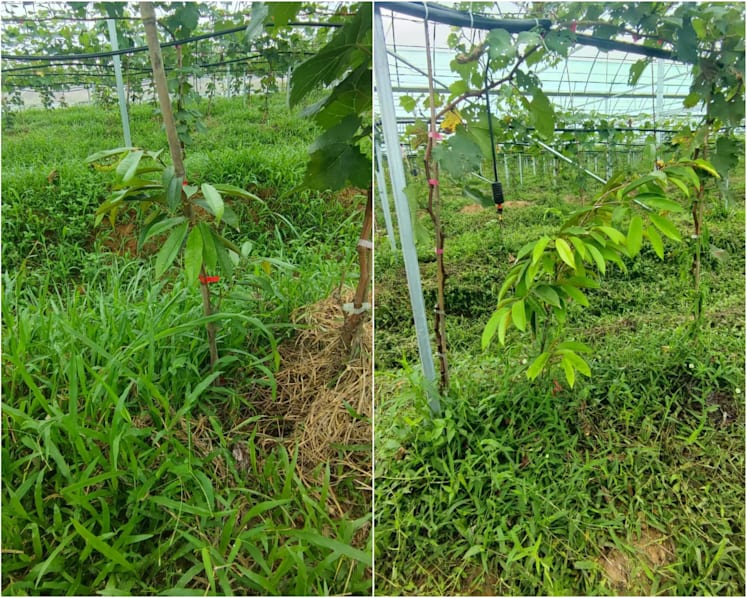
Yang is also experimenting with growing durians in greenhouses, where conditions can be more tightly controlled.
At a site in Chengmai county, he plans to train durian trees to grow along Y-shaped frames designed to support their branches and fruit.
“I think greenhouse-grown durians can be quite easy to grow successfully,” he said. “The conditions can be controlled.”
“If it rains, I can close the whole greenhouse.”
Other growers are experimenting with water management not only to protect their trees, but also to influence when they bear fruit.
Youqi has spent three years testing whether controlling water supply can induce earlier flowering and fruiting – with the aim of timing harvests for around Chinese New Year.
“The demand (then) is very high and prices will be higher,” said deputy general manager Zhang.
“That way, we can maximise our profits.”
But finding varieties that can cope with Hainan’s conditions is another challenge.
Aside from the annual summer season and extreme weather events like typhoons, rainfall varies sharply throughout the year.
Hainan Grand Modern Agriculture Development has trialled growing more than 60 durian varieties at its plantation in Qionghai county since 2011, located farther north from the island’s main durian-growing areas.
More than 10 varieties, including Musang King, Monthong and Black Thorn, are now bearing fruit, said Peng Anji, the company’s sales manager.
“We prioritise strains that are wind-resistant, highly adaptable and have a stable fruit set,” he added.
BIG BETS, LONG WAIT
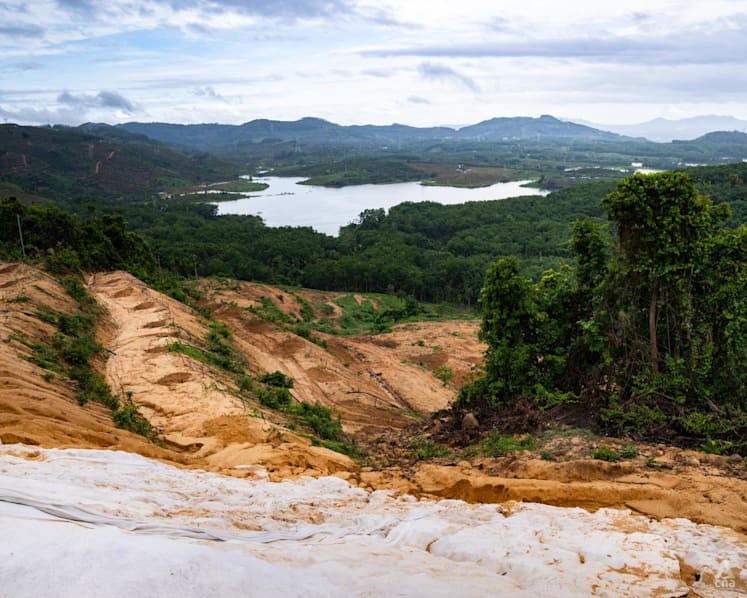
Looking over his 34ha plantation in Lingshui, Yang told CNA that he plans to invest around 30 million yuan (US$4.46 million) in the plantation as well as supporting infrastructure.
He expects a four- to five-year wait before the trees begin bearing durian fruit.
He has already spent more than 200,000 yuan on a bridge connecting different parts of the hillside plantation.
China’s market demand for durian is “huge”, he said.
“I’m investing so much because I’m very confident in the (local) durian industry.”
Guolian Group, a Hainan-based agricultural company focused on durian cultivation, has set one of China’s most ambitious durian-expansion targets.
It aims to develop over 6,700ha of durian plantations across Hainan over the next three years and plans to acquire orchards from smaller farmers – some with durian trees already between three and four years old, said Zhang Guoqin, CEO of its parent company Lanjin Group.
Growers often face financial pressure before durian trees start fruiting, he noted.
“When we come across such orchards, we acquire them,” he said.
Zhang estimates that once the project reaches peak production, it could yield about 100 million durians a year.
The lucrative market has attracted many new growers, but industry players note that many new entrants have limited experience with durians.
“If preparations are insufficient, it could lead to investment risks,” said Lang Haibo, president of the Sanya Durian Association.
It is trying to reduce risks by providing training and technical guidance – as well as hosting site visits for new growers.
It has also been working to develop common industry standards as the sector gradually expands.
“If they come to us for advice, we’ll tell them frankly about the pros and cons … and how to avoid the pitfalls we encountered,” Lang said.
HIGH-TECH DURIANS?
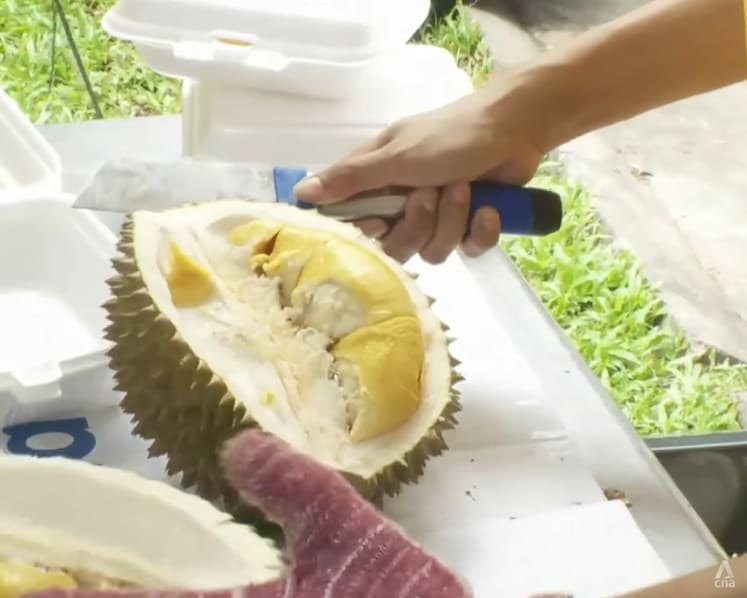
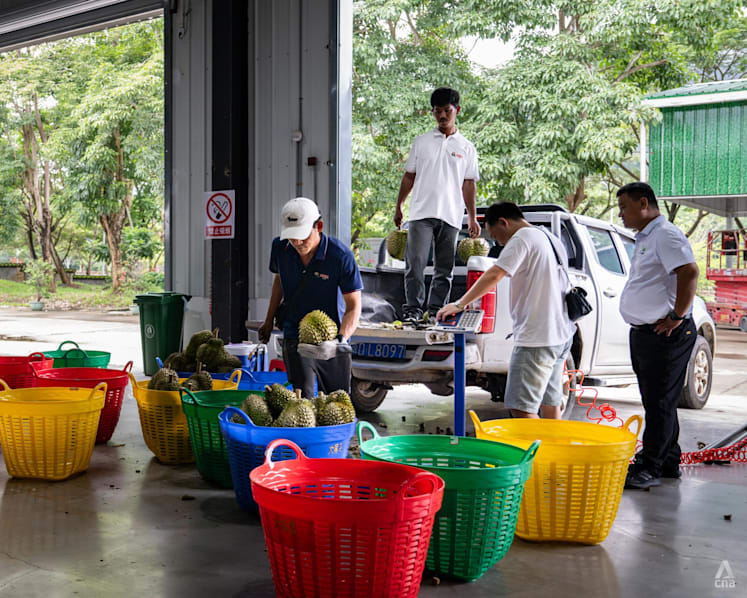
At Youqi’s packing facility in Sanya, a Thai worker identifies mature durians by tapping the fruits with a small stick – listening for a more hollow sound.
But human judgment is no longer the only test.
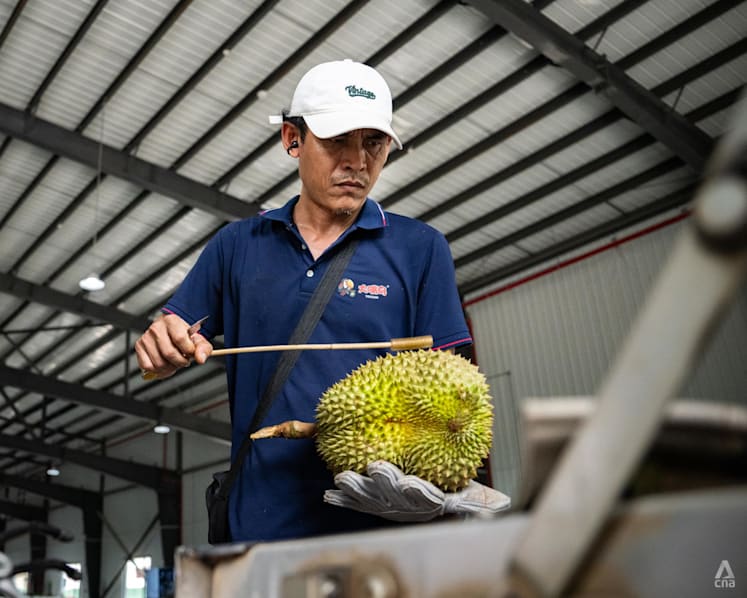
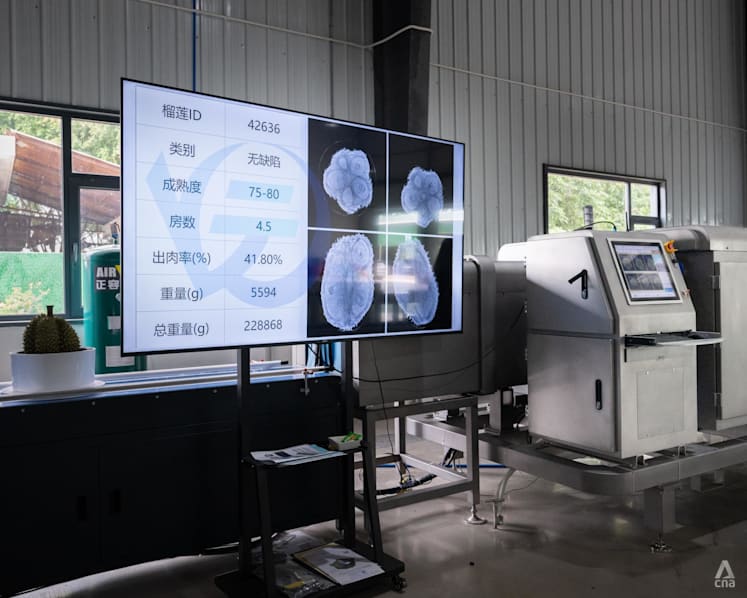
Each fruit now gets a second check from a machine – passing through a scanner much like a patient undergoing a medical scan.
Within seconds, cross-sectional images of the unopened fruit appear on a screen – showing details like the number of flesh-filled sections and the proportion of edible flesh – all without having to crack open their shells.
The scanner can also detect pests and other problems inside the fruit, Zhang said.
“When large volumes of durians arrive, workers can get tired. Machines don’t,” he added.
Guolian Group is developing a traceability system that gives each durian tree its own chip, linked to China’s BeiDou satellite navigation system. Consumers can then scan a code on the fruit, tracing it back to the farm where it was grown.
The system could help build consumer confidence and distinguish Hainan-grown durians as domestic cultivation expands, said Zhang.
He pointed to Sunshine Muscat grapes, once a premium fruit in China, whose prices plunged as production spread across the country.
“When it comes to costs, I don’t think technology is there to save money. We are actually investing more,” he said.
“But with standardised technology and supporting systems, we may be able to reduce costs and improve efficiency.”
GROWING CHINA’S DURIAN DREAM
For all its ambitions, Hainan is unlikely to rival Southeast Asian countries like Malaysia, Thailand and Vietnam in terms of durian production and scale.
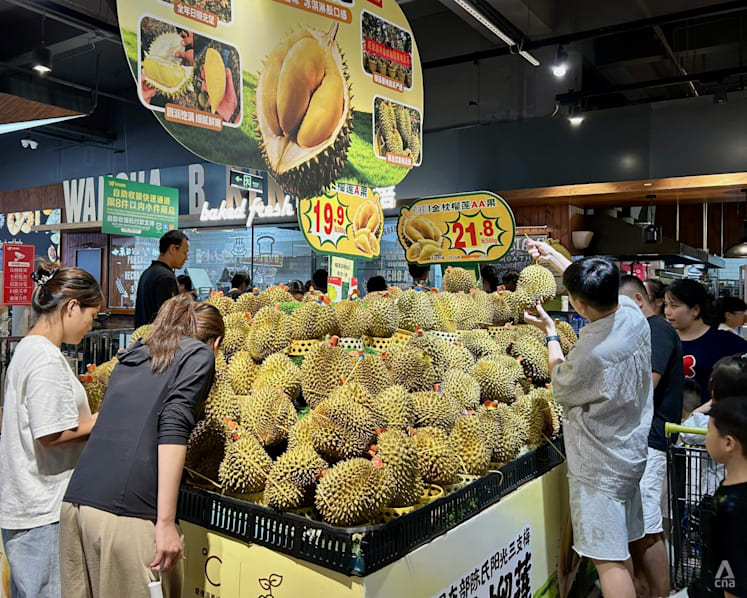
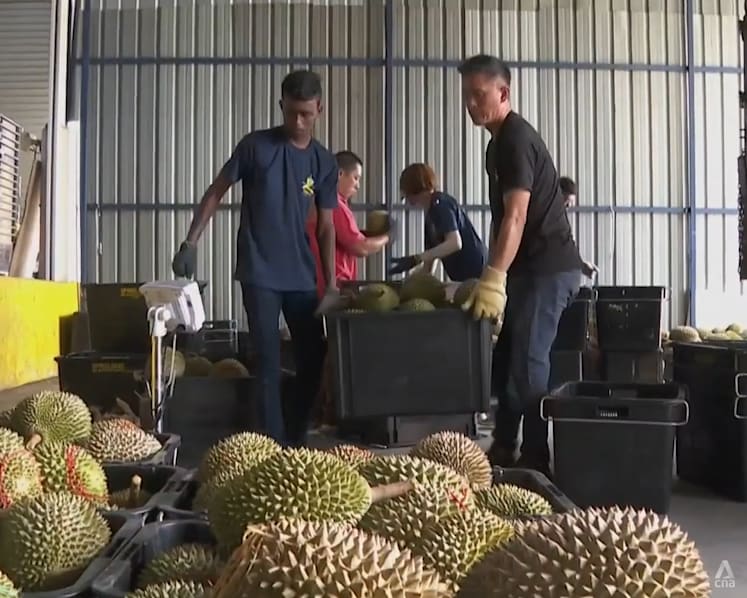
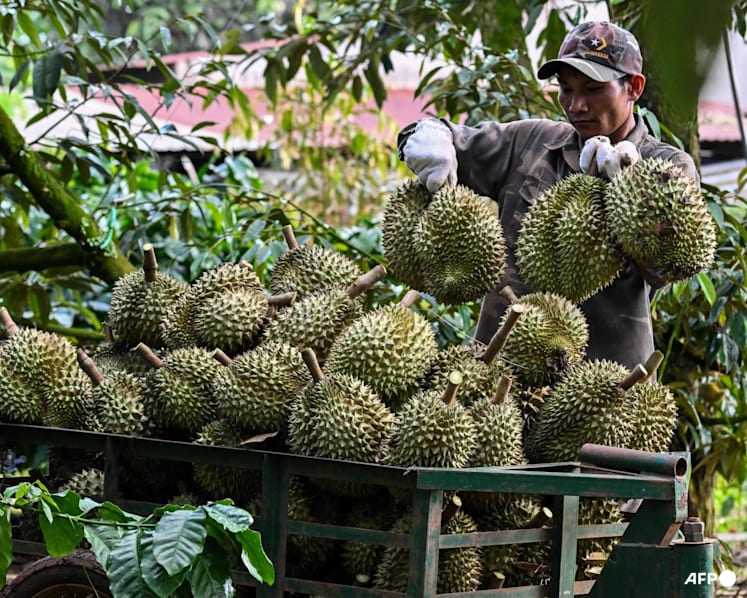
Thailand exported more than 826,000 tonnes of durian to China in the first half of 2026, according to Chinese customs data – exceeding 100 billion baht (US$3.03 billion) and setting a new milestone.
Vietnam’s durian exports have also grown rapidly since it gained market access in 2022. It became China’s biggest durian supplier by volume last year, ending Thailand’s near two-decade dominance.
The country’s agriculture ministry expects durian exports to exceed US$4 billion in 2026.
Malaysia, which has traditionally focused on frozen durian exports to China, shipped over US$30.2 million worth of the fruit to the mainland market in the first six months of 2026 – up 342 per cent compared with the same period in 2025, customs data showed.
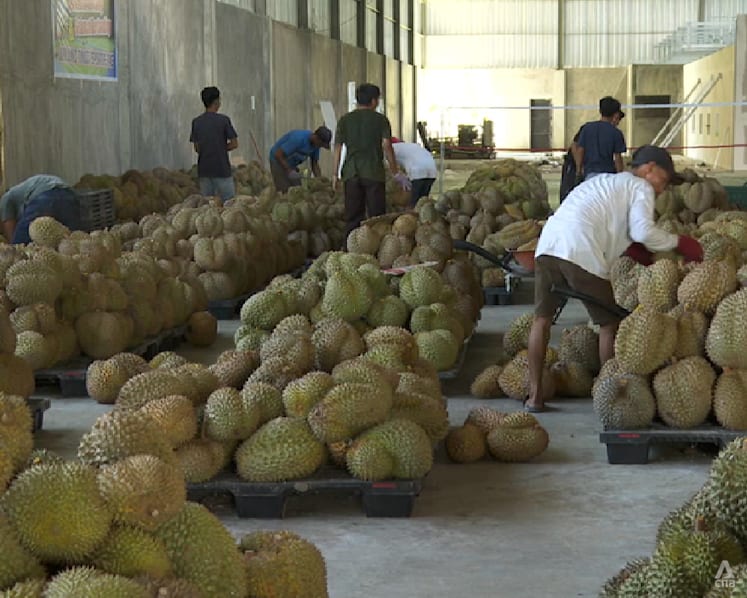
Hainan’s output remains tiny in comparison, noted analysts.
“If there is a dent, I haven’t seen it yet in the numbers,” HSBC’s Dacanay said.
“Our scale is too small,” said Feng from the Hainan Academy of Agricultural Sciences, adding that even expanding to 20,000ha would be “a remarkable achievement”.
By his estimate, more than 660,000ha of durian farms and plantations are already planted across the region.
Hainan should instead pursue a “small and beautiful” model rather than competing with Southeast Asian countries on volume, Feng added.
“We can only grow suitable varieties in suitable areas, produce high-quality fruit and sell it at a good price,” he said.
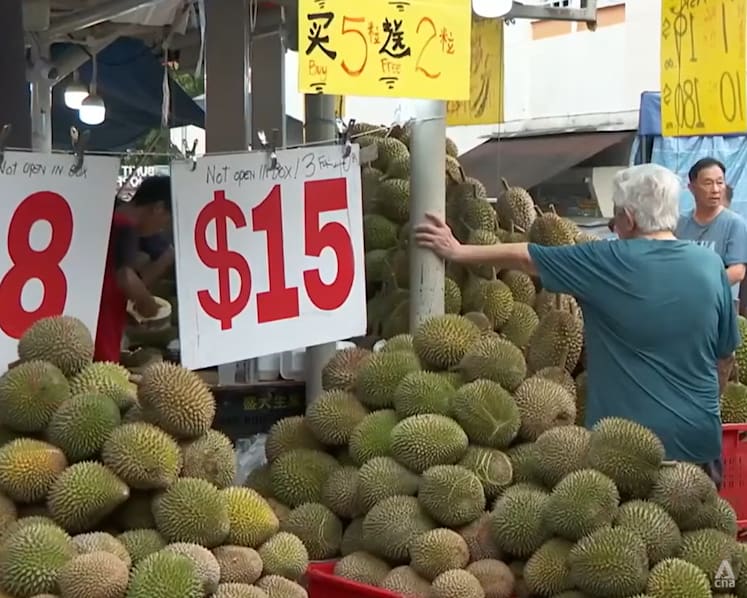
At the Hongxingang Fruit Wholesale Market in Sanya, fruit seller Yu Qian said she would like to stock more Hainan durians – but supply remains limited and unstable.
“Who wouldn’t want to sell their own local speciality?”
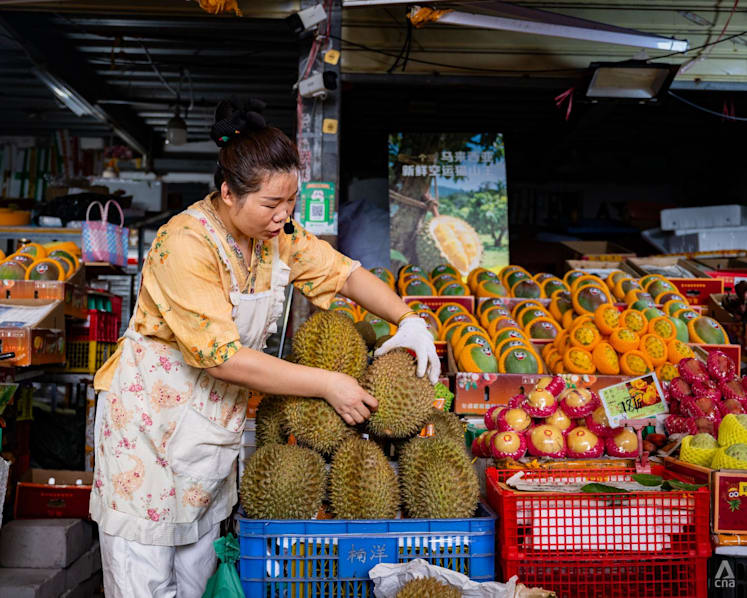
Another seller, Shen Junhe, said local Hainanese durians arrive in much smaller, less consistent batches compared to overseas imports.
“The daily supply is simply not enough,” he said.
But for some consumers, where the fruit comes from matters much less than how it tastes.
Liu Xudong, a tourist from Changchun city in China’s northeastern Jilin province, bought three durians during her stay on the island.
“I’m not too particular about the variety or where it comes from,” he told CNA. “If it’s good, I’ll buy it.”
Hainan’s durian industry is still ramping up and the sector remains collaborative.
Industry associations often organise exchanges and training, while more experienced growers often share techniques with newcomers, said Sanya Durian Association’s Lang.
“We don’t really compete with one another. We help one another,” he said.
With only a limited area in China suitable for durian cultivation, Hainan alone cannot produce enough to meet demand, Lang said.
For Youqi Agricultural Company, the firm is focused on quality rather than competing on volume or price.
“We are differentiating ourselves. We only target the high-end segment,” said Zhang, the deputy general manager.
“It’s not that our prices are higher. Our quality is higher.”
Hainan also has an advantage that Southeast Asian exporters cannot easily replicate, Zhang said – proximity to Chinese consumers.
With shorter journeys to market, Chinese growers can leave durians on trees longer before harvesting them.
A durian picked in the morning could be on a consumer’s table that same afternoon, he said.
“That is a very big advantage for high-quality durian,” Zhang said.
At the same time, lower-grade fruit can be processed into products such as durian candy and freeze-dried durian, Zhang added.
Meanwhile, Yang hopes his durian plantation will eventually become a destination in its own right.
Once trees mature, he plans to offer fruit-picking tours as well as accommodation stays like durian farms in Malaysia – where visitors can stay in luxurious space-capsule-style hilltop cabins and pick and eat ripened durians.
For him, the goal is to make locally grown durians more accessible to Chinese consumers.
“I think we’ll soon achieve ‘durian freedom’,” he said.
Source: CNA/mc(ht)
Sign up for our newsletters

Get the CNA app
Stay updated with notifications for breaking news and our best stories
Get WhatsApp alerts
Join our channel for the top reads for the day on your preferred chat app

Get bite-sized news via a new
cards interface. Give it a try.
Click here to return to FAST
Tap here to return to FAST
FAST







