CNA Explains: Smart glasses and the law in Singapore – when does filming a stranger cross the line?
Filming in public is not automatically illegal, since a person generally has no expectation of privacy in that setting, a lawyer says.
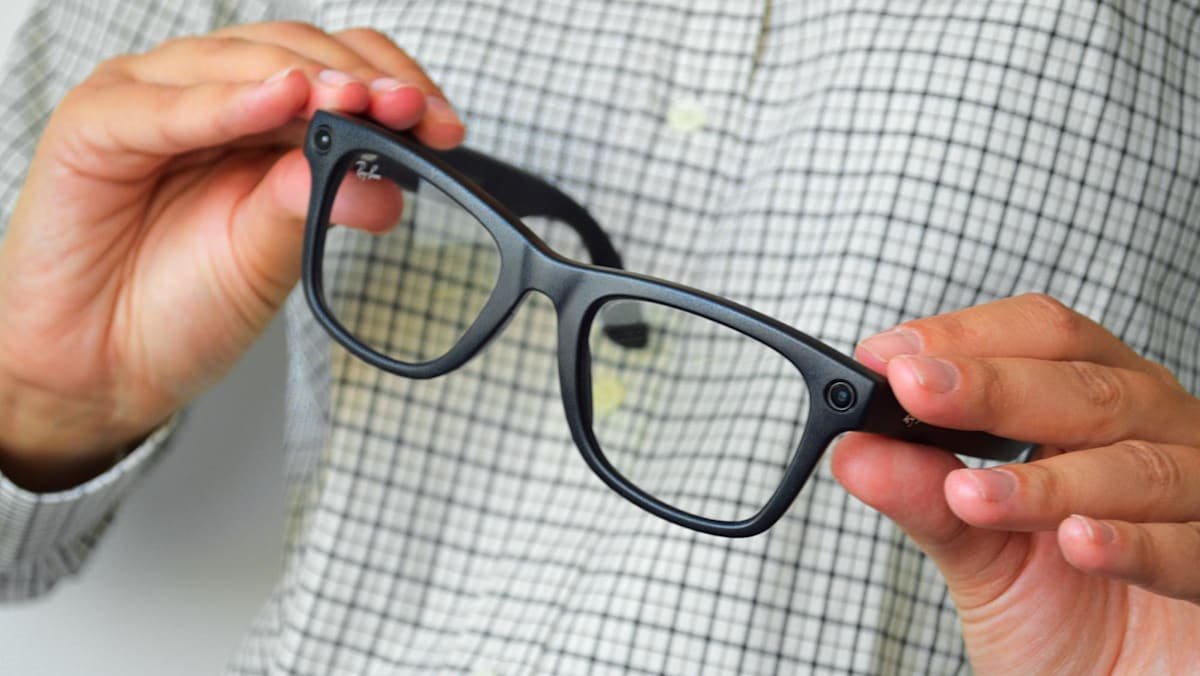
A person holds a pair of smart glasses equipped with a built-in camera on the frame. (File photo: iStock)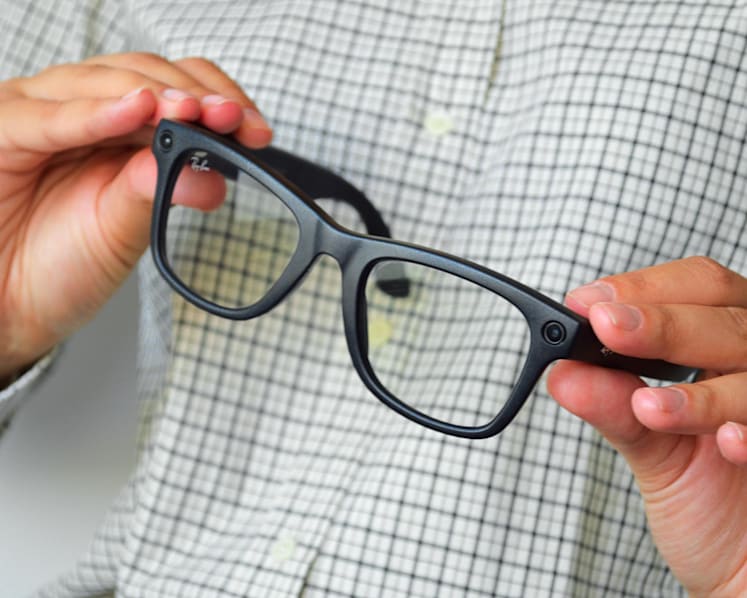
New: You can now listen to articles.

This audio is generated by an AI tool.

Read a summary of this article on FAST.
Get bite-sized news via a new
cards interface. Give it a try.
Click here to return to FAST
Tap here to return to FAST
FAST
SINGAPORE: A video showing a man purportedly wearing smart glasses while trailing female students circulated on social media this week, prompting a police report and raising questions about the legality of filming strangers in public.
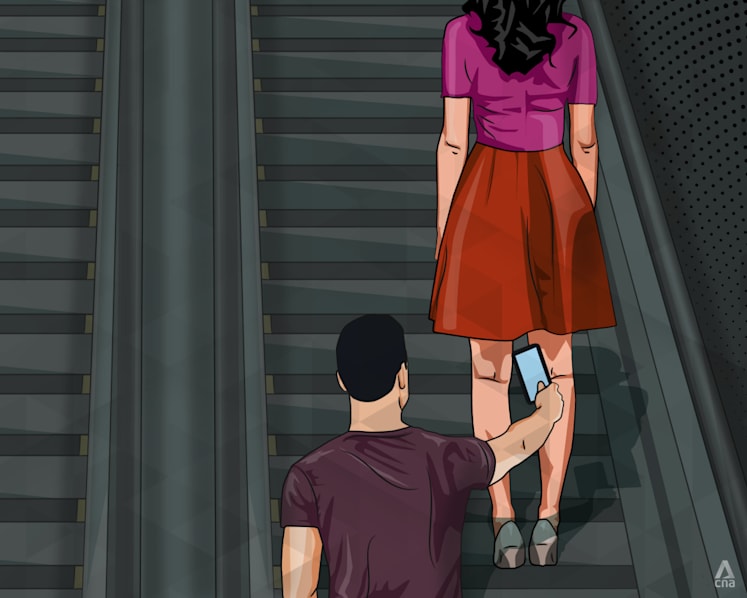
In the video, the man held his mobile phone close to his chest and, at one point, pressed the frame of his black-rimmed glasses.
He appeared to be wearing smart glasses, a type of wearable technology that lets users take photos, film videos and make calls, among other functions.
Such devices have fuelled growing concerns about privacy and filming without consent. On Wednesday, technology giant Meta released a camera-free version of its smart glasses amid the pushback.
As smart glasses continue to hit the shelves, CNA speaks to lawyers about when filming in public crosses the line.
Is it illegal to film others in public without their consent?
Filming in public is not automatically illegal, since a person generally has no expectation of privacy in that setting, said Ms Joyce Khoo, a senior associate lawyer at Quahe Woo and Palmer.
But filming may cross into illegality if it is done in a voyeuristic manner or intrudes on a person’s privacy.
This could include filming a person’s private areas, whether bare or clothed, or filming them during a private act such as showering or using the toilet, she said.
Filming in public may also become illegal if it is part of harassment or stalking, or accompanied by other unlawful conduct, such as entering the toilet of the opposite gender, she added.
Invictus Law director Cory Wong said the intent can be inferred from the filmer’s actions.
If the filming occurs on two or more occasions, or is a single but protracted act, it could constitute stalking under the Protection from Harassment Act (POHA).
“It is hard to argue that a voyeuristic, persistent or protracted act of filming was done without any ill intent. There is also the aggravating factor of vulnerable victims if minors are the ones being filmed,” he said.
What happens when the footage is posted online?
Even if the filming itself was lawful, posting footage online can cross the line into illegality if it causes harassment, defamation or misuse of personal data, Ms Khoo said.
Under POHA, a person may be liable if they post identifiable footage that causes someone “harassment, alarm or distress”, she said.
Under the Films Act, a person may also be liable for distributing obscene materials.
Ms Noelle Teoh, an associate lawyer at Gloria James-Civetta and Co, said no general rule requires a person’s face to be blurred simply because they did not consent to being filmed in public.
But where identification serves no purpose, particularly in sensitive situations or where children are involved, blurring may be a “sensible precaution”.
Publishing footage that identifies or allows others to identify the individual concerned may amount to doxxing in some cases, including where it is done with the intention of causing harassment, alarm, distress or humiliation, she said.
But not every post containing identifying details amounts to doxxing.
For example, someone who records a car being driven badly and posts the footage online showing the vehicle and its registration number would not necessarily be doxxing the driver, especially if the driver is not identified, she said.
“The position may be different if additional information is published which identifies the driver and the circumstances indicate an intention to subject that person to harassment or humiliation,” she said.

How do smart glasses play into legal and privacy concerns?
Lawyers noted that the rise of smart glasses has made covert recording harder to detect, allowing people to film for longer periods without being noticed.
Existing criminal laws here are broad enough to capture unlawful use of smart glasses and other wearable cameras, said Mr Wong.
But he added that using such technology to evade detection or conceal an offence is a long-recognised aggravating factor, one that can make an offence more serious.
Ms Teoh agreed that the technology itself is not inherently unlawful.
“Existing laws on matters such as voyeurism, harassment and data protection can apply regardless of the device used,” she said.
She added that as wearable recording technology becomes more discreet and sophisticated, it remains to be seen whether laws, regulations or industry practices will evolve to address the privacy concerns it raises.
She cited Japan, where many mobile phones are designed with a shutter sound that cannot be muted, to deter covert photography.
Similarly, smart-glasses manufacturers have incorporated visible recording indicators. For example, Ray-Ban Meta glasses have an outward-facing capture light that activates when photographs or videos are being taken.
“These examples show that the response to new recording technology may not necessarily come only through legislation, but also through product design, industry standards and other safeguards intended to make recording more apparent to those around the user,” she said.
What can I do if someone is filming me in public without my consent?
Mr Wong said the first step is to report the matter to the authorities or security personnel on site.
The person being filmed does not automatically have the right to “pry into the contents” of the suspect’s recording device, he said, adding that the suspect can always refuse.
“However, once the authorities step in, the authorities then have the powers to investigate and to seize the suspect’s handphone for digital forensic examination. At that point in time, the suspect’s refusal to cooperate or to comply can subsequently be used against him in court,” he said.
Ms Teoh said it would be sensible to prioritise personal safety and avoid physically confronting the person or attempting to seize their device.
Where possible, the person being filmed should preserve evidence of what occurred, such as the time and location, a description of the suspect and screenshots or links to any subsequent online publication.
Such material may be relevant if they make a police report or take legal action, she said.
Can I seek protection under POHA?
To obtain a protection order under POHA, a person must show that harassment has occurred and is likely to continue or recur, and that the court considers it just and equitable to grant the order, said Mr Wong.
On when filming someone could amount to harassment under POHA, Ms Teoh said the court may consider factors including how often and how long the behaviour occurred, how it was carried out, the surrounding circumstances and its likely effects on the victim.
“So, the legal analysis may be quite different between a tourist inadvertently capturing another person in the background of a photograph and someone deliberately and repeatedly following a particular person while recording them.”
In cases where harmful footage is posted online, victims of certain online harms may also seek relief through the Online Safety Commission under the Online Safety (Relief and Accountability) Act.
Under the Act, the commissioner may order harmful content to be taken down or access to an offending account restricted, where the requirements are met.
Want an issue or topic explained? Email us at digitalnews [at] mediacorp.com.sg. Your question might become a story on our site.
Source: CNA/er(cy)
Sign up for our newsletters

Get the CNA app
Stay updated with notifications for breaking news and our best stories
Get WhatsApp alerts
Join our channel for the top reads for the day on your preferred chat app

Get bite-sized news via a new
cards interface. Give it a try.
Click here to return to FAST
Tap here to return to FAST
FAST