Commentary: Asia has to prepare before climate disasters, not just cope after they strike
When it comes to climate adaptation and resilience in the region, there are wide gaps between estimated needs and available capacity and finance, says former foreign correspondent Nirmal Ghosh.
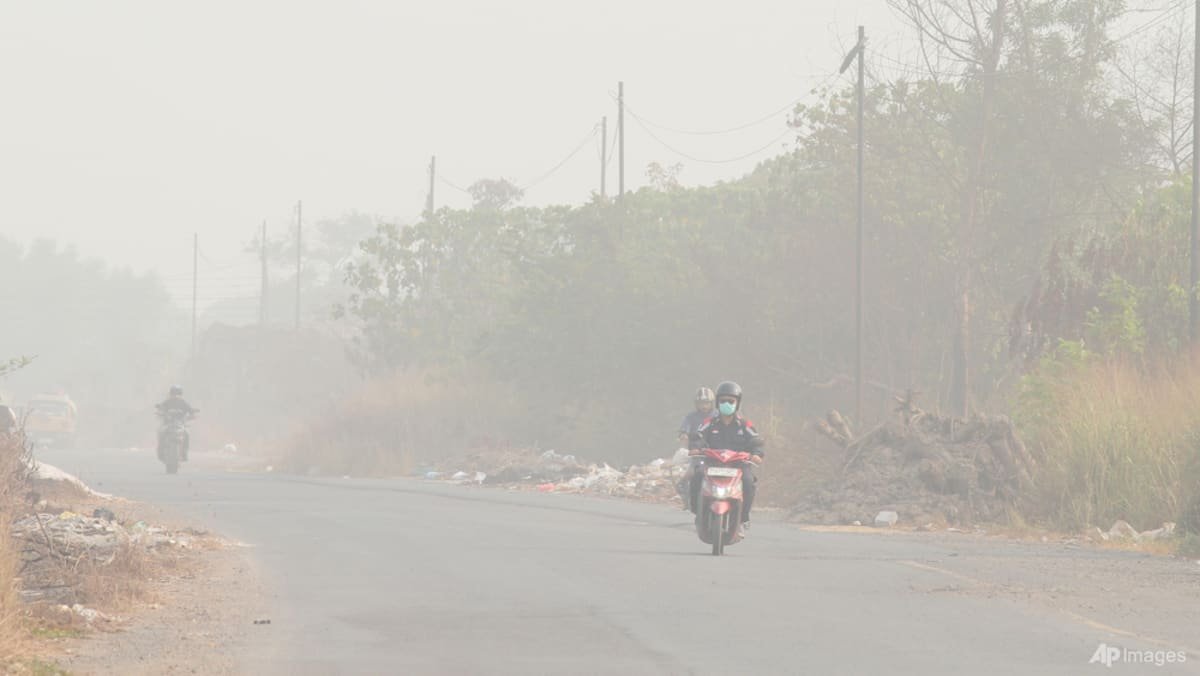
Motorists ride their two-wheelers on a road amid haze from wildfires in Palembang, South Sumatra, Indonesia, Sep 9, 2026. (AP Photo/Muhammad Hatta)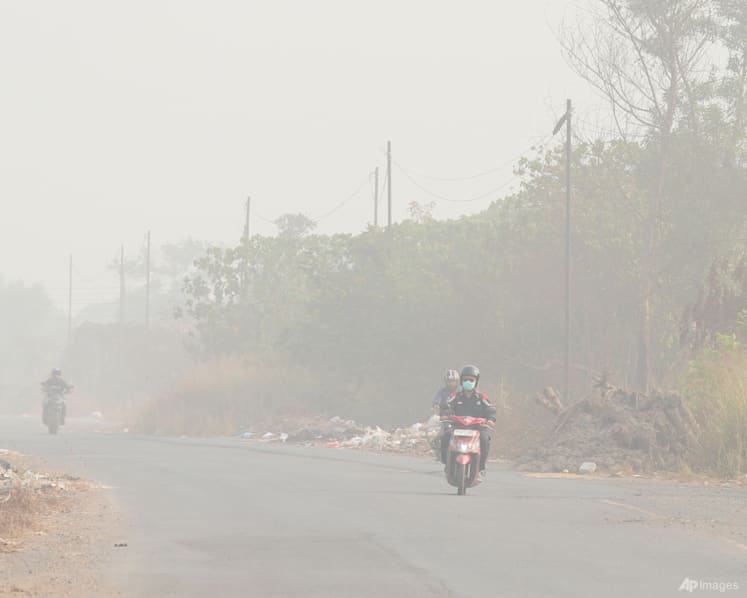
New: You can now listen to articles.

This audio is generated by an AI tool.

Read a summary of this article on FAST.
Get bite-sized news via a new
cards interface. Give it a try.
Click here to return to FAST
Tap here to return to FAST
FAST
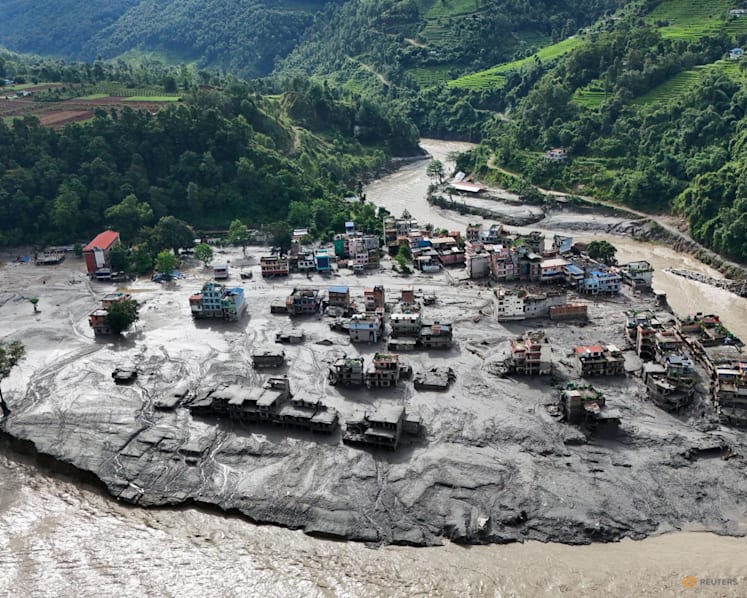
SINGAPORE: The devastation from recent catastrophes across Asia has been shocking: The collapse of a glacier in Nepal unleashed a monster flood in August with a death toll that is still rising; Indonesia is battling its worst wildfires in years on the islands of Borneo and Sumatra, which shrouded the region in smoke.
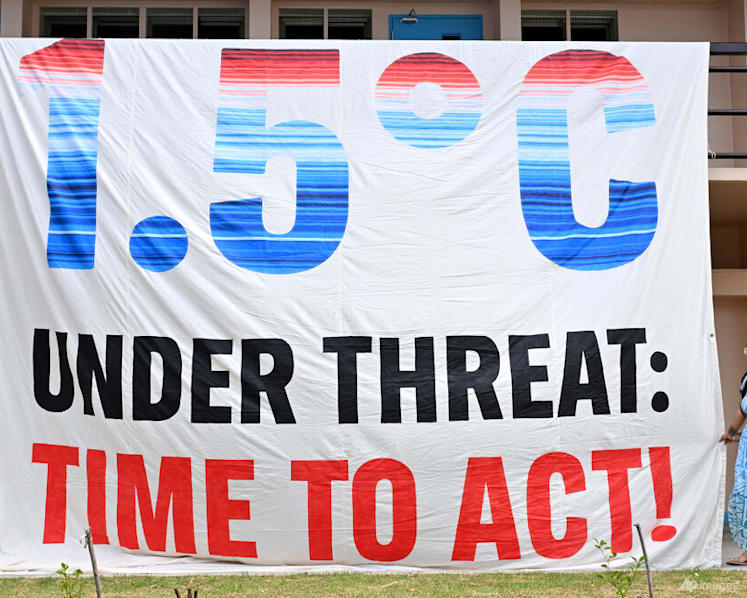
But the broader climate picture is less surprising. The world is on the brink of exceeding a 1.5°C rise in average temperature above pre-industrial levels. This year’s El Nino, the phenomenon associated with dry and hot extremes, is set to be the most intense on record.
Asia is warming nearly twice as fast as the global average. Southeast Asia in particular is one of the world’s most disaster-prone regions, with intensifying events driven by warmer temperatures, threatening food security.
Yet the region remains largely underequipped to deal with the consequences of global warming.

Guess Word
Crack the word, one row at a time

Buzzword
Create words using the given letters

Mini Sudoku
Tiny puzzle, mighty brain teaser

Mini Crossword
Small grid, big challenge

Word Search
Spot as many words as you can
ASIA’S WORRYING GAP
There are wide gaps between estimated needs and available capacity and finance, when it comes to climate adaptation and resilience. Put simply, adaptation is about taking measures to avoid or moderate damage from climate and weather-driven events, while resilience is about coping with and recovering from them.
An assessment published in May by Singapore’s Temasek Trust concluded that by 2030, Asia will account for around 75 per cent of the global climate adaptation and resilience financing gap. “More than US$200 billion is required annually across the region, yet current flows stand at only around US$19 billion,” it said.
A paper by McKinsey, also in May, zeroed in on Southeast Asia. It concluded that to protect the region today to the adaptation standards of developed economies, it would need additional investment of about US$25 billion per year, bringing total annual investment to US$37 billion.
This gap has consequences that are being lived with now, in the thousands displaced by the Nepal disaster, the human health costs of bad air quality in lower Southeast Asia, and the looming agriculture crisis.
While poorer people bear the brunt, the wealthy are not exempt; Asian companies are projected to bear around US$336 billion in annual climate costs, the Temasek study concluded.
Additionally, Singapore-based OCBC Group Research in a Sep 9 bulletin warned that it sees India, the Philippines, Thailand and Indonesia as economies with high exposure to the effects of El Nino. Malaysia and Vietnam face “meaningful but more concentrated risks”.
“The main impact will be higher food prices, with rice, wheat, maize and vegetable oils most exposed,” wrote OCBC.
HARD DECISIONS NEEDED
But closing that gap requires not just money. Prioritising adaptation and resilience would require a fundamental shift from reacting after disasters happen to proactively investing in prevention – which means hard decisions.
In the case of Nepal, the death toll and destruction may have geological and climate triggers but it was high because of poor planning, governance failure, and lack of enforcement of zoning laws that allowed building settlements and infrastructure along floodplains, Kunda Dixit, Kathmandu-based publisher, author and lecturer on climate change told me.
The economic logic of planning ahead is irrefutable. A May 2025 World Resources Institute study found that every US$1 spent on climate adaptation is expected to yield over US$10.50 in economic, social and environmental benefits.
There are a handful of good examples. Bangladesh has reduced the once-horrific death toll from cyclones. From just two weather radars in the 1970s, the country now has more than 50 radars, balloons and weather stations which send out data and alerts, and has also built many more cyclone shelters.
India’s coastal Odisha state has also reduced death tolls by constructing hundreds of multi-purpose cyclone shelters and expanding advanced early-warning systems that give it time to evacuate many thousands from vulnerable areas.
THE BIGGEST OBSTACLE IS POLITICAL
Yet, preparation requires spending today to guard against costs that come much later.
But political horizons are short. Public education on climate risk is in many cases inadequate, so public pressure to force governments to reduce risk through adaptation is largely absent.
“Adaptation is very localised in our region.” Sharon Seah, Principal Fellow at the Climate Change in Southeast Asia Programme at Singapore’s ISEAS-Yusof Ishak Institute told me, adding: “It is left up to (civil society organisations) and environmental groups to pick up the slack and they struggle to get funding for adaptation work.”
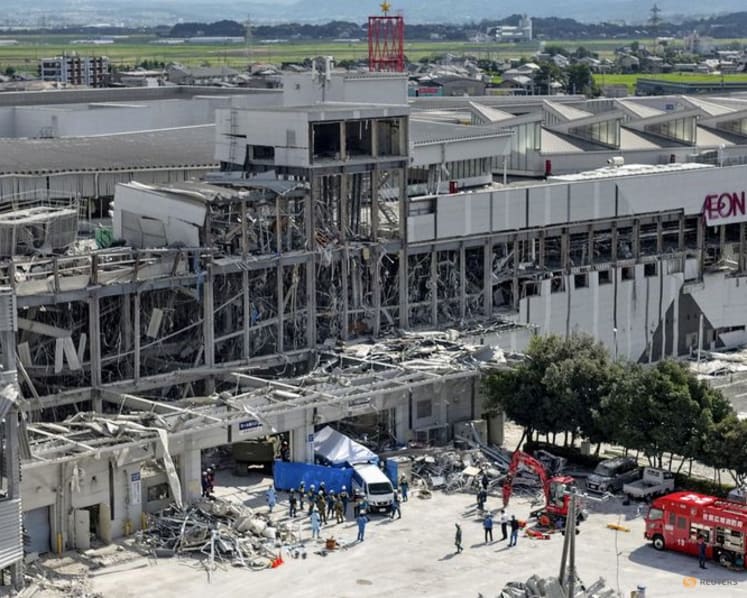
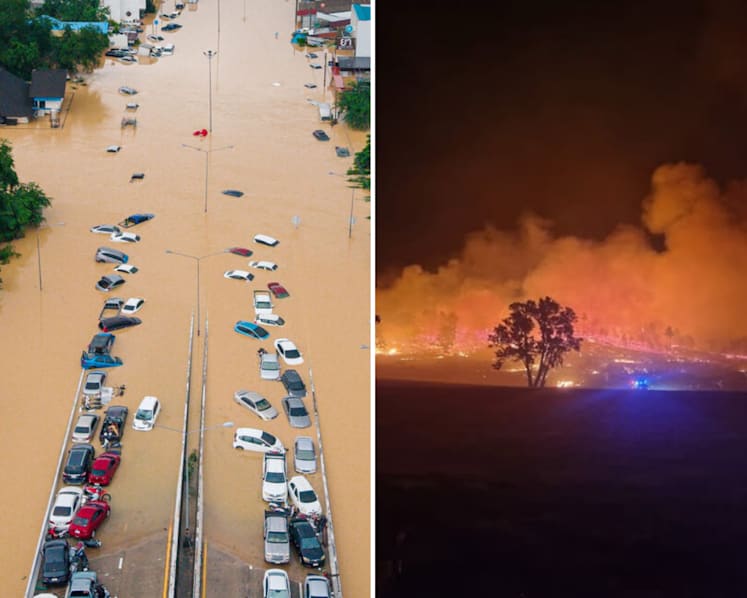
“Countries have to proactively implement adaptation measures in disaster-prone areas through political will, improved governance, education, rationalising land-use policy and, at least in part, through internal resources,” Dr Raman Sukumar at the Indian Institute of Science told me.
The international community has been slow to respond – and even slower still in recent times with a conservative, science-sceptical government in the United States pulling out of climate deals and cutting back on international aid.
When climate-driven disasters occur, they tend to do so in cascades. Wildfires, storms and debris floods, for example, can knock out electricity grids and close down airports, hampering rescue operations. Inadequate medical facilities can be very quickly overwhelmed. Food crises can deplete national food reserves, leaving other areas underserved.
But the writing on the wall is clear. Asia must fend for itself, reorient towards disaster preparedness and adaptation, and cooperate for the collective good – else be thoroughly unprepared for the cascading shocks that will mark the coming decade.
Nirmal Ghosh, a former foreign correspondent, is an author and independent writer based in Singapore. He writes a monthly column for CNA, published every third Friday.
Source: CNA/ch
Sign up for our newsletters

Get the CNA app
Stay updated with notifications for breaking news and our best stories
Get WhatsApp alerts
Join our channel for the top reads for the day on your preferred chat app

Get bite-sized news via a new
cards interface. Give it a try.
Click here to return to FAST
Tap here to return to FAST
FAST