Commentary: Return of tensions in the South China Sea was a matter of time
Clashes on the water between China and the Philippines have become sharper and more frequent after two years of relative quiet, says Andrew Chubb from the Asia Society Policy Institute.
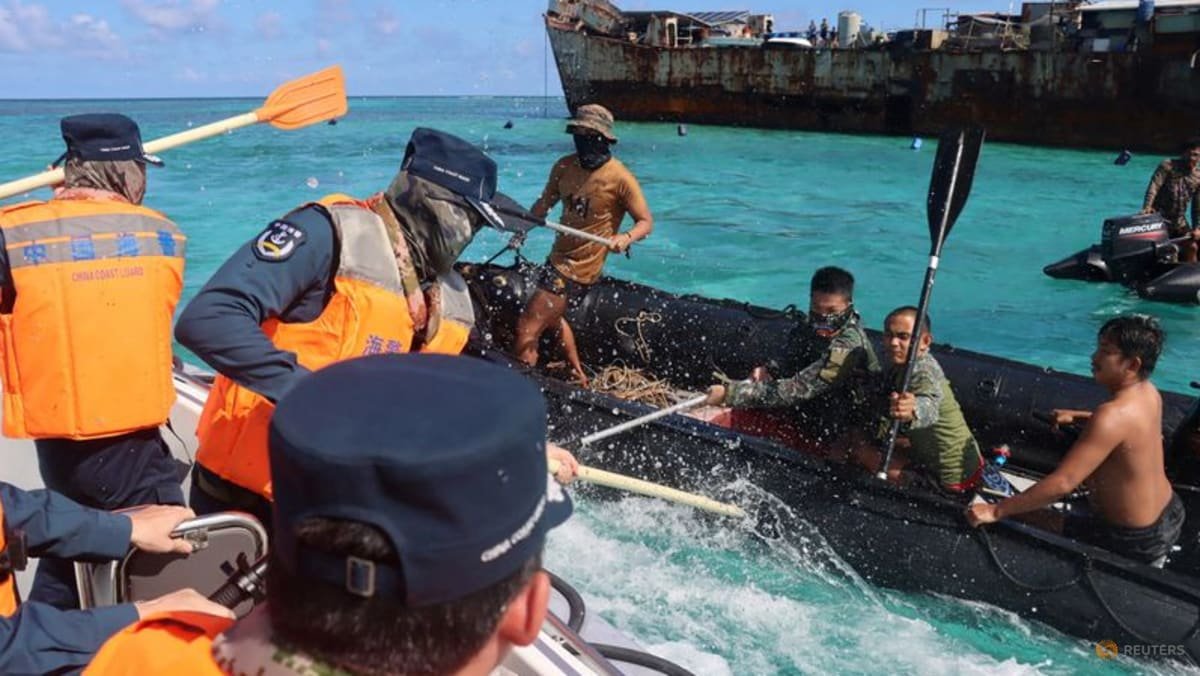
Philippine Navy personnel and China Coast Guard personnel clash near a grounded Philippine warship at Second Thomas Shoal, in the South China Sea, Jul 20, 2026. (cnsphoto via REUTERS)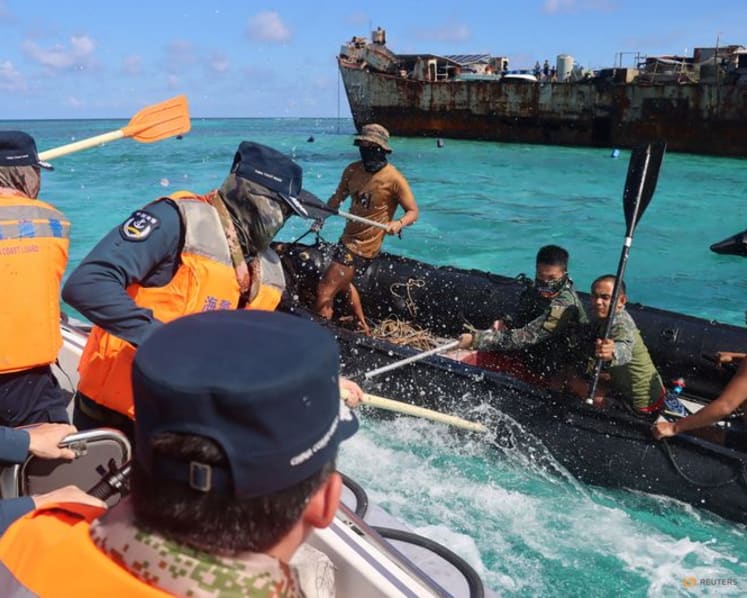
New: You can now listen to articles.

This audio is generated by an AI tool.

Read a summary of this article on FAST.
Get bite-sized news via a new
cards interface. Give it a try.
Click here to return to FAST
Tap here to return to FAST
FAST
LANCASTER, England: Tensions are once again on the rise in Asia’s most contentious waterway, after a period of relative quiet in the South China Sea.
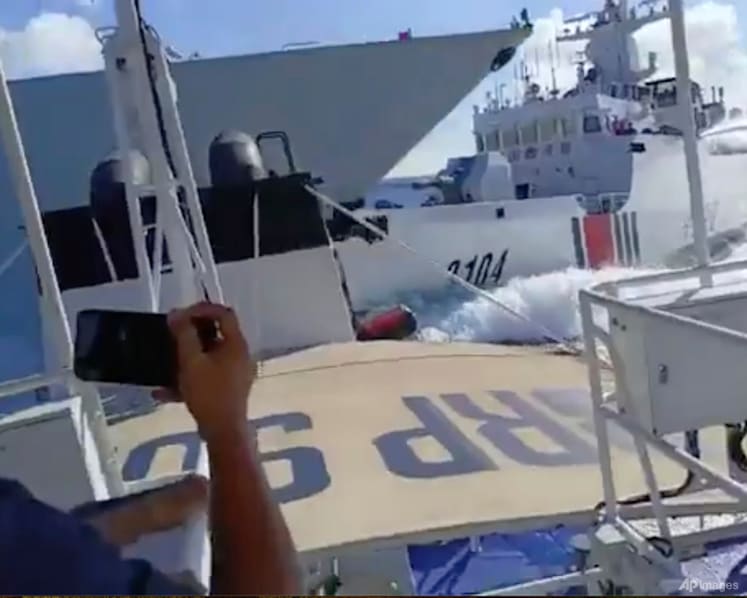
Clashes on the water have become sharper and more frequent since July. The most serious confrontation was on Jul 20, when Chinese Coast Guard personnel and Philippine marines fought with batons and paddles near Second Thomas Shoal, with a Filipino marine receiving a serious blow to the head. Most recently on Friday (Sep 18), Chinese and Philippine vessels collided near Sabina Shoal.
The return of such regular clashes was all but inevitable.
China has long sought control in the disputed waters and its level of activity has notably increased across multiple sites this year. Its efforts appear more and more to be about turning its presence into what the Chinese Coast Guard calls more systematic “management and control” of the waters.

Guess Word
Crack the word, one row at a time

Buzzword
Create words using the given letters

Mini Sudoku
Tiny puzzle, mighty brain teaser

Mini Crossword
Small grid, big challenge

Word Search
Spot as many words as you can
WHY CLASHES ARE RETURNING
Renewed confrontation was only a matter of time. The arrangement that allowed relative calm to prevail around Second Thomas Shoal since July 2024 managed disputes without resolving them.
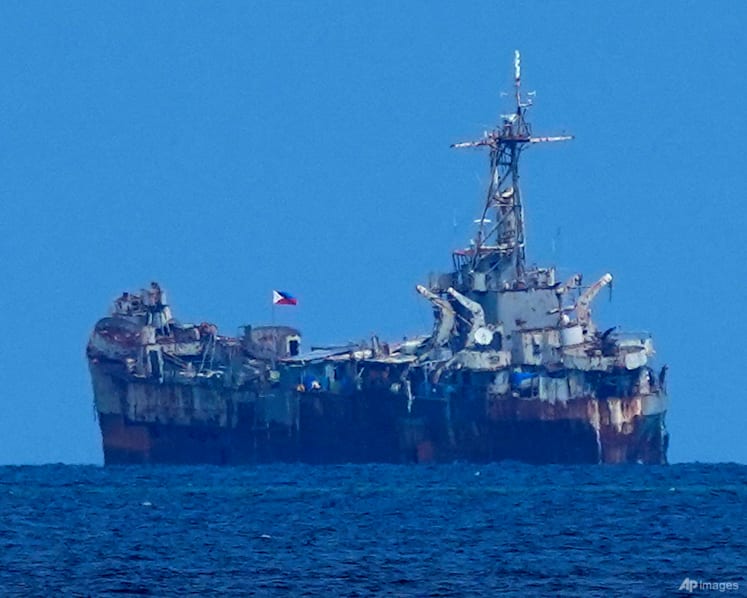
Under that tacit agreement, the Philippines was able to complete 13 rotation and resupply missions to Second Thomas Shoal without physical interference. However, a reported condition was that Manila refrain from significant construction work to reinforce the rusting outpost, the grounded WWII-era transport ship BRP Sierra Madre which is in danger of falling into the sea.
Videos indicate the Jul 20 incident was triggered when Philippine marines confronted a Chinese Coast Guard vessel that had approached the Sierra Madre. China’s ambassador in Manila explicitly stated that the vessel had approached to surveil “some kind of construction work in the ship”.
China’s Foreign Ministry reiterated on Jul 21 that it would permit humanitarian resupply missions – provided the Philippines provided prior notification – but would “resolutely stop” any attempt to “build fixed facilities or a permanent outpost”.
The Philippines cannot put off such work indefinitely if it wants to maintain its position at the shoal. Given the rapid decay of the Sierra Madre in the salty maritime environment, doing so could in effect entail abandoning a reef that lies squarely within the Philippines’ Exclusive Economic Zone under the United Nations Convention on the Law of the Sea (UNCLOS).
The latest clashes also come around the time of the 10th anniversary of the 2016 arbitration ruling that China’s nine-dash line was unlawful as a claim to maritime space. Beijing has never accepted the ruling.
EVERY MOVE ADDS UP
The broader direction is even clearer at Scarborough Shoal, where China has achieved practical on-water control by setting new rules, expanding its ability to enforce them and restricting access to the shoal.
China telegraphed its intent in 2025 with its announcement of a “Huangyan Dao National Nature Reserve” covering significant sections of the shoal. Since then, Beijing has been steadily building the administrative and legal frameworks to make comprehensive “management and control” of the disputed atoll a reality.
On Aug 1, the Ministry of Natural Resources, National Forestry and Grassland Administration, China Coast Guard, and Hainan provincial government jointly issued management rules reserve. The rules establish a routine patrol system, authorise investigation and punishment of violations, prohibit unauthorised fishing and other activities – which in effect prevent Philippine fisherman from entering the reserve except under specified circumstances.
Data from the Asia Maritime Transparency Initiative show China has doubled its Coast Guard patrolling presence around Scarborough Shoal in 2025 compared to the previous year. The same data indicate it’s on track to double it again in 2026. In April, China reinstalled a floating barrier across the entrance of the shoal.
Nor is all this an isolated episode. This is occurring alongside efforts to strengthen Chinese physical presence elsewhere in the South China Sea, including major new reclamation at Antelope Reef in the Paracel Islands.
CHALLENGE OF PUSHING BACK
The question then is whether China will face any pushback.
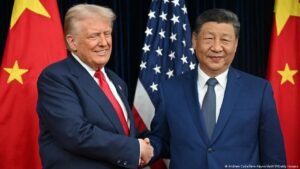
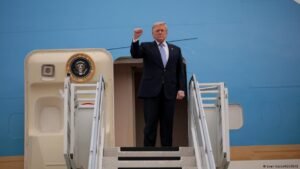
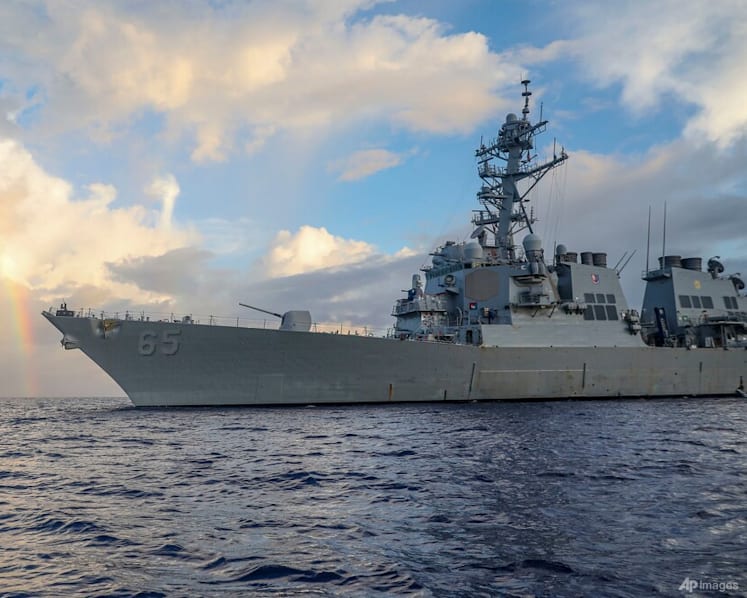
Although the United States has reaffirmed an “ironclad” commitment to the Philippines’ defence, credibility of US deterrence in the South China Sea has been called into question. Not only has the war on Iran weakened the US military posture in East Asia, US President Donald Trump himself has repeatedly shown a willingness to negotiate with China over American regional security issues.
The last reported Freedom of Navigation Operations (FONOPs) – to challenge excessive maritime claims – in the South China Sea was in August 2025. There have been no publicly known US FONOPs since then.
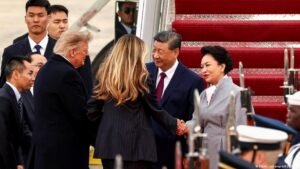
This pause mirrors a pattern seen during Mr Trump’s first term when he sought to build a relationship with Chinese President Xi Jinping.
There are, however, signs that other countries with an interest in a balance of power in the region may be stepping up. Earlier this month, the UK said it had conducted a joint FONOP with Australia in the South China Sea. In May, the UK sailed a naval vessel through the Spratly Islands, as did the Dutch navy through the Paracel Islands.
Amid budgetary squeezes, whether European navies can sustain such deployments and meaningfully compensate for the US’ reduced attention is far from clear.
There will likely be no shortage of clashes in the coming years to test such commitments.
Andrew Chubb is a Fellow on Chinese Foreign Policy and National Security at the Asia Society Policy Institute’s Center for China Analysis, and a Senior Lecturer at Lancaster University.
Source: CNA/ch
Sign up for our newsletters

Get the CNA app
Stay updated with notifications for breaking news and our best stories
Get WhatsApp alerts
Join our channel for the top reads for the day on your preferred chat app

Get bite-sized news via a new
cards interface. Give it a try.
Click here to return to FAST
Tap here to return to FAST
FAST