
Does ethnicity affect the type of breast cancer you develop and how easily it’s detected?
Asian women tend to have denser breasts, which can make cancer harder to detect. Studies also show that certain breast cancer types are more common among some ethnic groups in Singapore. But doctors say ethnicity alone doesn’t determine how the disease behaves.
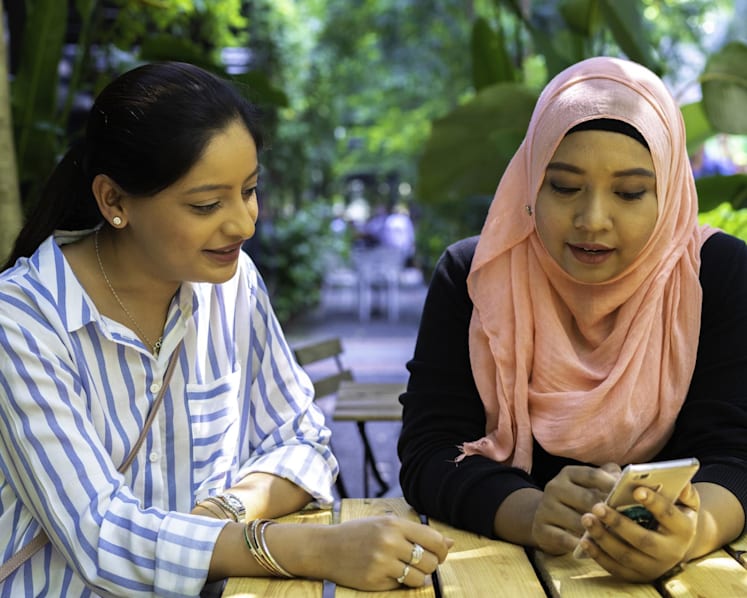
Studies in Singapore have found differences in the subtypes of breast cancer diagnosed among Chinese, Malay and Indian women. (Photo: iStock/PonyWang)
New: You can now listen to articles.

This audio is generated by an AI tool.

Read a summary of this article on FAST.
Get bite-sized news via a new
cards interface. Give it a try.
Click here to return to FAST
Tap here to return to FAST
FAST
Much of what we know about breast cancer comes from studies involving Caucasian women in Western countries. But research in Singapore has found differences in certain breast cancer characteristics among Chinese, Malay and Indian women.
Dr Lim Siew Kuan, senior consultant and breast surgeon at Solis Breast Care and Surgery Centre, said that breast cancer is classified in different ways. One classification describes where the cancer originates within the breast, while another describes its biological behaviour and how it is likely to respond to treatment.
For example, invasive ductal carcinoma (IDC) begins in the milk ducts. “It accounts for around 70 to 80 per cent of invasive breast cancers worldwide,” said Dr Lim. “This is true across all ethnic groups, including Asian women.”
HER2-positive breast cancer, on the other hand, refers to a molecular subtype, she added. HER2 stands for human epidermal growth factor receptor 2 – the cancer cells have increased HER2 activity, which can drive their growth.
Adjunct Associate Professor Samuel Ow, senior consultant at the Department of Haematology-Oncology at National University Cancer Institute, Singapore, said Asian women have a slightly higher proportion of HER2-positive breast cancer – around 19 per cent, compared with 14 per cent in Caucasian women.
“HER2 used to have a poor outlook,” he told CNA Women. “The good news is that we now have targeted therapy which specifically blocks HER2, and HER2-positive breast cancer can be treated very effectively.”
BREAST CANCER AND ETHNICITY
Dr Lim said research has shown that breast cancer patterns can vary between populations. Studies from Singapore have identified differences in the distribution of breast cancer subtypes among Chinese, Malay and Indian women.
Chinese women appear to have a higher proportion of hormone receptor-positive breast cancers, whose growth is stimulated by hormones such as oestrogen or progesterone.
Malay and particularly Indian women appear to have a somewhat higher proportion of triple-negative breast cancers, which tend to behave more aggressively, and chemotherapy is commonly an important part of treatment, said Dr Lim.
“However, treatment decisions are based on the characteristics of the individual tumour and not what type of cancer is more common in a patient’s ethnicity,” Dr Lim added.
Dr Lim said certain breast cancer characteristics, such as age at diagnosis, breast density and the distribution of tumour subtypes, may vary between populations. However, the same internationally accepted methods are used to diagnose and treat the disease.
“These local patterns are important for research, screening and healthcare planning, but they do not make breast cancer in Singapore a different disease,” she explained.
ETHNICITY IS JUST ONE FACTOR
Dr Lim said that breast cancer risk and tumour biology are influenced by many factors – not just ethnicity. These include genetics, reproductive history, lifestyle and environmental influences. Even within Asia, there is considerable variation between populations.
“Singapore gives us an interesting opportunity to study this because of our multi-ethnic population,” she said. “We do see differences in breast cancer characteristics and outcomes between ethnic groups, but ethnicity alone cannot predict how a breast cancer will behave.”

She added that the most important information comes from testing the tumour itself, as well as its grade and stage, as these determine prognosis and guide treatment decisions.
Adjunct Assoc Prof Ow said: “Ethnicity can also reflect differences in lifestyle, childbearing and sociocultural factors, which may influence health-seeking behaviour, including whether women come forward for cancer screening, which can affect the stage at which breast cancer is diagnosed.”
Around five to 10 per cent of breast cancers are linked to an inherited genetic predisposition such as BRCA1 or BRCA2, said Adjunct Assoc Prof Ow. He advised women to be familiar with the cancer history on both their mother’s and father’s sides of the family.
ASIAN WOMEN HAVE DENSER BREASTS
One difference between Asian and Western women is breast density, which could impact diagnosis. Adjunct Assoc Prof Ow explained that both dense breast tissue and tumours appear white on a mammogram, making cancer harder to detect.
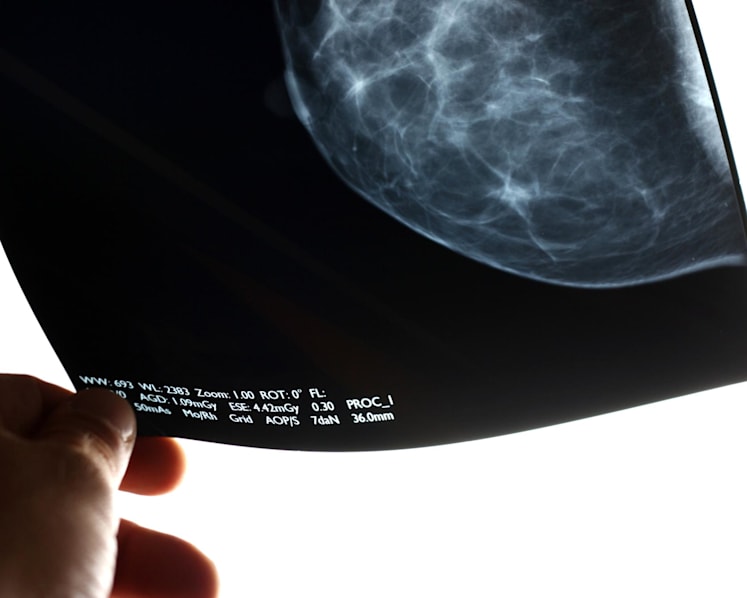
Having dense breasts is also a risk factor for developing breast cancer. However, Adjunct Assoc Prof Ow said: “This does not mean [Asian women] have a markedly higher overall breast cancer risk than women in the West – breast density is only one of many factors that determine risk.”
Dr Lim said that “breast density is an important factor we consider when deciding how best to assess a woman’s breasts”. This is where 3D instead of 2D mammography could be used.
“Compared with conventional 2D mammography, 3D mammography uses less compression force and provides clearer, more detailed views of breast tissue,” said Dr Lim. “This can improve the detection of breast cancers, particularly in women with dense breast tissue, and may be useful when more detailed imaging is needed to assess a breast concern.”
BREAST CANCER AND YOUNGER WOMEN
Although breast cancer remains primarily a disease of older women, it is increasingly being diagnosed in younger women in Singapore – one in six is under 45 and about one in 10 is below 40.
Adjunct Assoc Prof Ow said breast cancer in a younger demographic reflects the effects of rapid Westernisation and industrialisation among generations born after the 1950s, whose breast cancer risk has increased compared with previous generations.
Contributing factors include having fewer children, giving birth at a later age, starting menstruation earlier and having a higher body mass index (BMI).
Breast cancers in younger women are also more likely to be more aggressive.
“Compared with older patients, younger women have a higher likelihood of developing high-grade tumours and biologically aggressive subtypes, including triple-negative and HER2-positive breast cancers,” said Dr Lim.
Singapore’s revised national guidelines recommend that women aged 40 to 49 have a mammogram every year, and every two years from age 50. Routine screening is generally not recommended below 40 for women at average risk, said Adjunct Assoc Prof Ow.
The eligibility age for mammograms was lowered from 50 to 40 earlier this year, following recommendations by the Screening Test Review Committee, an expert committee appointed by the Ministry of Health.

Statistics show that Singapore has the highest rate of breast cancer in Southeast Asia. Adjunct Assoc Prof Ow noted that its rates now resemble those of developed countries.
Contributing factors include later childbearing, having fewer children, longer life expectancy, rising BMI and greater consumption of dietary fat or animal products, which can increase the body’s exposure to oestrogen, a risk factor in breast cancer.
“But there is good news, too – five-year survival in Singapore has improved dramatically, from about 50 per cent in the 1970s to more than 80 per cent today,” Adjunct Assoc Prof Ow said.
“Whatever your age, a persistent breast lump or change should always be checked – you are never too young for a breast symptom to be taken seriously,” he added.
CNA Women is a section on CNA Lifestyle that seeks to inform, empower and inspire the modern woman. If you have women-related news, issues and ideas to share with us, email CNAWomen [at] mediacorp.com.sg.
Source: CNA/pc
RECOMMENDED
Get bite-sized news via a new
cards interface. Give it a try.
Click here to return to FAST
Tap here to return to FAST
FAST