Dollar drifts with oil; Gulf tensions, Fed minutes in focus
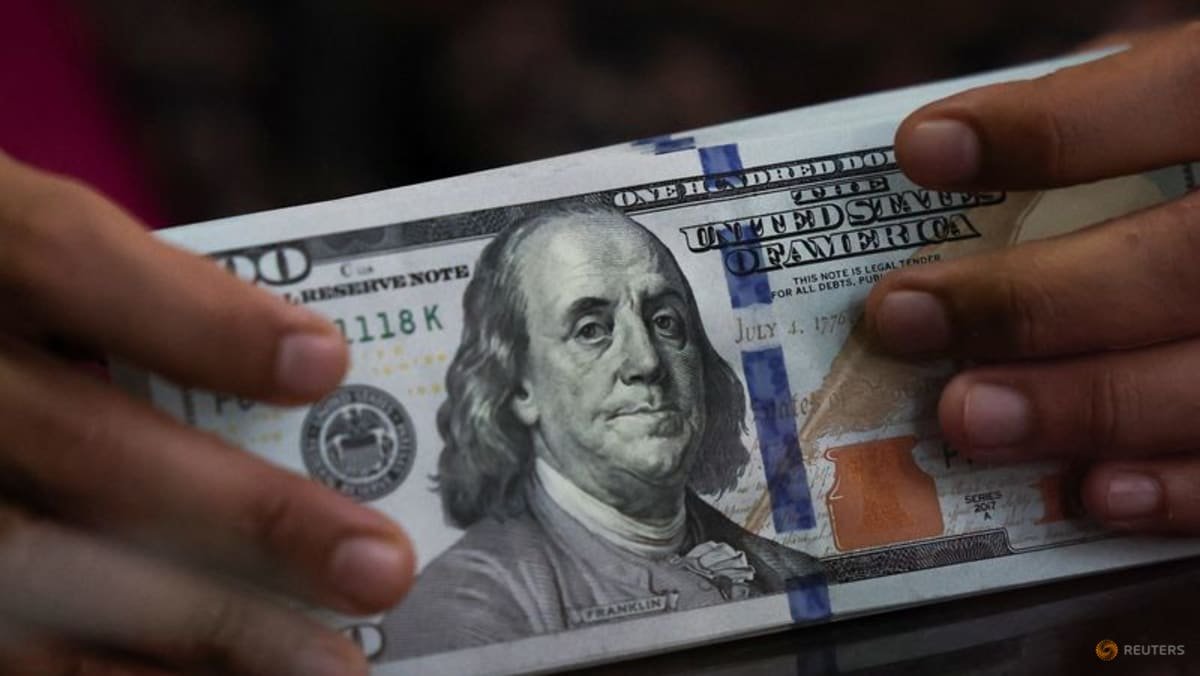
An employee holds U.S. dollar bank notes at a money changer in Jakarta, Indonesia, April 9, 2025. REUTERS/Willy Kurniawan
Read a summary of this article on FAST.
Get bite-sized news via a new
cards interface. Give it a try.
Click here to return to FAST
Tap here to return to FAST
FAST
LONDON, July 9 : The dollar backed off this week’s highs on Thursday as the U.S. and Iran carried out renewed attacks, despite a spike in oil prices that rekindled concerns about inflation and boosted expectations the Federal Reserve could soon raise interest rates.
Minutes on Wednesday from the Fed’s latest meeting in June showed policymakers kept the door open to a rate rise this year, although there was division over when that should happen.
“If tensions in the region were to intensify further and the price of oil continue to rise sharply, it could reinforce the dollar’s recent upward momentum especially now that the Fed has indicated that it is open to raising rates this year,” MUFG currency strategist Lee Hardman said in a note.
The dollar index was flat on the day at 101, largely due to a pickup in the euro, which rose 0.1 per cent to $1.1426, while the yen inched above 40-year lows, but remained firmly at levels that could trigger official buying to support it, at 162.49.

Guess Word
Crack the word, one row at a time

Buzzword
Create words using the given letters

Mini Sudoku
Tiny puzzle, mighty brain teaser

Mini Crossword
Small grid, big challenge

Word Search
Spot as many words as you can
Rising oil prices following the latest round of attacks by the U.S. and Iran are keeping the yen in particular under pressure, given Japan’s dependence on imported fuel and its strained finances.
Currency volatility has also picked up this week across the board.
“A flare-up of Middle East tensions has rattled global markets again and jammed a war risk premium back into asset prices,” said Kyle Rodda, senior financial market analyst at Capital.com.
The most significant second-order effect of the jump in oil prices is what it means for inflation and global interest rates, Rodda said. “A jump in oil prices could bring forward the timing of a Fed hike.”
The U.S. military said it launched a round of fresh strikes on Iran hours after President Donald Trump declared an interim agreement to end the war was “over”, sending oil prices sharply higher.
The more bellicose tone gave investors a “wake-up call” on the risk of an acceleration in inflationary pressures, which has sent U.S. 10-year Treasury yields to seven-week highs, reflecting a growing chance of a rate hike this year.
The June FOMC minutes, the first under Chair Kevin Warsh, showed policymakers becoming increasingly concerned about inflation. The markets have increased the implied probability of a hike this year to about 87 per cent, according to CME FedWatch.
Brent crude futures drifted on Thursday to $77 a barrel, down 1.5 per cent on the day, having closed up more than 5 per cent the previous day, around its highest for two weeks.
Elsewhere, the New Zealand dollar was the top-performing major currency on Thursday, up 0.6 per cent at $0.573, after the central bank raised rates the previous day and indicated it could do so again if needed. The Australian dollar was steady at $0.693 and the pound was unchanged at $1.34.
(Addtional reporting by Jiaxing Li; Editing by Shri Navaratnam, Tom Hogue, Kate Mayberry and Chizu Nomiyama )
Source: Reuters
Sign up for our newsletters

Get the CNA app
Stay updated with notifications for breaking news and our best stories
Get WhatsApp alerts
Join our channel for the top reads for the day on your preferred chat app

Get bite-sized news via a new
cards interface. Give it a try.
Click here to return to FAST
Tap here to return to FAST
FAST