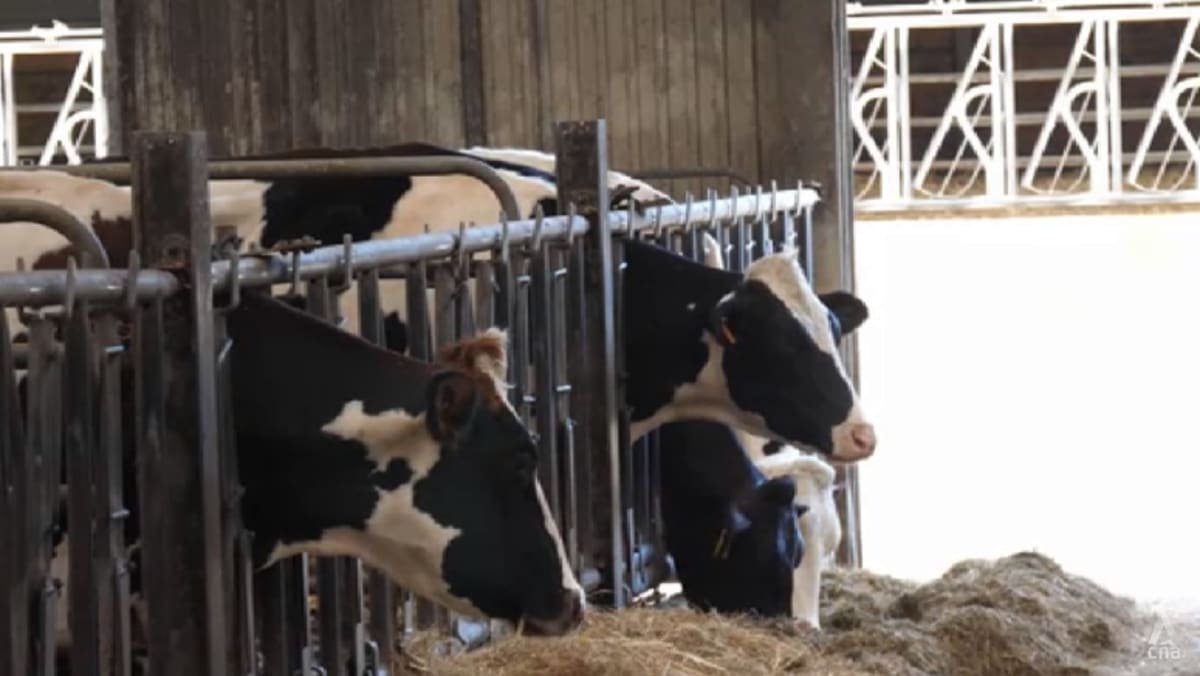
Europe’s scorching summer hits farms, raising concerns for food exports to Asia
Vulnerable crops and livestock have been hit by extreme heat across Europe, with farmers reporting falling yields.
Farmers in southern Belgium say extreme summer heat has taken a toll on cattle. (Image: CNA)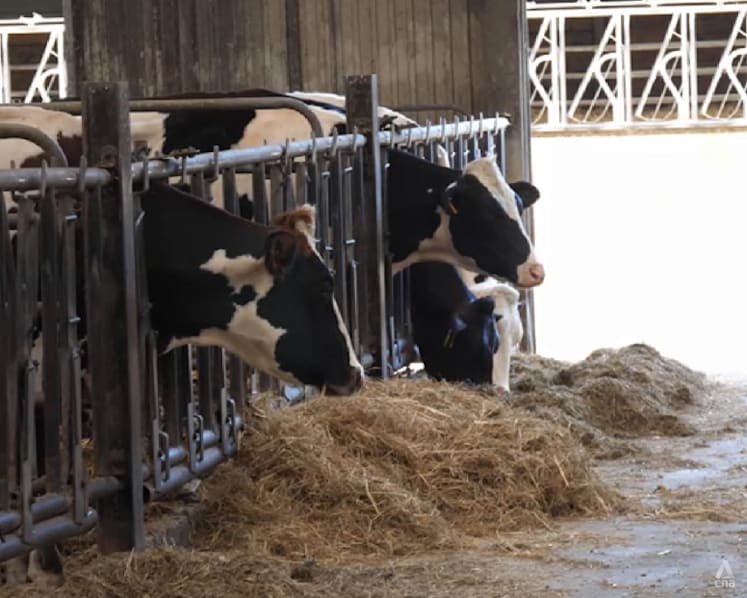
New: You can now listen to articles.

This audio is generated by an AI tool.
Read a summary of this article on FAST.
Get bite-sized news via a new
cards interface. Give it a try.
Click here to return to FAST
Tap here to return to FAST
FAST
VIROINVAL, Belgium: A gruelling summer in which temperatures climbed to around 40°C has taken a toll on farmers in southern Belgium.
Cattle have suffered higher mortality rates, fertility problems and weight loss, while farmers in the region say their incomes have fallen by as much as 40 per cent over the summer months.
“The fauna is not prepared for that. Our animals are not prepared for that. Our buildings are not designed for that. Our operating structure is not ready for these extreme temperature conditions,” said Daniel Coulonval, president of the Walloon Agricultural Federation.
Despite efforts to keep their cattle cool, farmers say milk production has dropped 5 per cent because of the heat.

Guess Word
Crack the word, one row at a time

Buzzword
Create words using the given letters

Mini Sudoku
Tiny puzzle, mighty brain teaser

Mini Crossword
Small grid, big challenge

Word Search
Spot as many words as you can
BEYOND LIVESTOCK
Belgian fruit and vegetable growers are also seeing the effects of the harsh conditions.
“Today, the apples are small. The potatoes are small. The carrots are small. Other fruits are absent,” Coulonval said.
The impact could extend to one of Belgium’s best-known food exports – fries.
“It will also have consequences when these potatoes are destined to produce fries. Obviously, the length of the fries will be different,” he said.
Around 45 per cent of Belgium’s processed potato exports are shipped outside Europe, with East and Southeast Asia accounting for 8 per cent of the country’s total processed potato exports.
The European Potato Trade Association told CNA that it was too early to provide reliable figures but warned the heatwaves could hit this year’s production and consequently, the market.
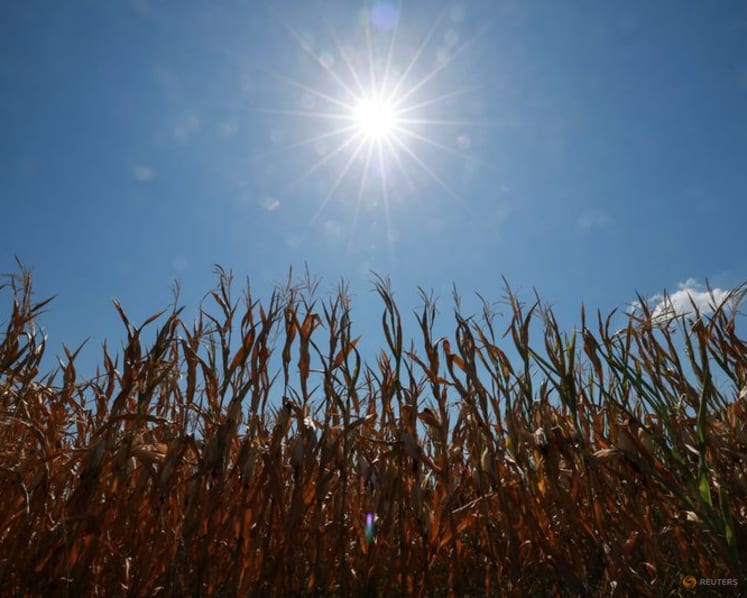
The problems extend well beyond Belgium, with extreme temperatures and drought hurting agricultural production across parts of Europe.
France’s corn harvest is forecast to fall 35 per cent this year to 9 million tonnes – its lowest level since 1980, the government said in August.
Drought has also left cornfields struggling in Germany and rice paddies parched in Italy.
On Sep 4, France announced more than €1 billion (US$1.16 billion) in support for farmers after the record heatwaves and drought damaged crops, pastures and water supplies.
IMPACT BEYOND EUROPE
The effects could be felt further afield, with Asia an important market for European Union agri-food exports.
Dairy is a key part of that trade.
Last year, Ireland launched a nearly US$4 million EU-backed campaign aimed at boosting dairy trade with China, Singapore and Vietnam.
Despite the strain on cattle and lower milk production at some farms, Europe’s wider dairy industry remains relatively resilient, bolstered by a strong first half of the year.
“Overall the exports will increase in 2026 compared to 2025, so from a supply security basis, there’s no question we will supply the world and Europe with dairy without any problem,” said Alexander Anton, secretary general of the European Dairy Association.
But scientists are investigating whether increasingly volatile weather could make agricultural output less predictable.


PREPARING FOR A WARMER FUTURE
Belgian researchers are embarking on an eight-year study to examine how agricultural production could change as the continent continues to warm.
Europe has warmed at more than twice the global average over the past three decades, with temperatures rising by about 0.56°C per decade, according to the EU’s Copernicus Climate Change Service.
Using climate-controlled chambers, scientists will track how crops respond to changing conditions.
“Some years we might have good yields, but for some other years we might have terrible yields which are going to be very low,” said Mathieu Delandmeter, a researcher at Gembloux Agro-Bio Tech at the University of Liege.
“So it’s going to depend a lot on the variability of this weather.”
Source: CNA/oc(ca)
Sign up for our newsletters

Get the CNA app
Stay updated with notifications for breaking news and our best stories
Get WhatsApp alerts
Join our channel for the top reads for the day on your preferred chat app

Get bite-sized news via a new
cards interface. Give it a try.
Click here to return to FAST
Tap here to return to FAST
FAST