Eurovision Song Contest organizers announced rule changes that would prevent countries involved in an armed conflict from hosting the event.
Israel and Ukraine are among the countries the rule could affect, with both having enjoyed recent success in the competition.
What did the Eurovision organizers say?
Eurovision is typically staged by the broadcaster from the country that won the previous edition as part of a co-production involving members of the European Broadcasting Union (EBU).
Under the new rules, “the winning broadcaster will automatically be ineligible to host the Contest if an armed conflict, a sensitive geopolitical situation, or any other situation materially affects the security, safety or stability of their state or immediate region,” the EBU said.
To view this video please enable JavaScript, and consider upgrading to a web browser that supports HTML5 video
The EBU may commission an independent security assessment if necessary. If the winning broadcaster is deemed unable to stage the contest, another broadcaster will be selected.
Why is the Eurovision changing the rules?
The EBU did not name any particular country as the reason, but Israel finished second at Eurovision in both 2025 and 2026.
Five countries — Spain, Ireland, the Netherlands, Slovenia and Iceland — boycotted the 2026 contest in Vienna, saying they could not participate alongside Israel because of the war in Gaza. Israel is currently involved in the war in Iran.
The new rule formalizes a challenge Eurovision has faced before.
Ukraine hosted the contest in 2017 despite fighting in the east of the country, but after winning Eurovision in 2022 it was unable to stage the following year’s event because of Russia’s full-scale invasion.
Liverpool instead hosted Eurovision 2023 in the United Kingdom on Ukraine’s behalf.
Russia has been excluded from Eurovision since 2022, when the EBU banned it following its full-scale invasion of Ukraine.
What else is changing about the Eurovision?
Under the new rules, the EBU is raising the minimum age for performers from 16 to 18 to reduce pressure on young artists.
Lead vocals must also be performed live and cannot be supported by pre-recorded voices.
To view this video please enable JavaScript, and consider upgrading to a web browser that supports HTML5 video
The EBU said the clarification was intended to protect the integrity of performances and ensure audiences hear the lead singer live.
Eurovision director Martin Green said the contest’s rules were reviewed each year to keep the competition fair and transparent.
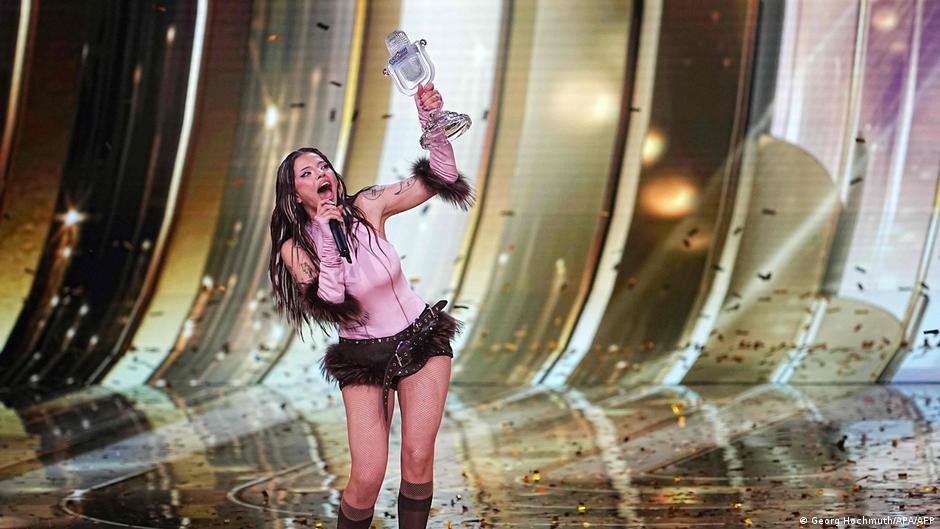
Next year’s contest will be held in Bulgaria following Bulgarian pop singer Dara’s victory in Eurovision 2026 in Vienna with “Bangaranga.”
Edited by: Louis Oelofse
Don’t let the algorithm hide the news. If you rely on our team for trusted reporting, please take a moment to select us as your Preferred Source on Google, so you’ll always see our verified news first.