Skip NavigationMarketsBusinessInvestingTechPolitics & PolicyVideoWatchlistInvesting Club PRO
 LivestreamMenu
- Foxconn sees potential to capture 50% of the global AI server market within a couple of years.
- The company’s production capacity is fully booked for at least the next year and a half, with AI infrastructure expected to account for more than 60% of revenue in three to five years.
- Foxconn plans to expand its U.S. manufacturing operations further upstream in the supply chain, while carefully managing AI investments amid concerns over excessive spending.
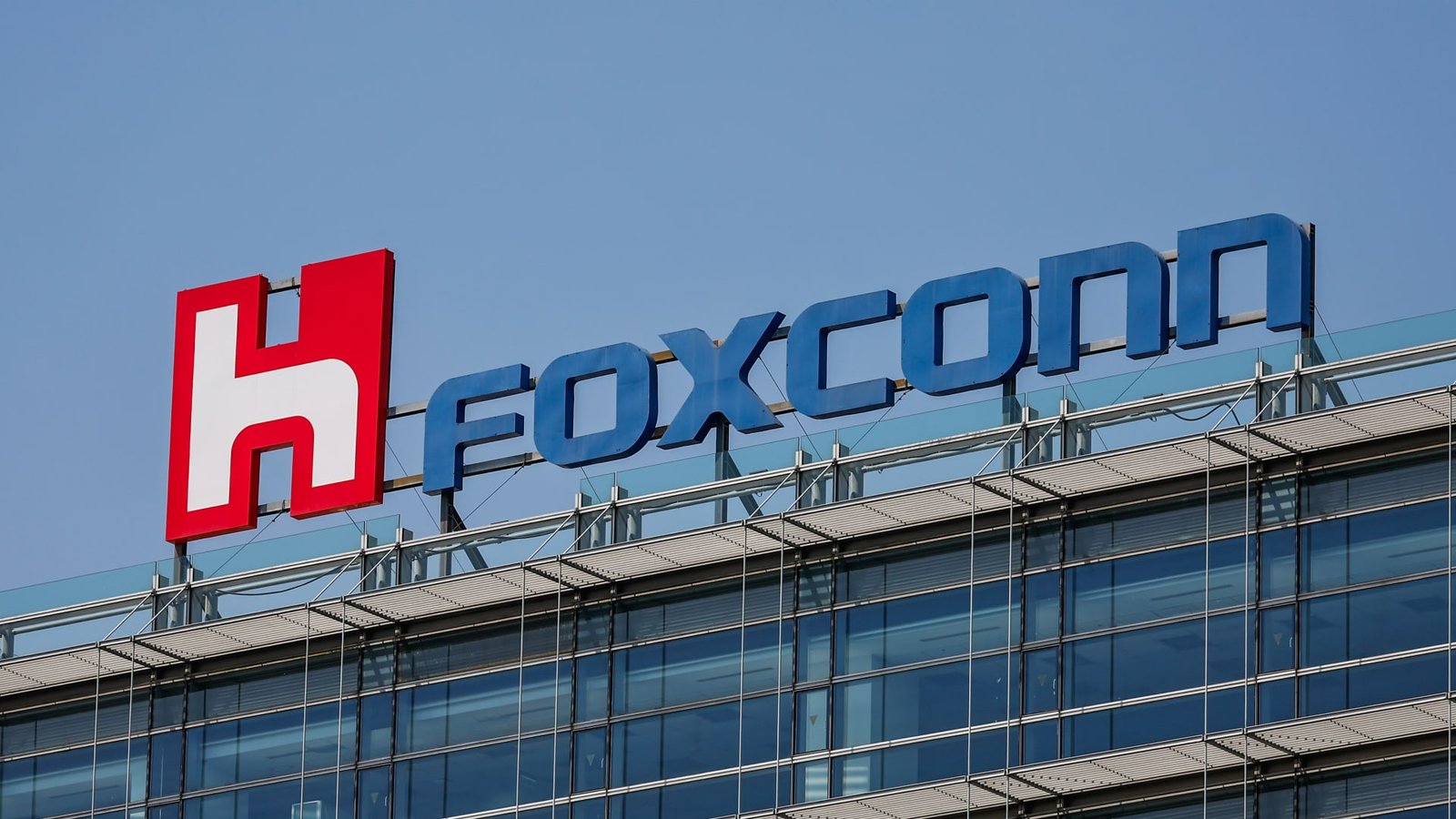
The logo of multinational tech company Foxconn (also known as Hon Hai), which is a major manufacturer for Apple products, in Taipei, Taiwan, on April 16, 2025.Anadolu | Anadolu | Getty Images
Taiwanese electronics giant Hon Hai Technology Group, or Foxconn, is looking to expand its artificial intelligence server market share and boost manufacturing in the United States, as demand for AI infrastructure shows little sign of slowing, Chairman Young Liu told CNBC.
In an interview with CNBC’s Christine Tan, Liu said Foxconn’s share of the global AI server market could reach 50% in a couple of years, potentially rising to around 45% next year.
“I think we can grow up to 50 percent,” Liu said, referring to Foxconn’s share of the global AI server market, which currently stands at around 40%.
 watch nowVIDEO04:56No risk of overcapacity yet as large part of AI demand still unrealized: FoxconnSquawk Box Asia
Formally known as Hon Hai Precision Industry, the company is best known as a major assembler of Apple’s iPhones but has increasingly turned to AI infrastructure as a key growth driver.
Liu expects AI infrastructure to account for 60% to 65% of Foxconn’s revenue in the next three to five years, excluding edge AI devices — which run AI and machine learning algorithms directly on local hardware.
Foxconn’s production capacity was already fully booked for at least the next year and a half, Liu said, pointing to sustained demand for AI infrastructure.
He said demand so far has come largely from AI model developers and cloud service providers, while governments and enterprises have yet to fully embrace the technology. AI demand remains “quite strong,” he added.
U.S. manufacturing expansion
Foxconn is looking to expand its U.S. manufacturing footprint, with Liu saying the company plans to move further up the supply chain to better serve the U.S. market.
“What we are going to do is we’re going to move up the supply chain,” he said, explaining that a broader manufacturing presence would allow Foxconn to respond more quickly to rising demand.
However, higher manufacturing costs in the U.S. mean the company will initially focus on products with stronger margins, including AI server racks and data center equipment.
Liu said greater production scale in the U.S. could eventually help lower manufacturing costs.
The expansion comes as Foxconn seeks to strengthen its position across the AI infrastructure supply chain, from servers and racks to entire data centers and computing services.
AI spending risks
However, even as AI demand continues to grow, Liu emphasized the importance of managing investments carefully.
“Overinvestment will kill the company,” he said, adding that Foxconn would keep a tight rein on spending as it expands its AI business.
Liu said Foxconn could spend more than its planned $3 billion to $5 billion a year on AI, depending on how far it expands its vertical integration.
Asked how the company would respond if major customers cut back on AI spending, Liu said weaker demand from one customer could be offset by growth elsewhere.
However, an industry-wide slowdown would pose a much bigger challenge for Foxconn and the broader AI supply chain.