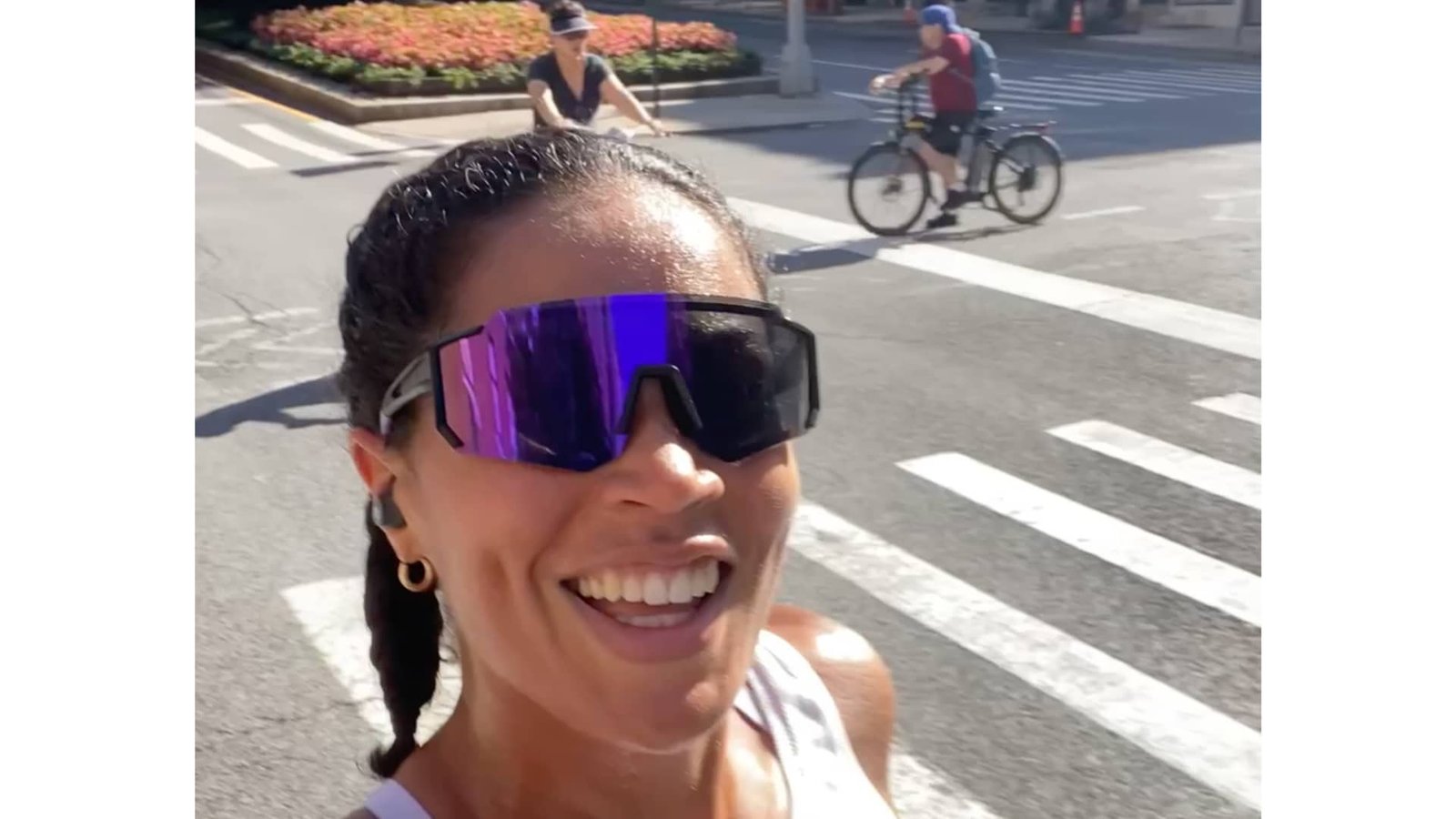
Skip NavigationNew York’s Summer Streets event in August closed a long stretch of Manhattan to car traffic, making a great opportunity for a long tun through the city.Kamaron McNair
I won the lottery in March. Unfortunately, not the Powerball jackpot, but a decent consolation: a chance to run the TCS New York City Marathon on Sunday.
The race lottery came with slightly better odds than the recent billion-dollar lotto draws, but it still surprised me to be among 1% of the 240,000 applicants who secured a bib, according to New York Road Runners, the organization behind the world-renowned event.
As soon as I got my acceptance email in March 2026, my credit card got hit with the $333 entry fee. I knew that would happen when I signed up, but I did not expect to actually be paying that fee, or to have to start training to run 26.2 miles through all five boroughs.
In the months leading up to the race, I hoped to avoid a spending marathon. I was in the process of paying down five figures of credit card debt, and knew I didn’t want to rack that back up buying every cute running outfit or purportedly “necessary” accessory advertised on my social media feed.
Running has historically been understood as an affordable sport. The only equipment you absolutely need is clothing and a pair of shoes, and the latter is technically optional. But as the sport has exploded in popularity, so have the products and brands catering to runners. Even a casual runner may find it difficult to find a good pair of running shoes under $100, and the price tag only goes up with shoes and gear purported to help you run your best.
“It’s become easier to spend a lot of money on running. There are more things you can buy, and it can start to feel like every item is something you need,” says Steve Mura, a coach with New York Road Runners. Items like watches, shoes, specialized water bottles and recovery tools “might serve a purpose, but the total can add up quickly,” he says.
I knew I would need some new equipment to prepare for the marathon, but I committed myself to trying to only buy what I felt I really needed. In the end I still spent $1,161 including my race fee. Here’s what I bought and what I felt was really worth the money.
Spring splurges
I’ve been casually running since 2020, so I didn’t go into training without any gear. I had a few pairs of running shorts, plenty of T-shirts and a good pair of Brooks trainers. But as I started upping my mileage, I needed some upgrades. Between April and the end of June, I spent $171 on new clothes from Old Navy, a fresh pair of Brooks, a tub of Squirrel’s Nut Butter to prevent chafing and a monthly subscription for a training app, Runna.
The Old Navy haul proved to be a bit of a bust. The shorts and bra I got were good for a few runs, but made me chafe as the temperatures and my distances increased. I’d worn out my previous running shoes soon after I started training, so I invested in a new pair and was happy to get them on sale for about $80 less than what they usually cost. I used the Runna app as my training guide because I didn’t really know where to begin with my plan.
Summer spending heats up
In July and August, I ran a total of just over 216 miles and spent about $327. That includes two months of Runna subscription charges and two more trips to Old Navy — but for better pieces this time. Additionally, I bit the bullet and got some premium gear from Bandit, an independent running apparel brand that started in Brooklyn in 2020.
I really tried to resist the company’s $88 shorts and matching $78 top. But I learned over many runs that I have two requirements for good running shorts: that they have pockets and don’t ride up. Bandit’s offering definitely met the pockets requirement and reviews told me they would not move, a fact I can now confirm. The top was less of a necessity, but it is now the best sports bra I own and thus far has not caused me any chafing. I also got socks from running sock brand Feetures. They were more affordable than other premium sock offerings, and I got four pairs for around $57.
I err on the side of affordability when it comes to clothes shopping, especially for stuff I work out in. However, training for a marathon quickly taught me the difference between good enough gear and performance wear. I love my Old Navy pieces for lighter workouts, but the cotton material isn’t great for longer runs.
I started experimenting with fuel options as my long runs started exceeding 15 miles in August. First I stuck to snacks I had in my home already, like dried mango or gummy bears. Then I bought a 12-pack of Honey Stinger gels for $20. That felt expensive for what amounts to sugar and salt. But they’re easy to carry and do their job of efficiently delivering carbs and electrolytes during a long workout.
Falling for a discount
I almost got through September with my Runna subscription as my only expense, but I hit the limit on my running shoes. After a particularly painful long run, I realized I’d racked up over 375 miles on the shoes I bought in May, and I felt it. While running shoes generally can have a lifespan between 300 to 500 miles, some experts encourage runners to rotate a couple of pairs of shoes to get the most out of them. I was wearing these for just about every run.
Initially, I tried to replace them with a gently used pair I got on eBay for $59. When they arrived, however, the insoles had been replaced and the soles had a little more wear than I was comfortable with. I returned them and bought a brand new pair. Unfortunately, I couldn’t get a pair on sale this time, so I wound up paying $195 on Amazon.
In October, with less than a month until the marathon, I completed a 21-mile run that made me confident I was ready for the race. I spent about $47 on a few final items that I could probably live without but will hopefully help the day go smoothly. Instead of more gels, I got a pack of honey packets to use as fuel for a better price of about $9 for 20.
For race day, I got an $11 pair of running sleeves and a 2-pack of portable phone chargers for $15. I’ve seen many TikTok videos about what you “need” at the starting village — runners typically arrive a couple of hours before their actual start time, so veterans generally encourage you to bring some essentials to stay warm and keep yourself and your phone fueled.
Finally, I splurged on a Nike marathon sweatshirt to commemorate the experience, not to run in. It was $65, which felt like a steal when some basic Nike sweatshirts go for $75 or more. It’s definitely not a need, especially since I’ll get a very nice medal to memorialize the race. But it’s newspaper-themed, so as a journalist, I was extra (extra) enticed.
A healthy investment
In total, this marathon has been a pricey endeavor, but hasn’t cost more than I’d spend on a regular week-long vacation. Beyond the financial investment, though, I have spent countless hours and a lot of energy on training, and for now I don’t regret any of it. Plus, the time I spent training also saved me some money I likely would have spent elsewhere.
I can’t calculate exactly how much training has saved me, but I’ve certainly declined some nights out and drinks here and there due to my running schedule. Plus spending two to three hours running — plus recovery time — on Saturdays and Sundays likely saved me from at least a few impromptu shopping trips.
There’s evidence to support the idea that regular running may help me save on healthcare costs in the long term, but it’s impossible to predict what ailments I may encounter or avoid in the future, and whether running has a direct correlation.
Training for this race has been a truly gratifying experience. I’ve spent more time outside than I regularly do, have explored more of the city I’ve called home for seven years and I’ve felt the effects of high-impact cardio training — I can confirm endorphins really do make you happy. I’m looking forward to the immense pride I’ll feel crossing the finish line on Sunday with 26.2 miles behind me.
But I have no plans to run another marathon, frankly. I know race day will be an incredible experience, but all in all, I’d rather spend my time — and money — on less intense activities.
 VIDEO13:38I bring in $20,000 a month selling Turkish baklavaOn The Job