


India is producing millions of graduates, but where are the jobs?
Youth-led protests seen across the country in recent weeks over exam irregularities have also tapped into wider anxiety over unemployment.
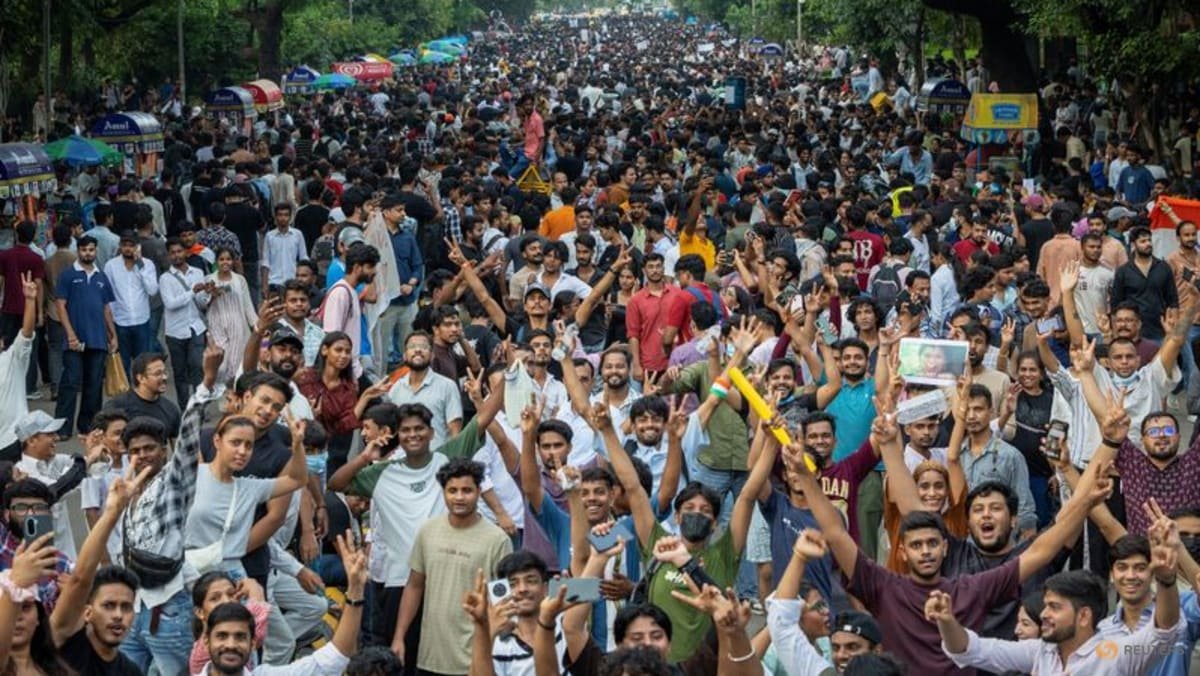
Supporters of India’s Cockroach Janta Party (CJP) celebrate after India’s Education Minister Dharmendra Pradhan resigned following days of protests, in New Delhi, July 25, 2026. (Photo: Reuters/Adnan Abidi)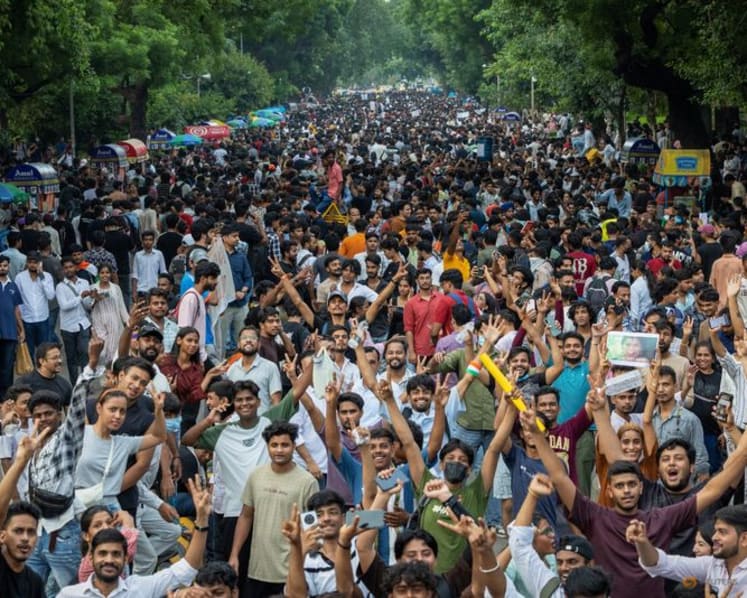
New: You can now listen to articles.

This audio is generated by an AI tool.
Read a summary of this article on FAST.
Get bite-sized news via a new
cards interface. Give it a try.
Click here to return to FAST
Tap here to return to FAST
FAST
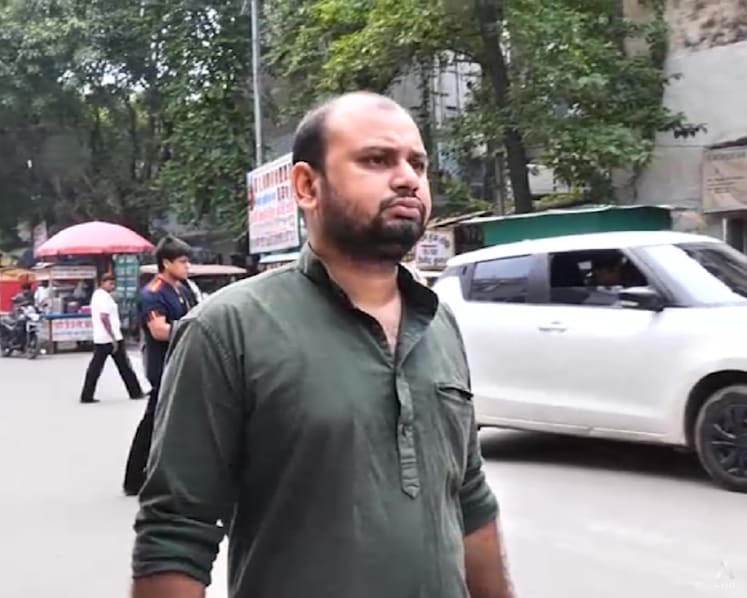
NEW DELHI: Three years after completing his master’s degree in Hindi, Vivek Kumar Jaiswal is still searching for stable work.
“The only jobs available are those at call centres or to fill in data entries – these pay a maximum of just US$120 a month,” he said.
“My degree feels useless in this job market. I’m fighting for the same jobs as those who have dropped out of school.”
The 28-year-old and his two siblings depend largely on the income their father earns driving an autorickshaw.
His frustration is increasingly familiar among young Indians making the transition from university to the workplace.

Guess Word
Crack the word, one row at a time

Buzzword
Create words using the given letters

Mini Sudoku
Tiny puzzle, mighty brain teaser

Mini Crossword
Small grid, big challenge

Word Search
Spot as many words as you can
India is one of the world’s fastest-growing economies and has rapidly expanded access to higher education. But growth in graduate employment has not kept pace with the number of graduates, researchers say.
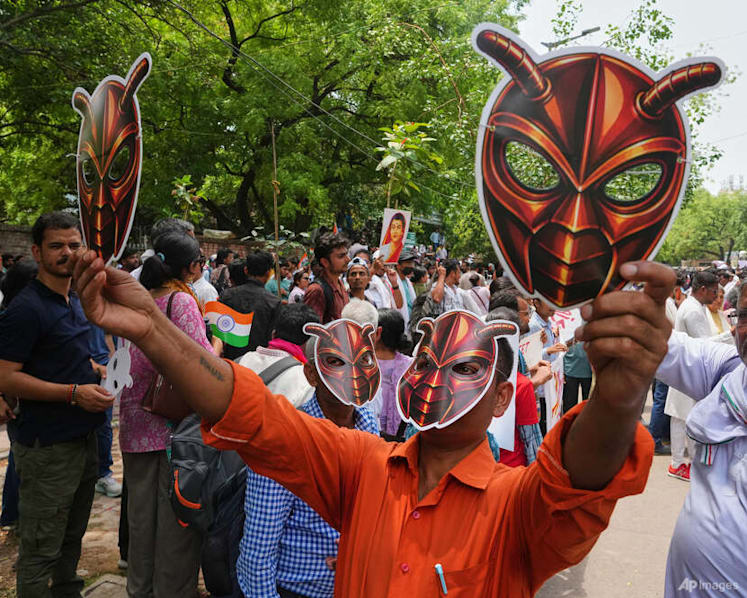
For Jaiswal, the anxiety over his economic prospects – and being stuck in a cycle of part-time work – drove him to join a protest by the Cockroach Janta Party (CJP) in July.
The movement began as online satire but grew into one of India’s biggest youth-led protest movements in years, drawing thousands to the streets.
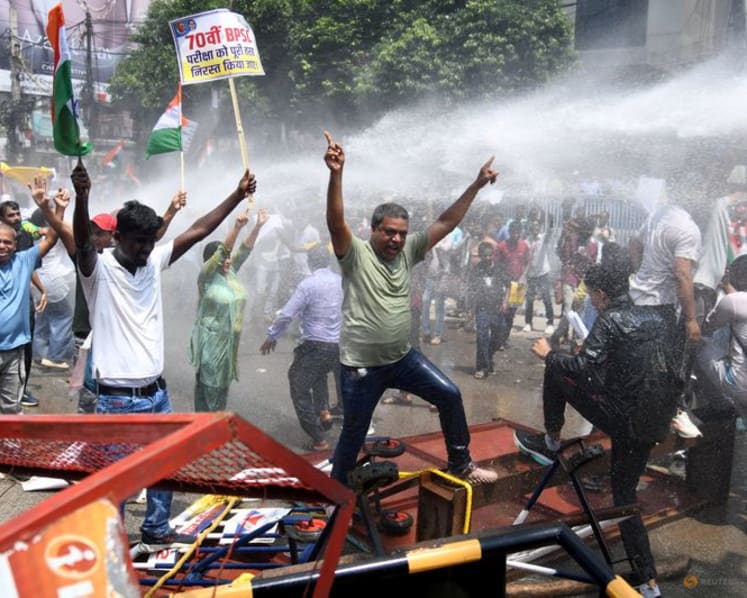
Sparked by repeated exam paper leaks, the protests have forced the government into talks and exposed deeper frustrations over India’s education system, jobs and fairness.
As Jaiswal stood among thousands of young Indians calling for reforms to the country’s education system, his concerns went beyond the classroom: finding a decent job.
“I was angry. All of us want to improve our lot in life – but to do that there needs to be good jobs in the market.”
MORE GRADUATES THAN GRADUATE JOBS
According to a report by Azim Premji University released in March, India produced about 5 million graduates each year on average between 2004 and 2023, but graduate employment grew only by around 2.8 million annually.
Nearly 40 per cent of graduates aged 25 and below were unemployed, compared with about 20 per cent of those aged 25 to 29, the report found.
Economist Rosa Abraham, an associate professor at the university and one of the authors of the study, said that many young Indians who manage to find work end up in low-paying, informal or irregular employment.
“Job creation has slowed down,” she said.
“We’ve also seen a lot of workers actually entering into agriculture,” she said, pointing to the trend as a reversal of structural transformation.
“Ideally, as an economy grows, the expectation is that workers leave agriculture. They move either into manufacturing or services.”
The government has expanded internship and apprenticeship programmes aimed at helping young people enter the workforce.
But Abraham said such efforts have yet to match the scale required to address the problem.
Government data showed that youth unemployment fell in July from a month earlier.
At 15.6 per cent, however, it remained more than three times the country’s overall unemployment rate, according to the Periodic Labour Force Survey.
The issue has increasingly become a source of political pressure.
On Monday (Aug 24), Congress president Mallikarjun Kharge criticised Prime Minister Narendra Modi’s government over unemployment and rising prices of essential commodities, accusing it of “ravaging” the pathway from education to employment.
A DEGREE BUT NOT THE RIGHT SKILLS
Artificial intelligence is adding another layer of uncertainty to the job market, reshaping some of the entry-level jobs available to graduates.
As workplace requirements change, young Indians may also find that what they learn in college does not always match the skills employers are looking for.
India’s Economic Survey, an annual government review of the economy, has acknowledged a mismatch between the training being provided and the needs of the industry.
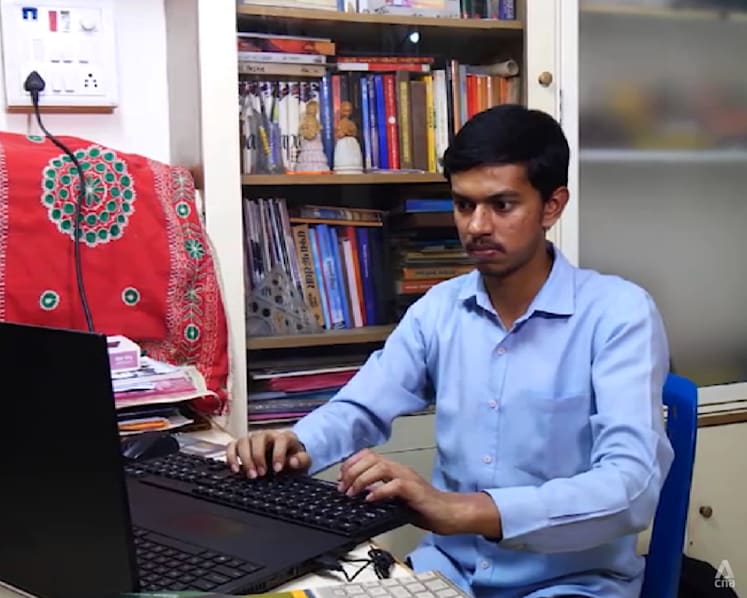
Engineering graduate Shubh Kansara discovered that disconnect for himself when he started applying for jobs.
He spent about a year unemployed before eventually settling for work outside his field of study.
“When we go for interviews, people expect new graduates to know different technologies,” he said. “None of this was taught to us in university.”
His parents had poured much of their savings into his education, expecting an engineering degree to open doors to greater opportunities.
Instead, his experience reflects a difficult reality confronting many Indian families: Even after investing heavily in a university education, a degree may not necessarily lead to the job they hope for.
Source: CNA/oc(mp)
Sign up for our newsletters

Get the CNA app
Stay updated with notifications for breaking news and our best stories
Get WhatsApp alerts
Join our channel for the top reads for the day on your preferred chat app

Get bite-sized news via a new
cards interface. Give it a try.
Click here to return to FAST
Tap here to return to FAST
FAST
About The Author







