Japan aims to cap FY27 new bond issuance at 40 trillion yen, PM says in Yomiuri interview
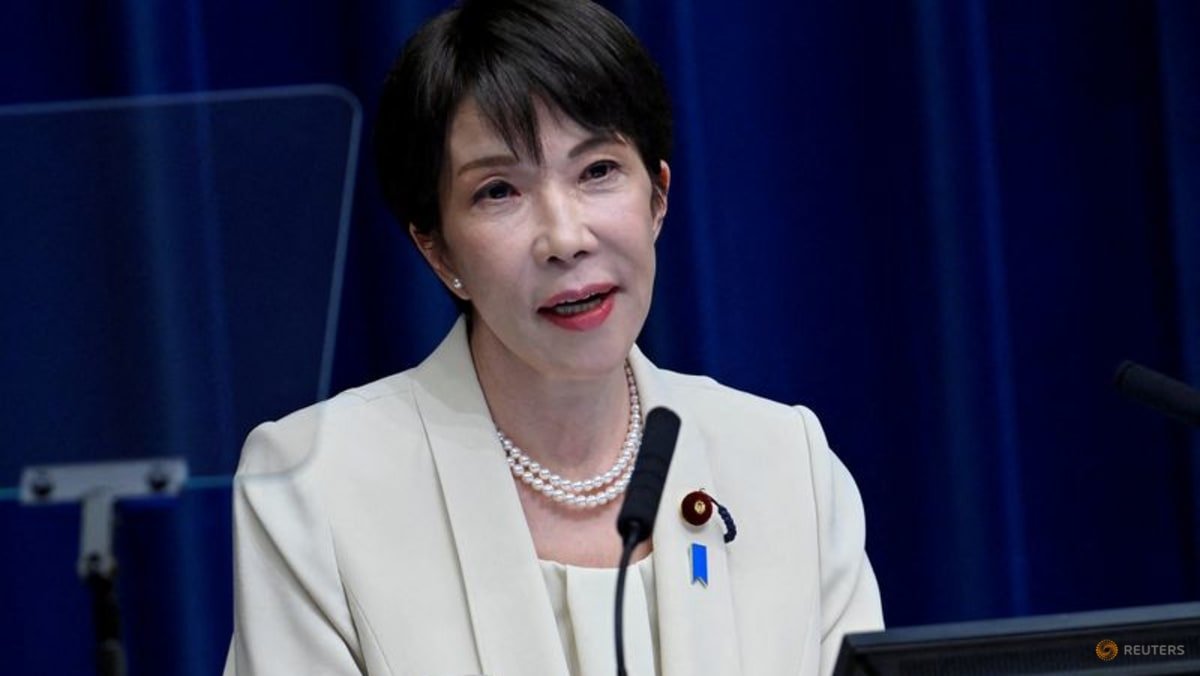
FILE PHOTO: Japanese Prime Minister Sanae Takaichi holds a press conference at the Prime Minister’s Office in Tokyo, Japan, July 27, 2026. David Mareuil/Pool via REUTERS/File Photo
Read a summary of this article on FAST.
Get bite-sized news via a new
cards interface. Give it a try.
Click here to return to FAST
Tap here to return to FAST
FAST
TOKYO, Aug 28 : Japan’s government aims to keep new government bond issuance to around 40 trillion yen ($251 billion) for the fiscal 2027 budget, Prime Minister Sanae Takaichi said in an interview with the Yomiuri newspaper.
Her comments came as Japan’s budget requests from government ministries and agencies for the next fiscal year are expected to exceed 130 trillion yen, setting a record for a fourth consecutive year.
In the interview, Takaichi cited the case of the fiscal 2025 budget, where a rise in tax revenues partially offset the extra burden of an extraordinary budget and allowed the government to keep new bond issuance below the previous year’s level at about 40 trillion yen.
“We will continue with the same approach going forward,” she said.

Guess Word
Crack the word, one row at a time

Buzzword
Create words using the given letters

Mini Sudoku
Tiny puzzle, mighty brain teaser

Mini Crossword
Small grid, big challenge

Word Search
Spot as many words as you can
Takaichi’s government plans to incorporate into the initial budget spending that in recent years was often financed through supplementary budgets, a move that could inflate the headline expenditure in the initial budget.
While the 40 trillion yen issuance is equivalent to the fiscal 2025 budget, it is far larger than 32.7 trillion yen new debt issuance planned for the current fiscal 2026 budget.
“If Prime Minister Takaichi has in mind the roughly 40.3 trillion yen in new bond issuance after the fiscal 2025 budget, her target may be viewed as somewhat expansionary,” said Toru Suehiro, chief economist at Daiwa Securities, in a report on Friday.
Takaichi also said in the interview that the government could tap foreign exchange reserves, a $1.3 trillion war chest for future yen intervention, to fund her plan to slash the consumption tax on food.
The tax cut, a centrepiece of Takaichi’s efforts to ease the impact of rising living costs on households, creates a revenue shortfall of roughly 5 trillion yen annually, intensifying pressure on the government to explain how it plans to fund the shortfall.
($1 = 159.3300 yen)
Source: Reuters
Sign up for our newsletters

Get the CNA app
Stay updated with notifications for breaking news and our best stories
Get WhatsApp alerts
Join our channel for the top reads for the day on your preferred chat app

Get bite-sized news via a new
cards interface. Give it a try.
Click here to return to FAST
Tap here to return to FAST
FAST
About The Author