Japan moves toward first-ever consumption tax cut, adds to fiscal strain
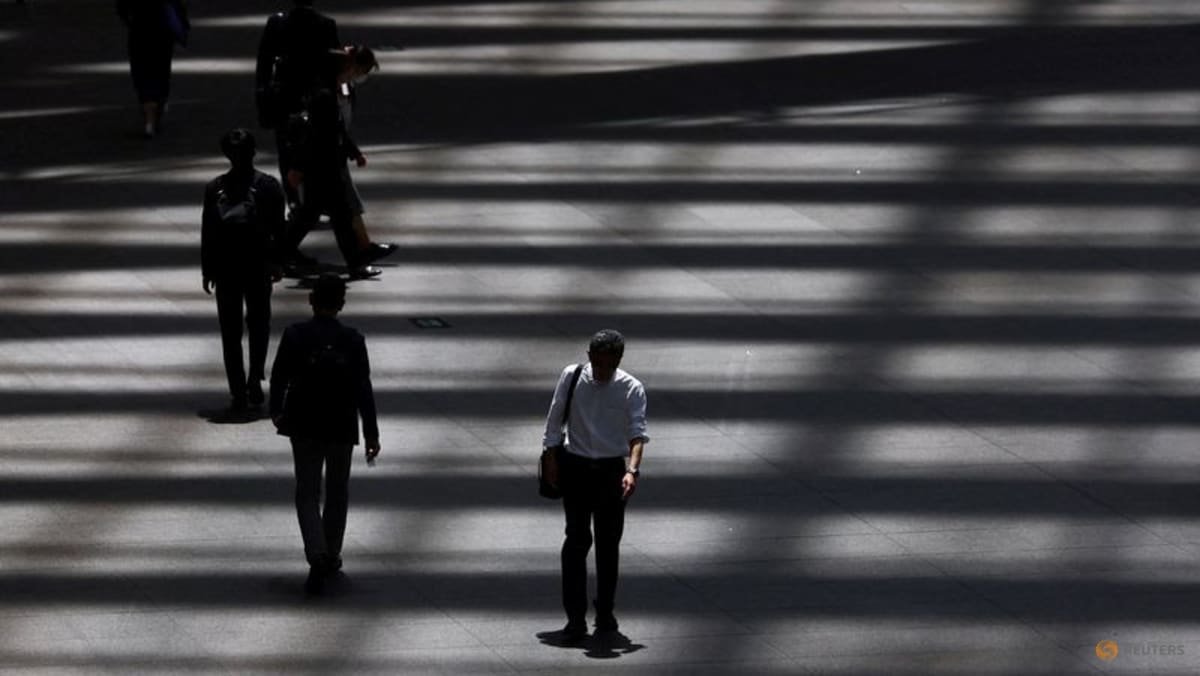
FILE PHOTO: People walk through a convention hall in Tokyo, Japan, May 15, 2025. REUTERS/Issei Kato/File Photo
Read a summary of this article on FAST.
Get bite-sized news via a new
cards interface. Give it a try.
Click here to return to FAST
Tap here to return to FAST
FAST
TOKYO, June 17 : Japan is moving toward temporarily cutting its consumption tax on food to 1 per cent in what would be the first effective reduction of its kind, further straining its already worsening finances.
The proposal, presented by a senior executive of the ruling Liberal Democratic Party (LDP) to a key government panel on Wednesday, would slash the current 8 per cent food levy for two years from April next year and serve as a bridge until a refundable tax credit system is introduced.
It would also be paired with targeted cash benefits for low- and middle-income households, effectively bringing the net burden close to zero.
The move marks a notable shift in Japan’s tax policy. Since the consumption tax was first introduced at 3 per cent in 1989, it has been raised in stages to the current 10 per cent, with a reduced 8 per cent rate for food introduced in 2019, becoming a key pillar of social welfare funding.

Guess Word
Crack the word, one row at a time

Buzzword
Create words using the given letters

Mini Sudoku
Tiny puzzle, mighty brain teaser

Mini Crossword
Small grid, big challenge

Word Search
Spot as many words as you can
Japan has never previously lowered the rate, making even a temporary cut a consequential step for policy and the public purse.
The proposal comes as Prime Minister Sanae Takaichi faces pressure to deliver on an election campaign pledge made in February for a zero-rate tax on food to cushion households from rising living costs.
Takaichi has said the government aims to avoid relying on additional deficit-financing bonds, but has yet to present detailed alternative funding sources to offset the expected revenue shortfall, leaving questions over how the measure would be financed.
Daiwa Institute of Research estimates that cutting the food sales tax to 1 per cent would reduce revenue by about 4.4 trillion yen for Japan’s roughly 125 trillion yen ($779.93 billion) annual budget, while boosting GDP by only around 0.3 trillion yen.
Fiscal concerns have already been weighing on the yen, which has struggled to gain ground despite the Bank of Japan’s interest rate hike this week, as investors worry that looser fiscal policy could offset the impact of monetary tightening.
($1 = 160.2700 yen)
Source: Reuters
Sign up for our newsletters

Get the CNA app
Stay updated with notifications for breaking news and our best stories
Get WhatsApp alerts
Join our channel for the top reads for the day on your preferred chat app

Get bite-sized news via a new
cards interface. Give it a try.
Click here to return to FAST
Tap here to return to FAST
FAST