Malaysia is ageing almost as quickly as Japan. Is it ready for the challenge?
From parents abandoned by their children to workers who cannot afford to retire, some Malaysians face an uncertain future. CNA’s Insight meets them as the country races to strengthen elderly care and grapples with retirement.
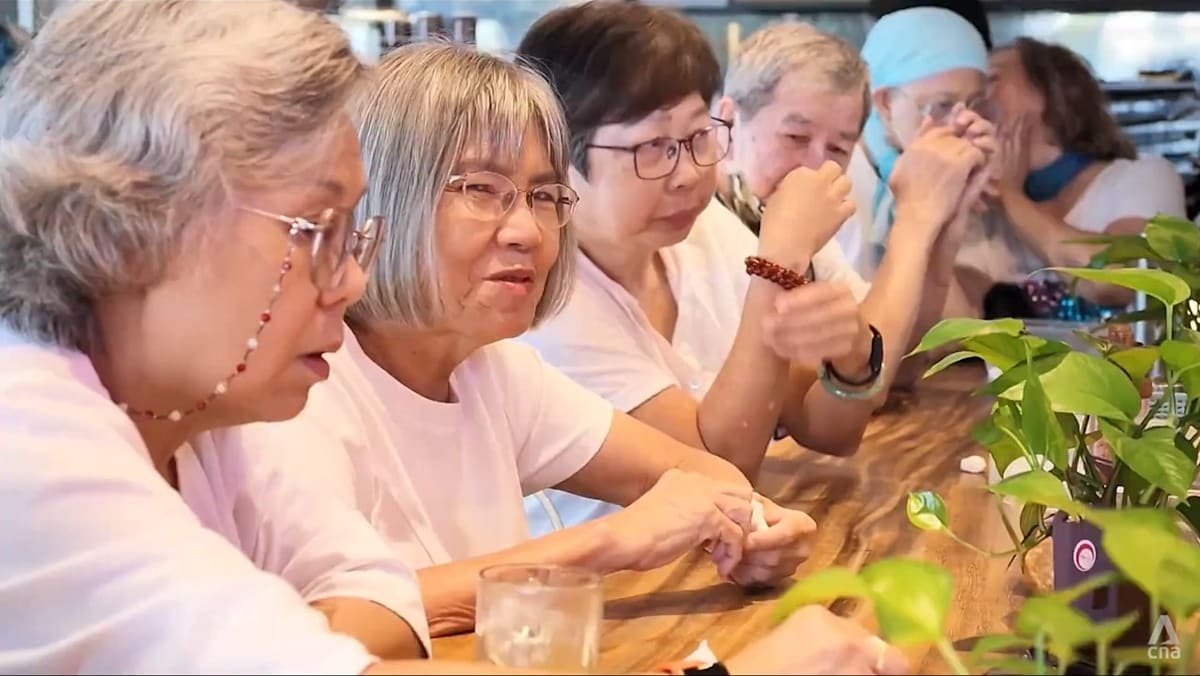
Gerontologist Lily Fu, 78, and folks from SeniorsAloud having drinks in a cafe.
New: You can now listen to articles.

This audio is generated by an AI tool.

Read a summary of this article on FAST.
Get bite-sized news via a new
cards interface. Give it a try.
Click here to return to FAST
Tap here to return to FAST
FAST
KUALA LUMPUR: Former nurse Muji Sulaiman runs a home in Selangor for about 35 elderly Malaysians. Some of them were abandoned by their families.
Take 88-year-old Juriah Hamid, whose children kicked her out of her own home, along with her clothes and belongings.
Now at Al-Ikhlas Old Folks’ Care and Treatment Home, she receives daily care and has activities planned for her, from exercise to karaoke to outings.
“I had a heavy heart before. Now I get to sing, dance, entertain people,” she said.

Guess Word
Crack the word, one row at a time

Buzzword
Create words using the given letters

Mini Sudoku
Tiny puzzle, mighty brain teaser

Mini Crossword
Small grid, big challenge

Word Search
Spot as many words as you can
When Muji, 66, first started taking in people like Juriah, she was an emergency department nurse who saw that some patients had nowhere to go upon discharge. She brought them home.
But as she took in more people, she needed more space. So in 2003, she turned an unused mosque into a care centre where residents pay according to their means, with its funding largely coming from some businesses she owns.
“I didn’t set out to take care of a lot of people. Maybe around eight to 10 people,” she said. Today, she wants to help more elderly Malaysians but cannot afford to take in more of them.

She is not alone in having concerns over elderly abandonment in Malaysia. At Hospital Kuala Lumpur, patient abandonment cases rose by 50 per cent between 2020 and 2023. About half of these patients were older than 60.
Now Malaysia is drafting legislation to protect its seniors. The proposed Older Persons Bill is expected to be tabled in parliament early next year.
The aim is to “strengthen the protection of older persons through a more comprehensive legislative framework”, said Women, Family and Community Development Minister Nancy Shukri. “It’s very important to ensure this because population ageing brings new social realities.”
The proposed law could protect some of the seniors who would end up in Muji’s home.
And it could help Malaysia catch up with its neighbours in Southeast Asia, where most countries — Laos is the only other exception — already have legislation specifically protecting older people.

But it may not be enough to resolve one of the most pressing issues in a country growing old fast: Who will care for the elderly?
“From what I can see, Malaysia isn’t ready to handle an ageing society,” said Muji.
While many countries round the world are ageing, the challenge for Malaysia is how rapidly this is happening.
It took France 115 years to go from an ageing to an aged society, whereas Malaysia is projected to make the transition nearly as quickly as Japan did: 27 years compared to 24 years, respectively.
By 2036, more than 15 per cent of the population is projected to be aged 60 or over — Malaysia’s definition of elderly — compared with 7.2 per cent in 2009.
And experts are sounding the alarm on the realities the country must grapple with, from adequate elderly care to retirement, CNA’s Insight finds.
WATCH: Malaysia is ageing as quickly as Japan. Is it ready for old age? (46:04)
THE CARE GAP
Al-Ikhlas is one of roughly 500 registered elderly care homes in Malaysia, among which are homes run by more than 100 non-governmental organisations and charities at subsidised rates.
There are about a dozen government-run care homes offering free accommodation to older people most in need. Private nursing homes licensed by the health ministry, meanwhile, can cost as much as RM8,000 (US$1,940) a month.
Industry estimates suggest more than 1,000 aged care homes may also be operating without registration, which points to a shortage of care facilities. So the country could need more facilities as it ages.
For now, most of the long-term care for the elderly is still provided by family members. But the pressure on those families — physical, mental and social — can be significant.
Former public relations professional Claire Khoo can attest to this. About three years ago, she swapped life as a “full-time corporate warrior” for more family time. Three months after she stopped working, she found out her mother had Alzheimer’s.

“Her mood swings can be quite massive,” Khoo said. “At that point in time, before she was on medication, there were a lot of blow-ups and … misunderstandings happening at home.”
The only child wanted to care for her mother herself and tried for about a year and a half before deciding that it was “very challenging” alongside caring for her own family, who include two teenage boys.
“I don’t have the capacity nor the experience nor the skill set to manage her illness alone,” she said. “(My mother) needs … someone to be with her 24/7.”
Her mother, 77, is still physically mobile but may eventually need help with everyday tasks because of her medical condition. “Her cognitive functions have declined considerably,” said Khoo, who has placed her in a special care centre.
Those in rural communities, where access to eldercare facilities and trained carers is limited, may face greater challenges.

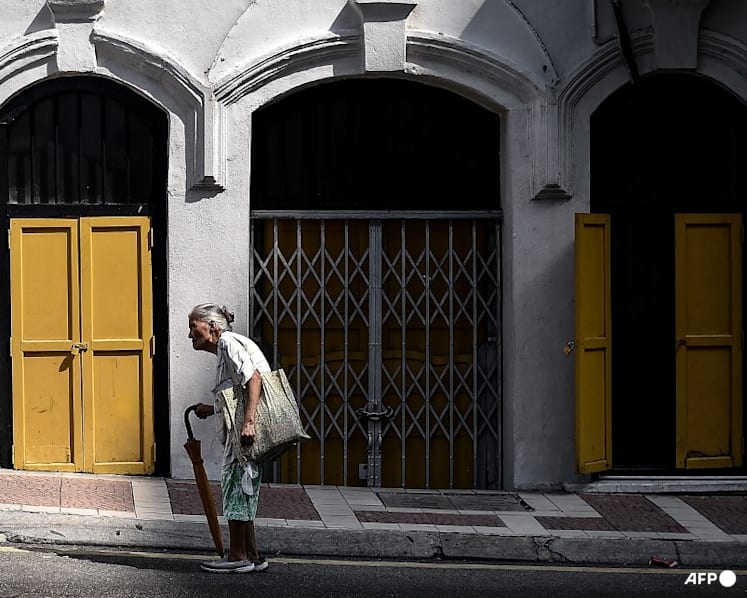
In Kampar, a former tin mining hub in Perak — the state with the oldest population — 18.1 per cent of the district’s residents are aged 60 or over.
Among them are semi-retiree Wong Foon and his wife, both 73, who were born there and have lived there for most of their lives.
As with many of their neighbours, their children have moved to cities for work. Their daughter lives in Kuala Lumpur, and their son is in Singapore. “I’m very fortunate. I have very, very good neighbours,” said Wong.
Even as members of their community rely on each other for support, the couple are coming to terms with the idea of leaving their decades-old home for a care facility one day.
These facilities in Kampar are “not so good”, so those who can afford it will go to Ipoh, the state capital, said Wong.
Many care homes in Malaysia have a long waiting list, however, a 2024 United Nations Development Programme assessment found. And demand is expected to rise further.

THE HEALTHCARE CHALLENGE
Malaysia’s ageing population will also put pressure on its healthcare system.
According to a study published in 2024 in the Journal of Health Policy and Outcomes, health expenditure on those aged 60 and older was about RM3.8 billion in 2014. This is projected to reach RM12 billion in 2030 and RM21 billion by 2040.
“We’re seeing more people (living) with multiple chronic diseases as a result of improvements in healthcare,” said University of Malaya professor of geriatric medicine Tan Maw Pin.
“We’re also seeing a huge number of older people in our community now, simply because of rapid population ageing.
“All this has led to hospital congestions, and it’s very severe. … We have a (large) backlog (of patients) sitting in emergency departments.”
Malaysia’s public healthcare system has faced doctor shortages in recent years.
When it comes to geriatric medicine, there were 67 geriatricians serving 2.7 million people aged 65 and over last year — a ratio of about one to 40,000, compared with the health ministry’s target of one specialist per 10,000 people.

“One of the things (needed) is to properly incentivise the practice. Number two is for people to have a sea change in their attitude towards caring for older adults,” said Tan.
“Even though everyone says we need more geriatricians, a lot of the young doctors haven’t even heard of geriatrics. … They don’t get the exposure to geriatric medicine at medical school.”
The shortage of manpower will lead to a “lack of optimisation” of care for an older person, who might then lack the “ability to return to pre-existing function”, the doctor warned.
“You could be spending a lot of money on unnecessary treatment and procedures. … That leads to a much bigger cost in healthcare and definitely congestion in the hospitals.”
While the ministry plans to add public hospital beds, there is also the challenge of ensuring that enough step-down care facilities — providing rehabilitation and nursing support — are available.
Japan faced this problem as its population aged. In the 1980s, older people were staying in hospital long after treatment because suitable step-down care was insufficient, while more hospital beds were opening up.

Noting that Japan was already rich then, Tan said: “We can’t go (that way) because we haven’t even got rich.”
What is happening earlier in life may also compound the health difficulties Malaysians face at an older age. Nearly 54 per cent of Malaysian adults are either overweight or obese, which is among the highest rates in Southeast Asia.
Among over 60s, last year’s National Health and Morbidity Survey found that 39.1 per cent had diabetes. More than 45 per cent suffered from sarcopenia, the loss of muscle mass because of ageing.
About one in 10 were frail, as many as the proportion who faced limitations in basic activities, such as bathing, dressing and eating. About 27 per cent faced limitations in more complex tasks, such as preparing meals and managing medication.
Malaysia is now working to better connect hospital treatment with primary healthcare and rehabilitation services, to ensure patients continue receiving the care they need after discharge from hospital.

“We have still a long way to go,” said Galen Centre for Health and Social Policy chief executive officer Azrul Mohd Khalib, highlighting that Malaysia is drawing inspiration from the way countries like the Netherlands provide care in the community.
“We need to see fewer people at healthcare facilities and more people at the primary care level. But for the moment, Malaysia is very much focused on tertiary care, and that’s something we need to reverse.”
THE RETIREMENT GAP
Who will care for Malaysia’s ageing population is one issue. Another is who pays — with retirement planning now a pressing matter as people live longer.
Life expectancy at birth is 75.5 years this year, while the official retirement age is 60. But for someone like Wong Yew Wah, 69, retirement is not an option yet.
As a panel beater, he smooths out dents in the bodywork of cars, a job he has done for more than 40 years.
He also does welding and a few odds and ends at his car workshop, where he spends about nine hours a day, six days a week. On average, he makes about RM1,000 a month.

“Business has been very quiet this year,” he said. “It’s enough for me to eat, but I still owe the landlord some rent.
“I don’t earn much money, but I’m very happy when my customers tell me, ‘Uncle, thank you. It looks great.’”
He has not saved for his retirement nor contributed to his Employees Provident Fund (EPF) either. The scheme is the main source of retirement savings for millions of Malaysians who, along with their employers, make contributions during their working life.
In the decades that he has run his own business, he “didn’t know to contribute”.
Even many of those who did and are on the verge of retirement will not meet the lowest savings threshold.
This benchmark is being raised from RM270,000 this year to RM390,000 by 2030, and only 21.5 per cent of EPF members aged between 56 and 60 as at last December will achieve the revised basic sum by age 60.

Besides irregular contributions, another reason many Malaysians do not have adequate sums in the EPF accounts is the special withdrawals the government allowed during the pandemic to help people cope with the economic downturn.
The median account balance fell by half after RM145 billion was withdrawn by 2022.
The retirement age should be extended so workers can save more, and wages must also go up, urged economist Muhammed Abdul Khalid.
“We aren’t ready for retirement, and it’s an ageing time bomb,” he said. “The majority of us are going into retirement without a safety net.”
And so Wong Yew Wah continues working, though his two children have asked him to retire.
“They said they could each give me some money every month, but I didn’t want it. I told them to keep the money because I’m still able to work,” he said. “I don’t want to trouble them.”
But for other elderly Malaysians lacking sufficient retirement savings, the financial burden could increasingly fall on their children — such as home-based food seller Siti Nur Hakimah, 31.

When she does not have any food orders, she is busy taking care of her three children — who have medical conditions including autism, cerebral palsy and a congenital heart defect — and her father, 63, who has cancer.
She sets aside RM600 a month from her husband’s salary for her father’s food expenses, “and we’re already frugal with that”, she said.
The eldest of four children, she gets occasional help from the second sibling, a freelancer, to cover her parents’ expenses. “Otherwise, it’s just me,” she said.
According to a Social Wellbeing Research Centre (SWRC) survey report in 2023, more than half of elderly respondents relied on financial support from their children, receiving RM526 a month on average. For some children, this eats into their own retirement savings.
These “socio-economic tensions” are increasing among those in the sandwich generation who are caring for children and parents “who are now also like children”, Azrul said. “It becomes an almost impossible task for individuals to shoulder (on) their own.”

A NATIONAL PRIORITY NOW — IS IT TOO LATE?
The growing pressure on families is one reason Azrul is concerned about a measure being discussed in relation to the proposed Bill to protect older persons: Making children legally responsible for the care of their parents.
His concern is that this will “shift the burden from the state to individuals, families and communities”. “It should be a shared responsibility,” he said.
If the government expects families to shoulder the burden of caring for senior citizens, then these families “need things like caregiver allowances, tax breaks, respite care, flexible working arrangements and the most important thing, … which is training”, he added.
The government will consider the fact that “different families have different needs”, according to Nancy. “We have to balance this to make sure that we also bring in … our family values, our culture, in the way we draft this bill.”
What must be addressed are issues such as neglect and abuse, she stressed.

Malaysia is also exploring a national long-term care insurance scheme. Options under consideration include a mandatory monthly premium of RM100, funding through taxes and a dedicated fund.
A scheme could be piloted among civil servants first, with a nationwide framework targeted for 2030, according to Rashidi Yahaya, the chairman of Kendana, the National Caregiver Council.
“Insurance solves the payability (problem), … but insurance doesn’t solve availability,” he said. “For long-term care insurance to work, the ecosystem must be in place, … the quality of workforce must be there. The providers must be there.”
On the manpower front, Malaysia is also playing catch-up. It had 43,000 skilled carers in 2024, and the target number is 50,000 by 2030, with a RM40 million initiative being rolled out under its latest budget to train new carers.
“Our aim is not simply to increase the number of caregivers, but … to make sure that we have quality, competency and professionalism (in) caregiving,” said Nancy.
“We must make sure that Malaysia is moving towards a more structured and integrated care ecosystem.”
With the population growing older, the government has now made ageing a national priority. The 20-year National Ageing Blueprint is set to be launched next month.
A shorter five-year plan, the Malaysia Care Strategic Framework and Action Plan 2026–2030, has already been rolled out, focusing on the welfare and care of older Malaysians and “addressing the different dimensions of ageing”.
“We’re looking at the full continuum,” said Nancy, who cited active ageing, social protection and community support, among other things.
“Preparing for an ageing society requires a whole-of-government and also whole-of-nation approach that brings together government agencies, families, communities, civil society and the private sector.”
On the funding front, however, Malaysia could see some headwinds.
One important revenue stream is declining: Petroleum made up 41.3 per cent of the federal revenue in 2009 and 17.5 per cent last year. Its share this year is projected to be 12.5 per cent.
“It’s going to be a problem if other revenue sources don’t grow,” observed Muhammed.
An ageing population also means a shrinking income tax base. Raising consumption taxes, meanwhile, remains politically sensitive in Malaysia, with public concern over living costs. Efforts to scale back fuel subsidies have also faced resistance.
In other ageing nations, such as Germany, Japan and Singapore, the share of tax to the gross domestic product is going up because the share of the consumption tax is increasing, said Muhammed. “We’re not collecting enough.”
Malaysia may only have a small window of opportunity to put the right systems in place for its ageing citizens.
The SWRC survey showed that for 48.8 per cent of respondents who had children, the latter were living elsewhere or abroad, while 19.5 per cent said their children lived nearby.
The breakdown of the extended family “is real and it’s here”, said SWRC director Norma Mansor.
So, can the nation be ready before the needs of an older population outpace its ability to respond? “We still have time, but we have to act now,” she said.
Some of the elderly Malaysians whom Insight met are still holding onto their independence and enjoying their silver years.
Take gerontologist Lily Fu, 78. She lives in Ampang, just outside Kuala Lumpur, and has two daughters, one living across the city and the other in Singapore.
“Both of them said, ‘Mummy, you can always live with us. We welcome you.’ But I thought about it — maybe not now,” she said. “When I’m not so independent, then I’ll seriously consider that.”
She has kept active, starting an online community for seniors to connect and to address their biggest complaint: isolation. “You need to have friends. … (If) you’re isolated, it leads to depression,” she said.
“All you need to do is find about five people you can really get along with. They’ll form your tribe. … They’ll be with you all the way, beside you, holding your hand till the last day.”
Watch this episode of Insight here. The programme airs on Thursdays at 9pm.


Source: CNA/dp
Sign up for our newsletters

Get the CNA app
Stay updated with notifications for breaking news and our best stories
Get WhatsApp alerts
Join our channel for the top reads for the day on your preferred chat app

Recommended
Get bite-sized news via a new
cards interface. Give it a try.
Click here to return to FAST
Tap here to return to FAST
FAST