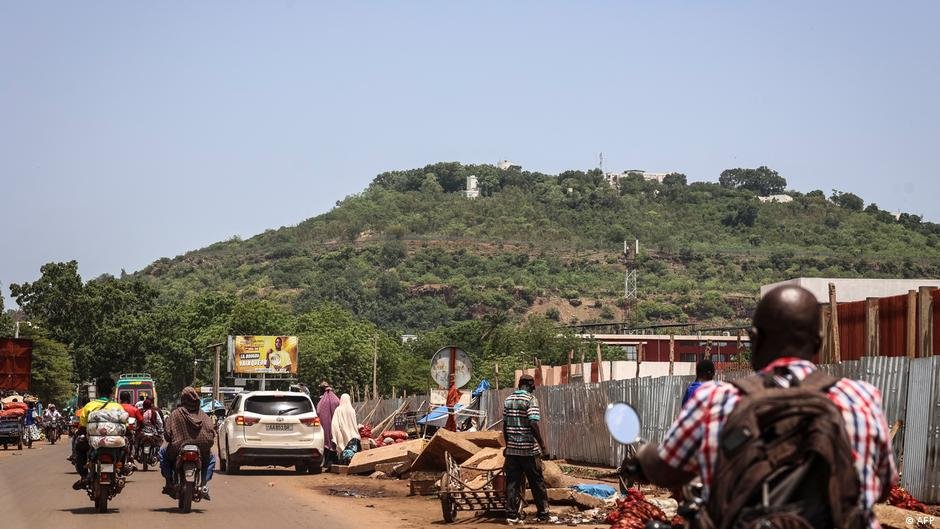
Insurgents attacked several towns in northern, central and southern Mali on Saturday, targeting army bases and a prison near the capital, Bamako.
The assaults involved the Tuareg separatist group FLA, which seeks an independent Azawad state in northern Mali and JNIM, which aims to impose strict Islamic rule.
The violence, along with attacks in April, reveals the huge security problem facing Mali’s military leaders, who staged coups in 2020 and 2021 promising to end what is now a more than decade-long uprising.
What do we know?
The army said attacks took place in Gao, a major city in the northeast, Aguelhoc and Anefis in the remote, far-north Kidal region and Sevare, a central town with a big army base.
There was also fighting near Kenioroba prison, about 60 kilometers (37 miles) southwest of Bamako.
Residents in Gao heard gunfire and rockets near a military camp. In Sevare, people reported hearing large explosions early in the morning. Aircraft flew overhead later, they said.
The FLA said its fighters entered Anefis and captured some army positions.
A resident said armed men were seen in town and that soldiers were still fighting.
By afternoon, an army statement said it had the nationwide situation “totally under control,” and reported that more than 20 attackers were killed. Rebels said fighting continued in places.
Social media showed bodies of fighters and burned motorcycles at several sites.
Ongoing threat from Tuareg, Islamists
Saturday’s attacks followed a major coordinated offensive in late April by the same groups.
The rebels seized the northern city of Kidal and killed Defense Minister General Sadio Camara, a key figure in the military junta.
Camara died during a coordinated assault when attackers used a suicide car bomb on his residence in Kati, a garrison town near Bamako, which was followed by gunfire.
JNIM has also attacked fuel trucks going to Bamako, causing shortages around the capital.
The FLA and JNIM had previously clashed over large ideological differences, but set aside those rivalries around a year before the April joint attacks.
The repeated assaults have fueled concern that Mali’s junta is struggling to fully control large parts of the country and that its forces are stretched.
Security has deteriorated since the coups, after which the junta turned away from French military support toward Russia and promised a return to stability.
But analysts say the recent attacks show the rebels are bolder and more coordinated than before.
To view this video please enable JavaScript, and consider upgrading to a web browser that supports HTML5 video
Uprising stretches 14 years
Mali’s insurgency surfaced in 2012 when Tuareg rebels and jihadists took large parts of the north.
The Tuareg (FLA) are nomadic people spread across the Sahel region who have long sought greater autonomy after complaints of marginalization by Bamako.
The jihadist groups, affiliated with al-Qaeda and the self-proclaimed Islamic State (IS), have exploited the resulting instability. They’ve established strongholds across northern and central Mali.
The insurgency has since spread to Burkina Faso and Niger. These neighbors also have military rulers and close links to Moscow.
Edited by: Wesley Dockery
Don’t let the algorithm hide the news. If you rely on our team for trusted reporting, please take a moment to select us as your Preferred news source on Google by clicking here, so you’ll always see our verified news first.
About The Author