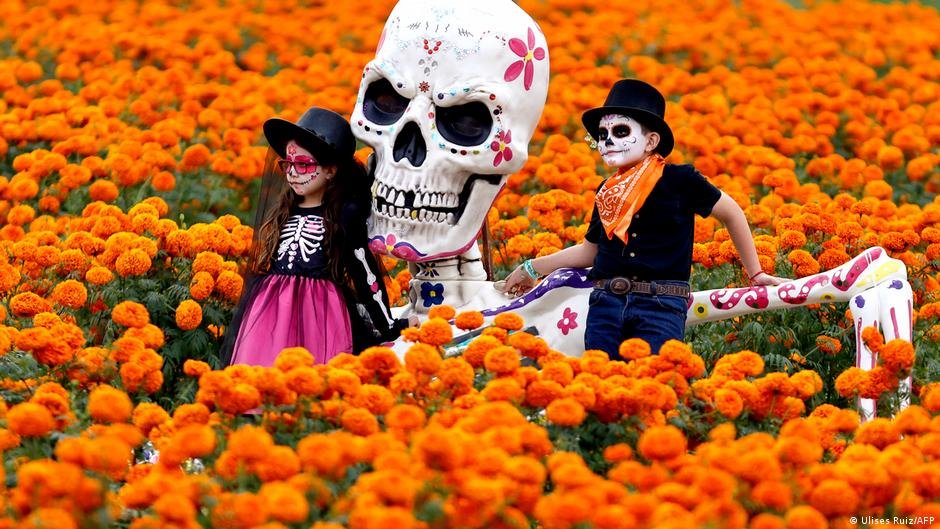
For Mexico’s Day of the Dead, the cempasuchil flower adorns altars, cemeteries and processions. For centuries, it has symbolized the connection between the living and the deceased.
Image: Ulises Ruiz/AFP
Preparations for Mexico’s Day of the Dead are in full swing — the event is usually held Nov. 1 and 2 — and the marigold’s vibrant orange hue is everywhere. According to legend, the flower’s vivid color and powerful fragrance is so captivating that it guides the spirits of the dead safely back to the world of the living.
Image: Marco Ugarte/AP Photo/picture alliance
Day of the Dead (Dia de Muertos) is one of Mexico’s most important holidays. According to tradition, the souls of the deceased return to the world of the living once a year. Pathways lined with flower petals, along with personal altars adorned with candles, photographs and cherished belongings, are meant to guide them back to their families.
Image: Ulises Ruiz/AFP
Mexico’s tradition of honoring the dead dates back to the time of the Aztecs and has been recognized as a UNESCO Intangible Cultural Heritage since 2003. At its heart lies not mourning, but the belief that the bond between the living and their ancestors endures beyond death.
Image: Ulises Ruiz/AFP
The marigold (Tagetes erecta), known in Mexico as cempasuchil, has been cultivated since the time of the Aztecs. Flowers hold deep cultural significance in many societies around the world, from lotus blossoms in Buddhist traditions and Japan’s iconic cherry blossoms to roses, which are widely regarded as symbols of love.
Image: Ulises Ruiz/AFP
In the Aztec language, Nahuatl, the name cempasuchil translates as “flower of twenty petals.” The marigold plant is grown during the rainy season, from May to July, and cultivated by Mexican farmers so it can be harvested in time for the Day of the Dead celebrations in October. For many rural communities, marigold cultivation is an important source of seasonal income.
Image: Enrique Castro/AFP
The festivities kick off in Mexico City with a large cempasuchil flower fair, drawing visitors from across Mexico and abroad. The Day of the Dead in Mexico has become a world-renowned spectacle. Everywhere, the distinctive marigolds glow in vibrant orange, warm gold tones, and radiant yellow.
Image: Josue Perez/ZUMA/IMAGO
According to a popular Mexican legend, the cempasuchil flower arose from the love between the young Xochitl and the warrior Huitzilin, a bond said to have endured even beyond death. To this day, it is regarded as a symbol and a guide for the connection between the living and the dead. Historically, however, the legend cannot be definitively traced back to pre-Hispanic times.
Image: Ulises Ruiz/AFP7 images1 | 77 imageshttps://p.dw.com/p/5Onfq