
‘Not enough to make a good game anymore’: Singapore game developers flail as pressures, risks intensify
French firm Ubisoft in October slashed 70 jobs at its Singapore studio. Experts and developers say the cuts reflect broader struggles for the local gaming scene.
The Ubisoft booth is shown at the E3 2017 Electronic Entertainment Expo in Los Angeles, California, U.S. June 13, 2017. REUTERS/ Mike Blake
New: You can now listen to articles.

This audio is generated by an AI tool.

Read a summary of this article on FAST.
Get bite-sized news via a new
cards interface. Give it a try.
Click here to return to FAST
Tap here to return to FAST
FAST
SINGAPORE: Years after local game developers flagged talent and funding crunches, the outlook has become even bleaker for many.
French firm Ubisoft’s plan to cut 70 jobs at its Singapore studio – around 20 per cent of its local workforce – reflects broader global trends for the sector, industry players and observers told CNA.
Just two years after fresh support was rolled out for a sector then seen as fast-growing, local developers and studios now find themselves squeezed by challenges including high operating costs, tighter funding and limited job opportunities.
Ubisoft’s cuts are “not an isolated Singapore story”, said Associate Professor Roberto Dillon of James Cook University Singapore, who specialises in game design and development.

Guess Word
Crack the word, one row at a time

Buzzword
Create words using the given letters

Mini Sudoku
Tiny puzzle, mighty brain teaser

Mini Crossword
Small grid, big challenge

Word Search
Spot as many words as you can
He noted that prior to announcing its Singapore cuts, Ubisoft was already closing studios and cancelling titles globally, and had also decided to shut its RedLynx studio in Finland in the same week.
Assoc Prof Dillon also cited Electronic Arts’ closure of its BioWare studio – known for iconic games such as Baldur’s Gate, Dragon Age and Mass Effect – after more than three decades as another example of the industry-wide slump.
Successful homegrown studios, too, are feeling the pinch.
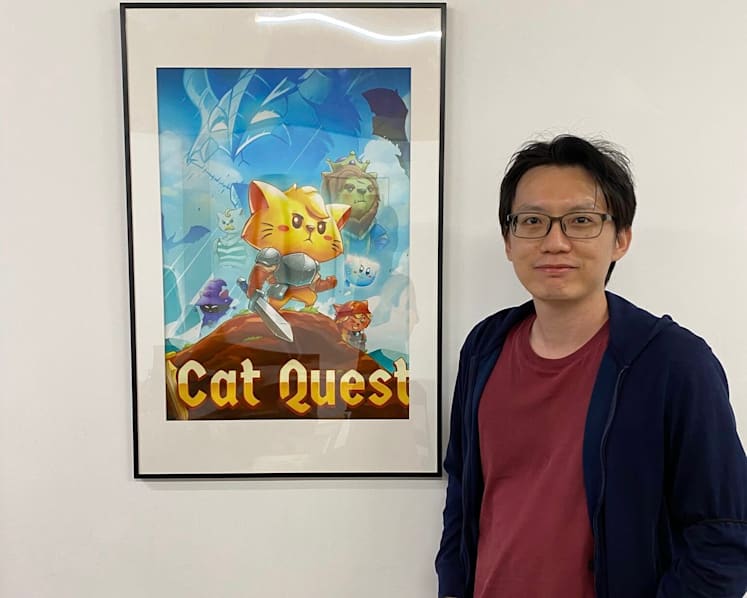
Mr Desmond Wong is chief executive officer of The Gentlebros, the studio behind the award-winning Cat Quest franchise.
He told CNA that rising manpower costs and currency fluctuations have weighed on revenue particularly in the past two years, despite the company selling more copies of its games than ever before.
CAUGHT IN STRUCTURAL SHIFT
Singapore Management University Associate Professor of Strategic Management Ted Tschang said the Ubisoft layoffs came as no surprise to him, seeing as the company is under considerable commercial pressure.
Assoc Prof Dillon noted that despite the global gaming industry generating record revenue of over US$200 billion last year, it has shed over 35,000 jobs since 2022.
This is due in part to rising costs, with modern “AAA games” development now routinely costing more than US$200 million per title, he said.
AAA games refers to high-budget and high-profile video games developed by large studios and often backed by major publishers.
Mr Ivan Ho, co-lead of the International Game Developers Association’s Singapore chapter (IGDA Singapore), said the severe headwinds in the industry are led by a structural sustainability crisis in the development of AAA games.
“When multi-million-dollar production cycles collide with global market shifts, satellite offices reliant on overseas headquarters are almost always the first to feel the strain,” he said.
Dr Xu Le, a lecturer from the National University of Singapore (NUS) Business School’s strategy and policy department, said that local studios may be affected by investment and restructuring decisions made overseas, regardless of their capabilities or performance.
This can create uncertainty for employees and disrupt the development and retention of specialised talent, she added.
Assoc Prof Dillon cited the example of Ubisoft Singapore’s recent Assassin’s Creed Black Flag Resynced reportedly selling over 3.5 million copies within two weeks of its July 2026 launch – about three months before it announced the Singapore office layoffs.
He said that local studios can achieve targets and commercial success, yet still face cuts because of losses sustained by the parent company elsewhere.

NEW GAME PLAN NEEDED
Singapore’s early push into the gaming sector may have borne fruit, but it now needs a new game plan to drive the industry forward, said local observers and players.
Attracting foreign studios that were in expansion mode had worked in the mid-2000s, said Assoc Prof Dillon, but that playbook had been designed for an era when AAA studios were growing and publishers wanted a low-risk Asian hub with strong infrastructure – an era that has now ended.
He cited Ubisoft’s growth in Singapore, from its 2008 opening with a small team into a studio of hundreds contributing to major projects, as a success story that “signalled to the world that Singapore could host serious game production”.
The strategy was also supported by coherent government funding and specialised game-related degrees, he added.
The Gentlebros’ Mr Wong said competition is also much tougher now, due to the sheer number of games in the market.
“It’s often not good enough to just make a good game anymore, and you have to always try to make something genre-defining or viral, or else people just won’t notice your game among all the other amazing games out there,” he said.
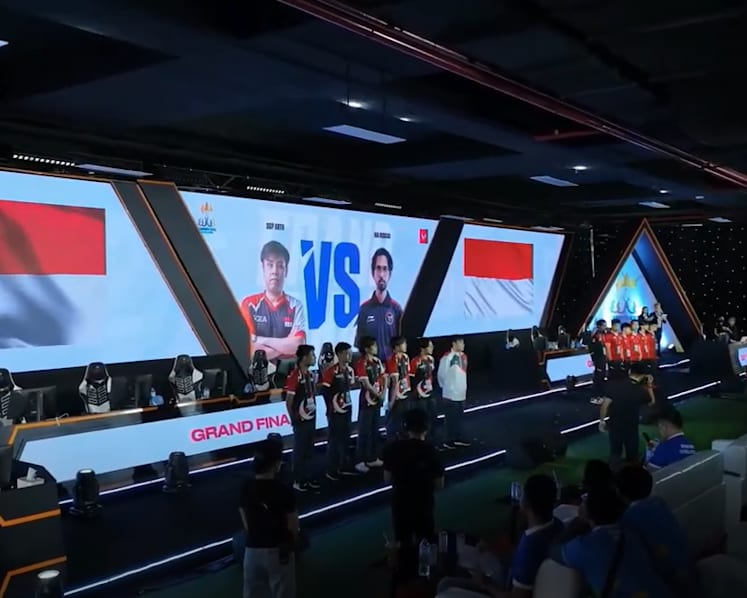

Singapore is also simply unable to compete on the basis of cost in the sector, said observers and players, including on the aspect of talent. This has created an environment in which there is no margin for error at all, said Assoc Prof Dillon.
Mr Neo Duan Kai, founder of independent game studio Asian Salad Studio, said it is very expensive to hire developers in Singapore compared to other countries in the region.
Mr Wong agreed: “We try our best to be competitive with our salaries, but it’s got to a point where we’re more expensive than Japan, Canada and even some parts of Europe.”
The personal opportunity cost of pursuing this path also cannot be ignored, said Mr Neo.
For instance, he noted, it’s not uncommon for individuals to give up high-paying jobs in a more stable career to pursue game development, often leading to other sacrifices such as deferring housing or marriage plans.
“It also means that if our game flops, the cost of that is higher for us than it is for our peers in the region.”
IGDA Singapore’s Mr Ho also noted that the long development cycles and crunch culture can bog down career progression in the sector, while the lack of industry safety nets creates constant instability.
Even for talented, passionate individuals, it can be a struggle to establish a sustainable, full-time career in game development in Singapore, he said.
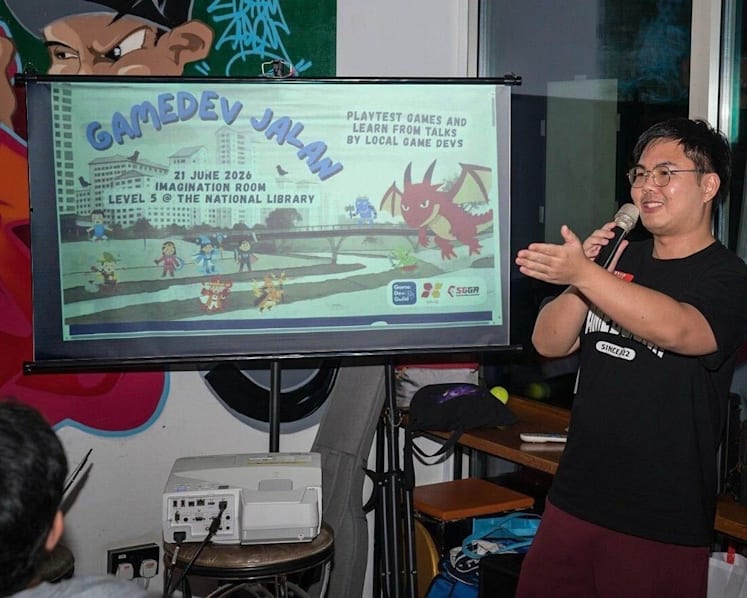
Independent developers like himself typically self-fund their projects while juggling full-time jobs in other industries to subsidise their game-building endeavours, he added.
EMPLOYMENT AND FUNDING GAP
Industry players are also finding it more and more difficult to secure funding and employment opportunities in the sector.
Established AAA studios primarily hire experienced senior talent, leaving fresh graduates to compete fiercely over a shrinking pool of entry-level roles, said Mr Ho.
“On the other end, successful local indie studios operate lean by necessity, typically running solo or hiring sparingly just to remain sustainable in an under-resourced ecosystem,” he said.
The project-based nature of gaming employment is another factor, said Assoc Prof Tschang, making long-term employment opportunities harder to find.
Mr Neo said that investors and publishers are also a lot more cautious than they were during the COVID-19 pandemic, often wanting projects to be further along in the development process before committing funds.
In Mr Wong’s view, some government support initiatives such as grants available to studios like his in recent years have had little effect.
Some may not directly apply to game development, he said, while some others are “just so difficult to apply for that it is simply not financially worthwhile to do so”.
Aside from support to help fledgling companies find their feet, there is limited help for homegrown firms that have already found some success to grow to the next level, he added.
Beyond financial assistance, he also hopes gaming industry players can get help to open new doors and reach new markets.
SUPPORT FOR THE INDUSTRY
Mr Neo noted that there have been successful government-funded projects, citing Compensation Not Guaranteed by Singapore-based studio Team Project Lunch.
The game was funded in 2024 by a S$50,000 Games Prototype Grant by the Infocomm Media Development Authority (IMDA), and went on to win Best Storytelling at the 2026 SEA Game Awards.
In response to CNA queries, IMDA said the grant was a “one-off initiative” that provided four local developers with funding to develop game prototypes incorporating Singaporean elements. The prototypes were later showcased at the Singapore Comic Con that year, said the agency.
IGDA Singapore’s Mr Ho said that similar initiatives should be expanded into broader incubation and commercial support, in order to turn such “isolated successes into a sustainable industry”.
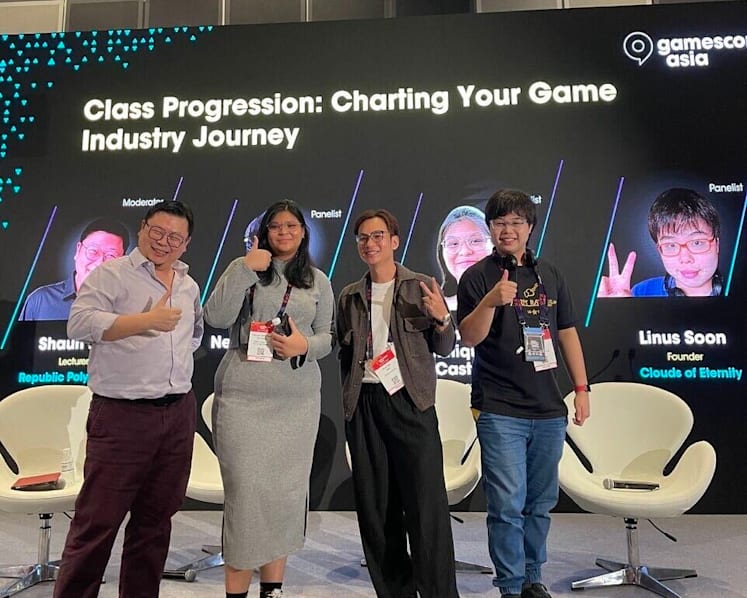
Mr Neo suggested the creation of a business education programme to help independent game developers understand and tackle industry risks and challenges, along with “anything to help offset the opportunity costs of starting your own initiative” to encourage more entrepreneurs in the space.
An IMDA spokesperson told CNA that the agency develops Singapore’s film, television and short-form digital content sectors through initiatives such as the Talent Accelerator Programme and the Digital Content and Capability Development Programme.
“We remain open to reviewing opportunities in emerging areas in response to evolving industry needs,” they added.
The Economic Development Board and Singapore Tourism Board told CNA that the country remains “an attractive location for games companies”, noting leading industry players based here including Nintendo, HoYoverse, LightSpeed Studios and Razer.
“We work closely with industry partners to support the sector’s growth,” said the agencies in a joint statement.
Companies setting up in Singapore for game development activities – such as publishing as well as research and development – tap on the country’s talent pool, access to regional markets and strong intellectual property (IP) protection, creating diverse career opportunities for Singaporeans, they added.
“As technologies and industry trends evolve, we will continue to work with companies to strengthen industry-relevant training and provide opportunities for talent to gain practical experience,” both agencies said.
SINGAPORE’S ADVANTAGE
Moving forward, Singapore should tap its comparative strengths to drive its gaming sector forward, said observers.
Dr Xu of NUS said more focus should be placed on higher-value activities, such as creative leadership, game design, technology development, IP management and regional business operations.
One possible approach is a hub-and-spoke model, with Singapore serving as the centre for such functions while selected production activities are undertaken in lower-cost locations such as Malaysia, Indonesia or Vietnam, she said.
Assoc Prof Dillon said that instead of competing with lower costs elsewhere, Singapore would benefit from focusing on becoming “the place where the most valuable decisions are made and the most sophisticated technical work is done”.
He also highlighted Singapore’s education system and ability to produce skilled and adaptable talent as something that cannot be offshored.
Industry observers and players alike also called for the development of locally-owned IP, which would help Singapore retain greater economic value from completed products in the long term.
This includes potential revenue from licensing, sequels and related products for successful games, said Dr Xu.
To this end, Assoc Prof Dillon said it was encouraging that the local industry has already produced games that are “both distinctly Singaporean and also globally exportable”.
For instance, The Gentlebros’ Cat Quest franchise has won international recognition, while fellow local developer Springloaded has built a following with Let’s Build a Zoo and Let’s Build a Dungeon.
Asian Salad Studio’s Mr Neo noted a strong sense of mutual support within Singapore’s vibrant community of independent developers.
The Gentlebros’ Mr Wong said that smaller studios like his have their strengths too. For instance, they are able to pivot and move faster to leverage on ongoing events, unlike bigger studios where major decisions can take weeks, he said.
“All in all, I would still say it is feasible even in today’s climate,” said Mr Wong.
“There are still opportunities and the potential for success – the bar is simply higher now.”

Source: CNA/fb(ml)
Sign up for our newsletters

Get the CNA app
Stay updated with notifications for breaking news and our best stories
Get WhatsApp alerts
Join our channel for the top reads for the day on your preferred chat app

Get bite-sized news via a new
cards interface. Give it a try.
Click here to return to FAST
Tap here to return to FAST
FAST