


Oil prices steady as traders weigh supply risks
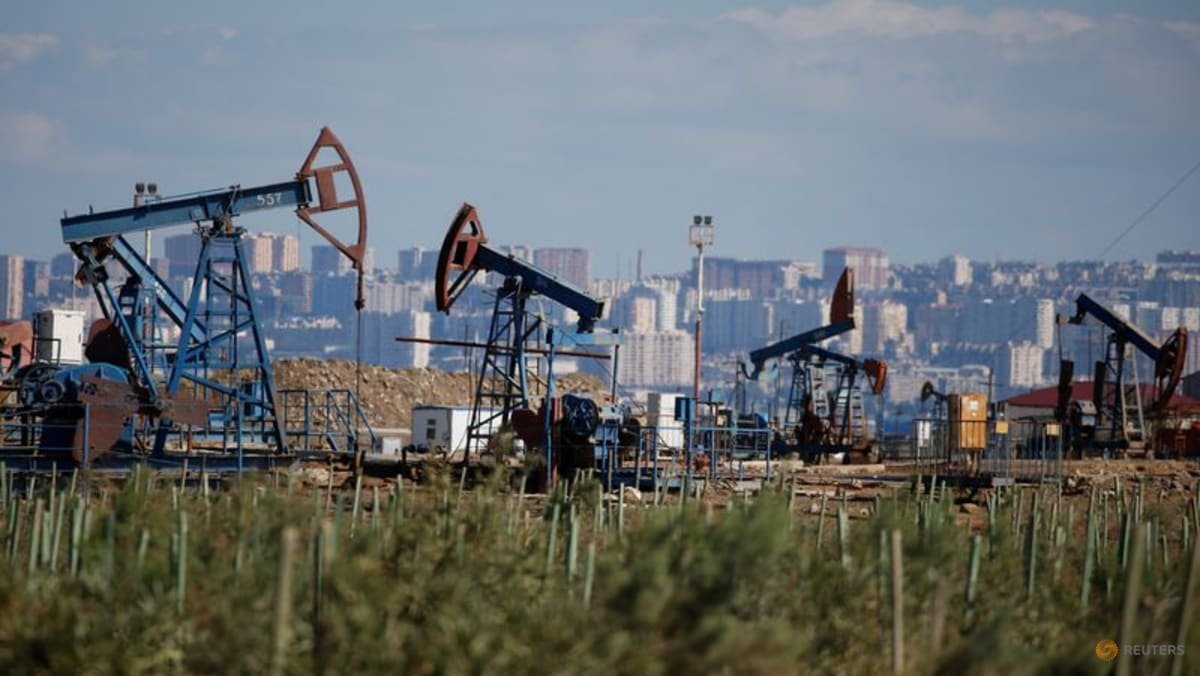
Pump jacks pump oil at an oil field on the shores of the Caspian Sea in Baku, Azerbaijan, October 5, 2017. REUTERS/Grigory Dukor
Read a summary of this article on FAST.
Get bite-sized news via a new
cards interface. Give it a try.
Click here to return to FAST
Tap here to return to FAST
FAST
Sept 2 : Oil prices were little changed on Wednesday after climbing to more than one-month highs earlier in the session as traders weighed the risk of supply disruptions following overnight U.S. and Iranian strikes against signs that crude supplies continue to reach the market.
Brent crude futures rose 9 cents, or 0.1 per cent, to $94.74 a barrel by 0805 GMT and U.S. West Texas Intermediate crude futures lost 19 cents, or 0.21 per cent, to $90.03.
Brent crude and U.S. West Texas Intermediate crude earlier climbed to their highest levels since July 24, reaching session highs of $97.04 and $92.29 a barrel, respectively.
“The market is facing a binary risk,” said Saxo Bank head of commodity strategy Ole Hansen.

Guess Word
Crack the word, one row at a time

Buzzword
Create words using the given letters

Mini Sudoku
Tiny puzzle, mighty brain teaser

Mini Crossword
Small grid, big challenge

Word Search
Spot as many words as you can
“An announcement that a deal has been reached, or that progress is being made, could send prices tumbling, while any escalation would further undermine the prospect of a peace deal. That’s why oil remains highly volatile, with a potential $5 move in either direction on fresh developments.”
The U.S. and Iran were back on a war footing on Wednesday after the most significant exchange of fire in weeks, with Washington threatening more devastating strikes.
The Islamic Revolutionary Guard Corps said the U.S. attacks would further restrict traffic through the Strait of Hormuz, a critical waterway that carried about one-fifth of the global oil consumed before the conflict and which Iran has effectively closed to commercial shipping.
The latest exchange followed a weekend flare-up in hostilities, the first since July, and came after attacks on two tankers departing the Strait of Hormuz on Monday, causing further disruptions to oil supplies and forcing traders to seek alternative crude shipments.
“Both Brent and WTI have traded above the $90 level this week, and a return toward $100 oil cannot be ruled out if the current escalatory phase continues,” said Tim Waterer, chief market analyst at KCM.
However, U.S. Secretary of Energy Chris Wright said on Tuesday that 17 million barrels of oil transited the Strait of Hormuz on Monday, saying it marked the highest level of crude oil to pass through the waterway since the Iran war had reduced flows.
“We’ve seen oil flow through the Strait of Hormuz despite the stalemate between the US and Iran, but rising tensions clearly put crossings at risk,” said ING analysts in a client note.
Elsewhere, Russia carried out a “massive” missile and drone attack on energy infrastructure in Ukraine’s southern region of Odesa overnight, transmission system operator Ukrenergo said on Wednesday.
Source: Reuters
Sign up for our newsletters

Get the CNA app
Stay updated with notifications for breaking news and our best stories
Get WhatsApp alerts
Join our channel for the top reads for the day on your preferred chat app

Get bite-sized news via a new
cards interface. Give it a try.
Click here to return to FAST
Tap here to return to FAST
FAST







