Polytechnics step up autonomous mobility training as industry needs evolve
From longer internships to training in driver-assistance systems, polytechnics in Singapore are strengthening their curriculum to prepare students for a future with self-driving vehicles.
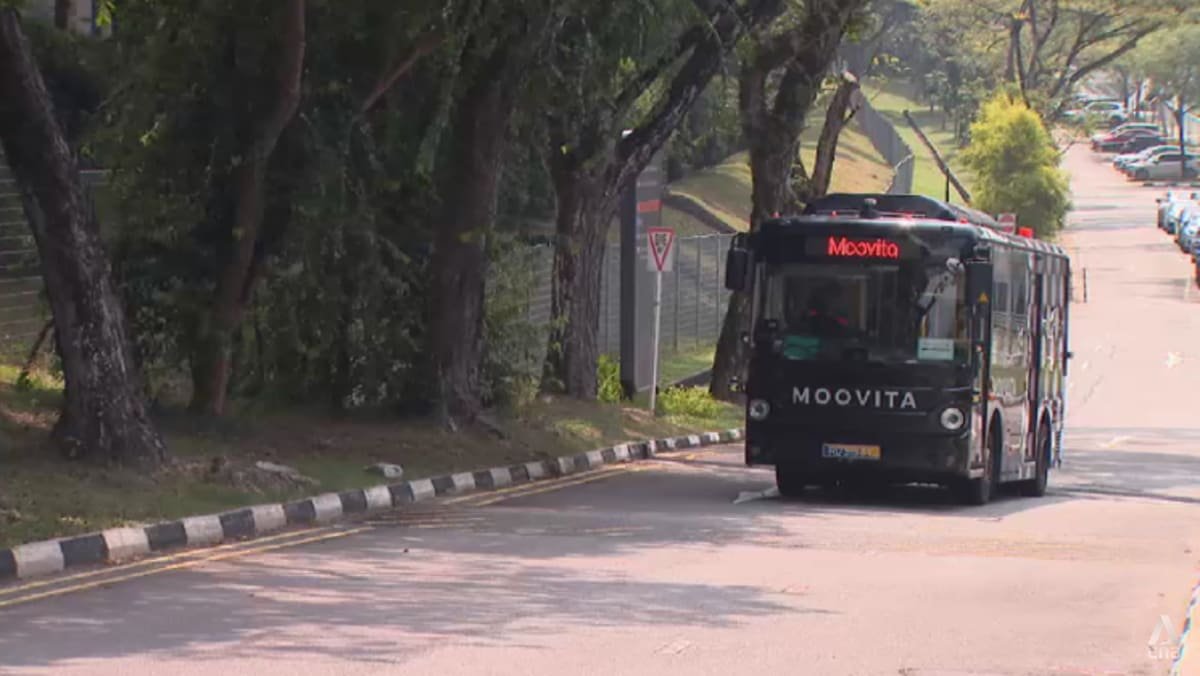
An autonomous shuttle operated by MooVita travels along a road at Ngee Ann Polytechnic.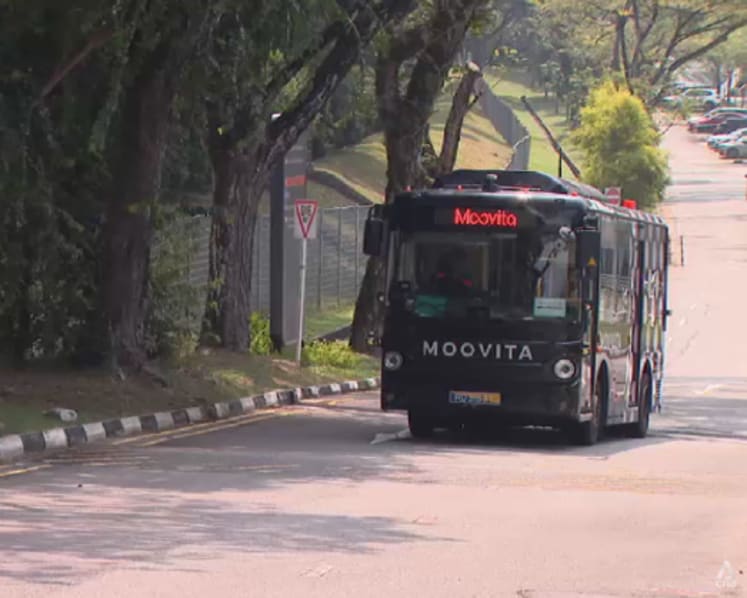
New: You can now listen to articles.

This audio is generated by an AI tool.


Read a summary of this article on FAST.
Get bite-sized news via a new
cards interface. Give it a try.
Click here to return to FAST
Tap here to return to FAST
FAST
SINGAPORE: Some polytechnics are strengthening their curriculum to prepare students for roles in autonomous mobility, amid a growing demand for cross-disciplinary skills that integrate software, hardware and artificial intelligence.
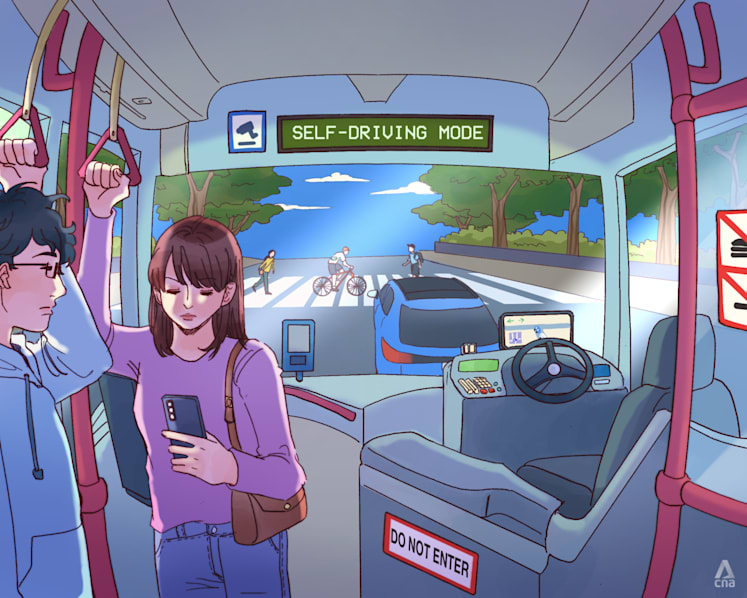
A key area is autonomous vehicles, which are designed to navigate and respond to road conditions with little or no human input. They rely on technologies such as sensors, cameras and AI to decide how to steer, accelerate or brake.
The institutes are also looking to deepen industry collaborations, with Singapore’s new S$800 million (US$626 million) transport research and innovation investment expected to open more opportunities for students to work on emerging technologies.
MORE REAL-WORLD EXPERIENCE
At Ngee Ann Polytechnic (NP), students are already getting hands-on experience with autonomous vehicles through internships.
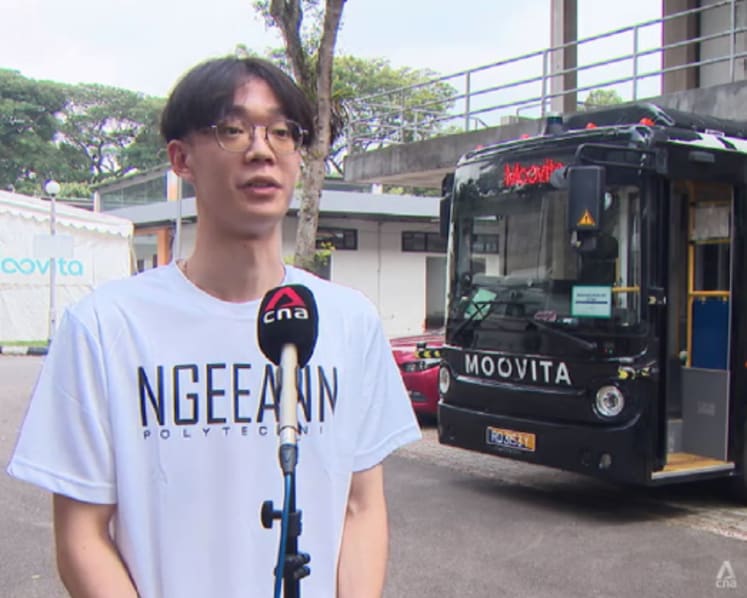
Third-year electronic and computer engineering student Shawn Lee is on a 22-week internship with autonomous vehicle operator MooVita.
His work includes mapping routes before self-driving shuttles are deployed and testing how they respond to different situations on the road.
“This project gave me a lot of practical experience that I could use in my further studies, and even after I graduate. I think that this is a growing industry – it could be what I will be heading into next,” he said.

Guess Word
Crack the word, one row at a time

Buzzword
Create words using the given letters

Mini Sudoku
Tiny puzzle, mighty brain teaser

Mini Crossword
Small grid, big challenge

Word Search
Spot as many words as you can
NP is looking to extend internships to as long as a year for some courses.
It is also exploring a tie-up with the Land Transport Authority’s (LTA) Centre for Autonomous Mobility to give students more exposure to the sector.
This could include learning journeys, sessions with industry experts and projects with potential partners, said Mr Tan Guangfan, covering director of NP’s School of Engineering.
Mr Tan hopes the potential collaboration with LTA could open doors to more industry partners involved in autonomous mobility.
He said multidisciplinary skills have become more important as increasingly complex engineering systems require different technologies to work together.
“Very complex systems like autonomous transport, smart infrastructures will require integrations of software, hardware, data, sensors, and communications to make things work,” he said.
He added that employers are increasingly looking for graduates who can “link different technologies together”.
LAYING THE GROUNDWORK FOR AUTONOMY
Republic Polytechnic (RP) is taking a similar approach.
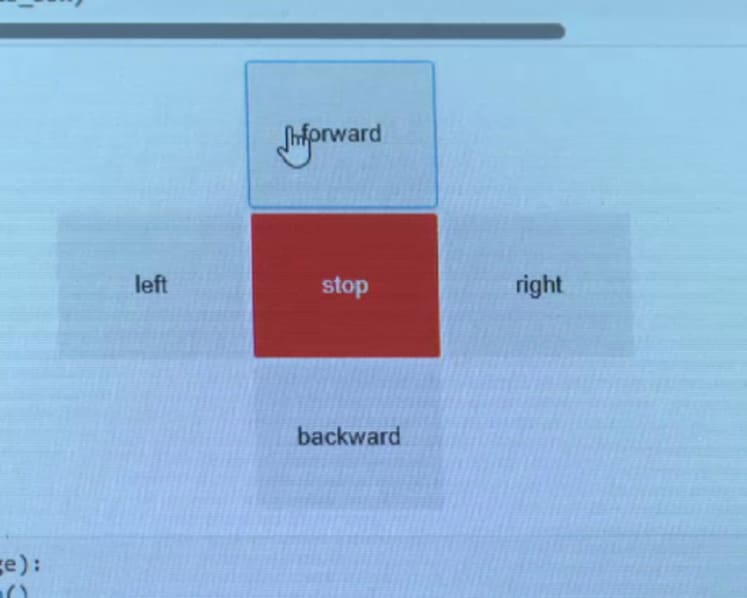
Students learn to code and control the movement of vehicles before using small autonomous robots to understand how sensors help them identify their surroundings and navigate obstacles, said Dr Quek Yang Thee, assistant director for capability and industry at RP’s School of Engineering.
They then apply what they have learnt to an actual vehicle, including considering how factors such as rain, bright sunlight and heat could affect its sensors and navigation.
Dr Quek said Year 1 students at RP’s School of Engineering take a compulsory module on unmanned systems, which introduces them to technologies such as autonomous vehicles and drones. Students in selected diplomas go into greater depth.
From October, RP plans to train up to 80 engineering students a year in advanced driver assistance systems (ADAS), after feedback from industry partners showed demand for such knowledge and skills.
The school plans to bring in training equipment and facilities to help students learn about the technology.
Dr Quek described ADAS as an intermediate step between conventional vehicles driven by humans and fully autonomous vehicles.
Such systems currently assist human drivers, with features including adaptive cruise control, lane-change warnings and automatic emergency braking.
While a human driver may still need to intervene today, he said these technologies could eventually form part of the larger AI system needed to operate a fully autonomous vehicle.
TAPPING NEW TRANSPORT RESEARCH FUND
Both polytechnics are looking to Singapore’s S$800 million investment push to further their autonomous mobility plans.
Mr Tan said NP intends to tap the fund for projects that align with its existing capabilities and Singapore’s future mobility priorities.
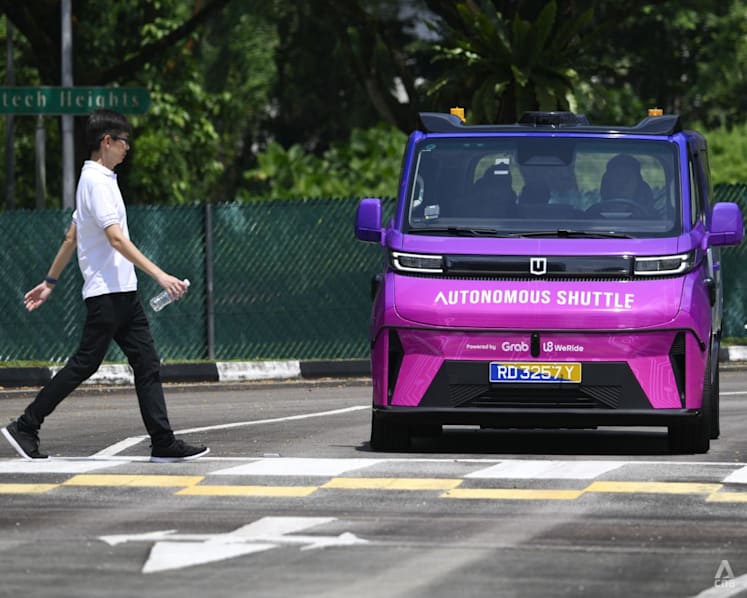
The polytechnic hopes to build on MooVita’s ongoing test-bedding of autonomous vehicles on its campus by bringing in more industry partners to develop, deploy and test their solutions there.
Mr Tan said different parts of the campus could be used to assess how these solutions perform in a real operating environment, while giving students and staff opportunities to take part in the projects.
Dr Quek said an area RP is interested in is using digital twins and simulated environments to bring more AI into its curriculum.
A digital twin is a virtual representation of a real-world object or system, which can be used to simulate how it would behave under different conditions.
For autonomous vehicles, this would allow students to test different scenarios in a virtual environment instead of putting an actual vehicle on the road.
Dr Quek said students could, for example, simulate how a self-driving vehicle should respond when a traffic police officer’s directions conflict with traffic lights.
“So, they can run the vehicles in a safe environment. They can crash the vehicles, they can do funny things with vehicles, but they will not get injured,” he said.
Source: CNA/mp(oc)
Sign up for our newsletters

Get the CNA app
Stay updated with notifications for breaking news and our best stories
Get WhatsApp alerts
Join our channel for the top reads for the day on your preferred chat app

Get bite-sized news via a new
cards interface. Give it a try.
Click here to return to FAST
Tap here to return to FAST
FAST
About The Author