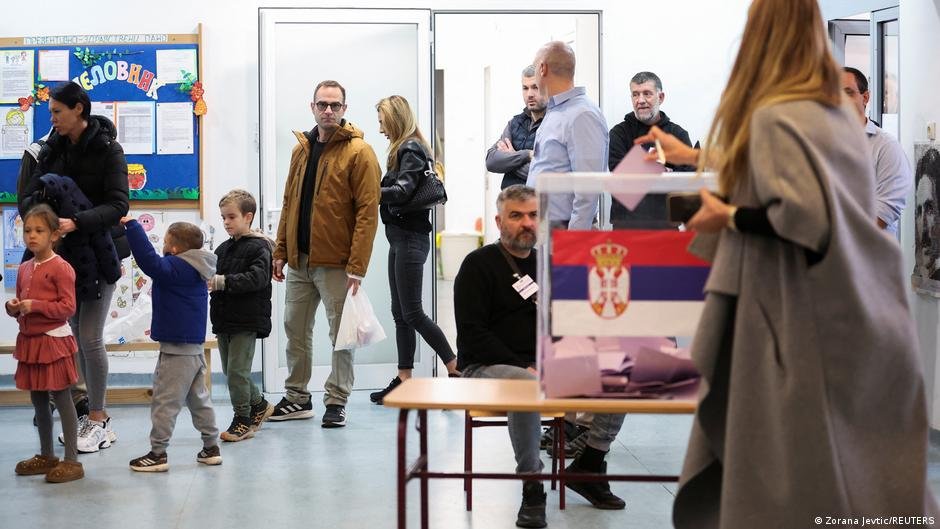
Voting began in Serbia on Sunday in a closely contested election that could bring an end to more than a decade of rule by long-time leader Aleksandar Vucic and his Serbian Progressive Party (SNS).
Polls suggest a tight race between the SNS and the newly formed, youth-backed Students’ List, which emerged from a mass student protest movement.
The protests were sparked by the deadly collapse of a train station canopy in the city of Novi Sad in 2024.
The disaster killed 16 people and stirred widespread anger over alleged corruption, poor construction standards and a lack of accountability for public infrastructure projects. Protesters accused the government of allowing corruption and political patronage to undermine public safety, allegations the authorities have rejected.
Demonstrations demanding accountability have since snowballed into Serbia’s largest movement since the fall of strongman Slobodan Milosevic in 2000.
To view this video please enable JavaScript, and consider upgrading to a web browser that supports HTML5 video
What began with university students staging blockades and marches soon drew support from teachers, farmers and other sections of Serbian society, turning a demand for justice over the disaster into a broader challenge to Vucic’s grip on power.
Vucic faces tough election challenge
SNS won parliamentary elections in 2012 and has dominated Serbian politics ever since. Vucic himself first came to power as prime minister in 2014 before becoming president in 2017.
After calling snap elections last month, Vucic stepped down as president to run for prime minister.
His second presidential term was due to expire in May 2027, and Serbia’s constitution prevents him from serving a third term.
Critics have accused him of concentrating power, undermining independent media and weakening democratic institutions. He and his party deny the allegations.
The student movement has sought to channel the energy of the street protests into an electoral challenge, presenting itself as an alternative to both the ruling party and Serbia’s established opposition.
The election is also being closely watched in Europe. Serbia is a candidate for European Union membership, but its accession process has been hampered by concerns over democratic standards and the rule of law.
Vucic has also maintained close ties with Russia and refused to join Western sanctions against Moscow over its invasion of Ukraine.
The vote comes six months after Peter Magyar’s victory in Hungary , when he defeated Vucic’s ally, Viktor Orban.
Polling stations close at 8 p.m. local time (1900 GMT).
To view this video please enable JavaScript, and consider upgrading to a web browser that supports HTML5 video
Edited by: Natalie Muller
Don’t let the algorithm hide the news. If you rely on our team for trusted reporting, please take a moment to select us as your Preferred Source on Google, so you’ll always see our verified news first.