56 minutes agoShareSaveAdd as preferred on GoogleBasillioh RukangaNairobi

 Reuters
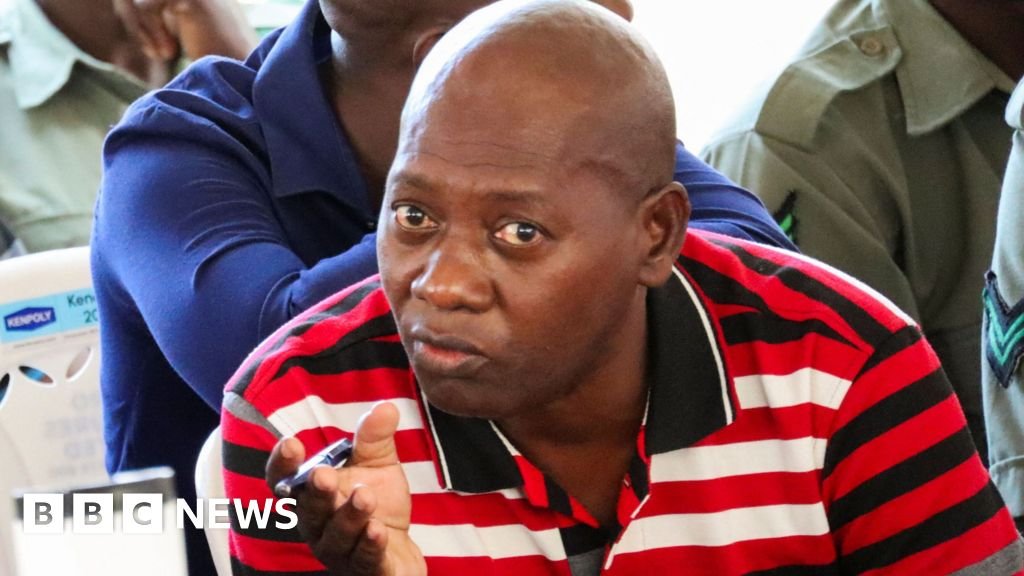
A Kenyan court is sentencing the leader of a doomsday cult, Paul Mackenzie, after his conviction for murdering 191 people, all but one of them children.
Alongside 27 others, Mackenzie was found guilty of the murders for instructing members of his cult to starve their children to death so they could “meet Jesus”.
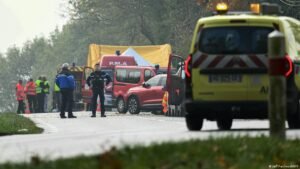
The self-styled pastor was arrested in 2023 after the discovery of more than 400 bodies in shallow graves in Shakahola forest near the Kenyan coast. The sprawling investigation into the cases shocked Kenya and drew international attention.
Ahead of sentencing, prosecutors in the court in Mombasa had argued for the death penalty for Mackenzie because of the gravity of the crimes.
The prosecutors also cited what they described as Mackenzie’s lack of remorse for the crimes. They requested life sentences for his co-accused.
Mackenzie and the co-accused have formally pleaded for mercy and asked for leniency from the court.
Before their conviction on 19 October, they had all pleaded not guilty and repeatedly insisted that nobody was forced to die.
Mackenzie’s followers believed he was “Jesus’s mouthpiece”, Justice Diana Mochache said as she delivered her eight-hour judgement last month.
Those who opposed Mackenzie’s teachings were beaten to death.
One of his co-accused said he had told his followers that anyone who “resisted the directive to fast must be forced to go to heaven through kicks and blows”.
Burials inside the forest where the cult was based were called “weddings” and those who died “were celebrated as having wedded with Jesus” the judge said.
The judge found that the deaths arose from an organised system, including religious teachings and directives that compelled followers to follow the deadly fasting.
Post-mortem results showed the cause of deaths to be starvation for most victims, while others died from suffocation, strangulation or head injuries.
The cause of death could not be determined for some, with their bodies having decomposed, while others died soon after their rescue as they were so emaciated.
 AFP via Getty Images
The Shakahola deaths have shone a spotlight on the lack of oversight of rogue religious activities and how they could have carried on for so long.
The gravity of the case prompted President William Ruto to set up a commission of inquiry, although this was later declared unconstitutional.
Investigations by the state-funded Kenya National Commission on Human Rights (KNCHR) revealed that local administration and law enforcement officials had repeatedly turned a blind eye to the cult’s activities.
The cult leader had previously been arrested and later released for lack of evidence.
Mackenzie established Good News International Ministries in 2003.
Over the next 16 years, the church grew in popularity, drawing thousands of followers in its branches across Kenya.
The church ran a television station called Times TV which would broadcast his sermons from his church in Malindi.
His End Days sermons included conspiracy theories that described education as “evil”, healthcare as “against the doctrine” and digital identity cards as “the mark of the devil”.
The main church shut down in 2019 and Mackenzie moved to Shakahola forest, encouraging his devotees to follow him.
While the conclusion of the murder cases may bring a sense of justice for the victims and their families, the convictions only account for 191 victims, while more than 400 bodies were exhumed from the forest.
Mackenzie and other leaders of the cult also face a raft of other cases, including for terrorism, radicalisation and denying education to children.

Go to BBCAfrica.com for more news from the African continent.
Follow us on Twitter @BBCAfrica, on Facebook at BBC Africa or on Instagram at bbcafrica