Skip NavigationMarketsBusinessInvestingTechPolitics & PolicyVideoWatchlistInvesting Club PRO
PRO LivestreamMenu
- New gene therapies are creating unprecedented hope for people with sickle cell disease, with Casgevy and Lyfgenia offering the potential to eliminate severe pain crises for many eligible patients.
- High costs, a demanding treatment process and limited access to sickle cell specialists have slowed their use.
- Experts say the broader sickle cell care system still has significant gaps, prompting new efforts to build stronger treatment networks nationwide.
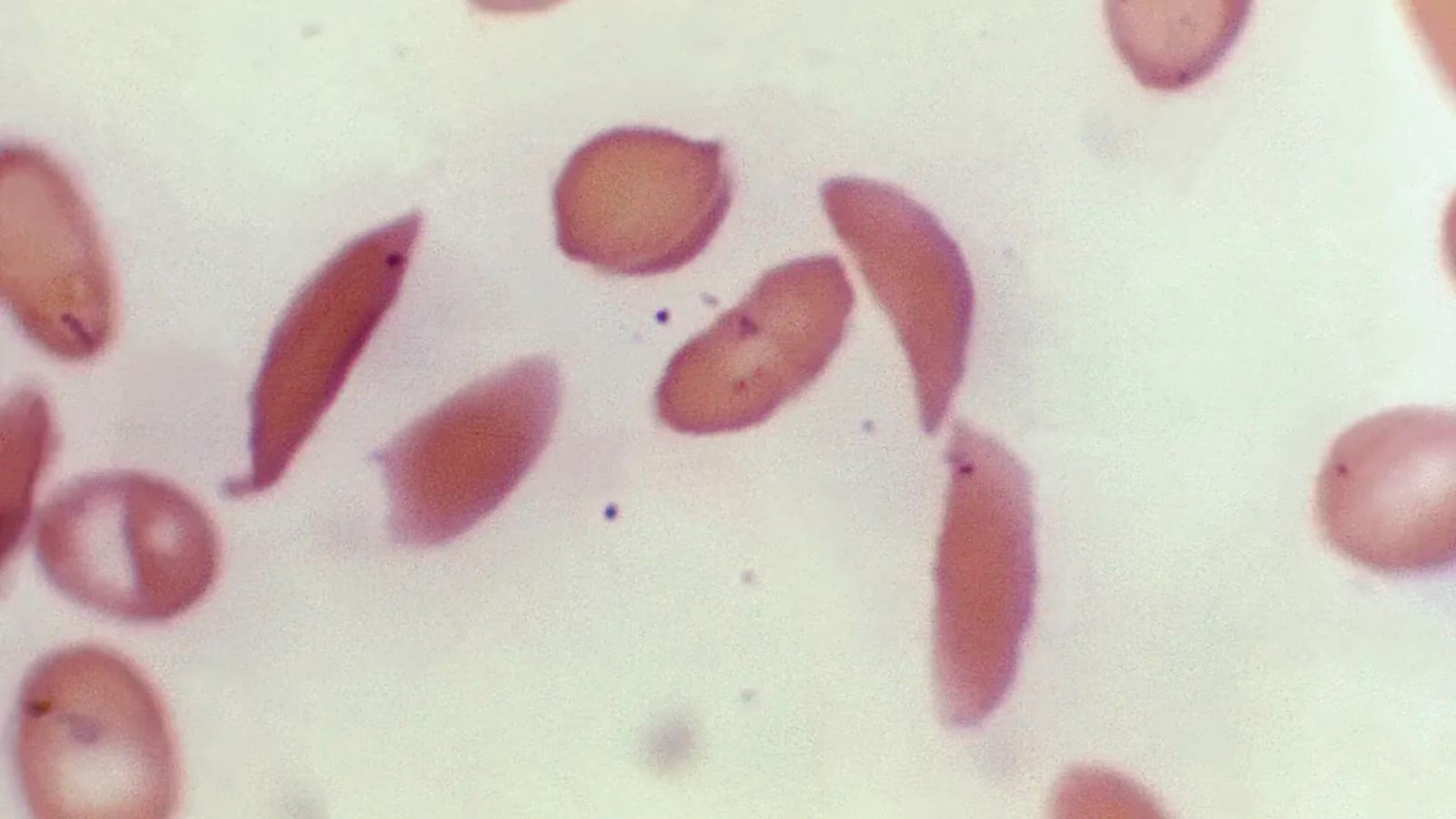
This microscope photo provided on Oct. 25, 2023, by the Centers for Disease Control and Prevention shows crescent-shaped red blood cells from a sickle cell disease patient in 1972. Britain’s medicines regulator has authorized the world’s first gene therapy treatment for sickle cell disease, in a move that could offer relief to thousands of people with the crippling disease in the U.K.Dr. F. Gilbert/CDC via AP, File
For decades, people living with sickle cell disease have endured a lifetime of hospital visits, medications and blood transfusions to manage a painful genetic blood disorder that can shorten life expectancy by up to 20 years.
But a long-awaited breakthrough came in 2023, when the U.S. Food and Drug Administration approved Casgevy and Lyfgenia, the first two gene therapies for patients with severe forms of the disease. Patient advocates and clinicians say the recent advancements in treatment could mark the beginning of a new era in sickle cell care, one that may free thousands from recurrent episodes of debilitating pain and improve long-term health outcomes.
“That opens up a whole world of individuals potentially being cured of sickle cell disease,” said Dr. Edward Donnell Ivy, chief medical officer for the national patient advocacy organization, Sickle Cell Disease Association of America.
Yet for thousands of people living with the disease, accessing the transformative therapies remains far from straightforward.
Patients often face a fragmented and uneven healthcare landscape where treatment costs, a complex treatment process, provider availability, and access to specialized treatment centers can vary widely based on where they live. The result has left therapies with the potential to dramatically alter the course of the disease still out of reach for many eligible patients.
“The patients’ priorities are actually a big part of really trying to figure out what the barriers to access are and how we overcome them,” said Dr. Alexias Thompson, an attending physician in the division of hematology at Children’s Hospital of Philadelphia and spokesperson for the American Society of Hematology.
Path to a breakthrough
Sometimes referred to as “the most common rare disease” because millions of people globally are affected, sickle cell disease impacts around 100,000 people in the U.S., according to the Centers for Disease Control and Prevention. More than 90% of the patient population are non-Hispanic Black or African American.
Sickle cell disease is a genetic blood disorder that causes normally flexible, round-shaped red blood cells to become rigid and crescent-shaped, which can block blood vessels and reduce oxygen delivery to tissues.
Some of the more common health complications that can occur include chronic fatigue and anemia, as well as blood clots and what is known as vaso-occlusive, or “pain” crises, which are severe episodes of debilitating pain that can last from a few hours to several weeks. Other complications can include stroke, organ damage, and increased risk of infection.
…from 1910 until about 2015, there was very little progress in disease-modifying treatments for sickle cell disease.” Dr. Andrew CampbellChildren’s National Director of Sickle Cell Disease Program
More than a century after the first documented U.S. case of sickle cell disease in 1910, progress in developing new treatments remained slow, due in part to decades of underinvestment and lower levels of philanthropic support than those received by other rare genetic disorders. From 2008 through 2018, research funding from the National Institutes of Health given toward sickle cell disease averaged $812 per patient, according to a 2020 analysis, by comparison, funding for the genetic disorder cystic fibrosis, which affects approximately 40,000 people in the U.S., averaged $2,807 per patient for the same period.
“There’s been a slow increase in the development of new therapies for sickle cell disease,” said Dr. Andrew Campbell, director of the comprehensive sickle cell disease program at Children’s National health system in Washington D.C. “In the past six or seven years, there’s been an explosion in that, but I would say from 1910 until about 2015, there was very little progress in disease-modifying treatments for sickle cell disease.”
A major breakthrough arrived in 1998 with the FDA approval of hydroxyurea, the first medication shown to modify the health effects of sickle cell disease. Studies have found the drug has helped to reduce the frequency of pain crises in patients by half, as well as the need for hospitalizations and blood transfusions. Since its introduction, hydroxyurea has become a cornerstone of sickle cell disease treatment that has helped thousands successfully manage their condition.
Signage is seen outside the U.S. Food and Drug Administration headquarters in White Oak, Maryland, Aug. 29, 2020.Andrew Kelly | Reuters
Yet the discovery of a curative treatment remained elusive until gene therapy. For years, the only option available to patients was undergoing a bone marrow transplant, which was limited to only a select number able to find a donor match.
“Bone marrow transplant was always available, but it wasn’t a great option because not too many people had access to a donor,” said Ivy, who is also a sickle cell disease patient. “Now that we have the cell and gene therapies, an individual can act as their own donor.”
Slow patient uptake
Gene therapy has been shown to achieve a high rate of efficacy, with 88% to 94% of patients experiencing complete freedom from severe vaso-occlusive crisis.
Yet despite their curative potential, uptake of gene therapies for sickle cell disease has been slow. By the end of 2025, a total of 64 patients worldwide had received infusions of Casgevy, according to a full-year earnings report by maker Vertex Pharmaceuticals, while another 147 people had undergone their first cell collection for the treatment. Lyfgenia manufacturer Genetix Biotherapeutics reported that 115 U.S. patients had been treated with the gene therapy since its 2023 approval, with an additional 216 having initiated cell collection by late 2025.
Gene therapy can be a daunting process that may deter some patients. It requires collecting the patient’s blood-forming stem cells and modifying them so they produce healthy hemoglobin and then returning those cells back into the patient’s body. Patients go through a condition stage prior to receiving the cells where they receive chemotherapy, blood transfusions, and endure frequent hospital stays that can last for weeks.
The entire therapy can take up to a year to complete, with the conditioning process often causing permanent infertility or sterility.
Currently, patients as young as 2 years of age with sickle cell disease can receive Casgevy, while Lygfenia is available for patients 12 years and older. Both therapies are approved for patients with severe forms of the disease, such as those with genotypes like HbSS, which includes a majority of patients, or HbS beta “zero” thalassemia. Likely candidates include patients who have experienced at least four pain crises or acute chest syndrome episodes within 24 months prior to seeking treatment. Studies have estimated that anywhere between 25% and 35% of the patient population would meet the current clinical criteria for gene therapy.
Ivy recalls experiencing four to five pain crises a year that required him to be hospitalized each time before he began taking hydroxyurea as part of a research study. He said the medication dramatically changed his life, allowing him to complete his medical education free from pain episodes.
When it came to gene therapy however, Ivy, said he opted to forego seeking that treatment because of the demands on his body and time. “If I was younger, I might strongly consider it for sure,” Ivy said. “But there are a lot of things to consider.”
Physical demands aside, the cost of gene therapy could potentially prohibit more sickle cell disease patients from seeking treatment. The list price for a single-course treatment ranges from $2.2 million and $3.1 million. This cost does not include such healthcare expenses as hospital stays, chemotherapy, or the specialized care needed.
But efforts have been made to address potential cost disparities between patients with private health insurance and the majority of sickle cell disease patients who receive health coverage through Medicaid or the Children’s Health Insurance Program, according to Dr. Alexis Thompson, an attending physician at Children’s Hospital of Philadelphia and a spokesperson for the American Society of Hematologists.
One of the largest efforts began in 2024 by the Centers for Medicare and Medicaid Services. The Cell and Gene Therapy Access Model is a program where the agency enters into agreements with states and manufacturers to set pricing for gene therapy care based on patient outcomes aimed at lowering the costs associated with both the actual therapy and supportive care. Currently 32 states, the District of Columbia and Puerto Rico, participate in the CMS model.
Thompson acknowledged however that the type of services that are covered through the program can vary. “Depending on the state that someone is in, some of the coverage may be more comprehensive than others,” she said.
While Medicaid does cover the cost of gene therapy for sickle cell disease, questions still remain as to how healthcare providers manage the large upfront costs of treatment as reimbursement remains complex and continues to evolve. Such costs can create financial challenges for hospitals and health systems before reimbursement is finalized.
While cost is a concern, it may not be as large of a challenge to accessing gene therapy as finding a qualified healthcare provider able to provide the treatment. Hospitals require a multi-disciplinary team of specialists working together to provide care for the patients before, during and after treatment.
…there is a mismatch between the number of patients and the number of providers – that means some patients are driving from up to three hours away to gain access to sickle cell expertise.”Dr. Christina AbramsDirector of the Pediatric Sickle Center at the Medical University of South Carolina’s Shawn Jenkins Children’s Hospital in Charleston
While many major academic health centers around the country offer gene therapy, the number of specialized care centers are still few enough to leave care gaps for people living in more rural areas, which would require many to frequently travel for hours across their state or to another state to access treatment.
Dr. Christina Abrams, clinical assistant professor of pediatrics and director of the Pediatric Sickle Center at the Medical University of South Carolina’s Shawn Jenkins Children’s Hospital in Charleston, said the gaps in access to gene therapy reflects the disparity in access to sickle cell disease specialists at large.
“Within the state of South Carolina, we have three main centers that are taking care of patients with sickle cell disease,” Abrams said. “But oftentimes there is a mismatch between the number of patients and the number of providers – that means some patients are driving from up to three hours away to gain access to sickle cell expertise.”
Bridging the gap
To try to bridge the gap, Abrams said her center employs several services including the use of social workers, patient navigators, and virtual health visits.
Similar efforts to address access issues have occurred at UAB, with the NIH-funded project, Recruitment and Engagement in Care to Impact Practice Enhancement for Sickle Cell Disease, or RECIPE, an initiative launched in 2021 that seeks to identify sickle cell disease patients who are not seeing a specialist and recruiting them into care.
One of the goals of the project is to connect with sickle cell disease patients 35 years of age and older who may have not been diagnosed at birth and get them connected to a sickle cell disease specialist.
“We’re really trying to help people in those areas who don’t know that they need that care,” Kanter said.
More broadly, efforts to create a more robust sickle cell disease care network nationally has been the work of the National Alliance of Sickle Cell Centers, of which sickle cell centers at both UAB and MUSC are participating members. With 115 member centers across the country, Abrams said the goal of the Alliance is to share information among both fellow specialists, as well as raise awareness among the broader medical community to help deepen their understanding of the impact of the disease.
“One thing sickle cell disease has lacked for a very long time is standardization of care and really bringing light to disease,” Abrams said “One of the benefits of being a member of this organization is helping to be a part of that bigger picture.”
CNBC Cures is underwritten by Alexion, AstraZeneca Rare Disease and BridgeBio.
Choose CNBC as your preferred source on Google and never miss a moment from the most trusted name in business news.Read More