Singapore manufacturers adjust to higher US tariff, hold off on major production shifts
Some firms are looking to improve productivity in response to the new 12.5 per cent duty, while businesses also face challenges working out which products are affected and how much they have to pay.
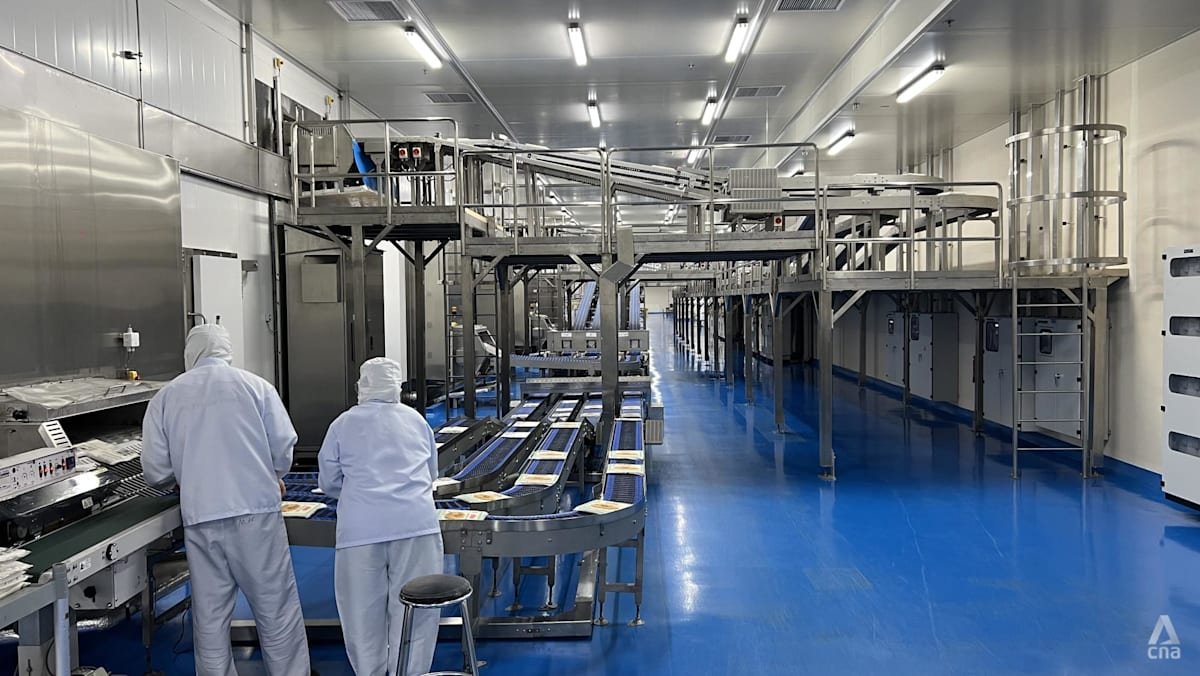
Workers at a production line at Tee Yih Jia’s manufacturing facility in Singapore.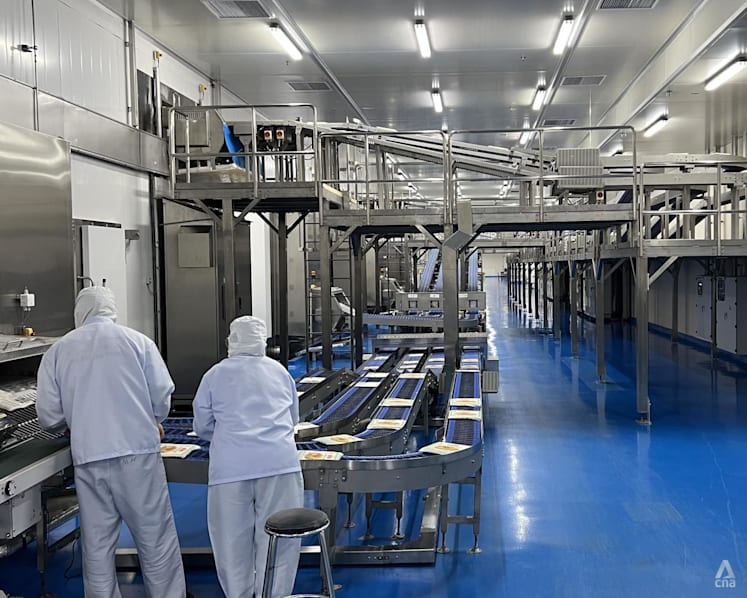
New: You can now listen to articles.

This audio is generated by an AI tool.


Read a summary of this article on FAST.
Get bite-sized news via a new
cards interface. Give it a try.
Click here to return to FAST
Tap here to return to FAST
FAST
SINGAPORE: Singapore manufacturers exporting to the United States are looking at ways to manage higher costs from a new 12.5 per cent US tariff, but some are holding off on major changes to where they produce their goods.
The tariff took effect on Jul 24 following a US Section 301 investigation into 60 trading partners over their restrictions on imports of goods produced with forced labour.
The US Trade Representative (USTR) imposed tariffs of between 10 per cent and 12.5 per cent on the economies covered by the investigation, with Singapore facing the higher rate. The measures replaced a temporary 10 per cent global US import surcharge that expired on the same day.
About one-third of Singapore’s domestic exports to the US are affected by the new tariff, according to the Ministry of Trade and Industry (MTI). Certain products are exempt, including pharmaceuticals, semiconductors and some electronics.
MTI has said Singapore does not condone forced labour and has a comprehensive enforcement framework against such practices. It is continuing to engage the USTR to explore options on the matter.

Guess Word
Crack the word, one row at a time

Buzzword
Create words using the given letters

Mini Sudoku
Tiny puzzle, mighty brain teaser

Mini Crossword
Small grid, big challenge

Word Search
Spot as many words as you can
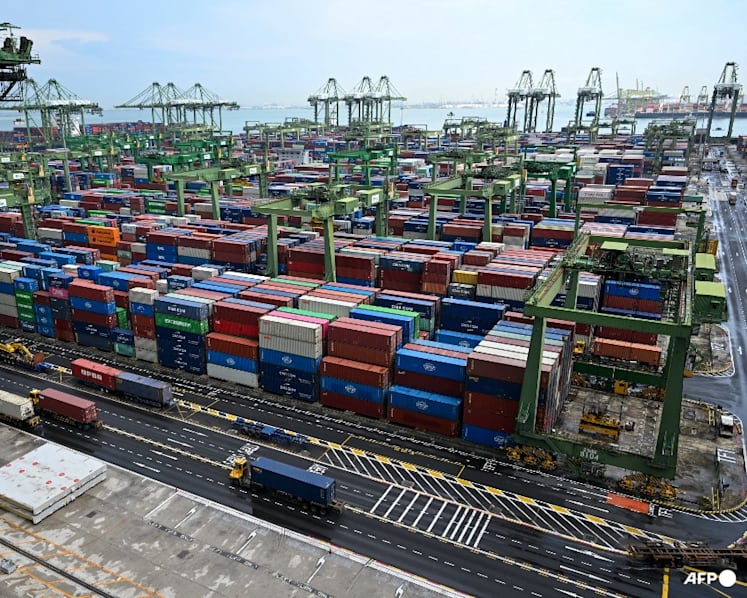
TARIFF ADDS TO FREIGHT COST PRESSURES
Food manufacturer Tee Yih Jia, whose products include spring roll skins, samosas and dim sum, is among the companies facing added cost pressures from the tariff.
The new duty comes on top of elevated ocean freight rates.
It has three production plants in Singapore supplying mainly the Americas, with the US accounting for about 20 per cent of its revenue.
Its US customers are concerned about the latest tariff, said Ms Priscilla Ng, the company’s global strategic manager.
“It essentially means a higher cost of serving the US market because we are actually looking at the entire supply chain, from the manufacturers in Singapore, down to the distributors and then eventually the customers in the US,” she told CNA.
“So with the new tariffs and the high ocean freight, it actually increases the cost much more significantly than previously.”
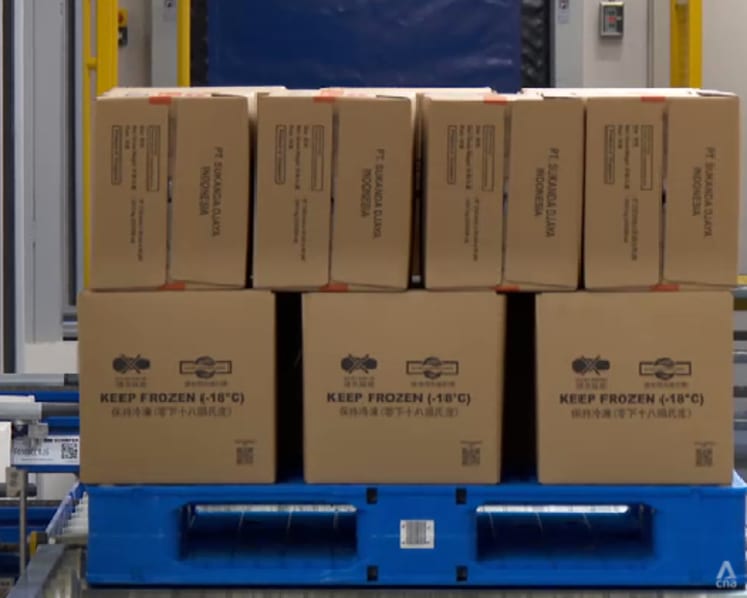
Shipping a 40-foot container from Singapore to the US currently costs Tee Yih Jia about S$14,000 (US$11,000).
The 12.5 per cent tariff also puts affected Singapore exports at a disadvantage against some regional competitors such as Malaysia and Indonesia, which are among the economies facing the lower 10 per cent tariff.
Despite the higher cost, Tee Yih Jia is not rushing to move production elsewhere.
Ms Ng said decisions such as outsourcing supply or production require long-term planning.
For now, the company is looking at automation, demand forecasting and other ways of improving productivity while maintaining product quality and supply.
TARIFFS ONLY ONE PART OF COST EQUATION
Medical device manufacturer Fong’s Engineering and Manufacturing is also taking a longer-term approach, saying the nature of its industry makes it difficult to shift production quickly.
The US makes up well over half of the company’s business, but Fong’s does not expect the tariffs to have an immediate impact on its operations.
Its customers place greater emphasis on consistent quality and supply, regulatory compliance and patient safety, said Mr Peter Horan, CEO of parent company FSP Group.
“Typically, the approach when looking at and confronting tariffs is that we look at this from a longer-term perspective, not making short-term changes, but rather focusing on long-term effects for our customers and for the market overall.”
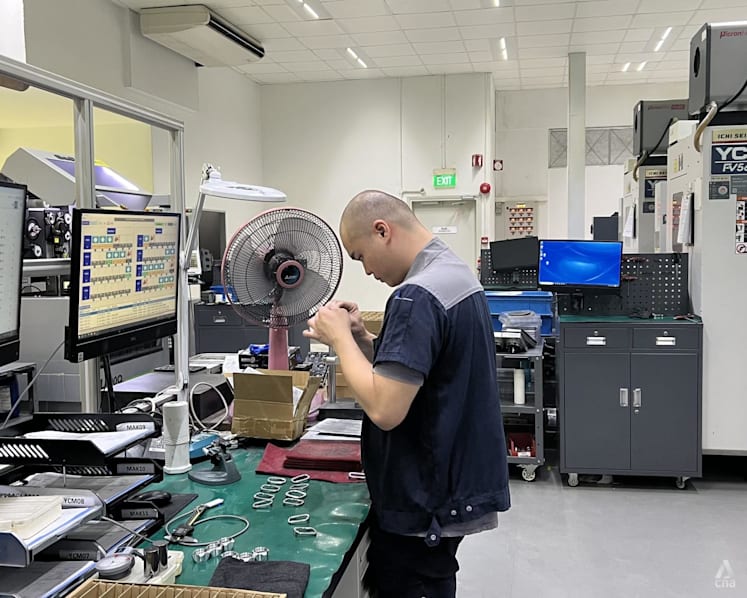
Changing manufacturing locations is also particularly difficult for medical device companies.
Moving production to a new site can take years, given the time needed to establish the location and complete validation and regulatory approval processes.
That makes it difficult to respond quickly to tariffs, particularly when rates applied to different countries can change, Mr Horan said.
“Tariffs are one element, but it’s only one element,” he said.
“The actual cost of the materials themselves, the cost of validating new sources, is also factored in, and that’s another reason why we don’t necessarily make changes so fast.”
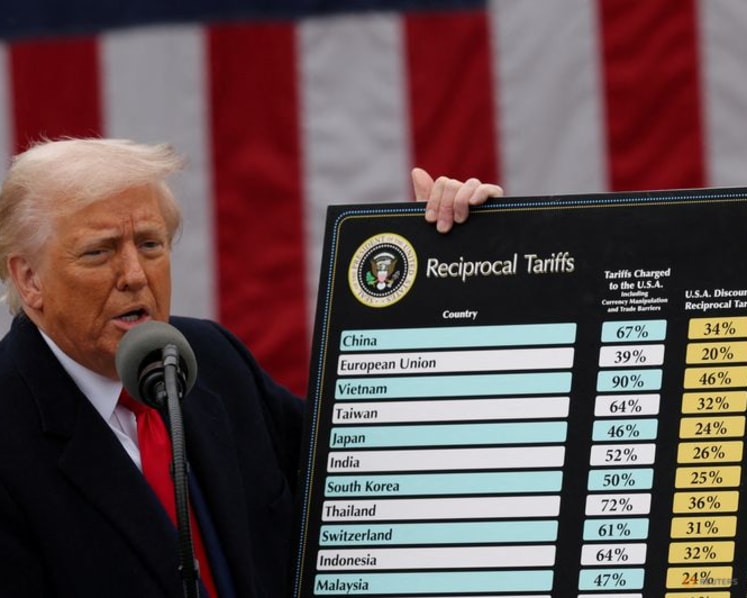
FIGURING OUT THE TARIFF IS ANOTHER CHALLENGE
Companies must also work out whether their products are covered by the US tariff and how much they have to pay.
This can become complicated for goods containing parts and materials from several countries.
Companies first have to establish how a product is classified under the international Harmonised System (HS) used by customs authorities.
While the HS is an international standard, countries can have their own more detailed classifications, said Associate Professor Goh Puay Guan from the Department of Analytics and Operations at the National University of Singapore Business School.
This may mean businesses need to provide documentation to support how their products are classified, including how they are used and the industries they are used in, Assoc Prof Goh told CNA’s Singapore Tonight.
“The issue is more of determining where it falls into the buckets, and it’s not always easy because besides the type of products, it could also be that it goes to distributors, for example, and then the end customer or the end use is not always clear,” he said.
Businesses may also have to establish a product’s country of origin, as a product being shipped from Singapore does not by itself establish that it is Singapore-origin.
Assoc Prof Goh said this could require companies to trace their supply chains beyond their direct suppliers to establish a product’s origin or show that forced labour was not used.
Manufacturers can generally track their first-tier suppliers relatively easily, he said, but information becomes harder to obtain further upstream.
Distributors may face another challenge, as they may not be able to trace their products to the level required. This could mean spending more time obtaining documents to establish where their products came from.
“And while it takes time, then in the interim, what do they do in order to clear customs – and that may also potentially mean lost business because the cargo gets stuck there or the importers in the US may not buy from such companies,” Assoc Prof Goh said.
Source: CNA/mp(ca)
Sign up for our newsletters

Get the CNA app
Stay updated with notifications for breaking news and our best stories
Get WhatsApp alerts
Join our channel for the top reads for the day on your preferred chat app

Get bite-sized news via a new
cards interface. Give it a try.
Click here to return to FAST
Tap here to return to FAST
FAST