Singapore to raise property annual value thresholds for social support schemes from March 2027
From Mar 1 next year, the threshold for the first residential property annual value tier will be raised from S$21,000 to S$24,000.
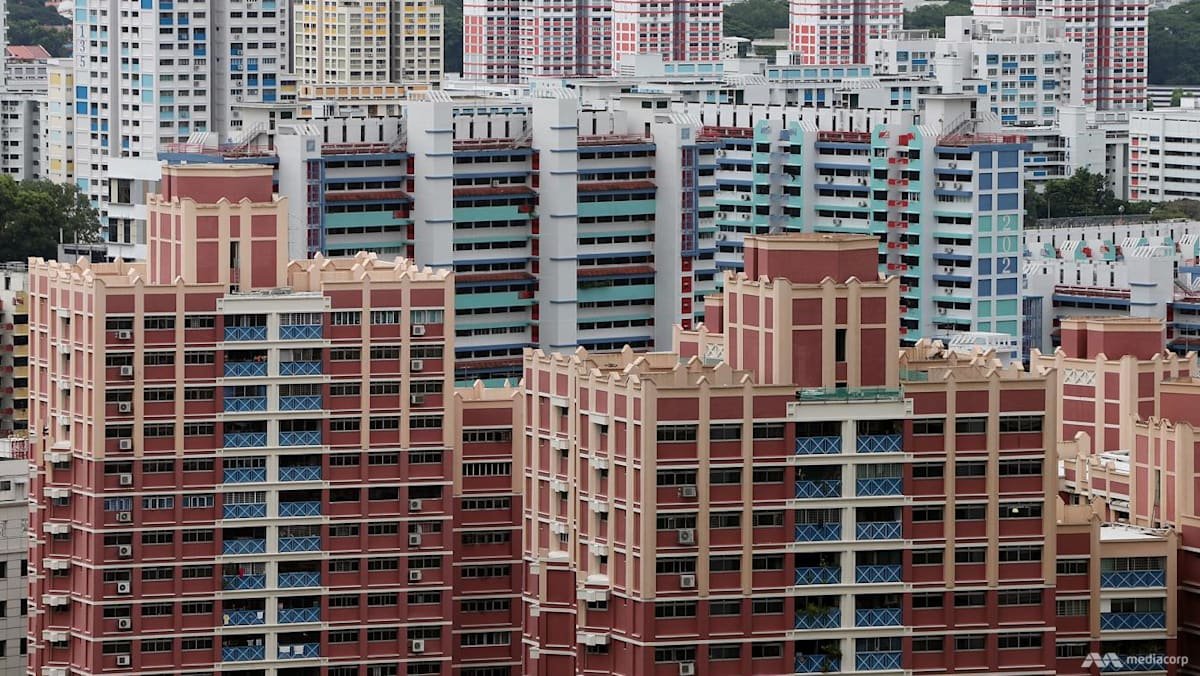
HDB flats in Singapore. (File photo: TODAY/Ooi Boon Keong)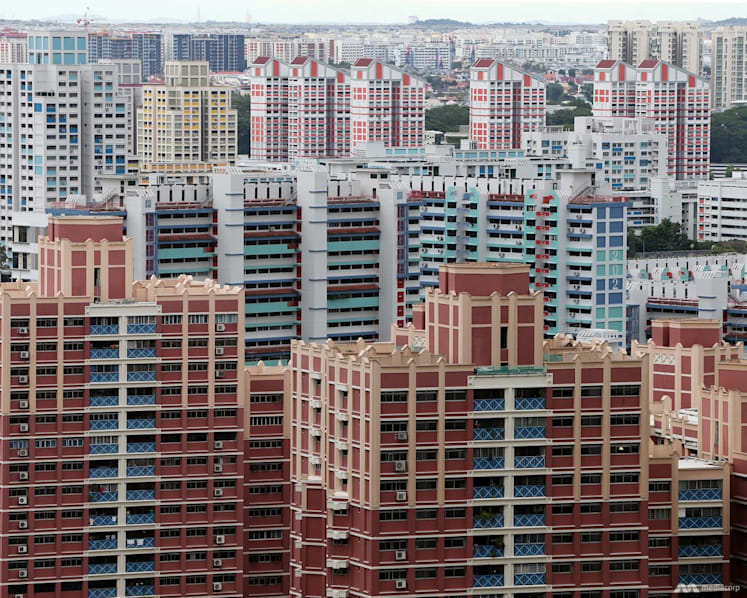
New: You can now listen to articles.

This audio is generated by an AI tool.

Read a summary of this article on FAST.
Get bite-sized news via a new
cards interface. Give it a try.
Click here to return to FAST
Tap here to return to FAST
FAST
SINGAPORE: The government will raise the annual value (AV) thresholds used to determine eligibility for social support schemes from Mar 1, 2027, to ensure that Singaporeans continue to receive support, said the Ministry of Finance (MOF) on Monday (Nov 23).
The first AV tier will be raised from S$21,000 to S$24,000, while the upper limit of the second tier will increase from S$31,000 to S$32,000.
Various government social support schemes, including the permanent GST Voucher scheme, MediShield Life premium subsidies and the Workfare Income Supplement scheme, provide tiered benefits to ensure that Singaporeans with greater needs get more support.
Alongside criteria such as income, the annual value of one’s residential property may be used as an indicator of means.

Guess Word
Crack the word, one row at a time

Buzzword
Create words using the given letters

Mini Sudoku
Tiny puzzle, mighty brain teaser

Mini Crossword
Small grid, big challenge

Word Search
Spot as many words as you can

The finance ministry said the changes respond to the increase in AVs for many residential properties since 2025.
“The increase will ensure that Singaporeans living in HDB flats and lower-value private properties will remain eligible for social support schemes, notwithstanding updates to the AV of their homes,” it said.
Singaporeans’ eligibility for social support schemes in a given year is determined by the preceding year’s AV.
To determine an individual’s or household’s eligibility for the first or second tier of 2027 benefits, the individual’s or household’s 2026 AV will be used, said MOF.
“The government will continue to review our social support schemes, including their eligibility criteria, to ensure that Singaporeans with greater needs receive more support,” said the ministry.
Singaporeans may approach the respective government agencies for more information on the social support schemes.
ONE-OFF PROPERTY TAX REBATE
A one-off property tax rebate will also be provided for owner-occupied HDB flats and private residential properties in 2027, set at 15 per cent and 10 per cent, respectively.
The tax rebate for private residential properties is capped at S$100, said MOF and the Inland Revenue Authority of Singapore (IRAS) on Monday.
“This will help to cushion property tax payments for Singaporeans amidst cost-of-living concerns,” they said in a joint media release.
After the property rebate, owners living in three-room and larger HDB flats will see an average property tax increase of about S$2 to S$4 per month.
Most owner-occupiers living in private residential properties will see an average property tax increase of about S$6 per month.
“All one- and two-room HDB owner-occupiers will continue to pay no property tax,” said MOF and IRAS.
Given the change to the AV threshold and the current PT rates, Singapore’s overall residential property tax system remains progressive, they said.
All property owners will receive their 2027 property tax bills by December 2026, with SMS and/or email notifications to notify them to view their property tax bills on myTax Portal.
“As IRAS issues tax bills in batches, some property owners may receive them earlier than others,” said MOF and IRAS.
Property tax bills next year are due by Jan 31, 2027.
“Property owners are encouraged to pay their tax via GIRO, either in interest-free instalments (up to 12 months) or as a one-time deduction,” said MOF and IRAS.
“Individual taxpayers may apply for eGIRO1 via myTax Portal to set up a GIRO arrangement within minutes,” they added.
Eligible retirees may also apply for the Extended GIRO Scheme for Residential Property (Retirees) to pay their property tax through a longer instalment plan of up to 24 months.
A 5 per cent late payment penalty will be imposed for those who fail to pay or have not set up GIRO instalments by the due date.
Property owners facing financial difficulties may approach IRAS for assistance to discuss a suitable payment plan before the payment due date, said MOF and IRAS
“They can apply for a longer payment plan via the ‘Apply/Manage GIRO Plan’ digital service at myTax Portal using Singpass or Singpass Foreign User Account.”
More information on next year’s property tax bills can also be found on IRAS’ website.
Source: CNA/rl
Sign up for our newsletters

Get the CNA app
Stay updated with notifications for breaking news and our best stories
Get WhatsApp alerts
Join our channel for the top reads for the day on your preferred chat app

Get bite-sized news via a new
cards interface. Give it a try.
Click here to return to FAST
Tap here to return to FAST
FAST