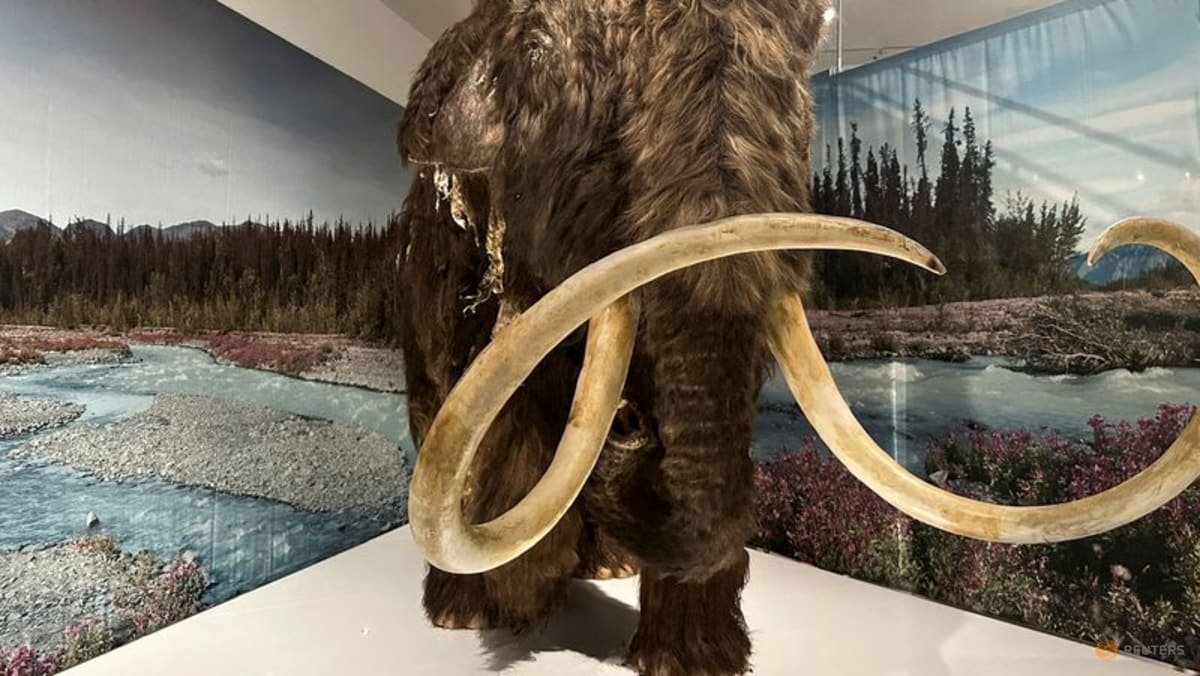
Study shows prehistoric people targeted female mammoths
Read a summary of this article on FAST.
Get bite-sized news via a new
cards interface. Give it a try.
Click here to return to FAST
Tap here to return to FAST
FAST
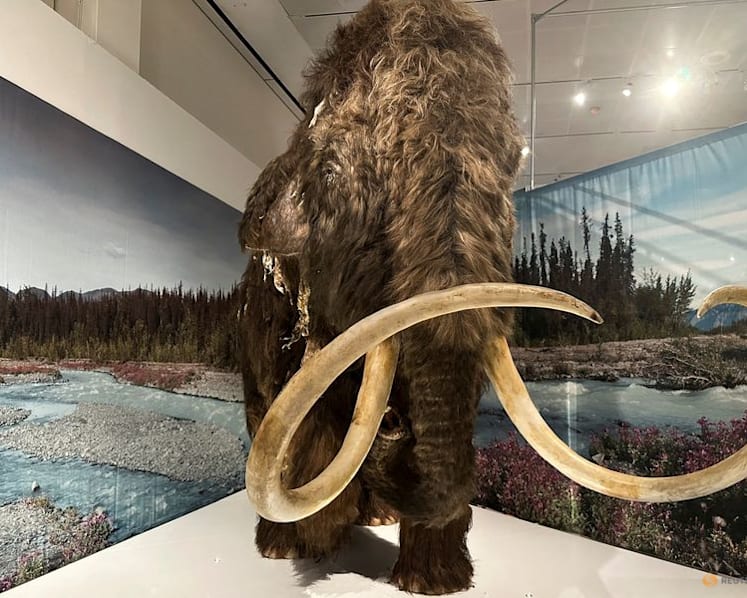
July 31 : Woolly mammoths were a favorite hunting target for Ice Age people in Eurasia and North America for many reasons. A single animal would provide a large amount of meat and fat. Its hide could be used for clothing. Its bones and tusks could be shaped into tools, weapons and art. And the largest bones could be used as building material for shelters or other structures.
New research shows that these prehistoric people were highly selective in the mammoths they hunted. Using genetic data from bones accumulated by people at 11 sites in Poland, Austria, the Czech Republic, Germany and Russia, scientists have discovered that they mainly killed female mammoths.
Some 70 per cent of the mammoths whose bones were studied from these accumulation sites were females, with 30 per cent males. In comparison, 66 per cent of mammoth bones recovered from natural settings were from males, and 34 per cent females.
The researchers used ancient DNA from 521 mammoths spanning approximately the past 50,000 years across Eurasia and North America, including 100 mammoths from 10 bone accumulation sites in Central and Eastern Europe as well as one in Siberia, alongside 421 mammoths from natural settings.

Guess Word
Crack the word, one row at a time

Buzzword
Create words using the given letters

Mini Sudoku
Tiny puzzle, mighty brain teaser

Mini Crossword
Small grid, big challenge

Word Search
Spot as many words as you can
So what accounts for this sex disparity?
“That’s a great question, and one we’re still actively investigating,” said Hannah Moots, a postdoctoral researcher at the Centre for Palaeogenetics, a collaboration between Stockholm University and the Swedish Museum of Natural History, and lead author of the study published in the journal Current Biology.
“One possibility is that if woolly mammoths lived in female-led herds like modern elephants, those groups may have moved across the landscape in more predictable, seasonal ways. Today, female elephant herds have relatively stable home ranges and movement patterns, whereas adult males are more solitary and often roam much more widely. That predictability may have made female-led herds easier for Ice Age people to locate repeatedly,” Moots said.
The herds were most likely matriarchal, comprising adult females, plus juveniles of both sexes.
“One could also speculate that it would have been easier to pin down a herd with juveniles, where the females would have been reluctant to run away,” Centre for Palaeogenetics evolutionary geneticist and study co-senior author Love Dalén said.
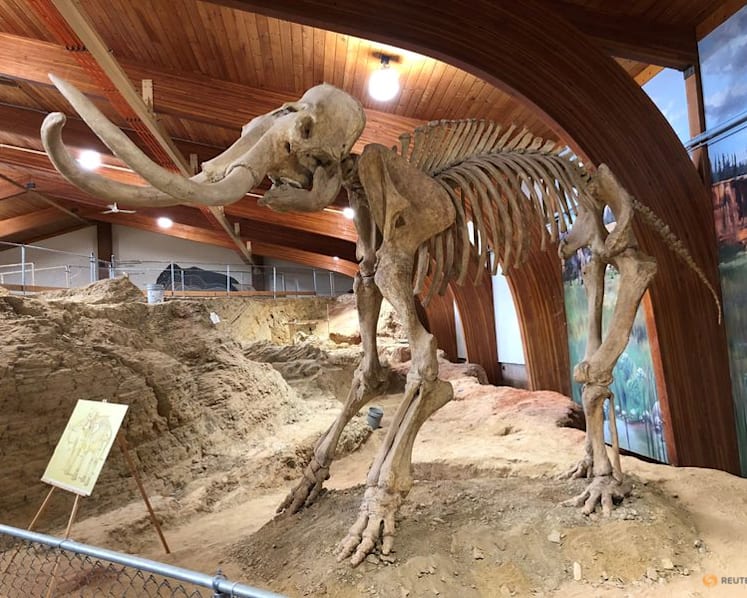
Dalén noted that female mammoths generally were smaller than males and perhaps somewhat easier to kill. An adult male weighed up to about 6 tons and stood up to about 11 feet (3.4 meters) tall at the shoulder, compared to about 4 tons and about 9.5 feet (2.9 meters) for an adult female.
The people who inhabited the mammoth regions were nomadic hunter-gatherers who collected edible plants and hunted various Ice Age mammals, also including woolly rhinoceroses, caribou, bison, deer and others. Some of the mammoth bones from the accumulation sites had projectile points embedded in them.
HUNTING TACTICS
The landscape itself may have been used against the mammoths, with hunters driving them into traps or natural hazards such as cliffs or swampland.
“I think ancient humans likely hunted mammoths by using terrain to their advantage. For example, I could imagine them using landscape features such as mud or bogs to help immobilize the animals before attacking them using spears, darts or arrows,” Centre for Palaeogenetics evolutionary geneticist and study co-senior author David Díez-del-Molino said.
The largest mammoth-hunting site in the study was called Kraków Spadzista in southern Poland, dating to about 25,000 to 30,000 years ago. It contains the remains of more than 100 mammoths, stone tools and evidence of mammoth butchery.
Mammoths vanished in mainland North America and Eurasia some 10,000 to 12,000 years ago at the end of the Ice Age, when the climate warmed rapidly and the open grasslands where mammoths had found food were replaced by forests and wet tundra. The role of humans in their extinction is a matter of debate.
The very last mammoths inhabited Wrangel Island, a lonely outpost off the coast of Siberia, before finally disappearing around 4,000 years ago. Other research showed that despite its small size and high inbreeding levels, this population was stable until right before its extinction.
In the new study, the researchers identified one Wrangel Island mammoth with a genetic condition called “X0/XX mosaicism,” possessing a sex chromosome combination that made it neither biologically female nor biologically male. In humans, this is called Turner syndrome.
“It’s unclear whether this X0/XX mosaicism is related in any way to the small size of the Wrangel Island population, or whether it is simply a developmental event that could have occurred in any mammoth population,” Moots said.
Source: Reuters
Sign up for our newsletters

Get the CNA app
Stay updated with notifications for breaking news and our best stories
Get WhatsApp alerts
Join our channel for the top reads for the day on your preferred chat app

Get bite-sized news via a new
cards interface. Give it a try.
Click here to return to FAST
Tap here to return to FAST
FAST
About The Author