



SUSS drops AI detector as more Singapore universities question reliability of such tools
NUS, SUTD and SIT do not use automated AI detectors, while SMU says such tools are only one input when investigating possible misconduct.
Universities say that students remain responsible for the integrity of their work even where generative AI use is permitted. (Photo: Pexels)
New: You can now listen to articles.

This audio is generated by an AI tool.

Read a summary of this article on FAST.
Get bite-sized news via a new
cards interface. Give it a try.
Click here to return to FAST
Tap here to return to FAST
FAST
SINGAPORE: The Singapore University of Social Sciences (SUSS) has disabled its university-wide artificial intelligence (AI) writing detector from August.
The university said in response to CNA queries that it recognises the limitations of AI detection scores, especially that these scores cannot conclusively determine whether generative AI was used inappropriately.
SUSS disabled Turnitin’s AI writing detection score from Aug 11.
“This decision does not affect SUSS’ expectations for students to uphold academic integrity and use generative AI responsibly,” it said.

Guess Word
Crack the word, one row at a time

Buzzword
Create words using the given letters

Mini Sudoku
Tiny puzzle, mighty brain teaser

Mini Crossword
Small grid, big challenge

Word Search
Spot as many words as you can
“Our focus remains on whether students can demonstrate understanding of, and ownership over, the work they submit.”
AI writing detectors analyse text to estimate the likelihood that AI generated it. They can be integrated into plagiarism and text-similarity detection software already used by educational institutions, such as Turnitin.
The university’s statement came after Nanyang Technological University (NTU) announced to its faculty earlier this month that it will discontinue the use of its AI detector from 2027, recognising that such tools are “fundamentally unreliable”.
In a statement to CNA on Aug 22, NTU confirmed that it will stop using automated AI detection tools from 2027.
Professor Christian Wolfrum, NTU’s deputy president and provost, said: “When AI detection tools were introduced, they served a reasonable purpose. AI use was uncharted territory, and universities needed ways to navigate that uncertainty.
“Now, the environment has changed fundamentally, and what was once a reasonable safeguard has become obsolete.”
AI misuse was a source of controversy for NTU last year. In April 2025, three NTU students were accused of misusing AI for false and inaccurate citations.
NTU did not respond to questions about whether these unreliable AI detection tools contributed to any accusations of academic misconduct, and whether investigations into any of the previous cases would be reopened.
One of the three students, who has since graduated, told CNA that she had not received any updates from the university.
Singapore Management University (SMU) said that it continues to use AI detection tools, but “never as the sole basis” for finding misconduct.
Associate Professor Michelle Lee, SMU’s associate provost for undergraduate education, said that the tools are strictly “one input among several”.
The assurance that a student’s work is their own also rests on how assessments are designed and asking the student to account for their work directly.
“Detection software has never carried this responsibility on its own at SMU,” Assoc Prof Lee said, confirming that SMU has no plans to change its approach.
“We believe the most reliable way to assure academic integrity is to design assessments that require students to demonstrate genuine competencies, not to detect whether AI was used after the fact.”
ASSESSING STUDENTS’ WORK
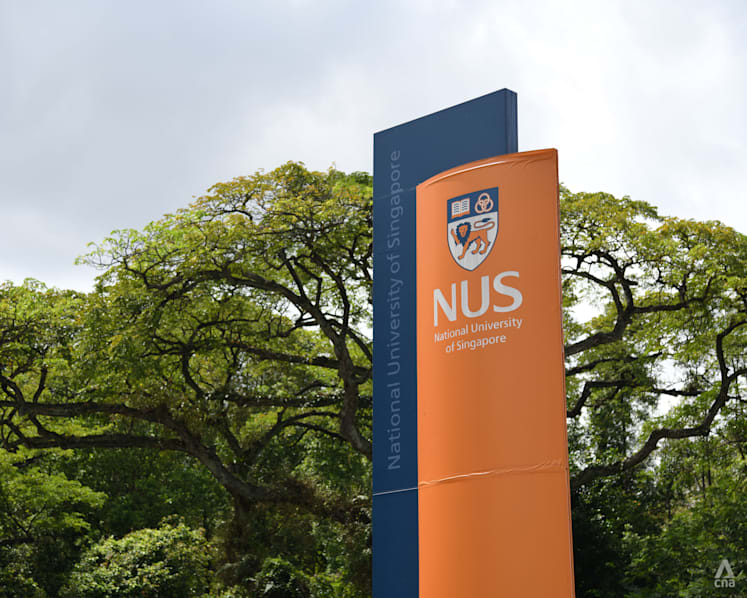
The National University of Singapore (NUS), Singapore University of Technology and Design (SUTD) and Singapore Institute of Technology (SIT) confirmed that they do not use automated AI detection tools.
The institutions said that the AI detection tools cannot reliably conclude that a student engaged in academic misconduct.
They added that investigations into such cases would consider the full context of the assessment and other relevant evidence, including the student’s explanation for their work and supporting materials such as drafts or reflections.
SUSS said that merely using generative AI is not considered academic misconduct.
The university has a policy that guides students and faculty members on the appropriate use of generative AI to support learning.
Depending on assessment requirements, this may include brainstorming, developing ideas, drafting and editing, SUSS said, adding that the institution is still committed to upholding academic integrity.
“Students remain responsible for the accuracy and integrity of their submissions, and for demonstrating that they have met the intended learning outcomes.”
SIT previously took part in an early pilot of an AI writing detection tool but decided not to adopt its use because of its limitations, it said.
“AI detection tools rely on statistical models to estimate the likelihood of content that may have been generated by AI. Such probability scores alone cannot conclusively determine whether a student has committed academic misconduct,” it added.
At NUS, AI writing detection tools are not used to determine plagiarism or academic misconduct.
Current technologies have “significant limitations” in reliability and accuracy, and are not used as evidence in disciplinary proceedings, it said.
Where using AI is allowed, students are evaluated on the quality of their work and will not be penalised for using it they properly acknowledged it, NUS added.
“Plagiarism is a serious academic offence in NUS. Students who represent AI-generated content or work as their own without appropriate acknowledgement are committing plagiarism.”
At SUTD, students must similarly declare their use of generative AI tools based on course-specific guidelines.
Professor Ashraf Kassim, its associate provost for education and innovation, said that the school has not seen any cases of AI misuse so far.
Not using a campus-wide AI detector is consistent with how the university uses AI in coursework, he added.
“Rather than treating AI as an adverse tool to be detected and isolated, we design our courses and curriculum to embed AI tools into the learning process itself.”

Source: CNA/hw(sf)
Sign up for our newsletters

Get the CNA app
Stay updated with notifications for breaking news and our best stories
Get WhatsApp alerts
Join our channel for the top reads for the day on your preferred chat app

Get bite-sized news via a new
cards interface. Give it a try.
Click here to return to FAST
Tap here to return to FAST
FAST
About The Author







