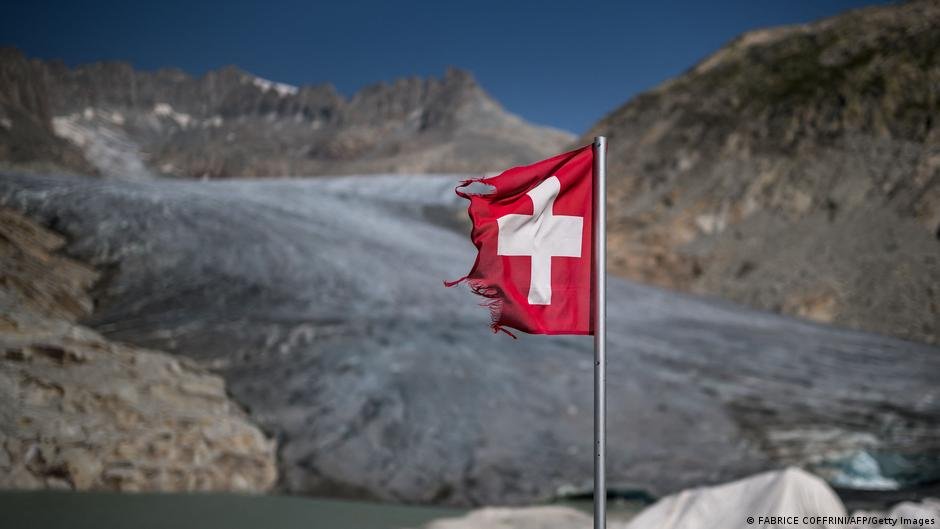
Glaciers in Switzerland have lost nearly 20% of their mass in five years, experts said Thursday.
The experts said Swiss glaciers are melting rapidly and this year saw the second-biggest drop on record due to unprecedented heat waves in Europe.
There was a drop of 5.5% of Swiss glaciers this year, the Glacier Monitoring in Switzerland (GLAMOS) network found in a new study.
GLAMOS warns of total glacier loss
According to the report, over the past five years, the Swiss glaciers have lost almost a fifth of their ice, warning that in the future it could threaten water supplies.
The report also raised questions about the long-term survival of Europe’s ice fields.
“Alpine glaciers have no chance of surviving in the long term under such conditions,” said GLAMOS chief Matthias Huss. “The glaciers this year have lost enormous quantities of ice.”
Little winter snowfall and record summer temperatures led Huss to call 2026 “a catastrophic year.”
To view this video please enable JavaScript, and consider upgrading to a web browser that supports HTML5 video
“This is a glacier that isn’t surviving,” he said. “There will probably be no ice in 10 or maybe 15 years.”
The GLAMOS report reiterates concerns about the impact of global warming, especially in Europe, the world’s fastest-warming continent.
“The warming that we are experiencing now can be attributed 100% to anthropogenic climate change. It’s as simple as that,” Huss said, using the term for climate change caused by human activity. “Without human emissions or fossil fuels we wouldn’t have any warming at the moment.”
If you rely on our team for trusted reporting, please take a moment to select us as your Preferred Source on Googleso you’ll always see our verified news first.
Edited by: Sean Sinico