Taipei mayor re-elected in tight election race
Kuomintang’s Chiang Wan-an beat Democratic Progressive Party’s Puma Shen, who conceded defeat in a race that gripped the island.
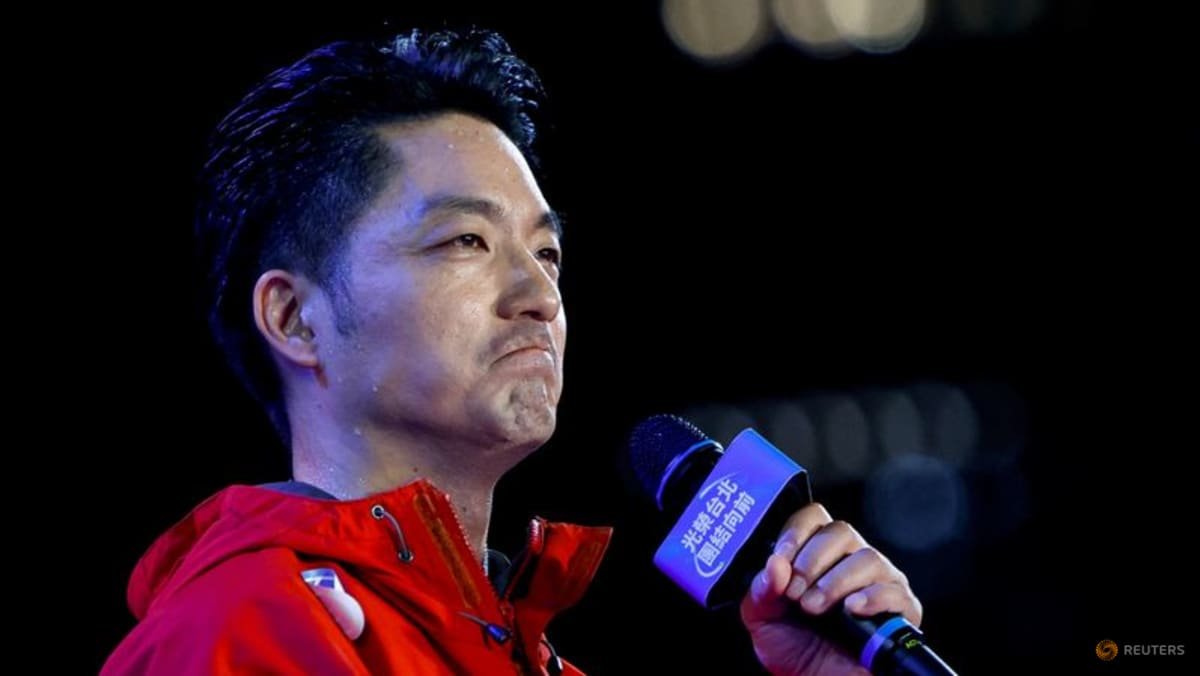
Taipei Mayor Chiang Wan-an, the Kuomintang (KMT) candidate seeking re-election, reacts as he addresses supporters during a campaign rally ahead of local elections in Taipei, Taiwan, on Nov 27, 2026. (Photo: Reuters/Ann Wang)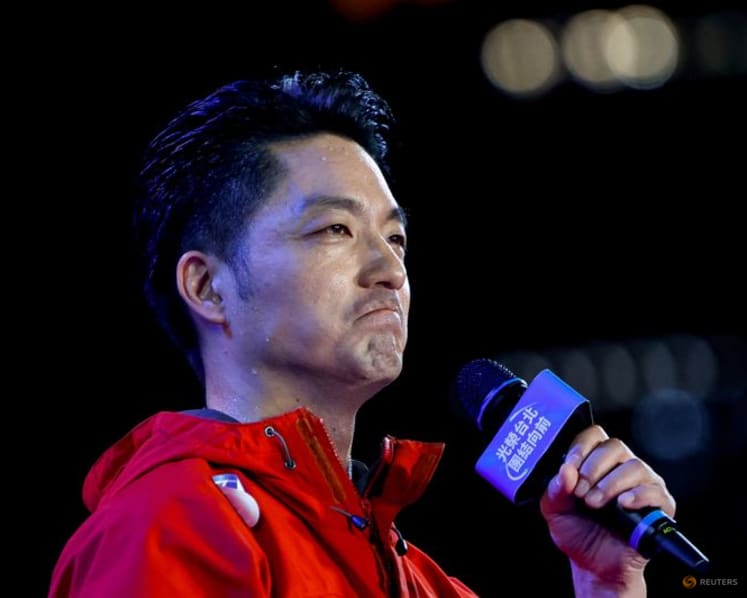
Read a summary of this article on FAST.
Get bite-sized news via a new
cards interface. Give it a try.
Click here to return to FAST
Tap here to return to FAST
FAST
TAIPEI: Taipei Mayor Chiang Wan-an was re-elected on Saturday after a nail-biting race against China critic Puma Shen in local elections held across the island democracy.
Chiang, 47, is a rising star in the Kuomintang party (KMT), which favours closer relations with China, and is seen as a potential future presidential candidate.
Shen, 44, was the underdog in the race for Taipei, which has long been a traditional KMT stronghold in northern Taiwan, along with New Taipei and Taoyuan cities.
After winning easily four years ago, Chiang faced a tougher contest against Shen, who was seeking to become the capital’s first Democratic Progressive Party (DPP) mayor in nearly 30 years.

Guess Word
Crack the word, one row at a time

Buzzword
Create words using the given letters

Mini Sudoku
Tiny puzzle, mighty brain teaser

Mini Crossword
Small grid, big challenge

Word Search
Spot as many words as you can
Voter surveys in the weeks leading up to election day showed Shen closing in on Chiang, or even slightly ahead of his KMT rival.
Shen took the stage in front of thousands of supporters less than four hours after polling stations closed to concede defeat in the race that gripped the island.
“The result is already out – I lost,” Shen told the crowd, confirming that Chiang had won.
With votes from 1,606 of 1,790 polling stations counted, or almost 90 per cent, Chiang had about 53.8 per cent of the vote to Shen’s 45.6 per cent, according to the electoral authorities.
Chiang took the stage a short time later, and thanked Shen and his own supporters.
“Together, we have made this a celebration of democracy,” Chiang told the audience.
Shen, a criminologist and former civil defence activist, became a lawmaker in 2024 and was an outspoken critic of Chinese interference operations against Taiwan.
He was accused by Beijing of being a “separatist” and barred from entering the country.
China views Taiwan as its own territory and has never renounced the use of force to bring the island under its control.
Shen, with no experience of election campaigning and low recognition among voters, was given little chance of success when he entered the race six months ago.
But his savviness on social media and on the stump whipped up a frenzy of support in Taipei and across the island, attracting many voters fed up with traditional politics.
Chiang supporter Chris Hsing, 50, was one of several hundred gathered outside the mayor’s campaign office, where she watched a livestreamed vote count showing her candidate heading to victory.
She said she had been worried that Shen’s huge support during the campaign had put Chiang “in a dangerous position”.
In the end, Taipei voters saw what the mayor “has done, so they will continue to let him stay in this position and keep working hard for everyone”, Hsing said, cradling her pet dog.
Shen supporter Olivia Lee, in her 40s, told AFP she was “disappointed” at the result “because I think Puma is truly remarkable”, but she held out hopes for the next election.
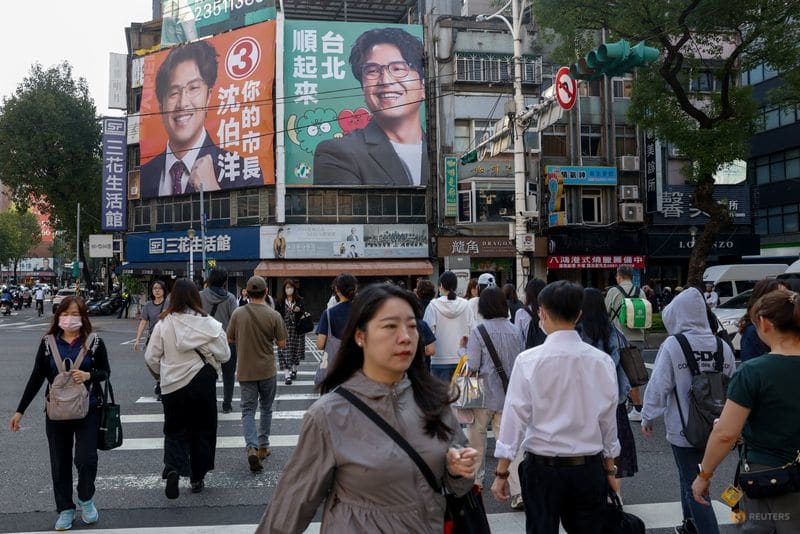
“INNOVATIVE CAMPAIGN”
While Shen “staged a very innovative campaign”, Chiang secured enough support from the city’s “more senior, conservative population”, Albert Tzeng, a former KMT adviser, told AFP.
Those KMT voters were underestimated in polls because of their “reluctance to express their political preferences”, Tzeng said.
“The interesting part is that the strongest force that mobilised them (to vote) is not the campaign of the KMT, but the reaction to the aggressive presence of Shen’s supporters.”
Shen’s political future in the DPP looks more promising despite the loss after showing his broad appeal among voters across the island.
Taiwan’s local elections decide about 11,000 positions, including mayors and magistrates, across its 22 cities and counties.
The government warned that China had used a range of tactics to try to influence the outcome of the elections, including “cognitive warfare” and “transnational repression”.
The KMT was defending the 14 city and county seats it won in 2022. President Lai Ching-te’s DPP was seeking to improve on the five seats it held.
So far, the KMT has declared victory in 10 cities and counties, including Taipei and New Taipei City, while the DPP has claimed nine. An independent has bagged Hsinchu City.
In the biggest upset of the night, the DPP won the central city of Taichung where the outgoing KMT Mayor Lu Shiow-yen is seen as a potential presidential candidate for 2028.
“Losing her home base, she now needs the support of a lot of KMT heavyweights to back her presidential push,” said Lev Nachman, a political science professor at National Taiwan University.
Analysts have cautioned that local elections are not a reliable predictor of how people might vote in presidential ballots, with history showing repeatedly that it can be the reverse.
Source: AFP/rk
Sign up for our newsletters

Get the CNA app
Stay updated with notifications for breaking news and our best stories
Get WhatsApp alerts
Join our channel for the top reads for the day on your preferred chat app

Get bite-sized news via a new
cards interface. Give it a try.
Click here to return to FAST
Tap here to return to FAST
FAST