Testing the waters? Businesses weigh China’s new trade shortcut to Southeast Asia
The Pinglu Canal provides China’s landlocked southwest region with a much shorter water route to the South China Sea – and Southeast Asia. But turning early business interest into sustained demand will be the bigger test, say analysts.
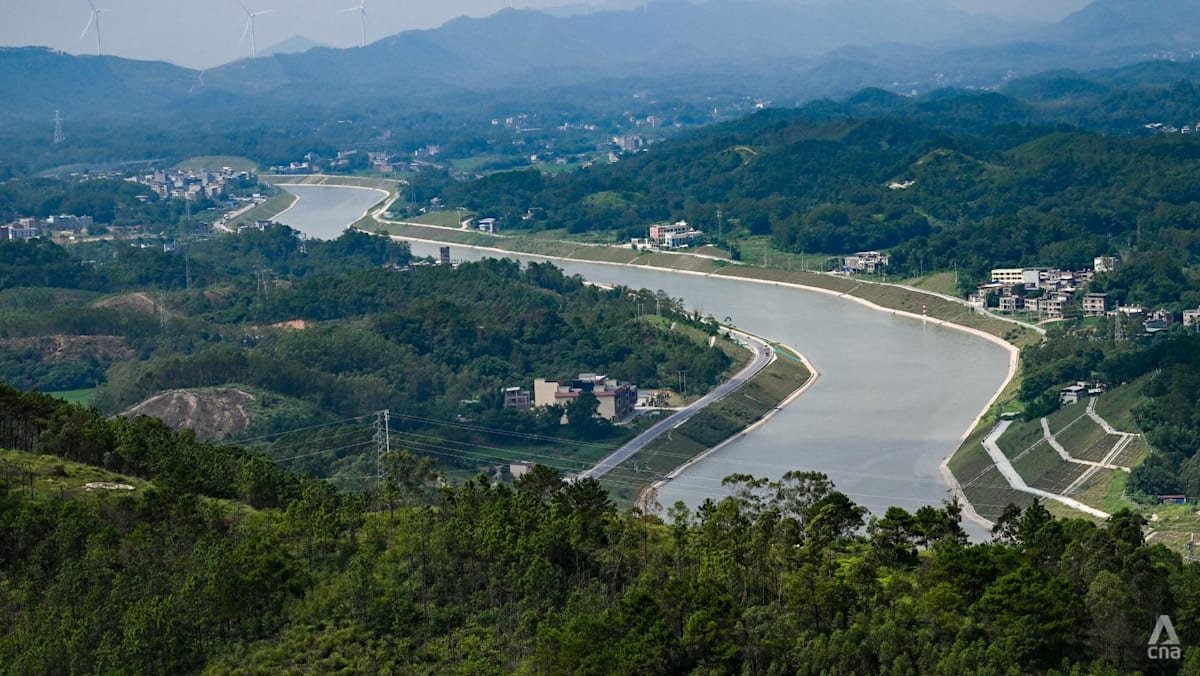
A section of the Pinglu Canal seen in Qinzhou, Guangxi, China on Sep 19, 2026. (Photo: CNA/Lan Yu)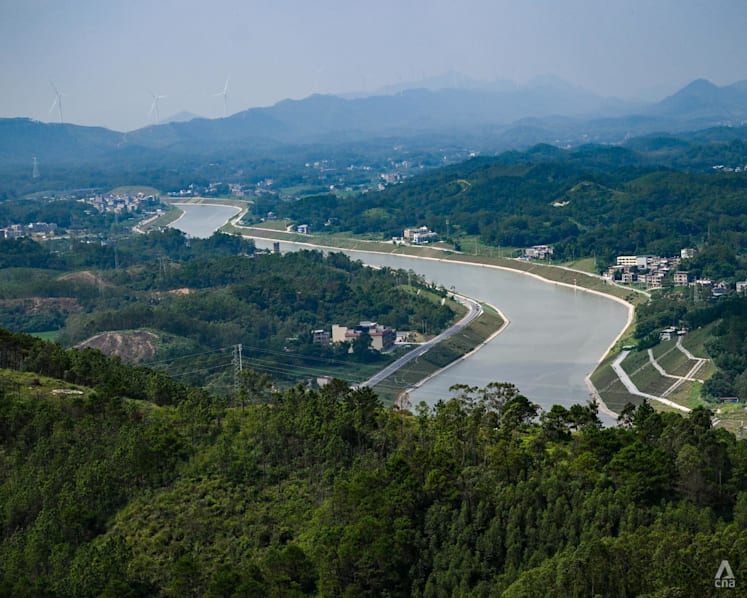
New: You can now listen to articles.

This audio is generated by an AI tool.

Read a summary of this article on FAST.
Get bite-sized news via a new
cards interface. Give it a try.
Click here to return to FAST
Tap here to return to FAST
FAST
NANNING, Guangxi: For one liftmaker in China’s landlocked southwest, getting its products to the coast can cost almost as much as shipping them abroad.
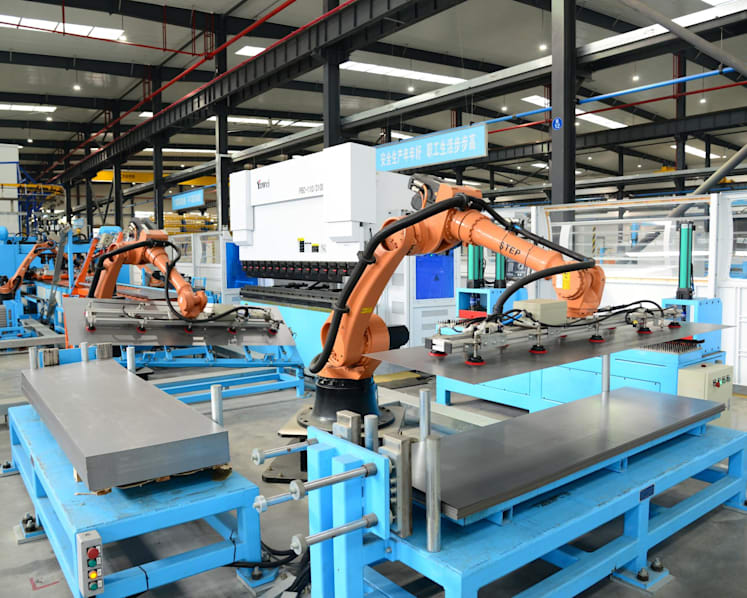
China Aviation Guizhou Elevator exports to Malaysia from its factory in Zunyi, Guizhou. Because the factory is far inland, around 800km by road from Qinzhou Port, each lift must first be transported overland to a seaport.
Simply getting its products to Qinzhou or Shanghai costs 2,000 to 3,000 yuan (US$300 to US$450) more than what manufacturers based in port cities pay.
“That weakens the price competitiveness of our products,” Xu Renyin, 36, who oversees the company’s foreign trade business, told CNA.

Guess Word
Crack the word, one row at a time

Buzzword
Create words using the given letters

Mini Sudoku
Tiny puzzle, mighty brain teaser

Mini Crossword
Small grid, big challenge

Word Search
Spot as many words as you can
“It is a major pain point for inland companies trying to go overseas.”
A new 72.7 billion yuan canal is aimed at narrowing that disadvantage.
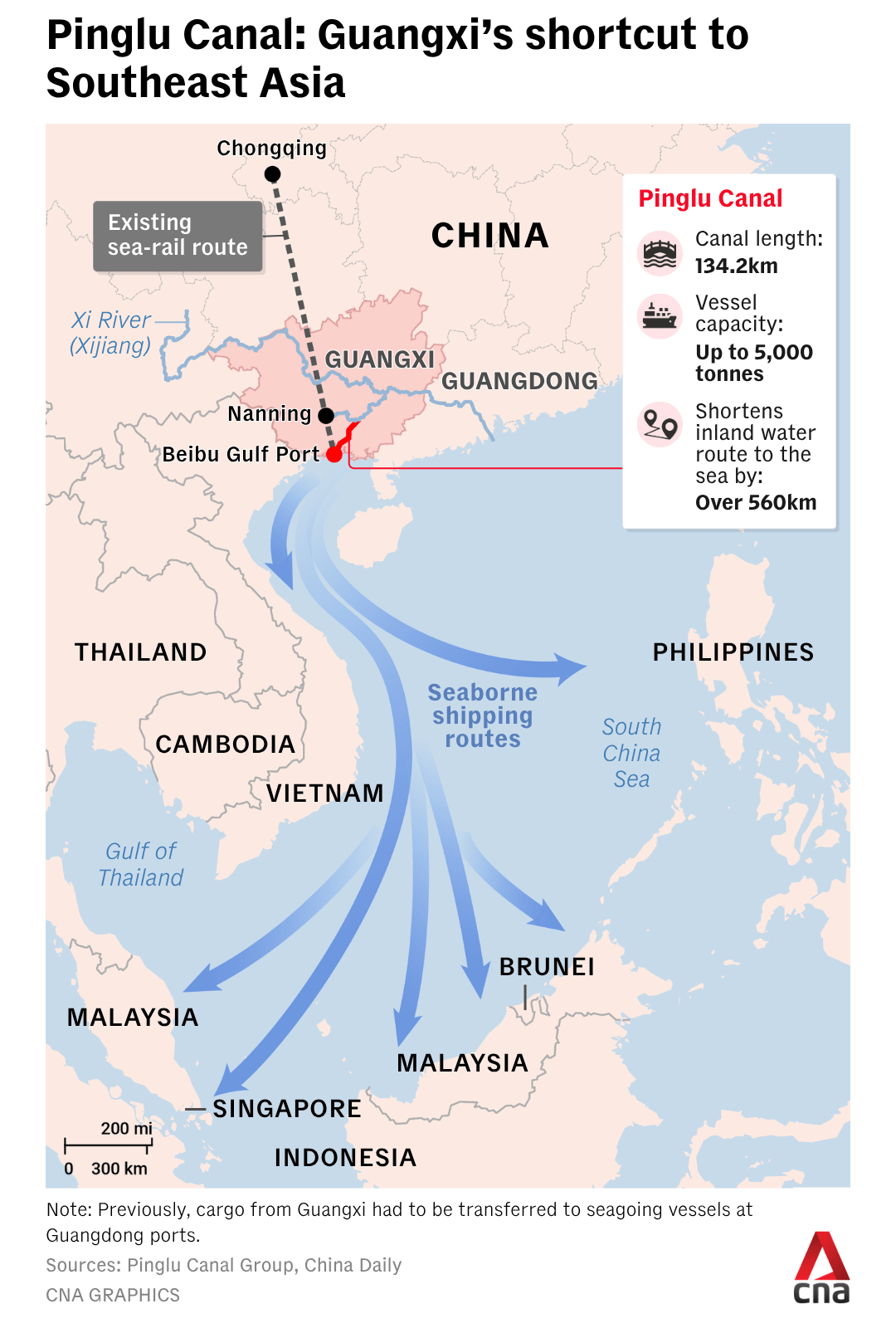
The Pinglu Canal, which opened in Guangxi on Sep 16 after four years of construction, gives inland southwest China a new water route through Qinzhou port to the South China Sea and Southeast Asia.
It cuts more than 560km off the existing river journey through Guangdong and will reduce transport costs by 18 to 30 per cent, generating annual savings of more than 5 billion yuan, according to state media.
The new route has already drawn early interest from businesses. But whether the touted savings materialise – and are large enough to persuade companies to switch from established routes – is less certain.
The canal will need enough cargo flowing both ways to keep freight rates competitive, said analysts.
They added that the longer-term test will be whether it can attract new industries and generate new cargo in southwest China – and whether demand holds up once initial subsidies and incentives are withdrawn.
“Shifting existing cargo is the short-term goal … generating entirely new cargo volumes is what will determine the canal’s long-term commercial value,” Wang Guowen, a logistics expert with the China Development Institute (CDI), a Shenzhen-based economic policy think-tank, told CNA.
A MULTIBILLION-DOLLAR SHORTCUT
State broadcaster CCTV has described the Pinglu Canal as China’s first river-to-sea canal planned at the national level since 1949.
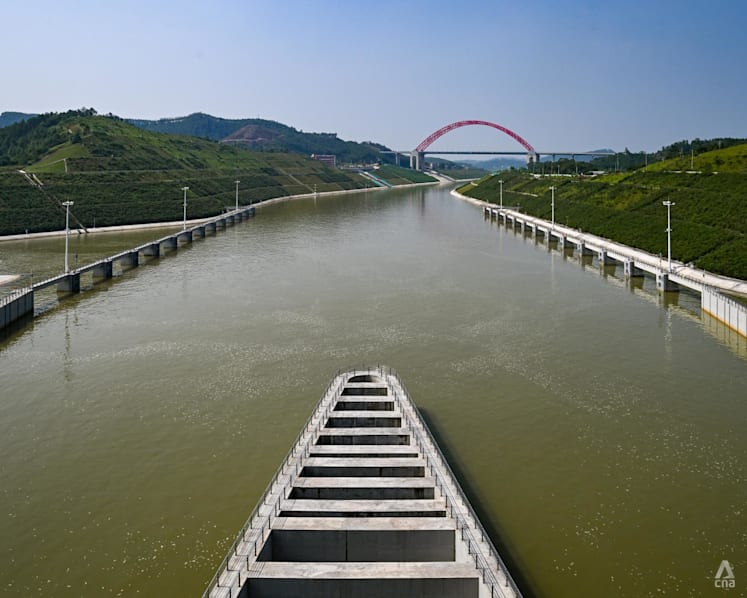
The 134.2km route was not built entirely from scratch. Most of it follows existing rivers that were widened and deepened, while builders cut a new 6.5km channel through the higher ground between them.
Guangxi has a coastline stretching 1,600km from the Guangdong border to the Vietnamese border, but its major rivers flow east towards Guangdong.
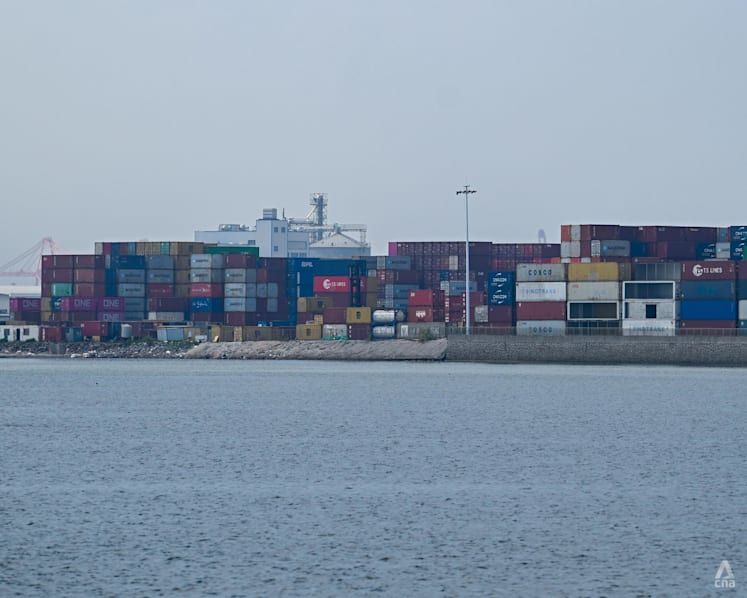
Before the canal opened, river cargo from Nanning and surrounding areas had to travel through the Pearl River system and Guangdong to reach the sea.
“Southwest China has long been at the far end of the country’s water and logistics networks,” Gordon Kee, a research associate at the Hong Kong Institute of Asia-Pacific Studies, under the Chinese University of Hong Kong (CUHK), told CNA.
The new route allows vessels to instead head south towards Qinzhou Port on the Beibu Gulf, effectively creating a shortcut to the sea.
It can accommodate ships with a capacity of up to 5,000 tonnes, with qualified vessels able to sail from inland ports to the sea without unloading cargo along the way.
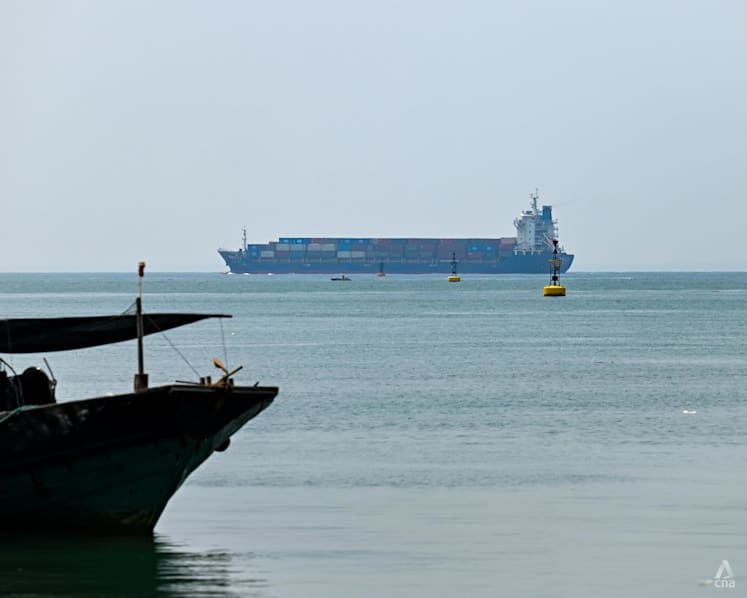
On Sep 8, ahead of the formal canal opening, vehicle parts made by Chinese automaker SAIC-GM-Wuling travelled through the Pinglu Canal en route to Can Tho in Vietnam.
The company said the new route could cut its logistics costs by about 10 per cent. It did not specify its current route taken or how much time or distance the canal would save.
“For us, the freight saved is real profit, and that translates directly into greater price competitiveness in ASEAN (Association of Southeast Asian Nations) and other global markets,” Cai Yan, a senior technical officer at the automaker, told CNA.
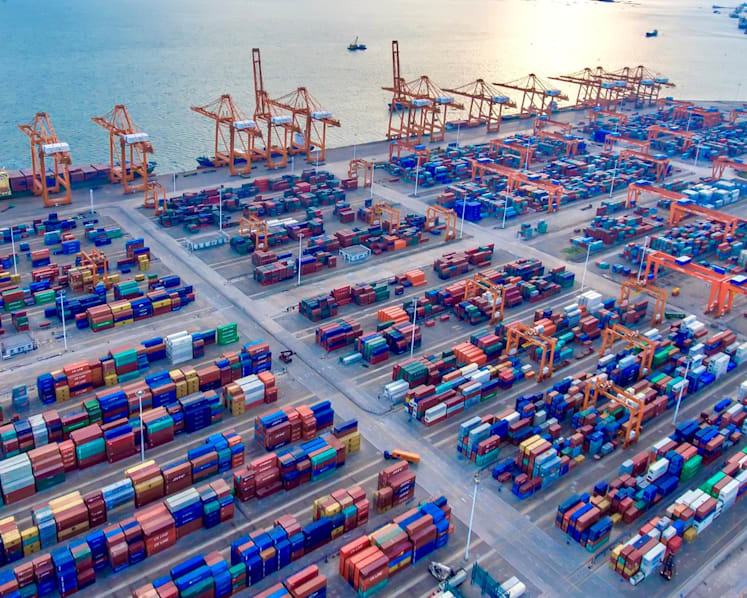
Pinglu also adds a waterway to the New International Land-Sea Trade Corridor, a China-Singapore initiative whose rail-sea service began in 2017, carrying freight from western China by rail to Qinzhou and onward by ship to Southeast Asia and other overseas markets.
Combined with those links, the canal could serve a potential hinterland of about 250 million people across Guangxi and southwest China, a region with major industries and natural resources.
Four days after the canal opened, operator Pinglu Canal Group told CNA it had arranged shipments for more than 30 customers.
The group has also signed agreements covering 3 million tonnes of cargo, said Liang Junze, 39, marketing head at one of its supply-chain subsidiaries.
Of that, 1.8 million tonnes, or 60 per cent, was backed by actual transport contracts, an early indication of demand, although it remains unclear how quickly the contracted volumes will materialise or whether that demand can be sustained.
“The Pinglu Canal is expected to handle at least 5 million tonnes of cargo in 2026 and more than 100 million tonnes annually by 2035,” Liang said.
WHO WILL COME ABOARD?
For some businesses, the new canal is already shaping expansion plans.
Meijiamei is best known for its 120 neighbourhood supermarkets in Nanning. Two years ago, it moved into farming, growing vegetables and passion fruit while raising pigs and fish in a low-waste system.
The company now hopes to use the canal to export produce to Thailand and Malaysia.
“When we started, we were already thinking about going overseas,” deputy general manager Liu Dejun told CNA.
“The catalyst, of course, was the Pinglu Canal.”
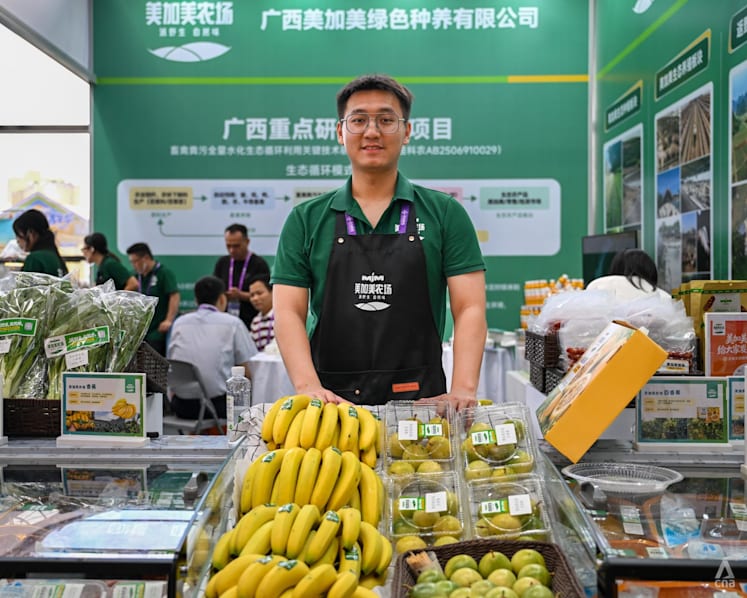
Transporting refrigerated vegetables to Guangzhou by road can cost up to 1 yuan per 500g, Liu estimated. For a 10-tonne truckload, the example he gave, that would amount to about 14,000 to 20,000 yuan.
While Liu did not provide a comparable shipping cost for using the canal, doing so would allow Meijiamei to share vessel space with other companies, he pointed out.
“Provided we have enough production capacity, our freight cost could become almost negligible.”
But Meijiamei has no overseas orders yet. It must produce more, secure export permits and meet overseas food standards.
“Agriculture takes time. You cannot expand production immediately,” Liu said.

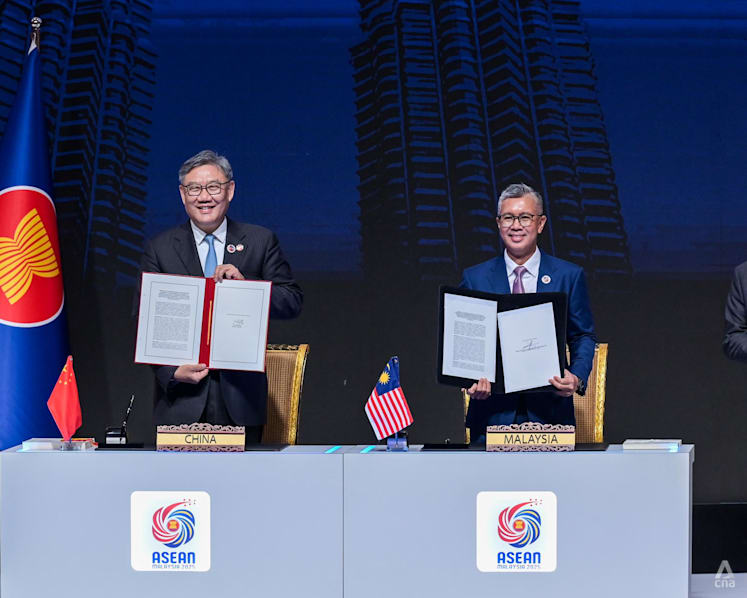
Early canal shipments have included iron ore, coal, steel, plywood and building materials, according to Pinglu Canal Group.
“The first users will be lower-value, high-volume goods that are sensitive to freight costs but not delivery time,” CDI’s Wang, told CNA.
Freight forwarder Hercules Logistics Guangxi told CNA that “around eight or nine” of its more than 300 clients have expressed interest in using the canal, mainly chemical companies based in southwestern China.
Two were testing the route or preparing shipments, including a shipment of nano calcium carbonate, a material used to make products such as rubber, plastics and coatings.

Companies shipping electronics are less likely to switch to using the canal, said Hong Xiaomei, a customs manager for Hercules Logistics Guangxi.
She said Guangdong ports offer more frequent sailings and better services for combining smaller shipments into one container. Air freight also provides a faster option for urgent goods.
“Companies compare the total door-to-door cost, not simply the freight charge for the canal section,” Hong told CNA.
CAN TRADE FLOW BOTH WAYS?
Ships will also need cargo for the return journey, or empty sailings could push up freight rates, noted CDI’s Wang.
ASEAN offers a potentially large source of two-way cargo, although current trade flows are tilted towards Chinese exports. The regional bloc has been China’s largest trading partner since 2020.
In 2025, China-ASEAN trade surpassed US$1 trillion for the first time, up 7.4 per cent year-on-year. China exported US$665.22 billion worth of goods to the bloc that year, compared with US$389.43 billion in imports, according to Chinese customs data.
The two sides also signed an upgraded free-trade pact last year that included supply-chain connectivity.
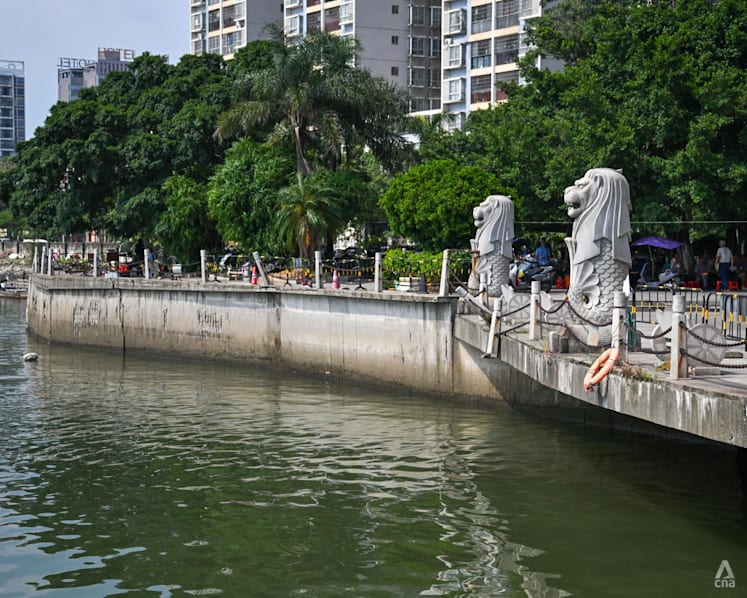
Guangxi is looking in part to Southeast Asian fruit to help fill returning vessels. Domestically, Qinzhou competes for cargo with ports in Guangdong, particularly Guangzhou, Shenzhen and Zhanjiang.
In 2025, more than one-third of China’s fruit imports from ASEAN entered through Guangxi. The shipments were worth 42.92 billion yuan, according to official figures.
Ahead of the canal’s opening, Guangxi approved a fruit distribution network centred on Nanning, Qinzhou and Chongzuo, aimed at supporting two-way trade with ASEAN.
Lou Binghai, deputy director of a Guangxi government body supporting the fruit industry, said some local produce previously had to be trucked to Guangdong before being shipped overseas.
Using the canal instead could save “about 4,000 yuan per container”, he said.
Meanwhile, Malaysia illustrates both the potential and challenge of building these two-way flows.
Under the bilateral “Two Countries, Twin Parks” initiative, the China-Malaysia Qinzhou Industrial Park is paired with the Malaysia-China Kuantan Industrial Park in Malaysia’s Pahang state.
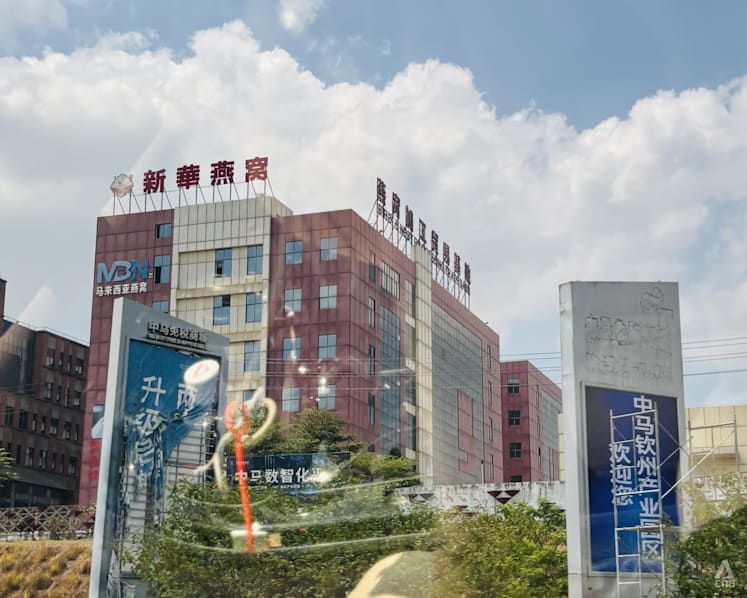
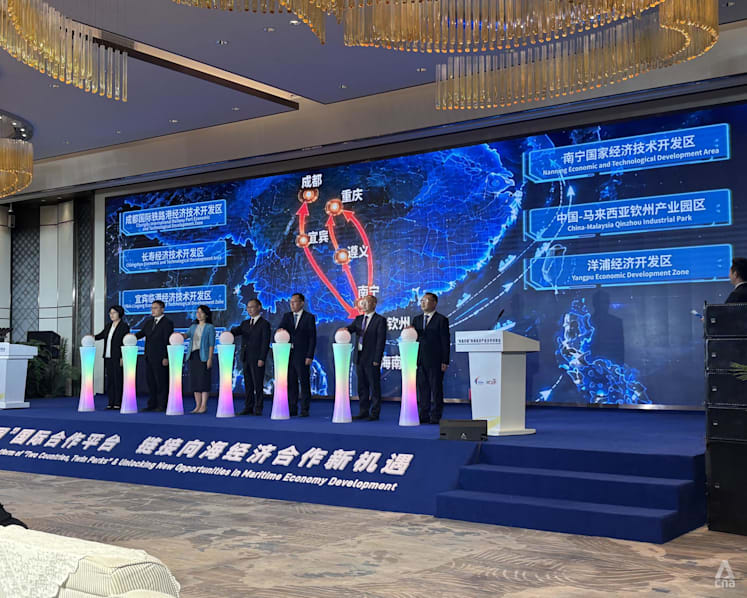
Connecting Qinzhou and Kuantan ports with road, rail and shipping networks in both countries could turn the twin industrial parks into “a key node connecting China and ASEAN”, said Looi Hei Tyng, deputy president of the Associated Chinese Chambers of Commerce and Industry of Malaysia.
He was speaking at a maritime industry conference during the 23rd China-ASEAN Expo, which kicked off in Nanning on Sep 17 – a day after the opening of the Pinglu Canal.
Yet closer integration would require more cargo to flow from Malaysia to China, he told CNA separately on the sidelines of the expo, adding that the imbalance in trade must be addressed.
In 2025, Malaysia imported RM353.03 billion (US$86.61 billion) worth of goods from China, nearly twice the RM188.88 billion it exported there, according to data from Malaysia’s Department of Statistics.
“It cannot be one-way,” he said. “A lot of Chinese goods come to Malaysia, but there are not as many Malaysian goods going back to China.”
Existing logistics infrastructure could help move cargo between inland China and overseas markets.
Singapore container shipping company Pacific International Lines (PIL) is part of a joint venture involved in developing and operating a logistics park in Nanning that could consolidate, store and distribute canal cargo.
CNA asked PIL whether it had received firm customer interest or cargo commitments, and whether it planned to introduce or adjust any services after the canal opened.
A PIL spokesperson described customer feedback as “encouraging”, but did not disclose any firm cargo commitments or specific service changes.
“We will continue to strengthen cooperation with ports, logistics partners and customers, and further enhance connectivity between southwest China, Qinzhou Port and PIL’s global network,” the spokesperson said.
At Qinzhou, where the Pinglu Canal meets the sea, Singapore-headquartered global port operator PSA International has investments in a container terminal, an adjacent railway depot and a digital port platform.
“Our container terminal, Beibu-Gulf International Container Terminal, is prepared to handle barges transiting the waterway,” Lim Chin Chuan, PSA International’s regional CEO for Northeast Asia, told CNA.
CUHK’s Kee said Qinzhou could focus on bulk cargo and nearby ASEAN markets, while larger hubs in Singapore, Guangdong and Hong Kong connect goods to markets farther afield in Europe, North America and elsewhere.
“Competition and cooperation will coexist,” he said.
MAKING A LASTING SPLASH
CDI’s Wang said it will take three to five years to assess the canal’s commercial performance.
The full journey from factory to customer must cost less than established routes through Guangdong or by rail, he said. Services must also run reliably, with cargo moving in both directions.
“The first year is a trial-operation and subsidy period, so the data may be distorted,” Wang said.
Pinglu Canal Group has said that ships will not have to pay fees to pass through the canal’s locks through 2026. Guangxi is also preparing subsidies for cargo transferred between trains, river vessels and seagoing ships.
Wang said the clearest test would come after that support is withdrawn.
“Only market-driven cargo paid for by shippers represents real and sustainable demand,” he said.

CUHK’s Kee said the savings must also be large enough to justify switching routes.
“If the saving is only 3 to 5 per cent, businesses will have to consider whether switching is worthwhile,” he said. “It needs to be at least 10 to 15 per cent.”
While the canal’s long-term commercial performance will take years to assess, it has already been celebrated in China as a landmark infrastructure project and an engineering showcase.
In Guangxi, that enthusiasm is visible on the ground, with the new waterway drawing crowds of visitors.
Four sightseeing boat routes opened on Sep 16, with demand exceeding capacity and bookings stretching into November, according to Nanning Transport Investment Group.
When CNA visited the Madao lock complex – one of three along the Pinglu Canal – on Sep 19, busloads of visitors were arriving from across Guangxi. Its chambers now stand where rice fields once stretched.
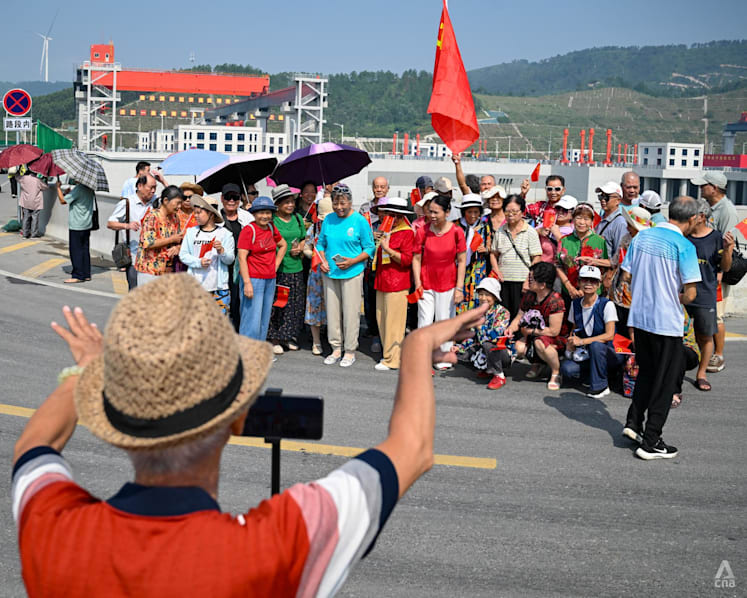
Among them was Lu Jianhua from Lingshan county. Back for his third visit since construction began, the 72-year-old took in the view of the vast complex.
“The world will be looking at Guangxi,” he said.
China Aviation Guizhou Elevator has yet to commit cargo to the canal. Xu said the firm will decide after assessing the full cost.
“If it proves suitable, we will definitely use the Pinglu Canal,” he said.
Source: CNA/mc(ws)
Sign up for our newsletters

Get the CNA app
Stay updated with notifications for breaking news and our best stories
Get WhatsApp alerts
Join our channel for the top reads for the day on your preferred chat app

Get bite-sized news via a new
cards interface. Give it a try.
Click here to return to FAST
Tap here to return to FAST
FAST