The Lotus Emira was meant to be the carmaker’s last petrol car. Now its future looks hybrid
Once expected to mark the end of an era, the Lotus Emira has been given a reprieve as the British marque retreats from its all-electric plans.
Once expected to be Lotus’ final petrol-powered model, the Emira is now set to continue into the carmaker’s hybrid era. (Photo: Lotus)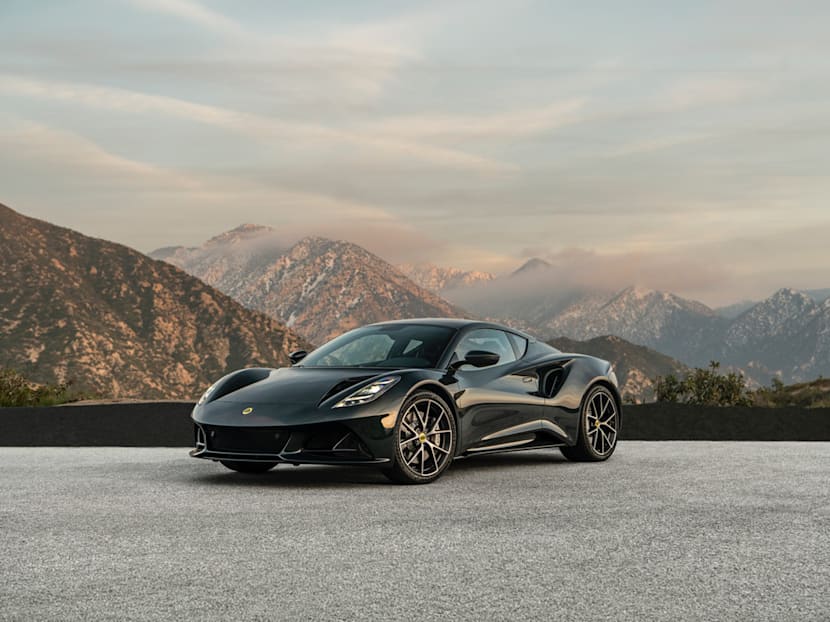
New: You can now listen to articles.

This audio is generated by an AI tool.

By
Read a summary of this article on FAST.
Get bite-sized news via a new
cards interface. Give it a try.
Click here to return to FAST
Tap here to return to FAST
FAST
The future is no longer all-electric – at least not at Lotus.
In May, Lotus (now owned by China’s Geely group) announced that it was abandoning its goal of becoming an all-electric carmaker by 2028. Under its new Focus 2030 strategy, the company plans a line-up comprising both hybrids and battery-electric vehicles.
Lotus is not alone. Softer-than-expected demand for electric vehicles has prompted several established carmakers, including Rolls-Royce and Volvo, to revise their electrification targets.
After several delays, Lamborghini, for example, eventually said it would abandon its plans for a fully-electric supercar in 2025. Instead, its highly-anticipated Lanzador will now be a 2+2 plug-in hybrid when it finally arrives at the end of the decade.
Jaguar, meanwhile, appears to be unfazed and on course to deliver the Type 01, the first EV in the company’s bold new all-electric chapter. The ground-breaking model was spotted on the roads of Monaco when testing began in May, ahead of the production model’s planned unveiling in October.
A HYBRID FUTURE
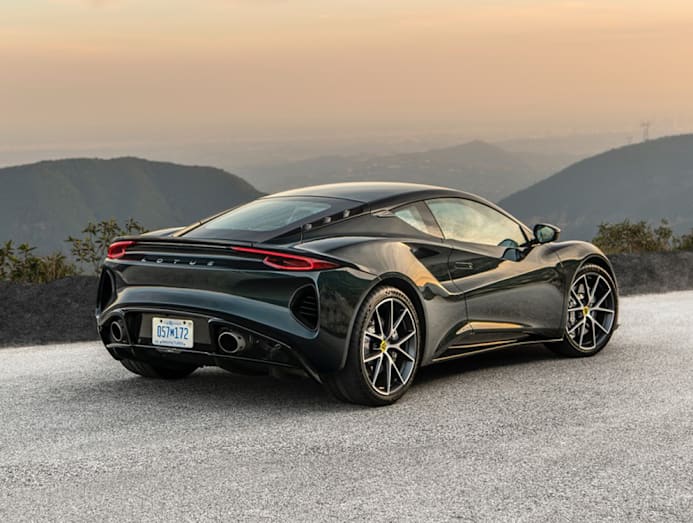
If the future is now hybrid, where does that leave the Lotus Emira?
We had initially conceived this review as an in memoriam of sorts – a farewell to the last petrol-powered Lotus and, perhaps, the last purist’s sports car from a marque with genuine racing pedigree.
The current Emira is offered with either a turbocharged 2.0-litre four-cylinder engine supplied by Mercedes-AMG or a supercharged 3.5-litre Toyota V6. Both powertrains face difficulties meeting forthcoming European emissions requirements.
Lotus therefore faced a choice: Retire the Emira or transform the powertrain to comply with the new rules.
Enter the incoming 2027 Emira, which the company has said will feature one of two new powertrains: A plug-in hybrid setup, as well as a revised V6 engine, which should allow the Emira to survive beyond the end of the decade.
Now it’s worth noting that Lotus was working on a brand new pure EV model that was intended to replace the Emira. Codenamed Type 135 and scheduled for a 2028 release, the new unnamed model will now be a hybrid V8 instead, in line with the company’s latest pivot away from a pure EV strategy.
THE MOST ACCOMPLISHED LOTUS YET?
The fear of loss is a funny thing. We tend to grasp something more fiercely when the threat of its extinction looms large – as many enthusiasts did when the Emira seemed to be on its farewell tour.
Now that the British manufacturer’s iconic two-seater sports car has received an indefinite stay of execution, the notion of its preciousness might have slipped a peg, truth be told.
Launched in 2021, Lotus claimed that the Emira has the world’s most powerful four-cylinder in series production and quickly found itself pitted against the Porsche 718 Cayman and the Alpine A110.
Its line-up has since grown to include several variants with different powertrain options and Turbo models flaunting different specs and tuning – an attempt, perhaps, to rival Porsche, and its never-ending powertrain configurations and options for any given model.
While the Emira no longer has to compete with these ghosts of automotive past as both models have ceased production in the past year, Lotus has just brought to market a brand new variant– the Emira 420 Sport.
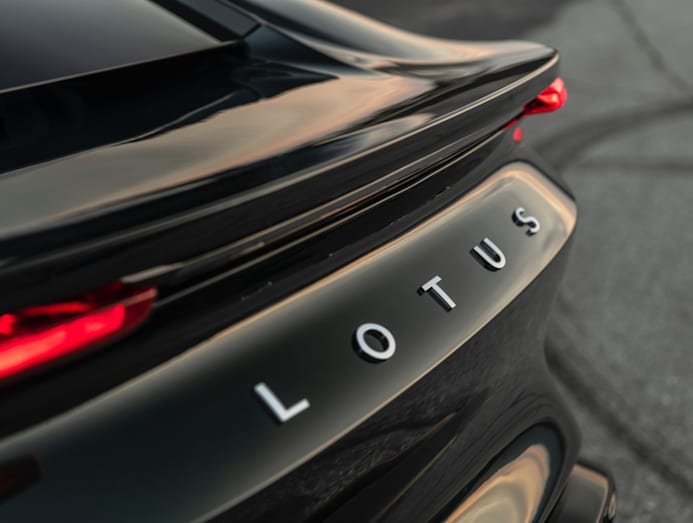
It’s touted as a “shrink-wrapped” version of the existing Emira, featuring a lowered chassis, and performance upgrades and aerodynamic improvements that translate to quicker acceleration, all in a lightweight package that will be delivered from August onwards.
But what of the Emira we drove?
FOUR CYLINDERS, PLENTY OF FIGHT
Of the two available powertrains, we tested the Emira 2.0 Turbo First Edition, whose turbocharged Mercedes-AMG four-cylinder engine produces 400hp and 480Nm of torque. That translates into brisk performance: The car completes the zero-to-100kmh sprint in 4.4 seconds.
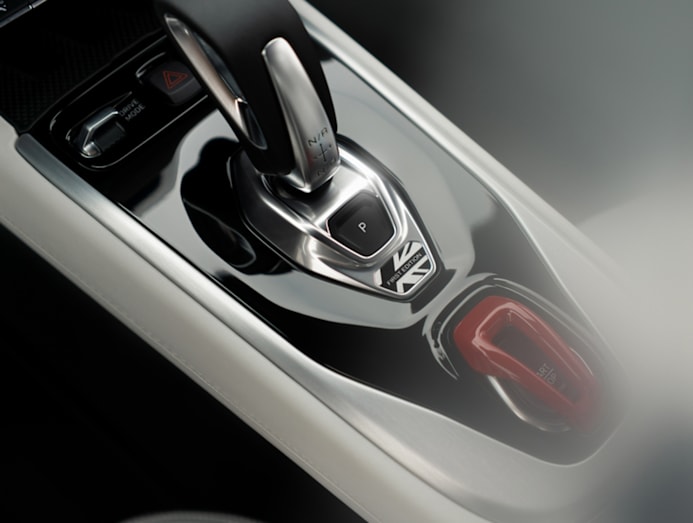
The First Edition unit features exclusive badging and comes bundled with a series of highly-specced performance upgrades and premium-option packages as standard. So you get a suite of high-end features such as the premium KEF audio system, Goodyear Eagle F1 SuperSport tyres, and the Lotus Design Pack, a sporty trim that includes sports pedals and other cool aesthetic finishes.
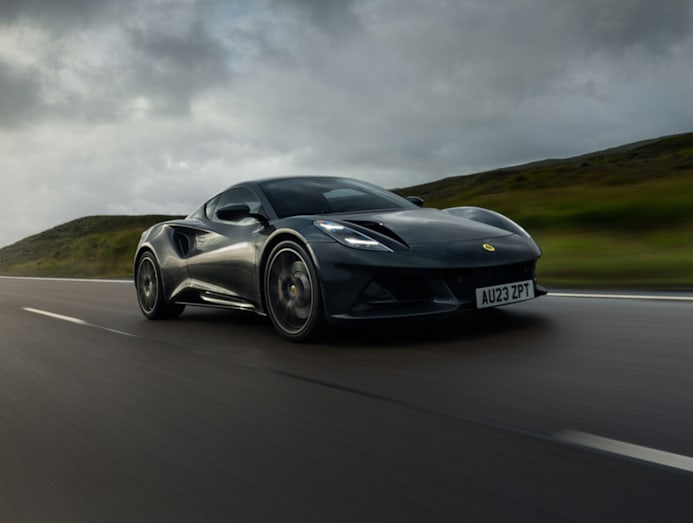
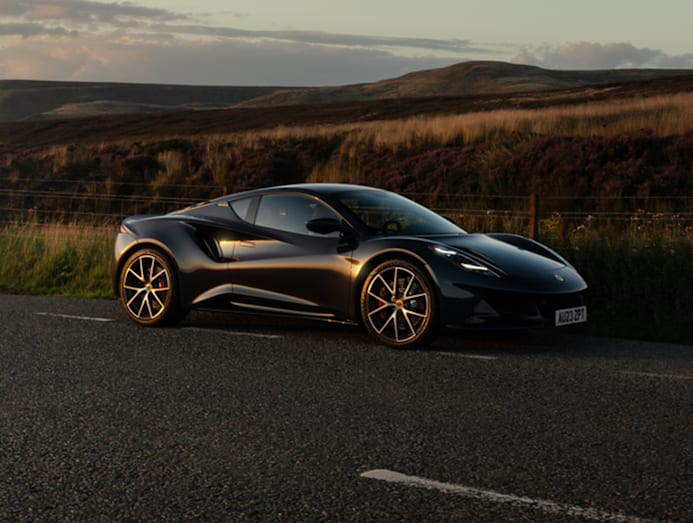
In terms of aesthetics, the Emira borrows its bold styling from the Evija, Lotus’ limited-edition, all-electric hypercar although its proportions are less dramatic.
Consider it a baby supercar designed for everyday use – one with a cabin-forward, low-slung, sculpted silhouette paired with aggressive side air intakes and muscular haunches that speak of its agility.
On the road, that agility quickly becomes apparent.
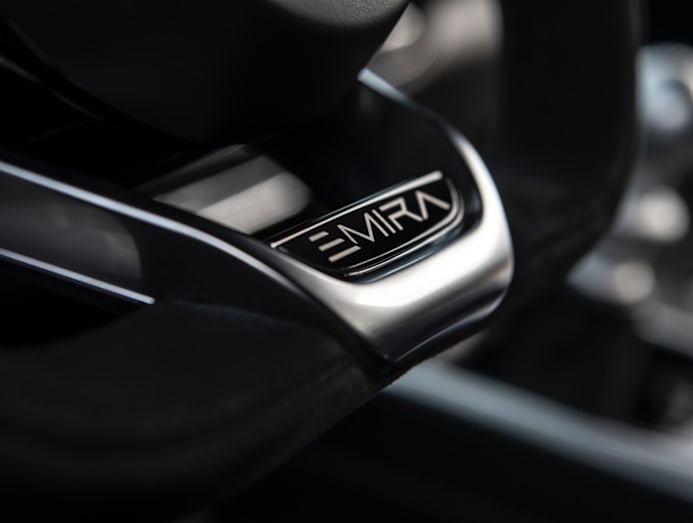
It feels a little like a miniature fighter jet on wheels – reminiscent of the original Elise, but with considerably more power and punch.
The mid-engined sports car flaunts a lightweight, stiff chassis structure and handles wonderfully on the roads, with visceral thrills awaiting every corner.
This 2.0-litre variant comes with an eight-speed dual-clutch automatic transmission, while you also get a manual option in the V6 version with the Toyota block for the purist pleasure of full manual control over the machine.
Like many high-performance sports cars, the Emira clatters ungraciously at low speeds, which actually gives the engine a bit of character. Once you climb up the rpms, it sings like the mating call of a male nightingale in the wild. Suffice to say, the Emira has one of the most vocal turbochargers you’ll experience on a production car, which makes for a lot of fun each time you tease the throttle.
There is plenty of feel through the pedals, while the steering is quick and responsive. The grunts, whistles and rising engine note are reminders to savour cars such as this while they remain – machines whose appeal lies not only in their speed, but also in the sensations and emotions they stir.
THE MOST PRACTICAL LOTUS?
The Emira is also far easier to get into and out of than earlier Lotus sports cars.
You sit low in the cabin, which feels more coupe-like and less sports car cockpit, and even lower on the newly introduced 2026 Emira 420 Sport version.
The interior’s upmarket feel comes from quality upholstery and trim materials, though some elements may appear a little plasticky. We imagine shifting gears would be a lot more satisfying if the paddle shifters behind the steering wheel weren’t as lightweight but bank-vault solid instead, like those Porsche Caymans were known for.
Some shared Geely-group influence is apparent. The automatic gear selector operates much like those in Volvo’s combustion-engined cars, while the steering-wheel controls resemble those used by Volvo and Polestar.
Your in-cabin digital experience begins with the touchscreen in the centre of the dash, complemented by the driver’s instrument panel behind the steering wheel. Graphics are clean and unfussy, but the software is a tad sluggish and response time could be improved, especially when you consider the quantum leaps in technology other luxury carmakers are making these days.
That said, we like that the Emira hasn’t gone full-digital. There are still analogue buttons and touch controls for certain functions, such as proper air-con and audio dials so you can easily access them from muscle memory, while keeping your eyes on the road.
There are thoughtful storage solutions, including a deep storage cabin under the armrest of the centre console and a handy storage shelf behind the seats.
There’s no frunk, unfortunately, and the 151-litre boot is on the shallow side, with only enough space for a small suitcase or a golf bag. So is the interior spacious and comfortable enough to qualify the Emira as a practical road-tripper? Sure, but a two-door grand tourer for one. Which is only half the fun.
Will the Emira go down in history as ‘The most accomplished Lotus ever made’, as the company has happily trumpeted for years? Possibly, had 2026 indeed been its curtain call. With the future uncertain but certainly hybrid, who really knows anymore?
Source: CNA/bt
Get bite-sized news via a new
cards interface. Give it a try.
Click here to return to FAST
Tap here to return to FAST
FAST