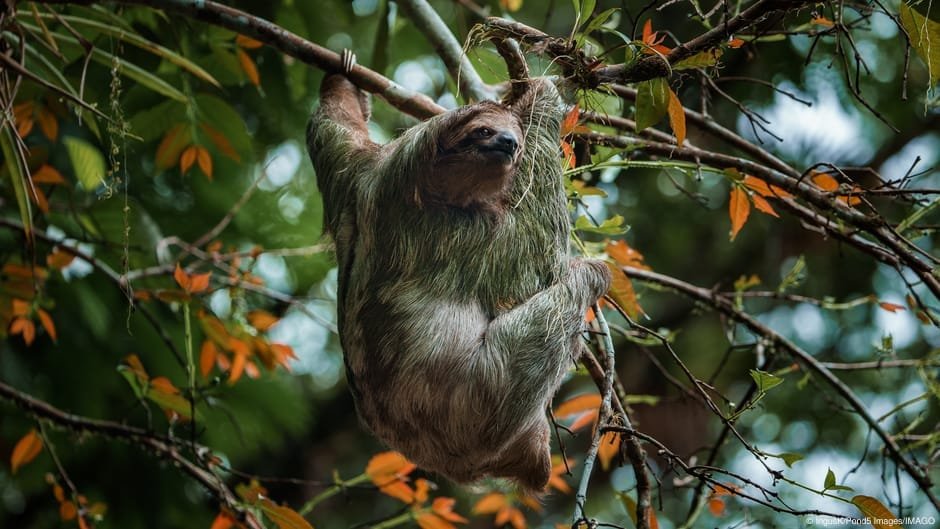
In Costa Rica, conservationists are installing rope bridges between trees so sloths can safely navigate the treetops despite urban development, cross between separate habitats and avoid dangers on the ground.
Image: IngusK/Pond5 Images/IMAGO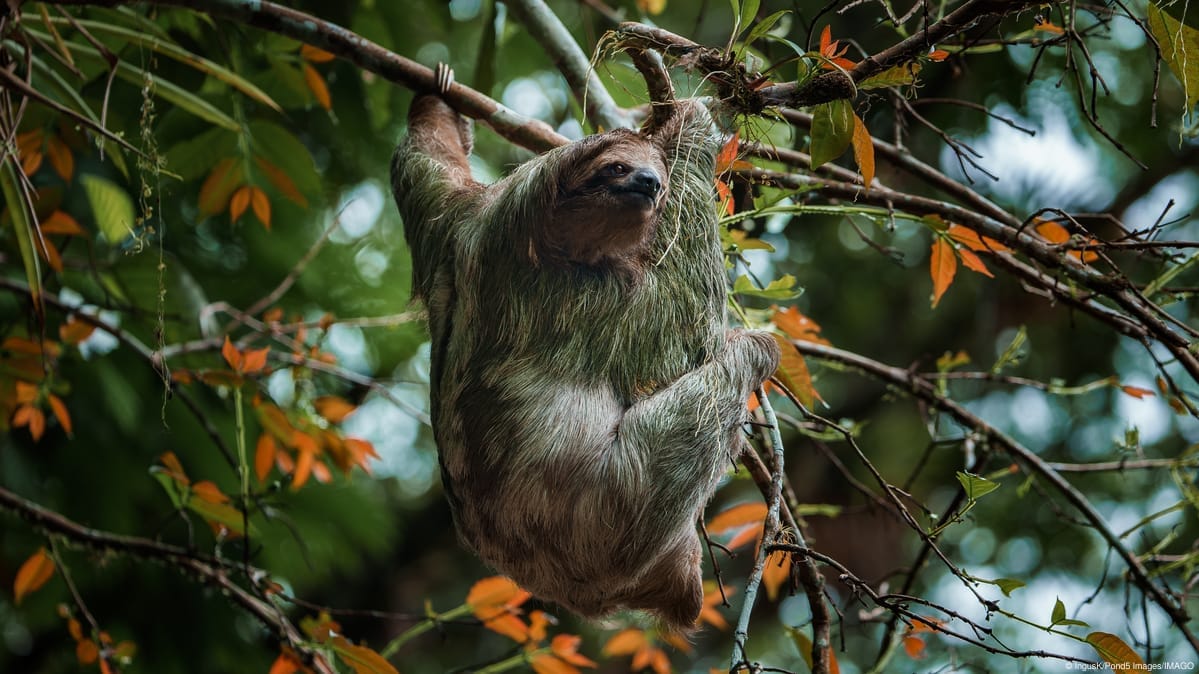
Unlike monkeys, sloths cannot jump from tree to tree. Even small gaps in the tree canopy often force them onto the dangerous ground, where dogs, vehicles and power lines pose a threat. Along Costa Rica’s Caribbean coast, conservationists are installing rope bridges, which provide the animals with safe passage through the increasingly developed landscape.
Image: Ivan Valencia/AP Photo/picture alliance
The Sloth Conservation Foundation has already installed about 410 rope bridges to help sloths move safely through the treetops. “The wildlife bridges that we install are just made from single ropes, which don’t look very elaborate, but for arboreal species, they work,” explains founder and zoologist Rebecca Cliffe, who has been researching sloths for nearly two decades.
Image: Ivan Valencia/AP Photo/picture alliance
After Cliffe saw many animals injured by dogs and other “ground dangers” in a sloth sanctuary nearly 20 years ago, she began experimenting with simple rope bridges. With very little money, she strung individual ropes between trees. Since then, cameras have recorded more than 22,000 crossings by wildlife, including species other than sloths, she told The Associated Press.
Image: Ivan Valencia/AP Photo/picture alliance
Sloths spend most of their lives in trees and use familiar paths to find food and shelter. Even a 3-meter (10-foot) gap between tree canopies can lead them off their usual route. Cliffe calls this “microfragmentation.” “They’re creatures of habit,” she said. When their environment changes, they often still try to follow the paths they learned early on.
Image: Ivan Valencia/AP Photo/picture alliance
Costa Rica has been praised for having reversed decades of deforestation: According to a 2023 report by the Organization for Economic Cooperation and Development, forest cover has increased from an estimated 21% of the country’s land area in 1987 to 59%. However, despite this recovery, many habitats remain threatened by increasing development and tourism infrastructure.
Image: Ivan Valencia/AP Photo/picture alliance
Despite the increased forest cover, many areas remain isolated from one another. While sloths use rows of trees and hedges as connections between forest patches, these are not always sufficient. In addition to rope bridges, it’s necessary to protect existing forests, create new ecological corridors and ensure environmentally sustainable development.
Image: Ivan Valencia/AP Photo/picture alliance
At the Sloth Sanctuary of Costa Rica, a rescue center for sloths near the small town of Penshurst, visitors can observe animals that are unable to survive on their own in the wild due to serious injuries, physical limitations or the early loss of their mothers. The effects of climate change, including heat and drought, also threatens these animals.
Image: Ivan Valencia/AP Photo/picture alliance
At the rehabilitation center, rescued and orphaned baby sloths are cared for in separate enclosures. The youngest are placed in incubators and fed milk, while older animals are given leaves and learn to climb outdoors. But it’s nearly impossible to replace a mother. Young sloths need about a year to learn how to forage for food and navigate safely through the forest.
Image: Ivan Valencia/AP Photo/picture alliance
To better track sloth populations, Cliffe’s organization relies on thermal-imaging drones, sniffer dogs and field studies. In the long term, the goal is for more trees to recreate natural corridors. For Cliffe, hope lies in many small steps. “It’s the cumulative power of many individual actions,” she told AP. “That’s what really gives me hope.”
Image: Ivan Valencia/AP Photo/picture alliance9 images1 | 99 imageshttps://p.dw.com/p/5Pw17