Taiwan bets on premium coffee, with Alishan’s beans commanding some of the world’s highest prices
In the final instalment of a three-part series on Taiwan beyond semiconductors, CNA looks at how the island is building a reputation for small-batch specialty coffee.
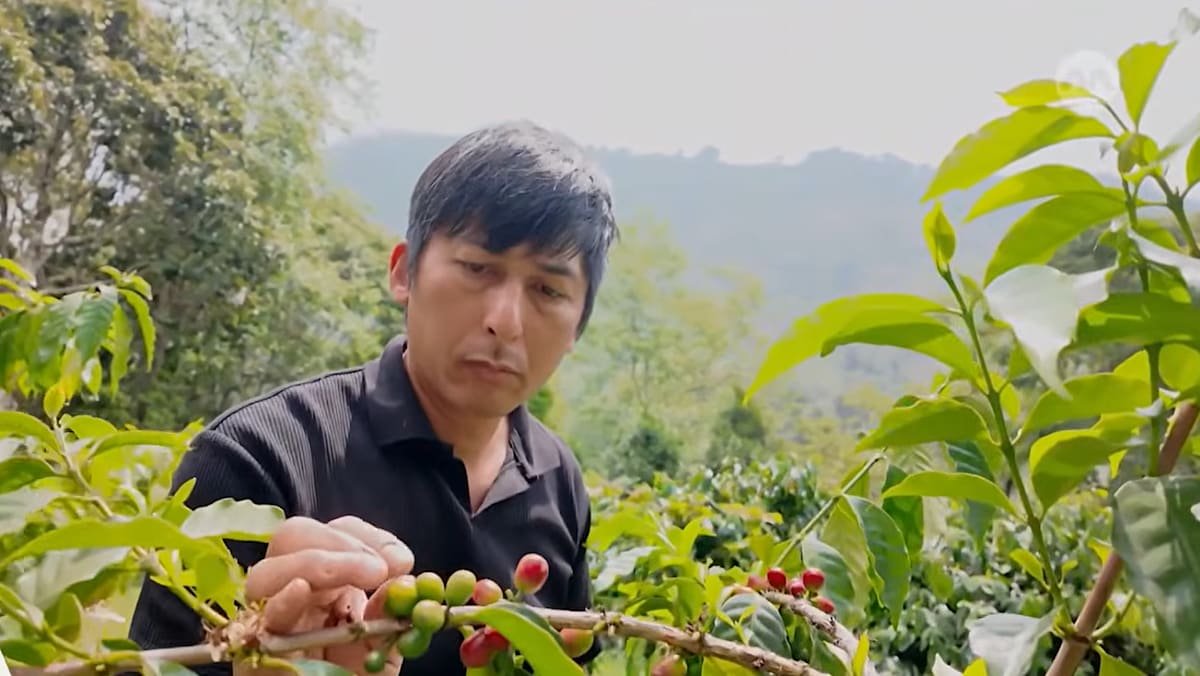
In the scenic mountains of Alishan, more than 1,200m above sea level, farmers produce small batches of specialty coffee that are attracting buyers willing to pay more.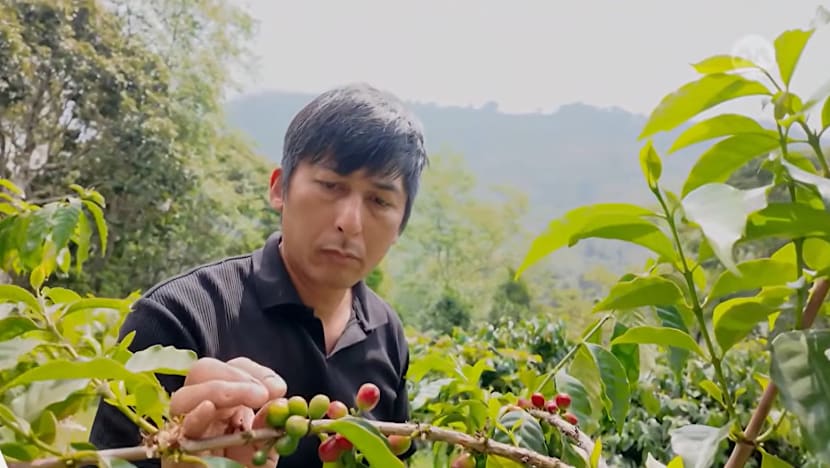
New: You can now listen to articles.

This audio is generated by an AI tool.


Read a summary of this article on FAST.
Get bite-sized news via a new
cards interface. Give it a try.
Click here to return to FAST
Tap here to return to FAST
FAST
CHIAYI COUNTY, Taiwan: Taiwan produces only a small amount of coffee each year, but its specialty beans fetch some of the world’s highest prices as growers prioritise quality over scale to carve out a niche in the premium coffee market.
In the scenic mountains of Alishan, more than 1,200m above sea level, farmers produce small batches of specialty coffee that are attracting buyers willing to pay more.
At last year’s Cup of Excellence, an annual auction platform for high-quality coffees, Taiwanese beans recorded the world’s highest average selling price at US$52 a pound, nearly three times the average price of beans from second-placed El Salvador.
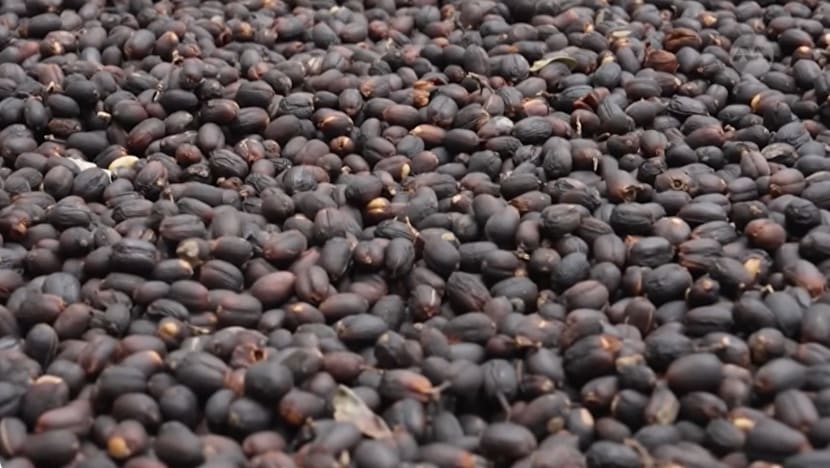
QUALITY ABOVE QUANTITY
Among Alishan’s leading growers is the family-run Zou Zhou Yuan farm.

Guess Word
Crack the word, one row at a time

Buzzword
Create words using the given letters

Mini Sudoku
Tiny puzzle, mighty brain teaser

Mini Crossword
Small grid, big challenge

Word Search
Spot as many words as you can
Founder Fang Cheng-lun says the region’s cooler temperatures give the coffee its distinctive flavour.
“Because of the cooler climate, the coffee cherries grow much more slowly,” said Fang. “That slower growth allows them to build up more flavour compounds, sugars and density.”
That slower ripening process has helped Taiwan’s beans stand out among those from traditional coffee-producing countries such as Brazil, Colombia and Ethiopia.
However, observers say that quality comes at a price. Farmers carefully hand-pick only ripe coffee cherries before processing them, a labour-intensive approach that drives up production costs.
“The daily wage I pay one coffee picker could hire more than 40 workers in Ethiopia, or more than a dozen in Central America,” said Fang.
“On top of that, Taiwan has very limited land, so it’s not easy to grow coffee on a large scale.”
Taiwan produces a small amount of coffee each year – around 1,000 tonnes. But it imports about 50,000 tonnes of beans to satisfy domestic demand.
Unable to compete on volume, growers are instead focusing on craftsmanship and producing distinctive, high-quality beans that command premium prices.
BREWING GLOBAL AMBITIONS
That strategy is finding support among local consumers.
At San Formosan Coffee, which specialises exclusively in Taiwanese beans, owner Sylvia Lin hopes to introduce more people to coffee grown on the island.
“Our goal is to showcase the unique flavours from Taiwan’s different coffee-growing regions,” she said.
Customers say the higher price is worth paying.
Coffee drinker Stephanie Lee said: “Even though it’s a bit more expensive, I think it’s worth it, because it’s something you can only really experience here in Taiwan.”
Taiwan’s appetite for coffee has also fuelled the industry’s growth.
The island drinks more than 4 billion cups of coffee a year – roughly 200 cups per person, among the highest consumption rates in Asia.
The market is now estimated to be worth more than US$3 billion.
Competition is also intensifying as international brands expand their presence on the island. For instance, Japanese chain Komeda Coffee entered Taiwan in 2018 and now operates 36 outlets.
Benny Ho, founder of local chain Cama Cafe, said greater competition would ultimately benefit the industry.
“Over the next three to five years, I think Taiwan’s coffee market will become even more competitive, and that’s inevitable,” he added.
“More international coffee brands have entered the market recently. But I think that’s a good thing. It exposes us to global competition and pushes us to keep improving in every aspect of our business.”
Beyond the domestic market, farmers and roasters are also looking to expand exports to Japan, Singapore, Hong Kong and South Korea, where demand for specialty coffee continues to grow.


Source: CNA/ca(dn)
Sign up for our newsletters

Get the CNA app
Stay updated with notifications for breaking news and our best stories
Get WhatsApp alerts
Join our channel for the top reads for the day on your preferred chat app

Get bite-sized news via a new
cards interface. Give it a try.
Click here to return to FAST
Tap here to return to FAST
FAST
About The Author