Ineligible applicants allocated HDB flats, housing grants due to weaknesses in checks: AGO report
HDB may also have overpaid about S$9.7 million to a contractor for car park patrol and enforcement services not performed.
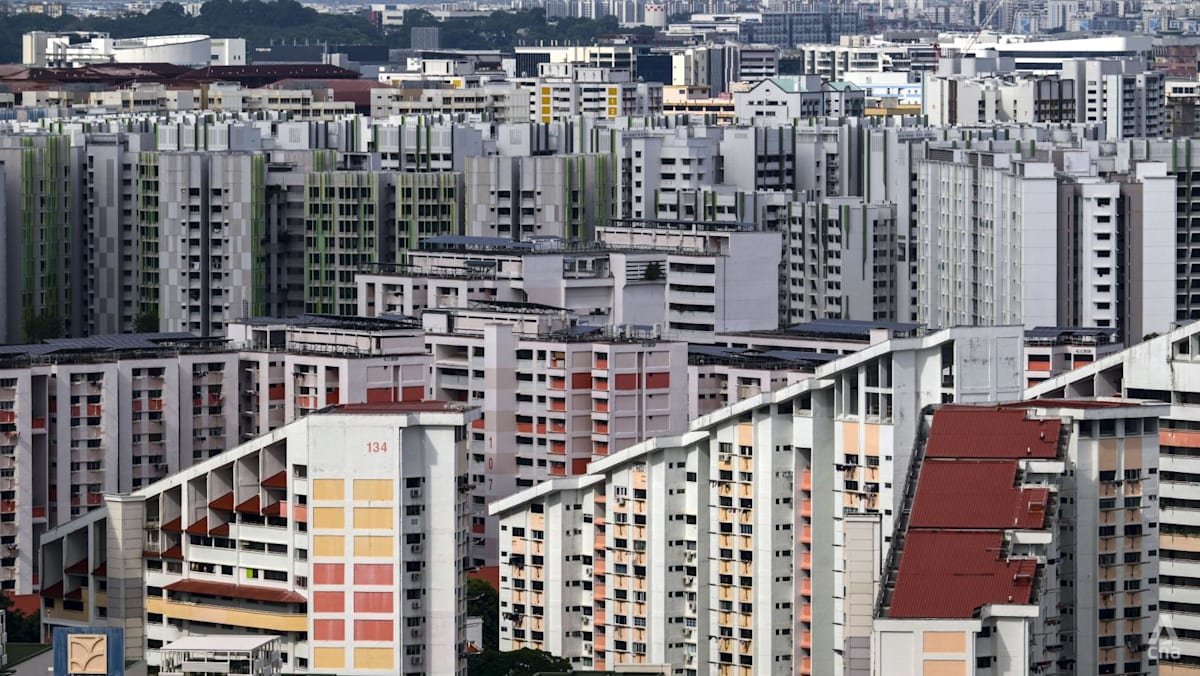
HDB flats in Potong Pasir (foreground) and the Bidadari Estate (background), on Jun 23, 2026. (File photo: CNA/Wallace Woon)
New: You can now listen to articles.

This audio is generated by an AI tool.
Read a summary of this article on FAST.
Get bite-sized news via a new
cards interface. Give it a try.
Click here to return to FAST
Tap here to return to FAST
FAST
SINGAPORE: Weaknesses in checks and oversight led to ineligible applicants being allocated Housing and Development Board (HDB) flats, receiving housing grants and gaining access to subsidised parking, the Auditor-General’s Office (AGO) said in a report released on Wednesday (Jul 15).
HDB accounted for the highest number of lapses flagged in this year’s report, which also uncovered issues with contractor oversight that could have resulted in millions of dollars in overpayments.
In a media statement, HDB said it takes the AGO’s findings seriously and has taken steps to rectify the issues and strengthen controls.
The audit covered the period Apr 1, 2022 to Mar 31, 2025.
HOUSING PRIORITY, GRANT SCHEMES

Guess Word
Crack the word, one row at a time

Buzzword
Create words using the given letters

Mini Sudoku
Tiny puzzle, mighty brain teaser

Mini Crossword
Small grid, big challenge

Word Search
Spot as many words as you can
The audit uncovered weaknesses in eligibility checks across the Married Child Priority Scheme, the Proximity Housing Grant and the CPF Housing Grant.
Data analysis and test checks of approved applications during the audit period identified cases where:
- Proximity criteria under the Married Child Priority Scheme and Proximity Housing Grant were not met at the point of application
- Proximity Housing Grant or CPF Housing Grant were given to applicants who received the same grant previously
- CPF Housing Grant was given to applicants who exceeded the income ceiling
- Conditions were not met during the minimum occupation period (MOP) for the Proximity Housing Grant and CPF Housing Grant
“As a result, flats were allocated and grants disbursed to ineligible applicants. Grant conditions might also not have been complied with,” the AGO said in its report.
“This increased the risk of not achieving the intended policy outcome of these schemes, such as for family members to live near one another for mutual support.”
Under the proximity criteria for the Married Child Priority Scheme and Proximity Housing Grant, the flat intended for purchase must be within 4km of the property where the parent or child is living or will be living.
AGO’s data analysis of more than 37,700 approved applications found that 37 applications for the Married Child Priority Scheme and 27 applications for the Proximity Housing Grant did not meet the criteria.
The grants in question amounted to S$470,000.
For nine of the Proximity Housing Grant applications, involving grants totalling S$170,000, HDB informed AGO that two were due to staff oversight and seven to inconsistencies in the calculation of distances by its internal systems. All nine affected applications have been rectified.
AGO noted that HDB also relied on internal records and applicant declarations, which may not reflect actual residence if individuals had moved without updating their details.
It said HDB should have verified such information against Immigration and Checkpoints Authority (ICA) records, which are considered authoritative as residents are required by law to update their addresses.
HDB said in a separate statement that it acknowledges the importance of using accurate, up-to-date information on residential addresses to assess eligibility for proximity-based priority schemes and grants.
It has since introduced additional checks against ICA’s records and taken steps to recover grants where necessary.

DUPLICATE GRANTS OR INCOME CEILING EXCEEDED
The audit also uncovered six cases where applicants for the Proximity Housing Grant (PHG) and the CPF Housing Grant (CPFHG) received grants more than once due to system errors and staff oversight.
HDB’s subsequent checks identified an additional four cases beyond the audit period.
“HDB informed us that the programming error had since been rectified. It had issued verbal warnings to the officers involved and would conduct refresher training for staff. For the affected PHG and CPFHG applications, it had either recovered the grant or regularised the case,” said AGO.
AGO also uncovered two instances where applicants exceeded income ceilings but were still granted the CPF Housing Grant. HDB identified three additional cases following the auditor’s findings.
HDB attributed these to system issues or oversight.
“HDB informed us that it had previously detected the system issue and implemented a fix in November 2024, but these cases were not detected then,” the AGO said in its report.
“HDB would assess the cases to determine the appropriate follow-up actions. It would also implement measures to further strengthen detection and oversight, which included regular refresher training, system prompts and exception reports.”
WEAK MONITORING DURING MOP
AGO also flagged gaps in HDB’s monitoring of compliance with grant conditions during the minimum occupation period, including the requirement for PHG recipients to live with or within 4km of their parent or married child throughout the MOP.
For 1,619 applications involving about S$92.9 million in grants, discrepancies were found between HDB’s records and ICA address data. These discrepancies raised concerns that recipients or their family members may not have met residence requirements.
HDB said it has taken follow-up actions, including recovering grants with accrued interest where conditions were breached.
It will also revise the terms and conditions of the PHG agreements to require individuals to update their NRIC addresses within 28 days of moving into the purchased flat to stay with the applicants, or to an address within 4km of the purchased flat.
IMPROPER SEASON PARKING APPROVALS
The audit also uncovered widespread lapses in eligibility checks for season parking.
More than 228,000 applications and renewals, amounting to S$24.99 million in revenue, were approved despite applicants not meeting criteria.
These included cases involving deceased applicants (S$2.95 million), applicants who were not the registered flat owner, tenants (S$21.58 million) and family parking arrangements that did not meet proximity requirements (S$490,000).
Separately, more than 10,000 transactions involving commercial vehicles charged incorrect season parking rates, resulting in an estimated S$1 million in under-collection.
The AGO report said HDB acknowledged the need to strengthen its verification checks on season parking and family season parking transactions, as well as its controls to identify commercial vehicles to charge the correct season parking rate.
It would also introduce measures such as requiring applicants to declare at application that they had met the eligibility criteria and reminding them at renewal that they must continue to do so. In addition, HDB plans to implement a revamped season parking system by 2027.
SOME CAR PARK PATROLS COMPLETED IN LESS THAN 10 SECONDS
Significant gaps were also identified in HDB’s oversight of a contractor responsible for car park patrol and enforcement services from Nov 1, 2021 to Jan 31, 2026.
A preliminary estimate found that HDB may have overpaid about S$9.7 million for work not performed.
AGO uncovered “significant discrepancies” in patrol records, non-compliance with audit requirements and other indications of shortfall in patrol work, including multiple instances where the patrol of a location was completed in “less than 10 seconds”.
“Given that about 50 per cent of the car parks to be patrolled were multi-storey car parks, it is highly implausible for a car park to be properly patrolled in such a short span of time,” said the AGO.
“We also noted that HDB did not make use of available data, such as actual patrol records, to facilitate its monitoring of the contractor beyond the existing system alerts. Thus, there was a risk that patrol duties might not have been performed as required under the contract.”
In addition, the actual patrol frequency for some car parks was lower than required by HDB. There were also concurrent clock-ins by the same patrol personnel at different car park locations.
“During our audit, HDB raised the data discrepancy issues with the contractor’s senior management who then initiated an investigation. According to the contractor, their investigation found that its IT system for managing the work of patrol personnel had access control weaknesses,” said the report.
“This resulted in the integrity of the records in the system and data for the audit being compromised. HDB informed us that the contractor had since lodged a police report and that it had worked with the contractor to put in place protective measures.”
HDB said it has zero tolerance for attempts to undermine its enforcement process and will exercise its full contractual rights.
“Besides issuing a formal warning letter in March 2026 for contractual breaches, HDB has commenced recovery of the administrative charges, which includes the full extent of payments made for works not rendered,” said the agency, adding that it recognises that there were gaps in its processes and has taken steps to address them.
This includes the implementation of automated system checks for more rigorous monitoring and adopting stronger contractual requirements in the latest contracts.
OTHER LAPSES
AGO also flagged errors in the valuation of variation works under Home Improvement Programme (HIP) projects, resulting in both overpayments and underpayments.
HDB has since reassessed the affected variation orders and rectified the valuation errors. It also accorded a poor performance grading to the consultants involved, which will affect their future tendering opportunities for HDB projects.
Possible irregularities were also identified in quotations for certain works, raising concerns about whether value for money had been achieved.
AGO’s checks also found “tell-tale signs” of possible irregularities in supporting documents submitted for audit. The construction contract concerned was managed by a consultant engaged by HDB.
A subsequent investigation conducted by HDB found that the employee involved had no intention to impede the audit process.
However, HDB acknowledged that making alterations to documents was a serious matter and said it takes a firm view of such lapses. Disciplinary action has been taken against the staff member responsible.
HDB also issued a warning letter and accorded a poor performance grading to the consultant, which will affect its future tendering opportunities.
Source: CNA/zl(gs)
Sign up for our newsletters

Get the CNA app
Stay updated with notifications for breaking news and our best stories
Get WhatsApp alerts
Join our channel for the top reads for the day on your preferred chat app

Get bite-sized news via a new
cards interface. Give it a try.
Click here to return to FAST
Tap here to return to FAST
FAST
About The Author