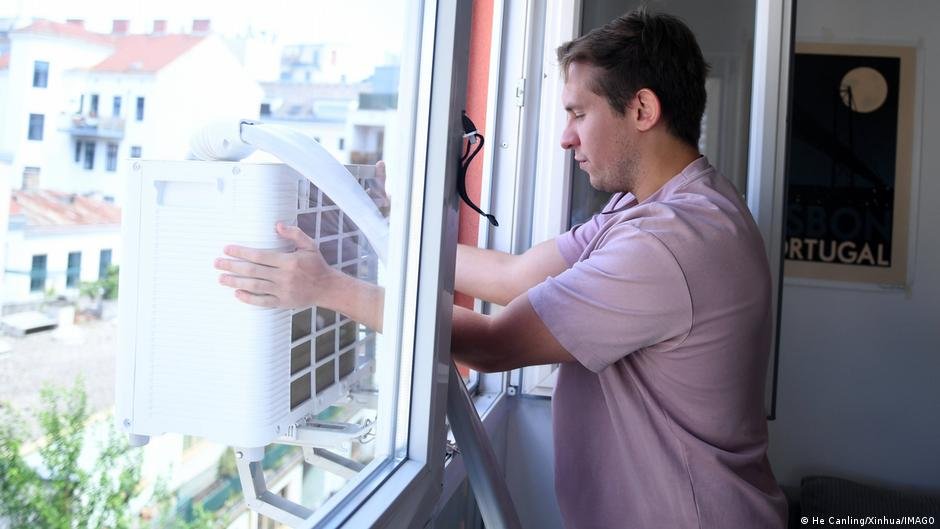
During the June heat wave that brought record temperatures to western Europe, around 65% of adults in the UK struggled to sleep, according to a recent poll. Near half of those lost three or more hours sleep a night.
Sleep disruption is an inevitable consequence of longer and hotter summers fueled by human-made climate change. As the fastest-warming continent that is heating at more than double the global average, Europe is a sleep loss hot spot.
In the German state of Saxony in June, a weather station reported a tropical overnight minimum temperature of 29.4 degrees Celsius (85 degrees Fahrenheit).
Such overnight extremes are now 100 times more likely due to climate change caused primarily by burning fossil fuels, notes World Weather Attribution, a global scientific body analyzing how climate drives weather extremes.
Climate change disrupts sleep
Heat-driven sleep loss has only recently been recognized as an important indicator of how climate change affects both physical and mental health.
A global team of researchers collated 165 million nights of data from nearly 318,000 users of wearable and under-mattress sleep trackers to monitor the impact of rising temperatures on sleep. In a paper published in July, they showed that when nighttime temperatures rise from around 12 C to 27 C, people face about a 40% higher chance of sleeping less than six hours.
Humans can’t maintain cognitive function, memory or emotional balance when they sleep less than seven hours a night, noted Ty Ferguson, a research fellow at Australia’s Adelaide University who studies the potential health and social impacts of climate-driven sleep disturbance — but wasn’t part of the July study.
To view this video please enable JavaScript, and consider upgrading to a web browser that supports HTML5 video
In addition to impacting mood and attention, disrupted sleep can increase diabetes risk, depression, heart disease and even obesity, according to Ferguson.
‘Sleep essential for immune function, mental health’
“Sleep is a fundamental physiological necessity essential for human immune function, mental health, and daily well-being,” said Bowen Chu, a researcher at the School of Atmospheric Sciences at Nanjing University in China who co-authored a March study on the potential economic impacts of climate-driven sleep erosion in children.
Unlike traditional climate impact research focused often on extreme weather events, understanding sleep loss “allows scientists to quantify the gradual, day-to-day, and cumulative effects of ambient temperature rise on the everyday lives and health of global populations,” Chu told DW.
“Temperatures are also rising faster at night than during the day,” notes Kelton Minor, an associate professor at the University of Copenhagen in Denmark whose research team, along with the World Sleep Society, has called for a global sleep task force to better understand and prepare for sleep depletion in a hotter world.
Nights are getting hotter in part because clouds absorb heat and send it to Earth after dark — unlike daytime when they reflect sunlight. Researchers have found that cloud patterns are changing in ways that amplify global warming.
‘Quietly accumulating’ sleep decline underreported
Sleep loss is probably underreported as a climate impact since it “doesn’t produce a dramatic single event — no headline death toll, not as visible damage,” noted Kim van Daalen, an environmental epidemiologist at the University of Cambridge and co-author of a recently published paper on “Sleep loss in a warming world.”
“It accumulates quietly, night after night, which makes it easy to miss in coverage that tends to focus on acute heat wave deaths or hospitalizations,” said van Daalen of the subtle impacts of sleep deficits.
“Heat-related sleep loss is likely to widen existing health and socioeconomic inequalities,” said van Daalen. Children may struggle with concentration, learning and emotions, while “greater cardiovascular and metabolic strain” is being placed on older adults and people with chronic illnesses when sleeping less.
To view this video please enable JavaScript, and consider upgrading to a web browser that supports HTML5 video
“Chronic sleep loss driven by high temperatures is associated with decreased labor productivity, reduced learning efficiency, potentially an increased risk of traffic accidents, and heightened long-term healthcare burdens on society,” said Chu of the broader societal impacts of sleep interruption.
“Poor sleep makes it harder to work, learn, care for others and maintain good health,” he said, adding that low-income households are more exposed because they live in poorly ventilated homes or cannot afford cooling.
Both lower-income populations within wealthy nations and residents of lower-income countries may be up to three times more vulnerable to the impact of heat on sleep, according to Minor.
This is explained by “lower access to air conditioning and other economic lifelines that can keep the heat out,” he said, pointing to “houseless individuals trying to sleep on the streets, migrants in sweltering tents, incarcerated populations in searing hot prison cells, infants in scorching bedrooms, as well as pregnant and new mothers already struggling to sleep.”
What are the solutions?
Even in a scenario where nations achieve net zero emissions, adaptation to climate-driven sleep loss will be an ongoing necessity since temperatures will take decades to fall, noted Ferguson.
Increased access to fans or air conditioning, lighter and breathable bedding, greater building insulation, and limiting heat-trapping concrete in cities are some of the ways climate-related sleep decline can be mitigated, he explained.
More green spaces and solar-radiation reflective surfaces, along with passive cooling building designs that utilize window shades and improve ventilation, will be vital structural solutions, according to Chu.
Adjusting schedules to avoid work during extreme heat waves will also be fundamental to adaptation measures that help maintain sleep duration in a hotter world, he said.
These solutions will be especially important in European countries like Germany that traditionally have little air conditioning, for example, compared to the US or Australia, notes Minor.
“Adapting the approximately one third of our lives that we spend sleeping to nighttime warming already warrants European policy prioritization and adaptive innovation,” he said.
Edited by: Sarah Steffen
About The Author