Japan identifies large share of rare earths in deep-sea mud off remote island
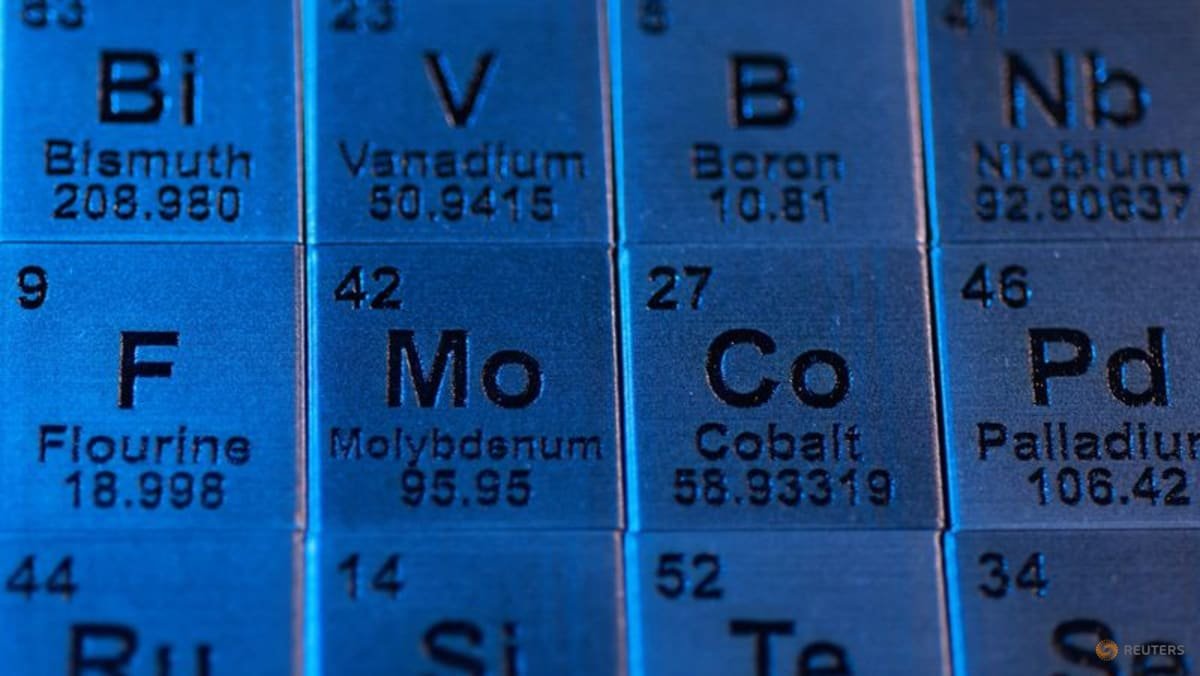
Blocks with symbols and atomic numbers of Rare Earth Elements (REE) in this illustration taken February 6, 2026. REUTERS/Dado Ruvic/Illustration
Read a summary of this article on FAST.
Get bite-sized news via a new
cards interface. Give it a try.
Click here to return to FAST
Tap here to return to FAST
FAST
TOKYO, July 24 : An analysis of rare earth-rich mud retrieved from the deep seabed off a remote Pacific Island earlier this year found medium and heavy rare earth elements accounted for about 54 per cent of the total rare earth content, Japan’s government said on Friday.
But it did not disclose the size of the content or the deposits, saying the data was insufficient due to the limited duration and geographic scope of sampling.
The Japanese scientific drilling vessel, Chikyu, completed a month-long mission in February near Minamitori Island, about 1,900 km (1,200 miles) southeast of Tokyo, marking the world’s first successful attempt to continuously lift rare-earth-bearing seabed mud from depths of around 6 km (4 miles).
The project comes as Japan seeks to diversify critical mineral supplies amid tightening Chinese export controls on heavy rare earths and related magnets, which are crucial for the defence and automotive industries.

Guess Word
Crack the word, one row at a time

Buzzword
Create words using the given letters

Mini Sudoku
Tiny puzzle, mighty brain teaser

Mini Crossword
Small grid, big challenge

Word Search
Spot as many words as you can
About 50 metric tons of mud were recovered. The analysis identified yttrium, used in aerospace, energy and semiconductor applications; gadolinium, used in magnetic resonance imaging and other high-tech applications; and dysprosium, used in high-performance magnets for electric vehicles, according to the Cabinet Office’s national platform for innovative ocean development.
Japan plans a month-long large-scale mining trial in the same waters from February 2027, aiming to dredge 350 tons of mud a day. The material will be dewatered at Minamitori Island and will be processed on the mainland to test separation, refining and smelting technologies.
The trial is expected to verify the feasibility of domestic rare earth production, with a comprehensive assessment of industrialisation prospects due by March 2028, said Kazushige Kikuchi, project manager at the Japan Agency for Marine-Earth Science and Technology, which operates the Chikyu.
Beijing imposed export controls on some heavy rare earths and related magnets in April 2025 and tightened restrictions on exports to Japan in January, and twice again the following month, targeting major conglomerates.
Source: Reuters
Sign up for our newsletters

Get the CNA app
Stay updated with notifications for breaking news and our best stories
Get WhatsApp alerts
Join our channel for the top reads for the day on your preferred chat app

Get bite-sized news via a new
cards interface. Give it a try.
Click here to return to FAST
Tap here to return to FAST
FAST