Tech rebound fuels record-breaking rally in South Korean stocks
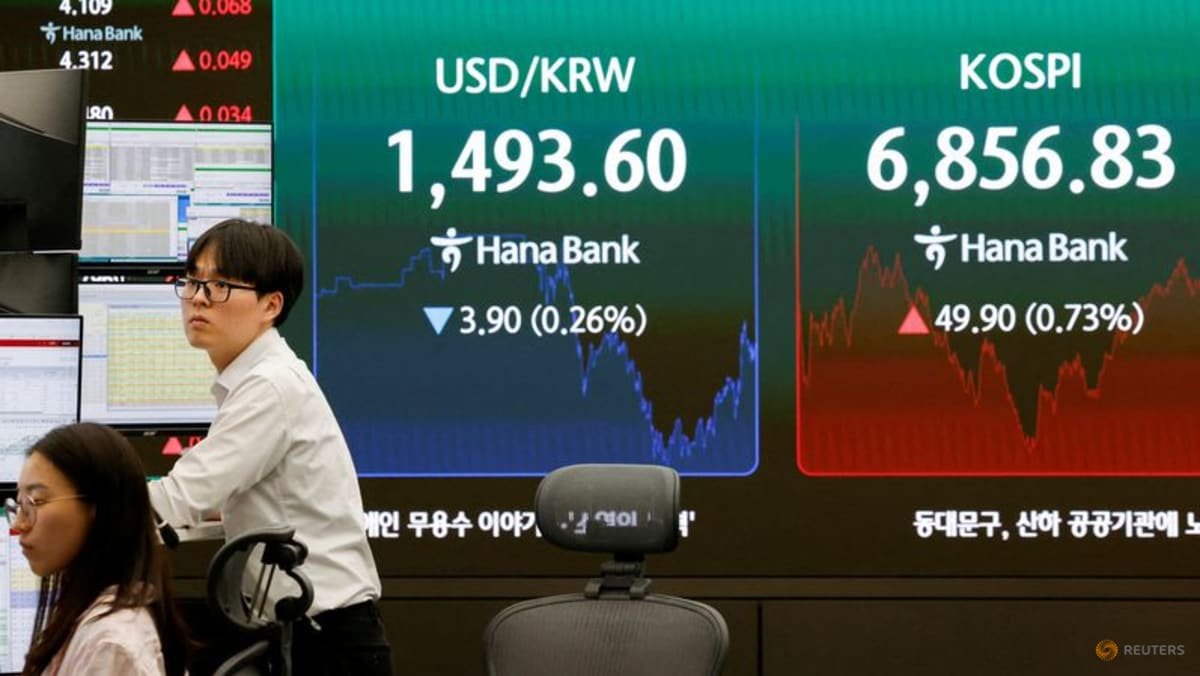
Currency dealers work as an electronic board displays the Korea Composite Stock Price Index (KOSPI), the exchange rate between the US dollar and South Korean won at the dealing room of a bank, in Seoul, South Korea on Jul 14, 2026. (Photo: Reuters/Kim Soo-hyeon)
Read a summary of this article on FAST.
Get bite-sized news via a new
cards interface. Give it a try.
Click here to return to FAST
Tap here to return to FAST
FAST
HONG KONG: South Korean stocks soared a record 17.9 per cent on Friday (Jul 31) as Asian tech firms performed a blistering recovery from an extended sell-off, with beaten-down chip giant SK Hynix rocketing almost a third as the AI boom roared back.
After four weeks of blood-letting fuelled by worries over the vast sums being invested in artificial intelligence, traders raced to pick up bargains following a series of strong earnings.
Seoul’s KOSPI had been at the forefront of the sell-off after hitting a record high a month ago, with chipmakers SK Hynix and Samsung the poster children of the rout, losing around half their value in the panic.
However, the voracious buying sentiment that had characterised markets for much of the past two years was back as bargain hunters returned and traders took heart in a series of announcements.

Guess Word
Crack the word, one row at a time

Buzzword
Create words using the given letters

Mini Sudoku
Tiny puzzle, mighty brain teaser

Mini Crossword
Small grid, big challenge

Word Search
Spot as many words as you can
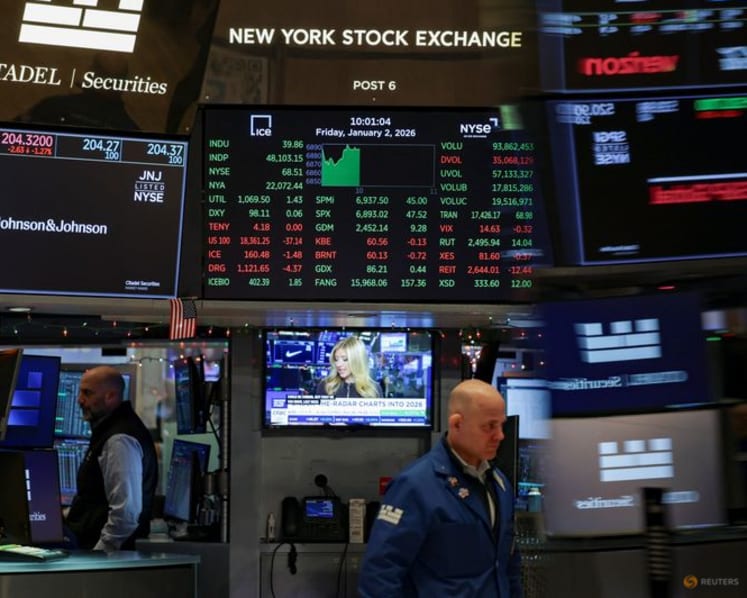
US giants Microsoft and Amazon unveiled healthy earnings this week that saw their shares storm higher on Wall Street, helping the Nasdaq pile on almost 3 per cent.
Analysts note that while tech firms have suffered heavy selling in recent weeks, that was focused on concerns about when the huge sums invested in AI would see returns rather than fundamental problems in the sector.
The KOSPI’s eye-watering rally was helped by news that South Korea’s government planned to pump almost US$14 billion into its sovereign wealth fund for AI investments and data centres.
Officials had earlier pledged to introduce measures to curb retail traders’ access to leveraged exchange-traded funds (ETFs), including limits on individuals’ investment in them, which had been partly blamed for the recent panic-selling.
Analysts also pointed to a report saying hedge fund Citadel bought a large part of the AI stocks held by hedge fund Situational Awareness, which had investments in several Asia-based firms including SK Hynix and had been offloading.
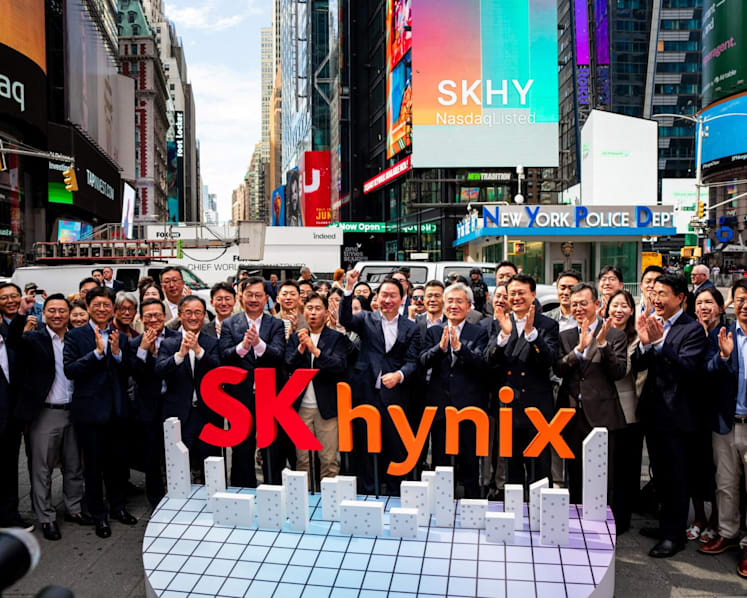
SK Hynix surged 30 per cent – wiping out its losses from the previous two days – helped by confirmation that Chey Tae-won, chair of parent company SK Group, had bought around US$3 million worth of shares, his first purchases in a personal capacity.
The move was seen as a major vote of confidence in the company after the rout.
Chey had dismissed the swings as a market adjustment earlier this month, saying investors should take a long-term view, adding that “memory chips will always be needed, so their value will eventually rise over time”.
Samsung Electronics spiked almost 27 per cent.
Ryu Hyung-keun, of Daishin Securities, told AFP investors had become “increasingly sceptical about how much further memory chip prices could rise”.
But Chey’s purchase of company shares had been interpreted by investors as “a positive signal”, he said.
The buying spree was mirrored in Tokyo’s 4 per cent rally, with tech giant Advantest piling on 16 per cent, chipmaker Kioxia 17.7 per cent and tech investment titan SoftBank 13.8 per cent.
Taipei jumped 8 per cent thanks to a 10 per cent jump in chipmaker TSMC.
Shanghai, Sydney, Mumbai, Bangkok and Jakarta were also up, while London, Paris and Frankfurt advanced at the open.
There were small losses in Hong Kong and Singapore.
The yen held its gains against the dollar a day after rallying amid speculation that Japanese authorities intervened to prop up the currency, which had been sitting around 40-year lows.
The Japanese unit strengthened to 158.98 to the greenback on Thursday – its best level since mid-May – from more than 163 before paring the gains. It suffered a wobble on Friday after the Bank of Japan held interest rates but regained its losses soon after.
The currency has come under increasing pressure from the wide gap between Japanese and US interest rates, and expectations the Federal Reserve will hike soon, while the Bank of Japan has been slow to do so despite elevated inflation.
Forecasts for an intervention had been growing as the yen weakened last month past 160 per dollar, the level at which the government last stepped in by spending more than US$70 billion in May.
Oil prices dropped 2 per cent, extending Thursday’s retreat, amid easing Middle East tensions.
The moves came after Hamas said it had agreed to a deal announced by US President Donald Trump to end the war with Israel that includes it handing over its weapons to a Palestinian governing committee and the gradual withdrawal of Israeli forces from Gaza.
Source: Reuters/nh/rk
Sign up for our newsletters

Get the CNA app
Stay updated with notifications for breaking news and our best stories
Get WhatsApp alerts
Join our channel for the top reads for the day on your preferred chat app

Get bite-sized news via a new
cards interface. Give it a try.
Click here to return to FAST
Tap here to return to FAST
FAST
About The Author