Trump unveils trade actions to compete with China on solar and chips
Polysilicon, the raw material used in semiconductors and solar panels, is primarily produced by China.
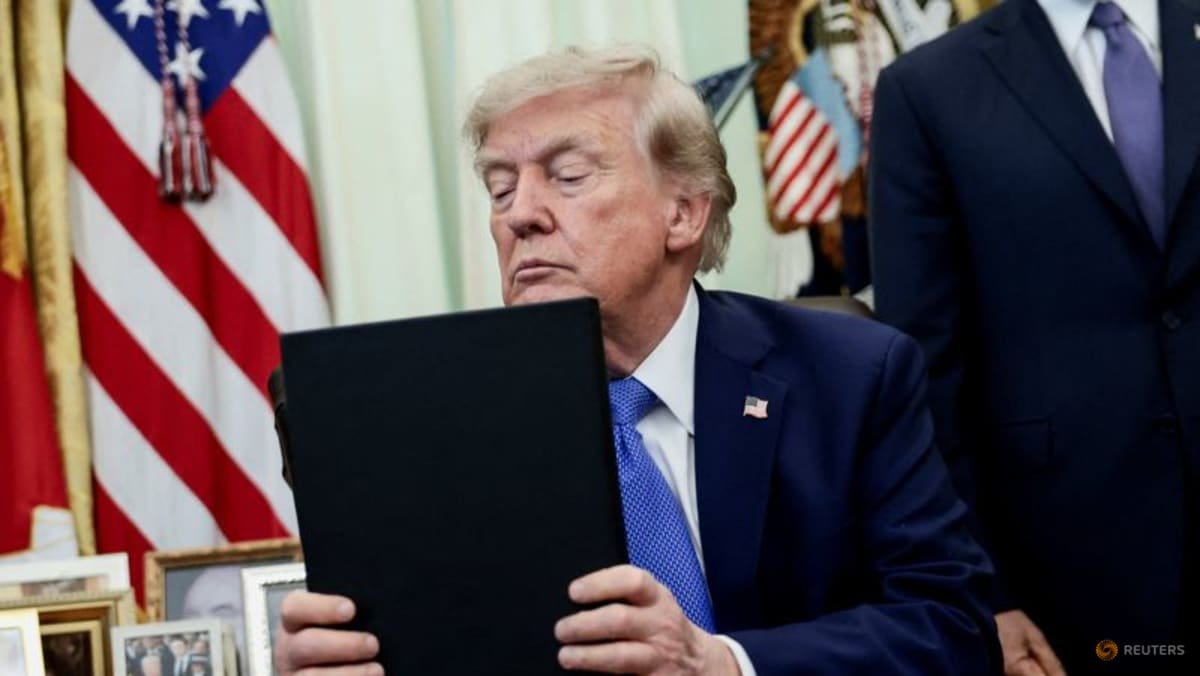
US President Donald Trump attends an event to sign executive orders related to birthright citizenship and the polysilicon industry, in the Oval Office at the White House on Aug 6, 2026. (Photo: Reuters/Evelyn Hockstein)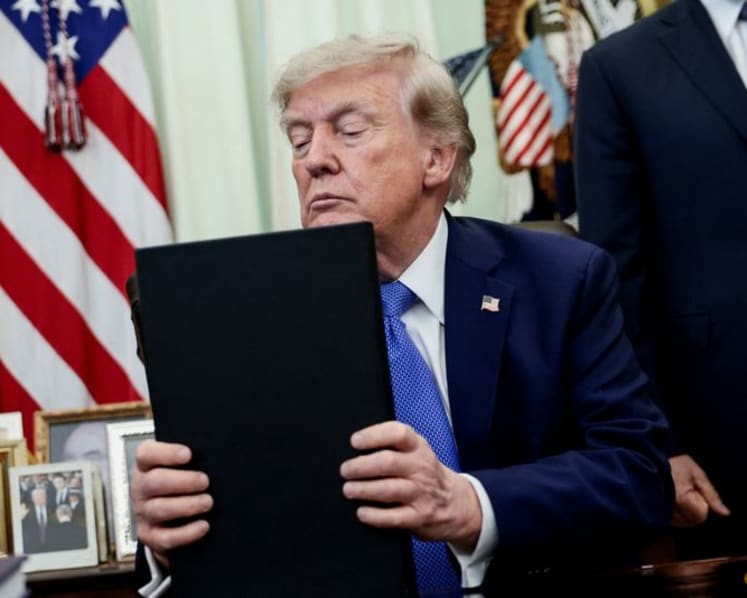
Read a summary of this article on FAST.
Get bite-sized news via a new
cards interface. Give it a try.
Click here to return to FAST
Tap here to return to FAST
FAST
WASHINGTON: The White House on Thursday (Aug 7) imposed a series of price floors and a 15 per cent tariff on products made from polysilicon, the raw material used in semiconductors and solar panels that is primarily produced by China.
US President Donald Trump’s proclamation under Section 232 of the Trade Expansion Act of 1962 is aimed at supporting domestic chip and solar supply chains needed to compete with Beijing on artificial intelligence and energy.
“The plan of action in this proclamation will, among other things, help ensure the commercial viability of United States production of polysilicon and its derivatives that is necessary to meet United States economic and national security requirements,” the order said.
Polysilicon, an ultra-pure form of silicon, sits at the start of the semiconductor and solar manufacturing supply chains. Manufacturers turn silicon wafers into solar cells and then assemble those into panels used in solar projects.

Guess Word
Crack the word, one row at a time

Buzzword
Create words using the given letters

Mini Sudoku
Tiny puzzle, mighty brain teaser

Mini Crossword
Small grid, big challenge

Word Search
Spot as many words as you can
American solar factories for the last decade have accused their Chinese rivals of dumping solar panels in the market, receiving unfair government subsidies and moving their manufacturing to other countries to dodge US tariffs.
The United States has two polysilicon factories. Hemlock Semiconductor, which operates a plant in Michigan, is a joint venture between Corning and Japan’s Shin-Etsu Handotai. Munich-based Wacker Chemie runs a factory in Tennessee.
“Today’s decision encourages continued investment in US capacity and supports long-term US competitiveness,” a Corning spokesperson said.
Wacker said it was reviewing the actions to fully understand their impact.
“We appreciate the Administration’s continued engagement on the issue given the ramifications for semiconductor supply chain resilience, advanced computing infrastructure, and broader US defence and security interests,” the company said in a statement.
Domestic semiconductor manufacturing depends on solar because the solar industry’s larger demand for polysilicon helps support production of the material required for chips. The chip industry accounts for 2.4 per cent of global polysilicon demand, according to the Semiconductor Industry Association.
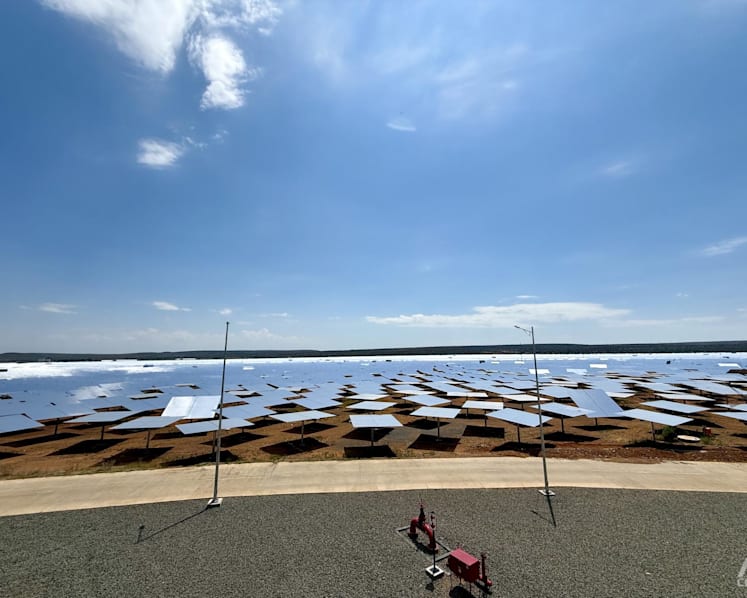
US solar manufacturing has expanded since Congress created tax incentives in 2022. Much of that growth, however, has been concentrated in panel assembly, leaving manufacturers dependent on imported wafers and cells, which require longer investment timelines.
Companies with US solar factories, including T1 Energy, First Solar and Qcells, the US solar arm of South Korea’s Hanwha, applauded Trump’s move.
“This is a decisive win for advanced American manufacturing and investment in domestic energy supply chains,” Dan Barcelo, CEO of T1 Energy, said in a statement. In addition to its Texas solar panel plant, T1 is investing US$510 million in a cell factory.
The trade protections will take effect on Dec 4, the White House said.
Tim Brightbill, a trade attorney with Wiley Rein who has brought several trade cases against Chinese solar companies, warned that the delayed implementation could lead to a surge of imports in the coming months.
Companies that buy solar panels have argued that the delay is needed to adjust supply contracts to higher prices.
According to a White House document, the president set minimum import prices of US$21 per kilogram for polysilicon, US$100 per kilogram for polysilicon ingots and wafers, US$0.22 per watt for solar cells and US$0.38 per watt for solar modules, or panels.
The proclamation also authorises the Commerce Department to create an incentive program for companies that invest in factories to produce polysilicon or derivative products.
The administration’s plan to pursue a hybrid system combining a minimum import price with tariffs was first reported by Reuters.
Source: Reuters/ec
Sign up for our newsletters

Get the CNA app
Stay updated with notifications for breaking news and our best stories
Get WhatsApp alerts
Join our channel for the top reads for the day on your preferred chat app

Get bite-sized news via a new
cards interface. Give it a try.
Click here to return to FAST
Tap here to return to FAST
FAST