NDR 2026: New western island to give Singapore room for energy and new industries, say experts
Defence experts also say Pulau Tekong could become a broader Singapore Armed Forces training hub, beyond its current role as a basic military training site.
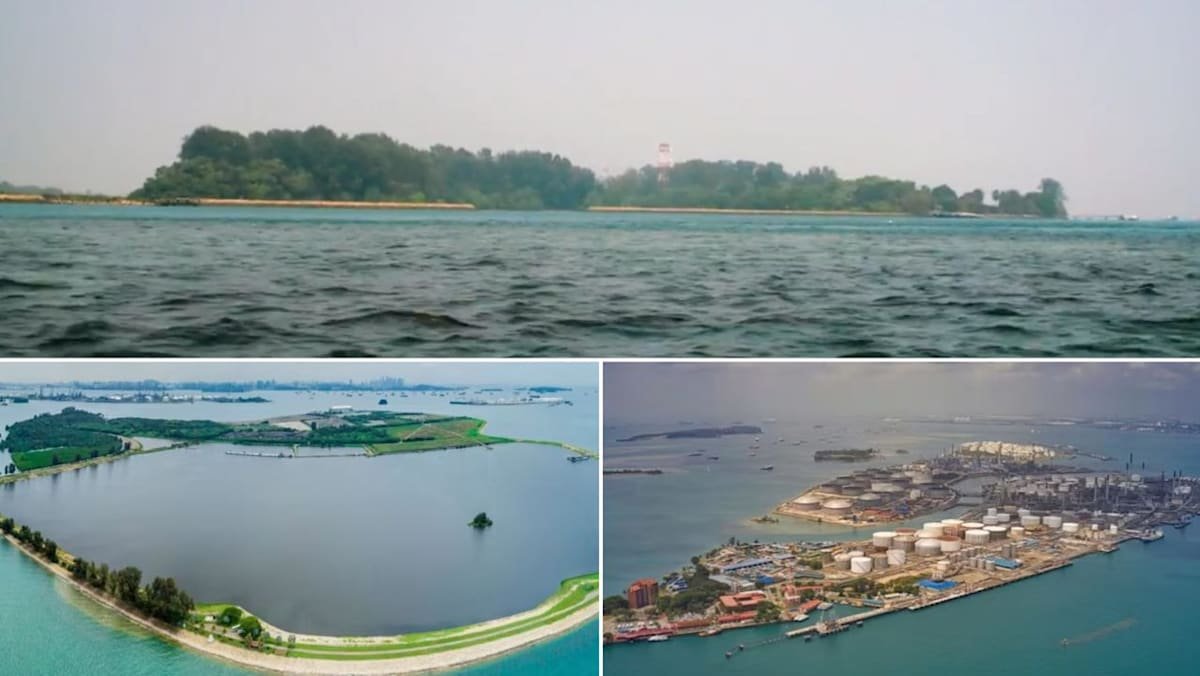
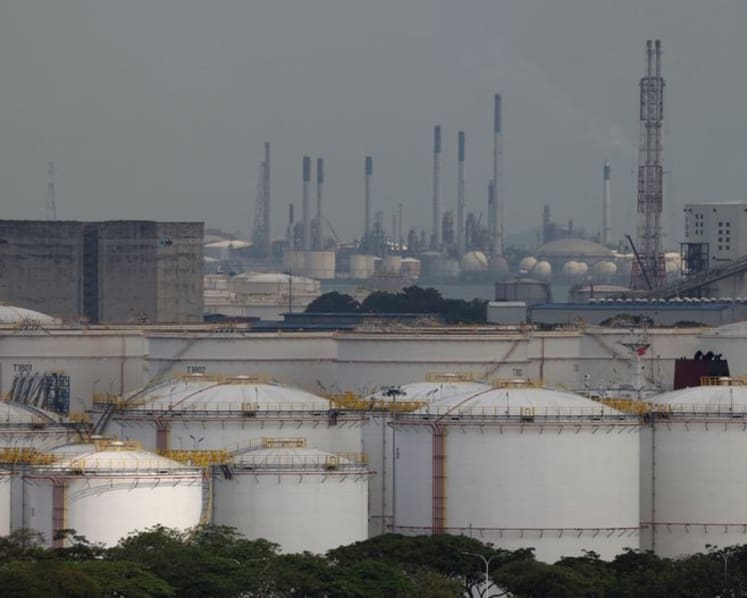
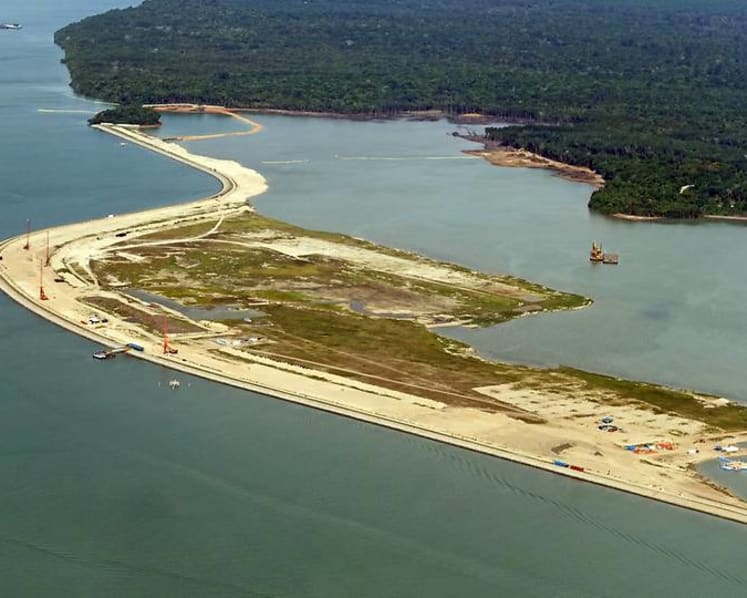
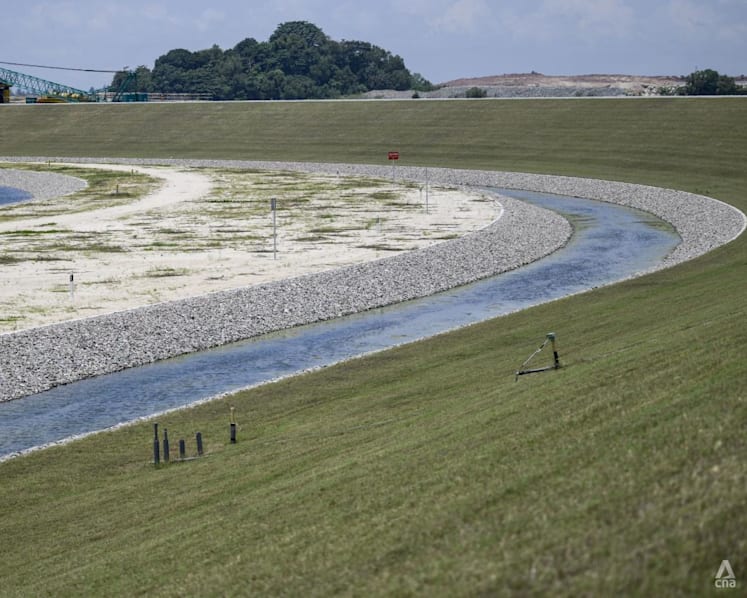
(Clockwise from the top) Coastline of Pulau Sudong, an aerial shot of Pulau Bukom and an aerial shot of the south side of Semakau landfill. (Photos: CNA, Shell and NEA)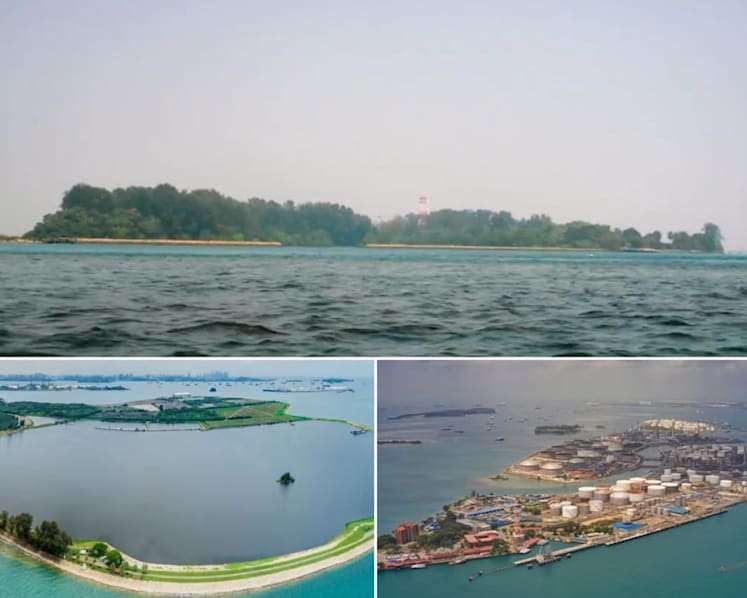
New: You can now listen to articles.

This audio is generated by an AI tool.


Read a summary of this article on FAST.
Get bite-sized news via a new
cards interface. Give it a try.
Click here to return to FAST
Tap here to return to FAST
FAST
SINGAPORE: Singapore’s planned western island could one day house nuclear power facilities – if the government decides to go down that path – and energy-intensive industries such as semiconductor manufacturing and data centres, energy experts said on Monday (Aug 24).
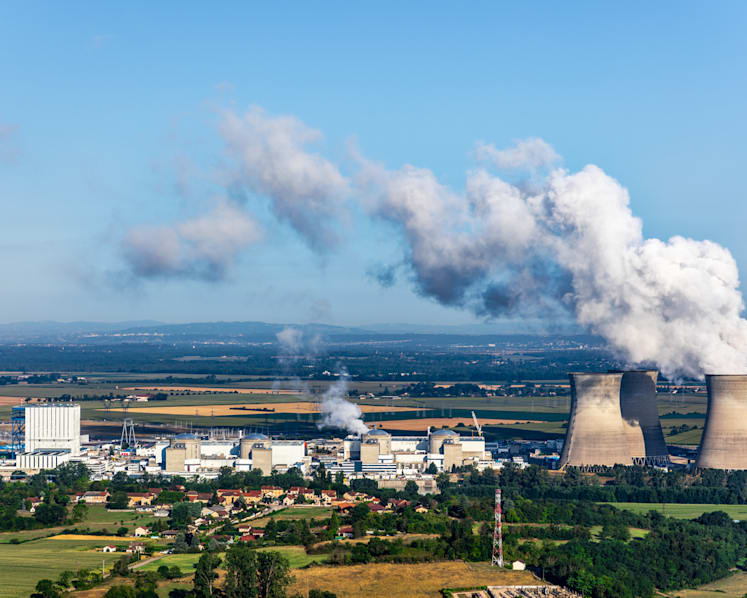
An offshore location could address one of Singapore’s biggest constraints in deploying nuclear power – the amount of land that would have to be set aside – while providing access to seawater for cooling and separation from the general population.
Singapore has yet to decide whether to deploy nuclear power, but it is taking steps to shore up its capabilities and expertise in this area. From 2027, the country will undergo an international assessment of its readiness to make an informed decision on nuclear energy.
Prime Minister Lawrence Wong announced during the 2026 National Day Rally on Sunday that Singapore intends to merge several islands south of Jurong Island – which could include Semakau, Bukom and Pulau Sudong – into a larger western island over the coming decades.

Guess Word
Crack the word, one row at a time

Buzzword
Create words using the given letters

Mini Sudoku
Tiny puzzle, mighty brain teaser

Mini Crossword
Small grid, big challenge

Word Search
Spot as many words as you can
He likened the process to the development of Jurong Island, where several offshore islands were progressively joined through land reclamation over more than a decade to create what is today a global energy and chemicals hub.
Besides supporting new industries such as advanced manufacturing, Mr Wong said the island could accommodate new power generation infrastructure to meet Singapore’s future needs. He did not specify the types of energy that could be generated.
As part of its longer-term plans, the government is also studying the feasibility of building an undersea tunnel connecting Pulau Tekong to the mainland. More reclamation is planned for southern Tekong, with about 500ha to be available for future civilian use.
NUCLEAR A POSSIBILITY
Experts pointed to advances in nuclear technology that could make small modular reactors (SMRs) more feasible in land-scarce Singapore. Compared with conventional large reactors, some SMR designs could have smaller site and emergency planning requirements.
Professor Lawrence Loh, director of the Centre for Governance and Sustainability at the National University of Singapore (NUS) Business School, said an offshore location could make nuclear infrastructure easier to separate and secure from the general population.
“The only place in Singapore where it might be possibly acceptable would be an island, not on the main island of Singapore, but offshore,” he told CNA.
Such separation could reassure the public given sensitivities around nuclear energy, while allowing access to the facility to be more tightly controlled, Prof Loh said.
Dr Alvin Chew, senior fellow at the S Rajaratnam School of International Studies (RSIS), Nanyang Technological University, said nuclear power would require large containment buildings, not just for the reactors but also for generation facilities such as turbines.
Supporting infrastructure would need a solid foundation, and electricity produced on the island would have to be transmitted via subsea cables to mainland Singapore, he said.
An offshore location could also offer ready access to seawater for cooling, which many power plants require.
Current light-water nuclear reactors similarly use large volumes of water for cooling, Dr Chew said, adding that nuclear plants also discharge large volumes of water into the sea during operations.
Dr Victor Nian, founding co-chairman of the Centre for Strategic Energy and Resources (CSER), said offshore development offered advantages including space, maritime access, cooling water and separation from densely populated areas. But he cautioned against assuming that an offshore facility would necessarily be safer.
“Safety still depends on the technology, engineering, regulation and specific site conditions,” he said, adding that offshore development could mean higher infrastructure and marine engineering costs.
He raised the possibility of a floating offshore facility that could use advanced nuclear energy to generate low-carbon electricity, produce hydrogen and desalinate seawater.
“Given the long development horizon, I believe we should preserve these possibilities without assuming today which technologies will ultimately be deployed,” Dr Nian said.
Dr Chew said one advantage of the western island is that it could provide land dedicated to energy infrastructure for a very long period.
Nuclear power plants are typically licensed to operate for 60 to 80 years, while decommissioning and land sanitisation could take another 10 to 20 years, meaning land used for nuclear energy could effectively be committed for up to a century.
“Hence, it is therefore more appropriate to reclaim an island dedicated for power generation rather than to commit and lock-in premium land on the main island,” Dr Chew said.
NEARER-TERM ENERGY OPTIONS
Nuclear could remain a longer-term possibility, but other forms of power generation may be more immediately feasible on the new island.
Dr Kim Jeong Won, senior research fellow at the Energy Studies Institute (ESI), NUS, said hydrogen-ready natural gas plants could be among the most plausible near-term options, given that natural gas is expected to remain a key part of Singapore’s energy mix for decades.
She said the authorities have already planned additional hydrogen-ready gas generation capacity to meet rising electricity demand, and the western island could provide space for such plants.
Ammonia-fired power generation could be another option, she said, pointing to an existing project on Jurong Island that combines low- or zero-carbon ammonia power generation with ammonia bunkering.
“If this pilot is successful, the western island might provide a much larger platform for this concept for the next step.”
An offshore location could accommodate a comprehensive system including generators, large-capacity ammonia storage, pipelines and substations, and could offer safety buffer advantages compared with residential areas on mainland Singapore, Dr Kim said.
The eventual energy mix would depend on available land, competing uses, access to the sea, costs and future energy needs, she added.
JURONG ISLAND 2.0
Prof Loh described the proposed island as potentially a “Jurong Island 2.0”, following a similar playbook with a greater focus on energy.
Rather than committing to a particular technology now, he said the priority should be to make the island “energy ready”, given how fast technologies are evolving and the island’s long development timeline.
Beyond power generation, experts said the new island could host energy-intensive industries that need large amounts of reliable power.
Prof Loh identified data centres as one possibility, as the growth of artificial intelligence drives demand for computing capacity and electricity.
Dr Nian named semiconductors, advanced manufacturing, chemicals and potentially digital infrastructure as obvious candidates. “These industries could benefit from reliable low-carbon power and shared energy, water and utility infrastructure,” he said.
Co-locating such industries with power generators could reduce the cost of transmitting energy to major consumers. Given that Bukom might be part of the new island, conventional petrochemical and related industries could also remain part of the mix, Prof Loh said.
RSIS’ Dr Chew said electricity generated on the island could also support activities on nearby Jurong Island, such as petroleum refining and hydrogen production.
Reliability, affordability, emissions, safety and energy security should ultimately determine the mix, Dr Nian said.
“Equally important is how the energy will be used and by whom,” he added.
While the island would not solve Singapore’s lack of natural energy resources, it could ease the physical constraint on its energy choices, Dr Nian said.
“I believe that is strategically important: the western island can preserve options for future Singapore, including nuclear if we eventually decide that it is needed,” he said.
However, experts also cautioned about the potential environmental impact. ESI’s Dr Kim said land reclamation and thermal discharge from power plants could disrupt marine ecosystems, while Prof Loh raised concerns about the impact of reclamation works on coral reefs around the western and southern islands.
WHAT A TEKONG LINK COULD MEAN FOR DEFENCE
Defence experts noted what a land connection between Pulau Tekong and the mainland could mean for national defence.
Pulau Tekong, home to the Basic Military Training Centre (BMTC), currently has no land connection to the mainland, and recruits travel there by boat for military training. With an undersea tunnel, recruits may have an easier journey to the island, the prime minister said on Sunday.
More reclamation planned for southern Tekong would create additional training space for the Singapore Armed Forces (SAF). With the island’s expansion and a potential undersea tunnel, the SAF could shift more of its training requirements from the mainland and place more military assets on the island, said Mr Thomas Lim from RSIS.
The SAF could also conduct a wider variety of more complex training or exercises depending on the type of mission, he said.
“Naturally, there are a lot of boxes that need to be ticked on these fronts, but land space is a valuable resource that militaries can utilise to design more realistic military exercises to improve training realism – think large groups of soldiers, military vehicles like armour or artillery assets, and training designs for elements such as urban or jungle-based operations.”
Mr Lim, an associate research fellow, said Pulau Tekong could become a broader SAF training hub beyond its role as a BMT site, as better connectivity through the tunnel could cut travel time between the mainland and the island.
It could also open a new land-based route for transporting logistics needed for military training, which the BMTC schools could benefit from if supply movement becomes more convenient and efficient.
Greater accessibility could bring more potential vulnerabilities, said Dr Chang Jun Yan, who heads the military studies programme at RSIS. But this is “by no means a dealbreaker”, as such vulnerabilities can be mitigated, he added.
Mr Lim said he does not see major security concerns at the moment but stressed that this was difficult to assess given the project remains in its formative stages.
Like Dr Chang, he believes the risks can be managed as long as the right security checks are in place.
For land-based travel routes, this could take the form of toll gates manned by security personnel, with additional measures to manage personnel and vehicle entries, Mr Lim said.
On the roughly 500ha available for future civilian use, the prime minister said no decision has been made on how the land would be used.
Dr Chang said speculation would be premature at this stage, but suggested civilian uses complementary to SAF needs could create synergies, such as defence-related industry or other security businesses.
Mr Lim added that the area could support civilian infrastructure such as research facilities for space, nuclear, energy or other related ventures with potential military or security applications.
Source: CNA/ng
Sign up for our newsletters

Get the CNA app
Stay updated with notifications for breaking news and our best stories
Get WhatsApp alerts
Join our channel for the top reads for the day on your preferred chat app

Get bite-sized news via a new
cards interface. Give it a try.
Click here to return to FAST
Tap here to return to FAST
FAST