Cool Japan: Human fridge chills workers in extreme heat
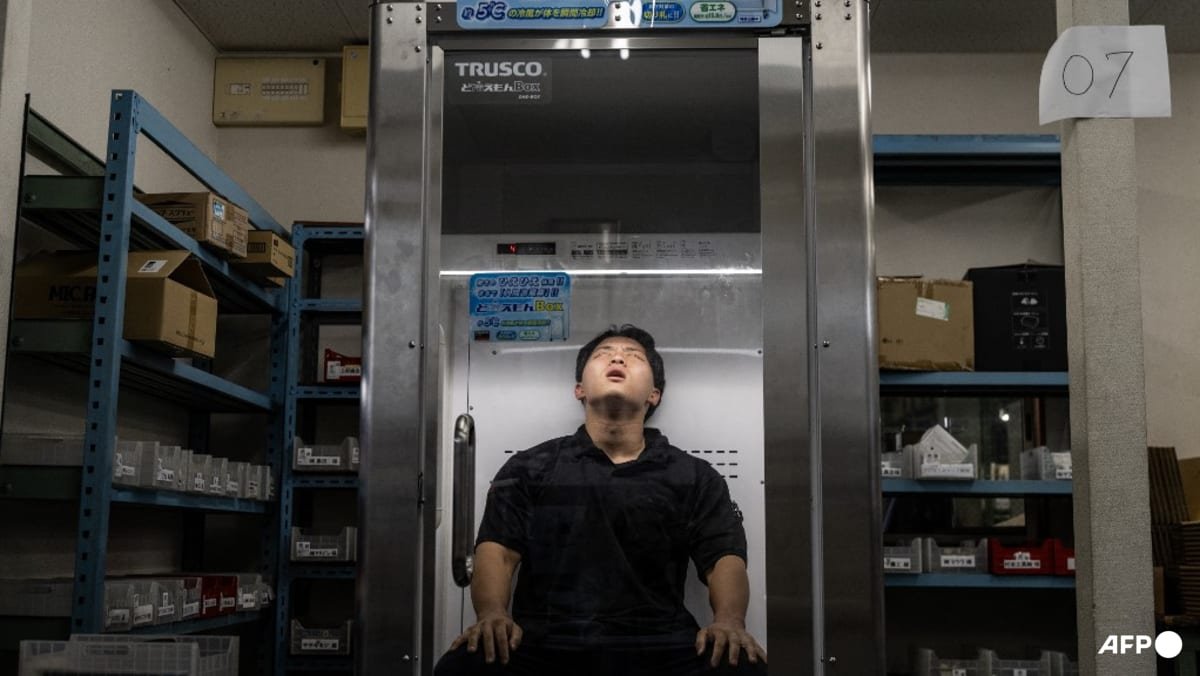
Konoe employee Taichi Konishi takes a break in a cooling box for workers, also known as a “human fridge”, at the company’s warehouse, a specialist wholesaler of screws and surveying equipment, on a hot day in Higashiosaka, Osaka Prefecture on Aug 21, 2026. (Photo: AFP/Andrew Caballero-Reynolds)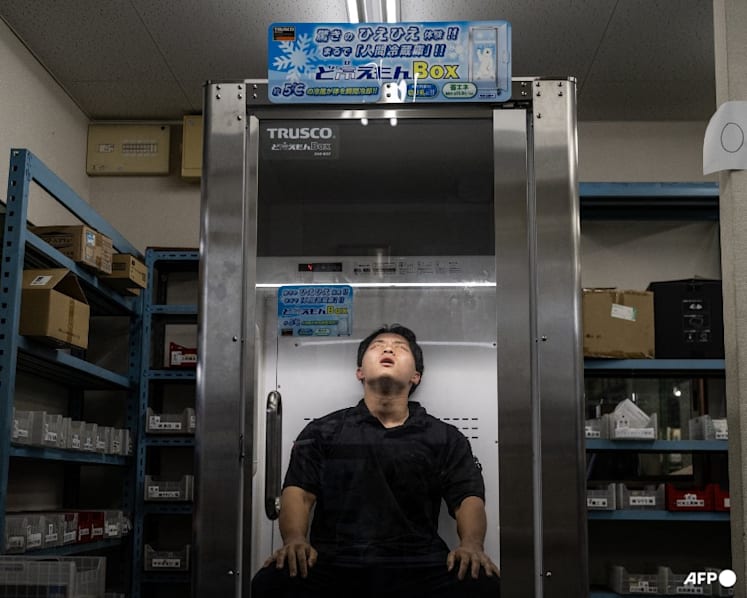
Read a summary of this article on FAST.
Get bite-sized news via a new
cards interface. Give it a try.
Click here to return to FAST
Tap here to return to FAST
FAST
HIGASHIOSAKA, Japan: Feeling dizzy and unwell after cycling to work in Japan’s punishing summer heat, warehouse worker Isao Tabuchi headed for his company’s newest acquisition: a refrigerator for humans.
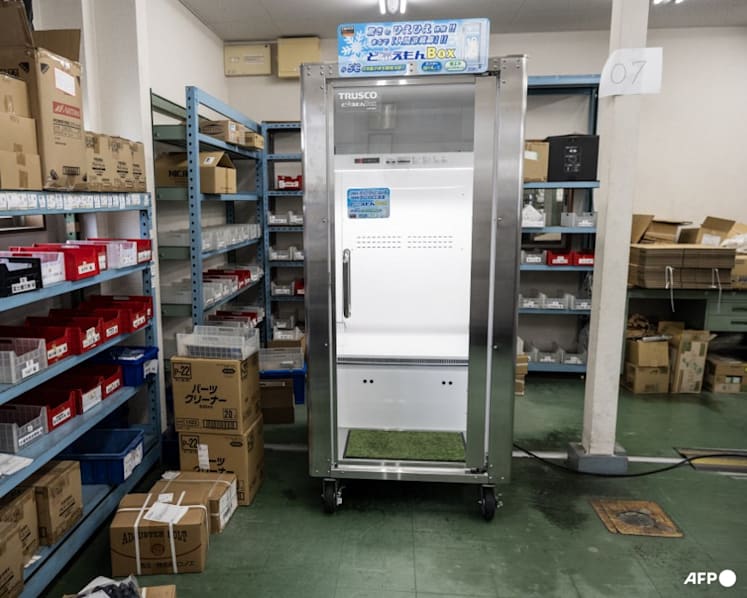
The phonebooth-sized machine, where jets of chilled air ensure ice-cold comfort, only launched this year but has proved popular in a country that seems to be getting inexorably warmer.
“I was really able to recover thanks to that. Once you use it, it’s very, very cool,” Tabuchi, 51, told AFP in the western industrial city of Higashiosaka.
Tokyo-based industrial equipment distributor Trusco Nakayama said it has sold more than 300 units of the Do Hiemon Box since April, priced at 1.5 million yen (US$9,400).

Guess Word
Crack the word, one row at a time

Buzzword
Create words using the given letters

Mini Sudoku
Tiny puzzle, mighty brain teaser

Mini Crossword
Small grid, big challenge

Word Search
Spot as many words as you can
Customers include construction sites, factories and warehouses, and will expand in the future to golf courses, said company sales agent China Yamamoto. Baseball stadiums may also be interested.
Some within the company had been sceptical, she added.
“It’s large, it’s expensive, and it’s not the kind of product where you can just explain it in words and have customers say, ‘Okay, let’s buy one.’ So there were a lot of uncertainties,” she told AFP.
“CRUELLY HOT”
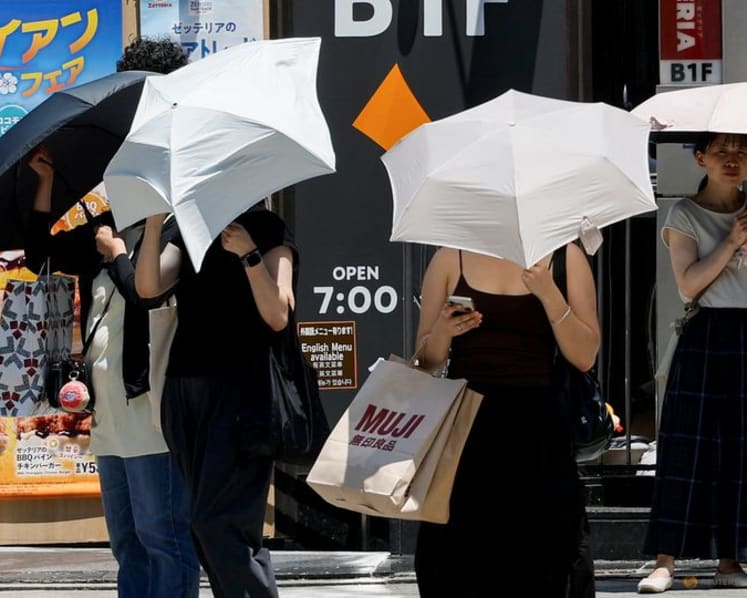
Scientists say human-induced climate change is increasing the frequency and intensity of extreme heat events around the world.
In 2025, Japan saw its hottest summer on record.
This year, the weather office began using a new word – “kokushobi” or “cruelly hot day” – when temperatures hit 40°C, urging the public to treat extreme heat like a natural disaster.
Tokyo alone recorded almost 120 heat-related deaths in the month to mid-August, while close to 63,000 people nationwide this summer needed emergency care.
Since last year, Japanese businesses have faced tougher legal requirements to help employees toiling in the heat.
Building sites, for example, must provide workers with suitable clothing such as jackets with built-in fans, as well as air-conditioned break rooms and canopies to ensure shade.
A new initiative introduced this year allows bureaucrats in Tokyo to come to work in shorts – a groundbreaking move in a country where formal business attire still rules.
The impact of rising temperatures on businesses in the world’s fourth-biggest economy is real.
A survey in July by Teikoku Databank found that 50 per cent of companies said intense heat had disrupted their operations.
Almost 88 per cent said they had upgraded efforts to help workers cope with the heat.
VITAL INVESTMENT
The Do Hiemon Box can provide one line of defence.
It operates from a regular power socket, can be wheeled around and doesn’t use much power, according to its maker.
To prevent overuse, it automatically shuts off after 20 minutes.
Investing in heat-countering measures has become essential to maintain the existing workforce and attract new recruits, said Yutaka Kono from Konoe, the specialist wholesaler of screws and surveying equipment where Tabuchi works.
Conventional air conditioners and spot coolers offer relief, but Kono’s firm has many open areas to allow trucks and heavy equipment to operate.
“I was really surprised by this new concept of putting people into a kind of refrigerator, and I found it very appealing that by going inside that refrigerator, a person’s body can be cooled in an instant to a safe temperature,” Kono told AFP.
“That made me think, ‘We definitely want to install one of these’,” he said.
Worker Taichi Konishi, 24, says he uses it about three times a day.
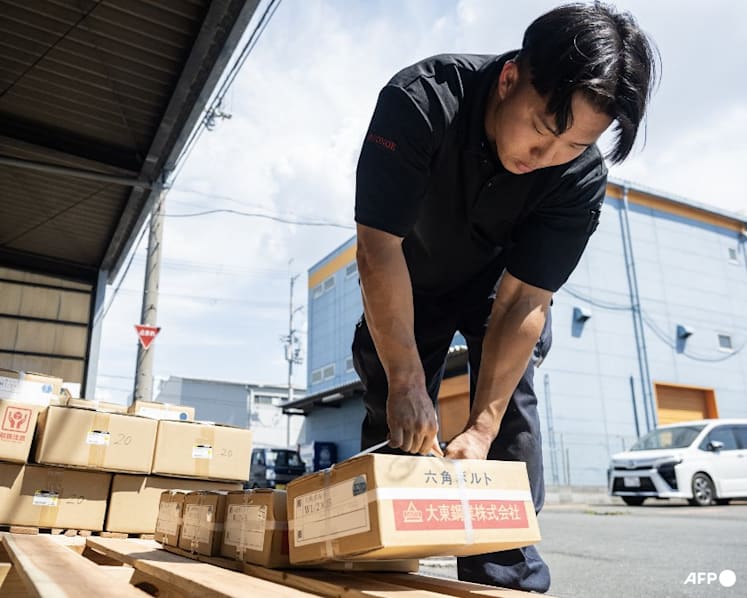
After moving heavy boxes of metal tools and parts by hand between cargo pallets, he strolls over, steps into the box, sits down and smiles, running his fingers through his hair like in the shower.
“This feels really good,” he told AFP.
“I’ve only been in for about two minutes, but even that was enough for all my sweat to dry up.”
Source: AFP/dc
Sign up for our newsletters

Get the CNA app
Stay updated with notifications for breaking news and our best stories
Get WhatsApp alerts
Join our channel for the top reads for the day on your preferred chat app

Get bite-sized news via a new
cards interface. Give it a try.
Click here to return to FAST
Tap here to return to FAST
FAST