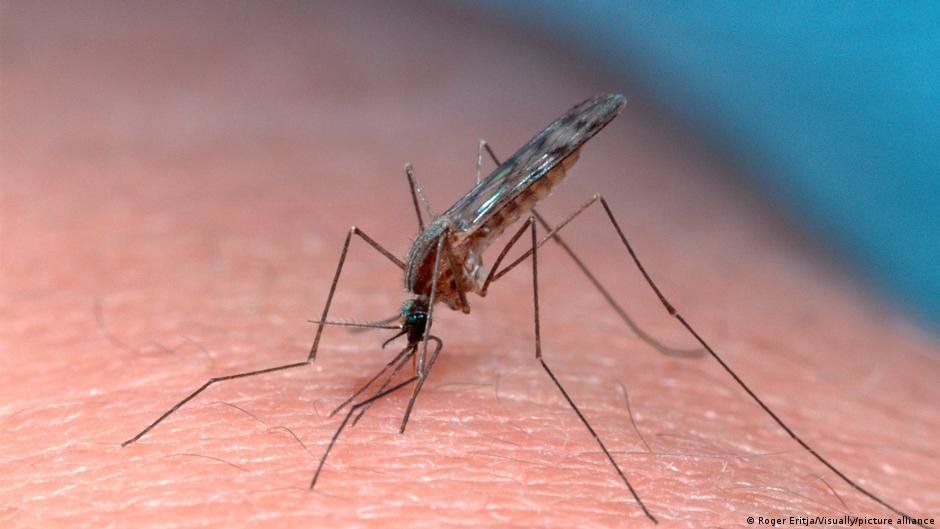
A Frankfurt Airport employee has died after contracting malaria in an outbreak believed to have been caused by an infected mosquito brought into Germany on an aircraft.
The case is part of a rare outbreak of so-called airport malaria, with six employees infected despite not having traveled to a malaria-risk country.
What we know about the Frankfurt Airport malaria death
Frankfurt Airport operator Fraport confirmed the death on Wednesday. A spokesperson said the company had been informed by the responsible health authority and expressed “deepest sympathy” to the employee’s relatives.
In total, six airport employees are known to have contracted so-called airport malaria in connection with their work.
The first four infections became known in mid-July. Germany’s Robert Koch Institute (RKI) for public health said those affected fell ill between July 4 and 6 and that the infections were believed to have been transmitted by an infected Anopheles mosquito imported by aircraft.
What is airport malaria?
Malaria cases in Germany normally involve people who have contracted the disease while traveling abroad.
Airport malaria, however, can occur when an infected mosquito is transported on an aircraft or in luggage and then infects someone on the plane, at the airport or in the immediate surrounding area.
To view this video please enable JavaScript, and consider upgrading to a web browser that supports HTML5 video
The RKI describes such cases as very rare. The last documented case at Frankfurt Airport was in 2023.
Because patients may not have traveled to a malaria-risk area, the disease can also be diagnosed later than usual.
The remaining infected employees are receiving medical treatment, while the local health authority continues to monitor the situation.
Mosquito traps have been installed at the airport. Mosquitoes captured there are being genetically analyzed at the Institute of Tropical Medicine in Antwerp to determine their species and origin.
Fraport has also informed employees at the airport and advised them to seek medical attention if they develop symptoms.
Edited by: Rana Taha
If you rely on our team for trusted reporting, please take a moment to select us as your Preferred Source on Google by clicking here and hitting the “star” or “preferred” button, so you’ll always see our verified news first.