CNA Explains: How airlines avoided a jet fuel shortage amid the Iran conflict
Despite warnings of a looming jet fuel supply crunch amid the Iran war, major airlines are now saying that they have enough fuel for the next few months. CNA finds out why.
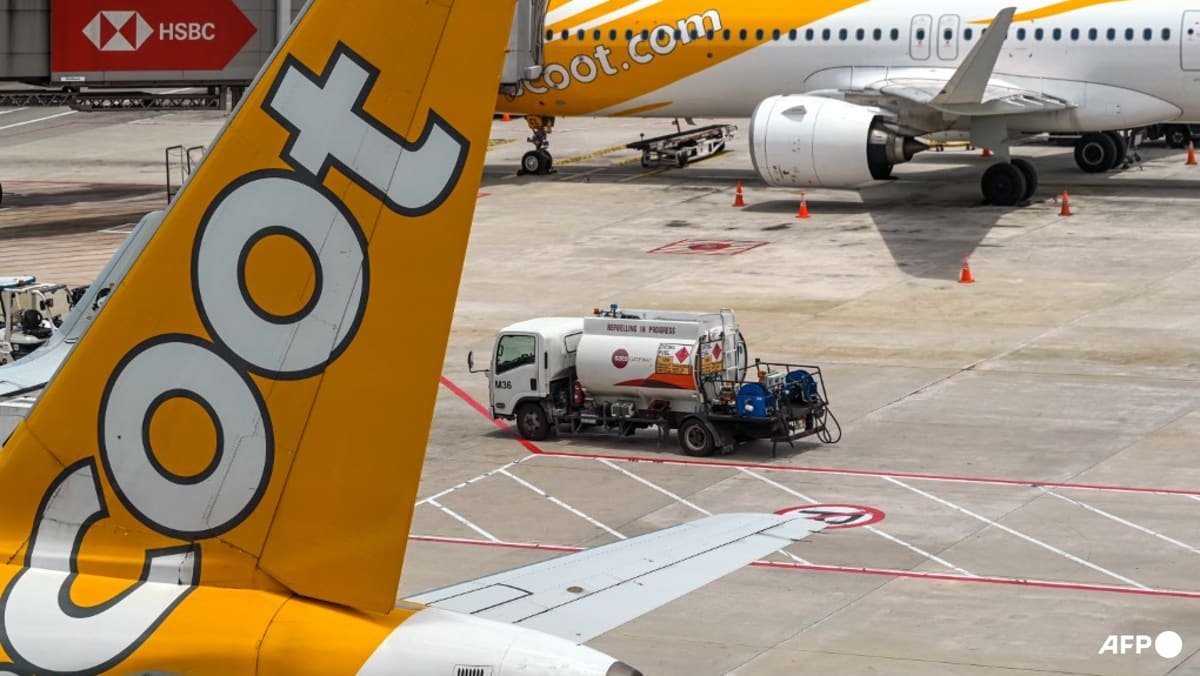
A refuelling truck carrying aviation fuel is pictured next to a Scoot passenger jet at Changi Airport in Singapore on Mar 13, 2026. (File photo: AFP/Roslan Rahman)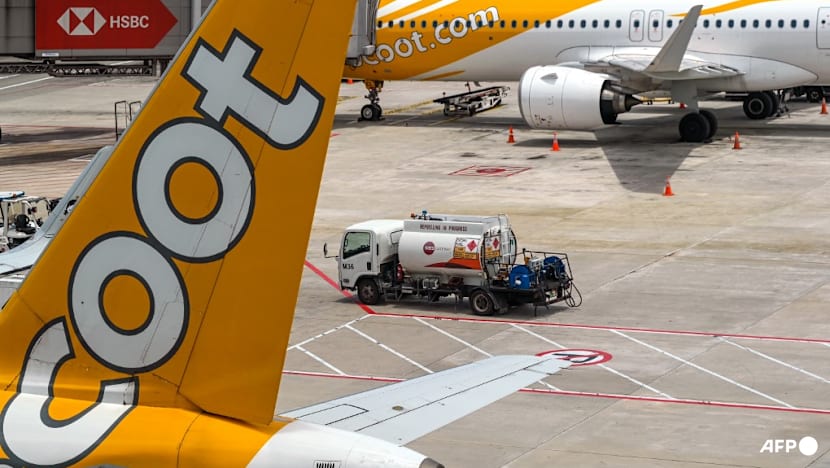
New: You can now listen to articles.

This audio is generated by an AI tool.

Read a summary of this article on FAST.
Get bite-sized news via a new
cards interface. Give it a try.
Click here to return to FAST
Tap here to return to FAST
FAST
SINGAPORE: The conflict in Iran has sent jet fuel prices soaring, as the prolonged closure of the Strait of Hormuz choked exports from Gulf refineries that supply a significant share of the world’s jet fuel.
The war, which began with United States-Israeli strikes on Iran on Feb 28, sparked air travel’s worst crisis in years, with airlines in April warning of a looming jet fuel supply crunch and International Air Transport Association chief Willie Walsh flagging concerns of a fuel shortage during the peak summer period.
But in May, major airlines moved to reassure travellers that they had enough supplies of jet fuel to last the summer.
The Lufthansa Group, which had only a month prior announced that it was cutting thousands of short-haul flights through October, said last week that “summer’s good to go”, thanks to stabilised fuel supplies.
So why did feared fuel shortages not materialise? And what are airlines concerned about now? CNA takes a closer look.
WHAT CAUSED THE CONCERNS?
While the global jet fuel market is relatively small, accounting for less than 7.5 per cent of global oil demand, it is vulnerable to disruption, as it relies heavily on refineries in the Persian Gulf, according to Bloomberg Opinion energy and commodities columnist Javier Blas.
Kuwait, the United Arab Emirates and Saudi Arabia exported around 400,000 barrels of aviation fuel per day in 2025.
“The Middle East was the single largest jet fuel exporting region in the world before the Iran conflict – so exposure was significant,” said oil analyst James Noel-Beswick, head of commodities at Sparta.
He added that vulnerabilities did not stop at direct jet fuel exports, as the closure of the Strait of Hormuz not only disrupted that supply, but also reduced the availability of crude oil.
Jet fuel is refined from crude oil.
“The region is also a primary crude supplier to India and East Asia, two of the world’s other major jet-producing hubs,” said Mr Noel-Beswick.
“When Middle Eastern crude stopped flowing reliably to those refineries, their capacity to produce and export jet fuel was also compromised. The supply chain risk was effectively amplified twice over – once at the source, and again downstream.”
The jet fuel market is also vulnerable to disruptions because airports typically run on a just-in-time model, thanks to how aviation fuel is sold and consumed by the planeload, Mr Blas wrote in an opinion piece.
Due to the vast quantities involved, airports typically store little jet fuel and instead rely on direct pipelines from refineries and import terminals.
Thus, when a supply disruption hits, whether to crude oil or refined fuel products, the jet fuel market has a smaller buffer than, for instance, petrol for road vehicles, he wrote.

WHY DIDN’T AIRLINES RUN OUT OF FUEL?
The jet fuel market’s relatively small size, while making it prone to disruption, also made it easier for airlines and refiners to make adjustments to avert a widespread crisis of grounded planes.
The surging of jet fuel prices – which doubled to over US$230 (S$295) a barrel in early April from their pre-war level of about US$100, before falling to around US$141 on May 29 – encouraged refineries to produce more aviation fuel, albeit at the expense of other refined oil products, Mr Blas wrote.
For example, US refiners raised jet fuel’s share of refinery output from 10.5 per cent before the war to 12.7 per cent, he said. That means they are producing about 250,000 more barrels of jet fuel a day compared to a year ago, he added.
European refineries have also ramped up jet fuel production to maximum capacity, while European Union regulators approved the use of Jet A aviation fuel, sourced from other parts of the world, as an alternative to the Jet A-1 fuel currently used in Europe.
“Global refining has held up better than many expected. The US, Nigeria, India and Europe have all been able to increase jet fuel output – absorbing some of the supply gap left by Middle Eastern disruption,” said Mr Noel-Beswick.
“Notably, Asian refiners outside China have surprised to the upside – they secured more crude access than initially feared, keeping runs higher than the market anticipated.”
Lufthansa said that jet fuel shipments from North America and Africa are increasingly replacing the aviation fuel previously imported from the Middle East.
“Airports, airlines … can always work to find alternatives where there are some supply issues,” said aviation analyst Brendan Sobie.
The demand for jet fuel has also fallen, experts said.
“From the time the conflict started, the market saw immediate impact, taking jet fuel prices more than US$100 (a barrel) higher than crude oil,” said Sushant Gupta, research director at Asia Pacific Refining and Oils.
“With the higher prices, we have seen jet fuel impacted over the past two to three months, and that has had an impact on the overall jet fuel balances.
“The overall jet fuel prices are now around US$45 (a barrel) above crude, so overall demand has corrected downwards and that has brought about the feeling that availability has improved,” he said.
One of the reasons for this is that airlines, such as Cebu Pacific, are cancelling or reducing flights on uneconomical routes.
Flight demand has also fallen, as passengers refuse to pay higher ticket prices or fuel surcharges to cover rising costs for airlines.
“One has to keep in mind all the cuts in flights due to the reduced passenger demand – higher fares due to high fuel inevitably impacts demand – also means less demand for fuel,” said Sobie, who is the founder of Singapore-based independent aviation consulting and analysis firm Sobie Aviation.
“At the moment, there is no concern about possible fuel shortages,” he added.
The flight cancellations and fall in passenger demand come on top of flights already cancelled due to the Iran war disrupting travel in the Middle East, with Mr Blas writing that hub airports in the region, including those in Dubai and Doha, have been badly affected by the conflict.
According to FlightRadar24, flights are running about 0.5 per cent below last year, a reversal of the 2 per cent increase year-on-year before the war.
“Demand has pulled back. Flight cancellations and improved operational efficiency across carriers have reduced the volume of fuel actually needed,” said Mr Noel-Beswick.
“The combination of supply resilience and demand destruction has, for now, kept the market balanced.”
COULD SHORTAGES YET MATERIALISE?
The European Commission said last month that while there were no shortages in the European Union at the time, regional supply constraints could arise if the blockage of oil supplies via the Strait of Hormuz does not get resolved, with jet fuel being the primary concern.
It added that though emergency stocks could be released if necessary, such releases would have to be matched with fuel-saving measures.
Meanwhile, the International Energy Agency (IEA) has also warned that countries are tapping into oil inventories and strategic reserves at a record pace.
But while the release of reserves has helped calm market volatility, it is only making up for part of the lost production, and these reserves are dwindling.
“The Gulf region is a key source of exports of refined oil products to global markets, notably for middle distillates such as diesel and jet fuel,” said the IEA on its website.
“Resuming flows through the Strait of Hormuz remains the single most important variable in easing the pressure on energy supplies, prices and the global economy.”
And as extra jet fuel comes at the expense of other refined products, such as gasoline, the demand for gas from road vehicles could impact aviation fuel supplies.
“The risk hasn’t gone away. One warning sign worth watching: the price differential between jet fuel and competing refined products – diesel and gasoline – has narrowed,” said Noel-Beswick.
“When jet commands less of a premium over those alternatives, refiners have less financial incentive to maximise jet output. If that dynamic persists, refinery slates could shift away from jet, and the current supply cushion may not hold,” he said.
“A prolonged Iran crisis remains the key variable.”
WHAT ARE AIRLINES CONCERNED ABOUT NOW?
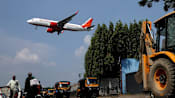
While the immediate fear of empty airport fuel tanks has dissipated, the aviation industry still has plenty to worry about, including profitability and passenger demand, if the Iran crisis drags on.
Some carriers were able to absorb the initial jump in jet fuel prices because they had hedging regimes in place. Fuel hedging allows airlines to lock in future fuel purchases at pre-agreed prices, giving them some protection when market prices suddenly spike.
For instance, Singapore’s low-cost carrier Scoot had fuel hedges in place when the Middle East crisis hit, giving it temporarily lower fuel costs compared with airlines that absorbed those price increases directly, Mr Sobie wrote in a commentary for CNA last month.
But airlines that hedged fuel prices cannot do so indefinitely, while those that were insufficiently hedged remain vulnerable to price spikes.
Singapore Airlines, which practices fuel hedging, said in May that while the carrier and its subsidiary Scoot had raised air fares across their network, the adjustments did not fully offset increases in the price of fuel, its single largest expense.
Airlines may also face weaker bookings if the crisis drags on and consumers, squeezed by the energy crisis and rising inflation, put off their travels or choose to visit closer destinations.
Tourism in Southeast Asia could be hit as residents travel to neighbouring countries less frequently, Mr Sobie wrote. Some Southeast Asian residents are holidaying closer to home after foregoing long-haul trips to the Middle East or Europe. But they are few compared to the large volume of middle-class consumers who, squeezed by the energy crisis, no longer have the discretionary income.
Passenger traffic could dip in Southeast Asian countries over the next few months, with Indonesia, Malaysia, the Philippines, Thailand and Vietnam all possibly experiencing double-digit declines in passenger numbers, with domestic demand particularly impacted, he added.
The survival of some carriers is also a concern, with American budget carrier Spirit Airlines becoming the airline industry’s first casualty linked to the Iran war, declaring bankruptcy and ceasing operations on May 2.
European budget airline Ryanair’s chief financial officer said in a CNBC interview last month that he would not be surprised if some European airlines found themselves in a similar scenario as Spirit.
“I think we will see some of the weaker carriers who were already struggling before the war possibly go to the wall in the winter,” Mr Neil Sorahan told CNBC.
While Mr Sobie wrote that Southeast Asia’s main low-cost carriers were unlikely to fail, given their size and economic importance, their pre-COVID-19 glory days may not return, even if fuel prices come down.
Source: CNA/ec(kg)
Sign up for our newsletters

Get the CNA app
Stay updated with notifications for breaking news and our best stories
Get WhatsApp alerts
Join our channel for the top reads for the day on your preferred chat app

Get bite-sized news via a new
cards interface. Give it a try.
Click here to return to FAST
Tap here to return to FAST
FAST
About The Author