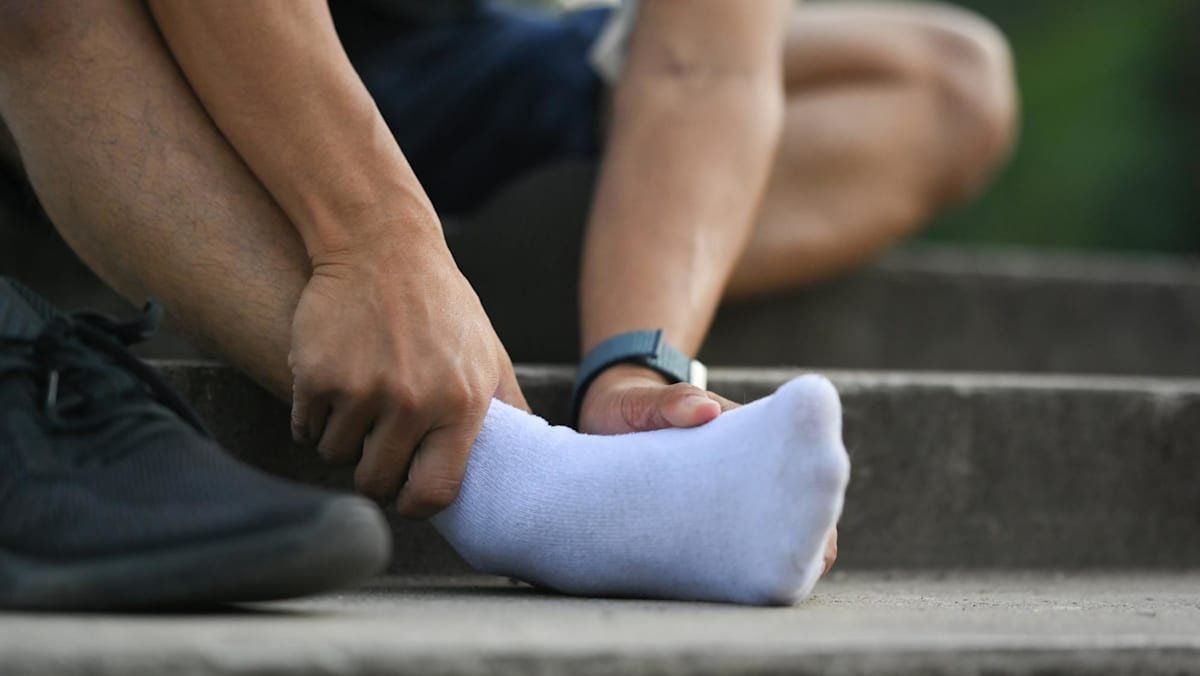
Always tripping or spraining your ankles? When ‘clumsiness’ could be a genetic nerve disorder
Charcot-Marie-Tooth (CMT) disease can cause progressive weakness, numbness, balance problems and foot deformities. But its slow progression means some people may simply think they’re clumsy. Neurologists explain the signs to look out for, what causes CMT and what can help.
(Photo: iStock/Prathan Chorruangsak)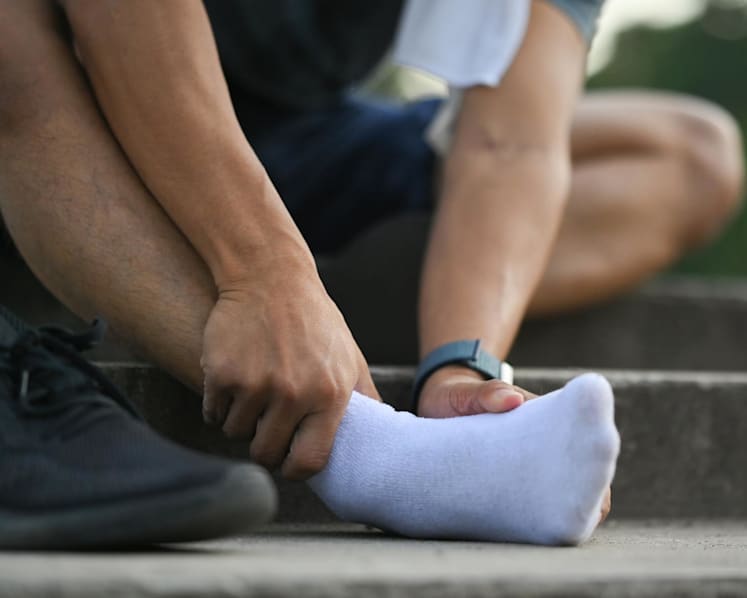
New: You can now listen to articles.

This audio is generated by an AI tool.

Read a summary of this article on FAST.
Get bite-sized news via a new
cards interface. Give it a try.
Click here to return to FAST
Tap here to return to FAST
FAST
The odd stubbed toe, ankle sprain, missed footing when stepping up a curb… we all have our moments of clumsiness as able-bodied adults. But when those sporadic episodes are coupled with numbness in the feet and lower legs, and subsequently, hand weakness that affects tasks requiring fine motor skills such as buttoning clothes, things start to look a little more concerning.
You may be experiencing signs of Charcot-Marie-Tooth (CMT) disease, an inherited neuropathy caused by genetic mutations that affect the peripheral nerves. The disease is named after the three doctors who first described it in 1886: Dr Jean-Martin Charcot (say “shah-coh”), Dr Pierre Marie, and Dr Howard Henry Tooth.
“Many patients do not have significant pain or sensory symptoms”, and often report “a recent onset of weakness”, said Dr Newman Cheng, a consultant with Department of Neurology, National Neuroscience Institute (NNI).
With September being CMT awareness month, find out whether your constant tripping needs a doctor’s assessment, and how the genes for CMT get inherited.

HOW DOES CMT AFFECT THE BODY?
Peripheral nerves are what connect the brain and spinal cord to the rest of the body – and are the reasons you can sense touch and move your muscles. In CMT, however, the peripheral nerves are affected by genetic mutations.
“These genetic mutations result in damage to the nerve’s myelin sheath – the insulating layer around the nerve – or the nerve fibres themselves, leading to progressive nerve degeneration,” explained Dr Cheng.
As a result, “nerve signals are transmitted less effectively, leading to progressive muscle weakness, muscle wasting and sensory loss”, explained Dr Amanda Chin Xin Yi, a consultant with Division of Neurology, Department of Medicine, National University Hospital.
CMT causes lifelong, progressive symptoms, including muscle weakness, limb atrophy, and sensory loss, according to the CMT Association in the US. These symptoms often lead to challenges with balance, walking, hand use, and other daily activities.
WHAT AGE DOES CMT USUALLY SHOW UP?
CMT can occur anytime from early childhood through late adulthood, said Dr Cheng, and the symptoms vary with age. In early childhood, CMT may present with delayed motor milestones, hypotonia (“floppy baby syndrome”), toe walking, or severe skeletal deformities including scoliosis, he said. “Adolescent or young adult onset is the most typical, with gradual development of foot deformities, ankle weakness, and gait difficulties.”
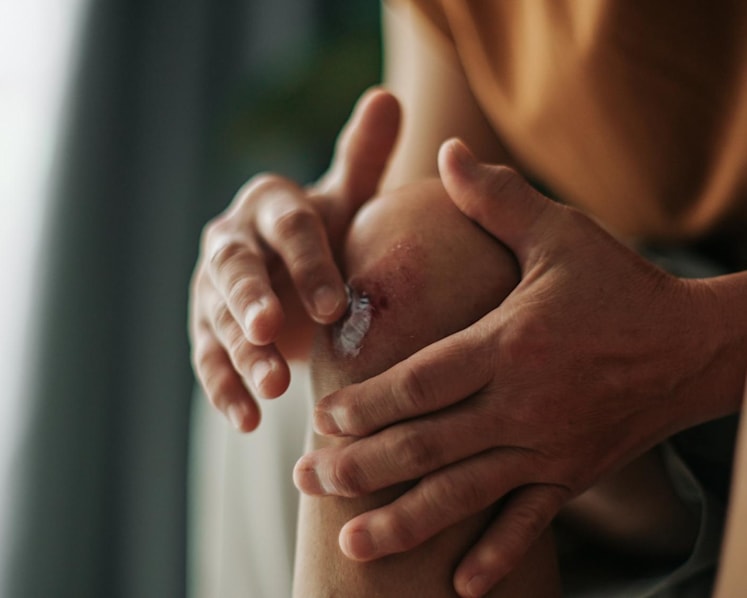
In general, observed Dr Chin, “individuals whose symptoms begin in childhood tend to have a more severe disease course because the nerves are affected over a longer period of time. Children with more severe forms may experience delayed walking, frequent falls and progressive foot deformities.”
The disease can also occur much later in adulthood in some individuals – “sometimes in their 40s, 50s or even later”, said Dr Chin. Such patients often have a milder course with “gradual onset of numbness, foot weakness or balance difficulties that progress slowly over many years”.
However, no two patients have the same experience, said Dr Cheng. “The severity varies widely even within the same family. Some people have such mild symptoms they never realise they’re affected, while others develop significant disability. This variability exists even among identical twins.”
DO BOTH PARENTS HAVE TO HAVE THOSE GENES TO AFFECT THEIR CHILDREN?
“More than 100 genes have been identified to cause different forms of the disease, and as such, inheritance patterns vary,” said Dr Chin. Worldwide, the most common subtype is CMT1A, she said, which is caused by a duplication of the PMP22 gene. “It accounts for approximately 40 to 50 per cent of all CMT cases.”
Naturally, the most common way the altered gene is inherited is via one’s parent or parents. “The most common pattern is the autosomal dominant inheritance pattern, in which a parent carrying the altered gene has a 50-per-cent chance of passing it on to each child,” explained Dr Chin.
“Other forms follow the autosomal recessive inheritance pattern, where both parents (usually healthy carriers with no symptoms) carry an altered copy of the gene each. The child must inherit an altered copy of the gene from each parent to develop the condition,” said Dr Chin.

Dr Cheng explained that there is also an X-linked inheritance pattern, where the mutation occurs in the X chromosome. The altered gene is only passed to daughters by their affected fathers, said Dr Cheng. But that doesn’t mean sons won’t develop CMT as there are the aforementioned autosomal dominant inheritance pattern and autosomal recessive inheritance pattern.
The X-linked inheritance pattern accounts for about 10 to 15 per cent of CMT cases. “Males typically have more severe symptoms than females,” said Dr Cheng, adding that “affected females may have mild symptoms or be asymptomatic”. There are also cases where CMT arises from “new mutations with no family history.”
Genetic testing will determine if you have inherited the genes behind CMT. “Because the inheritance pattern varies according to the genetic subtype, genetic testing and genetic counselling are important for affected individuals and their families,” said Dr Chin.
HOW COMMON IS CMT?
CMT is a rare disease. “The global prevalence ranges from about 10 to 80 per 100,000 persons,” said Dr Cheng. Or one in 2,500. In Singapore, “CMT prevalence is estimated at about 15 per 100,000 people”, with NNI diagnosing about five to 15 CMT patients a year, he said.
The numbers can seem pretty high for a rare disease but Dr Chin explained that “CMT is not a single disease but an umbrella term comprising a group of more than 100 different genetic disorders”. “As such, while CMT as a whole is relatively uncommon, each individual genetic subtype is much rarer, with some affecting only a small number of families worldwide.”
WHY IS CMT LARGELY UNHEARD OF?
CMT is often “under-recognised” because it progresses very slowly, said Dr Chin. “Many patients gradually adapt to their symptoms and may simply believe they are naturally clumsy or less athletic than others.”
Even with the use of genetic testing, there are “over 100 genes that can cause CMT, making genetic testing complex”, said Dr Cheng. Furthermore, “CMT is relatively uncommon in general practice, so clinicians may not immediately consider it”.
It also doesn’t help when CMT’s symptoms can resemble those of more common conditions, said Dr Chin, including orthopaedic foot problems, lumbar spine disorders, diabetic neuropathy or other peripheral nerve diseases. “Some individuals have relatively mild symptoms, making the diagnosis less obvious.”
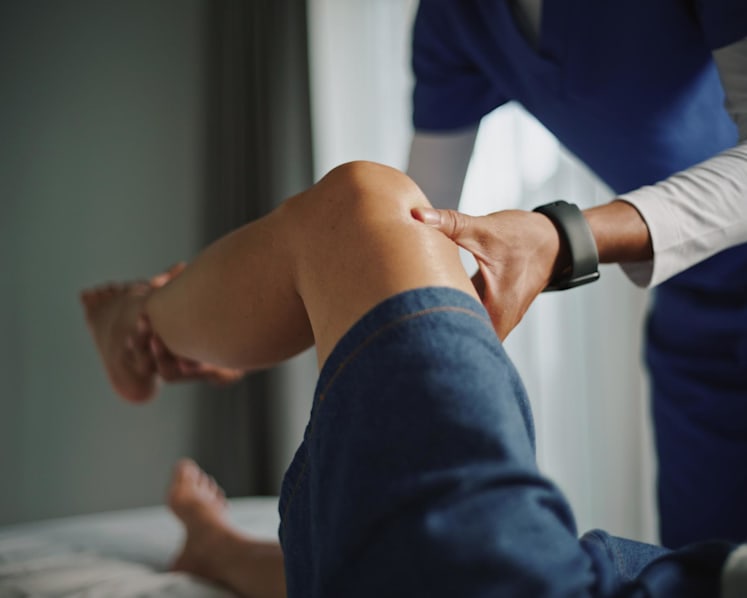
HOW DO YOU KNOW IF YOU HAVE CMT OR YOU’RE JUST CLUMSY?
“It is common to trip or sprain an ankle occasionally, particularly during sports or physical activity,” said Dr Chin. “The difference with CMT is that the symptoms are persistent, progressive and often accompanied by other neurological signs.” These signs include progressive weakness in the feet or hands, numbness or reduced sensation, she added.
See a doctor, too, said Dr Cheng, if you experience a persistent inability to lift and hold up both ankles against gravity, and it gets more difficult over time. Having high-arched feet or other foot deformities, along with a family history of similar symptoms or a diagnosis of CMT should also prompt medical evaluation, said Dr Chin.
WHAT HELP IS THERE FOR PATIENTS?
There is no cure for most forms of CMT but fortunately, it is not a fatal disease. Swimmer Yip Pin Xiu, a seven-time Paralympic gold medalist and seven-time World Champion, is proof that patients can make waves living with CMT. Also living life to her fullest is para athlete, Nur Sabrina Suhaimi – Singapore’s only female wheelchair rugby player.
“There is a great deal that can be done to help patients maintain their mobility, independence and quality of life,” said Dr Chin, including physiotherapy (to maintain muscle strength, mobility and balance), occupational therapy (to improve hand functions) as well as assistive devices and ankle-foot orthoses to improve walking and reduce falls.
“Patients with significant foot deformities may also be referred for orthopaedic assessment, while those with neuropathic pain can receive appropriate pain management,” she said.
Lifestyle modifications are another area that can make a difference, said Dr Chin. “Certain medical conditions and lifestyle factors may worsen symptoms, function and/or mobility in someone who already has CMT. These include diabetes, excessive alcohol consumption, and Vitamin-B12 deficiency as they can contribute to nerve dysfunction as well.”
Furthermore, “research into gene-targeted therapies and other novel treatments is progressing rapidly”, said Dr Chin. “These advances offer hope that more targeted treatments may become available in the future.”
Patients who plan to have families should consider undergoing genetic counselling, advised Dr Cheng, for “information about inheritance patterns and recurrence risk”. For support, he suggested contacting Rare Disorder Society Singapore as there isn’t a local dedicated support group for CMT patients.
Source: CNA/bk
RECOMMENDED
Get bite-sized news via a new
cards interface. Give it a try.
Click here to return to FAST
Tap here to return to FAST
FAST
About The Author