The German government on Tuesday said Russia was “responsible” for an attempted drone attack at the Leipzig/Halle Airport on August 4.
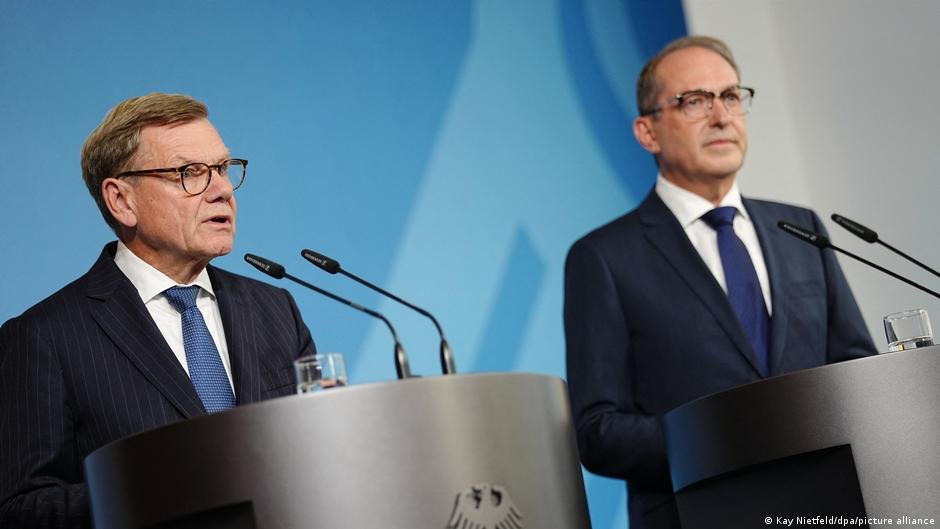
“The federal government concludes that Russia is responsible for the hybrid attack in Leipzig,” said Interior Minister Alexander Dobrindt at a press conference in Berlin on Tuesday afternoon, adding that the attack fitted the pattern of a “long series of destabilization operations” against Europe.
Leipzig airport attack: What has Germany said?
“The means used — such as the drone configuration, components, explosives and detonation systems — are known to us from other hybrid operations by Russia and its war against Ukraine,” added Foreign Minister Johann Wadephul.
Authorities discovered a drone fitted with explosives and a detonation mechanism on the evening of August 4 in the security area of Leipzig/Halle Airport between Ukrainian cargo aircraft and believe a second drone may have collided with a DHL aircraft nearby.
Last week, German media reported a third drone, also loaded with explosives, had also been discovered at the airport.
German federal prosecutors described the incident as a “serious attack on Germany’s transport and logistics infrastructure.”
“Taken together, police investigations, patterns of the crime and intelligence findings substantiate Russian responsibility for the attempted attack at Leipzig Airport,” said Dobrindt.
“We do not view Leipzig as an isolated incident, but rather see it in the context of other hybrid actions. We assume that Germany will be the target of further hybrid attacks by Russia,” he continued.
How will Germany respond?
Interior Minister Dobrindt insisted that Germany is “not at war” but that it is “a daily target of hybrid warfare.” Therefore, he said, Germany would respond to the hybrid attack in Leipzig in a “proportionate and measured, yet resolute manner.”
Foreign Minister Wadephul said Germany’s response would be coordinated closely with European Union and NATO partners.
In addition to a strengthening of internal security, he also announced additional measures including the closure of the Russian consulate in the western city of Bonn from September 18 and the rescinding of a contract enabling the operation of the “Russian House,” a Russian cultural center in Berlin.
“Our message to the Russian leadership is clear,” said Wadephul. “We are sticking to our security course. The attack on Leipzig shows that this is necessary. We will not allow our social cohesion to be divided by Russian attacks. We remain ready to react along with our partners when the protection of our population demands it.”
Finally, he said that Germany would continue to support Ukraine in its “defensive battle against Russian aggression.”
How have NATO and the EU responded?
“NATO stands in full solidarity with Germany after the Russian hybrid attack in Leipzig on 14 August,” said NATO Secretary General Mark Rutte, adding that the alliance would continue strengthening its ability to deter and defend its allies against threats.
“Russia’s attempts to intimidate us, to undermine our unity and our willingness to support Ukraine are futile and will fail,” he added.
“The German government has taken strong measures and the message is clear: hybrid attacks will not go without a clear response,” said European Commission President Ursula von der Leyen.
“We are united in our resolve to stand against Russian aggression,” she continued. “We will deter anyone who seeks to undermine our freedom and security. Russia is seeking to sow distrust and fear among our societies. But it will fail. And we will stand by Ukraine for as long as it takes.”
The European Union’s foreign affairs chief Kaja Kallas said earlier on Tuesday that it was “clear” that Russia was involved in the drone incident, but declined to comment further until Germany had identified those it believes were responsible,
Kallas said Russia was becoming increasingly provocative, raising the question of what could be done to deter Moscow from escalating tensions any further.
To view this video please enable JavaScript, and consider upgrading to a web browser that supports HTML5 video
This is a developing story. Please refresh for updates.
About The Author