US opens probe into Tesla Cybercab compliance with federal safety rules
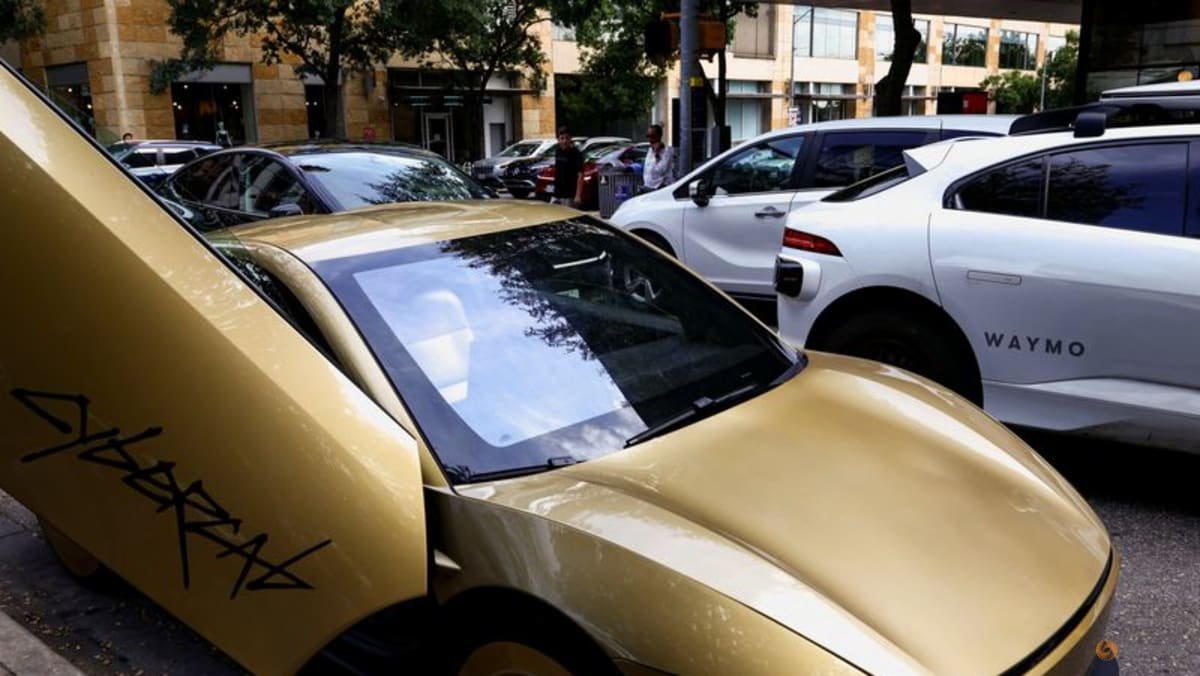
A gold-colored Tesla Cybercab arrives for an event in downtown Austin, Texas, U.S., September 3, 2026. REUTERS/Kaylee Greenlee
Read a summary of this article on FAST.
Get bite-sized news via a new
cards interface. Give it a try.
Click here to return to FAST
Tap here to return to FAST
FAST
WASHINGTON, Sept 4 : The U.S. National Highway Traffic Safety Administration on Friday opened an investigation into whether 1,000 Tesla Cybercab vehicles were properly certified.
The auto safety regulator is examining the process and technical data the EV maker relied on to claim compliance with federal motor vehicle safety standards.
The probe comes after Tesla on Thursday began commercial deployment of a small number of the two-seater Cybercabs in Austin, Texas, and said it planned to gradually expand the service to additional vehicles and locations.
NHTSA said the Cybercab lacks permanently attached conventional manual controls, including a steering wheel, brake pedal, accelerator pedal and mirrors.

Guess Word
Crack the word, one row at a time

Buzzword
Create words using the given letters

Mini Sudoku
Tiny puzzle, mighty brain teaser

Mini Crossword
Small grid, big challenge

Word Search
Spot as many words as you can
The agency said it would examine the basis for Tesla’s certification of the vehicles and related issues, including the extent to which the company determined that certain Federal Motor Vehicle Safety Standards were not applicable to the vehicle.
Tesla did not immediately respond to a request for comment.
The EV maker had 420 autonomous vehicles registered in Texas as of Friday morning, according to state records, including 45 Cybercab vehicles.
In June, the agency proposed to end a government requirement for manual brake pedals in self-driving vehicles, a move that would make it easier to deploy such vehicles on U.S. roads. It has proposed other changes to federal safety standards to allow AVs to avoid needing additional human driver equipment.
Under existing law, fully self-driving vehicles do not need NHTSA approval if they have required human controls, like steering wheels, brake pedals or mirrors.
NHTSA has authority to grant petitions to allow up to 2,500 vehicles per manufacturer yearly to operate on U.S. roads without required human controls. In July, NHTSA approved a petition for Amazon’s Zoox unit for limited commercial deployment of its novel steering-wheel-free robotaxis, a first for the autonomous ride industry.
Source: Reuters
Sign up for our newsletters

Get the CNA app
Stay updated with notifications for breaking news and our best stories
Get WhatsApp alerts
Join our channel for the top reads for the day on your preferred chat app

Get bite-sized news via a new
cards interface. Give it a try.
Click here to return to FAST
Tap here to return to FAST
FAST