Commentary: You can’t shield kids from scary news – here’s what Sesame Street and other children’s shows did after 9/11
Rather than trying to shield children completely from disturbing events, adults can help them process what they’ve seen in honest, reassuring and age-appropriate ways, says this professor.
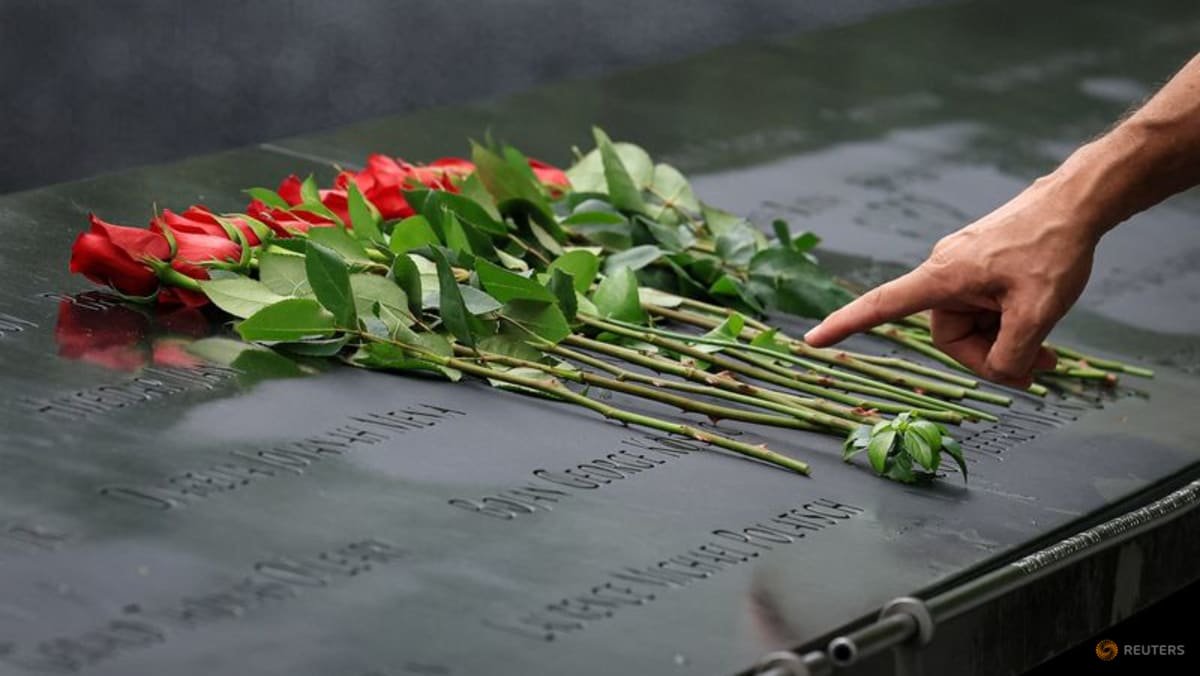
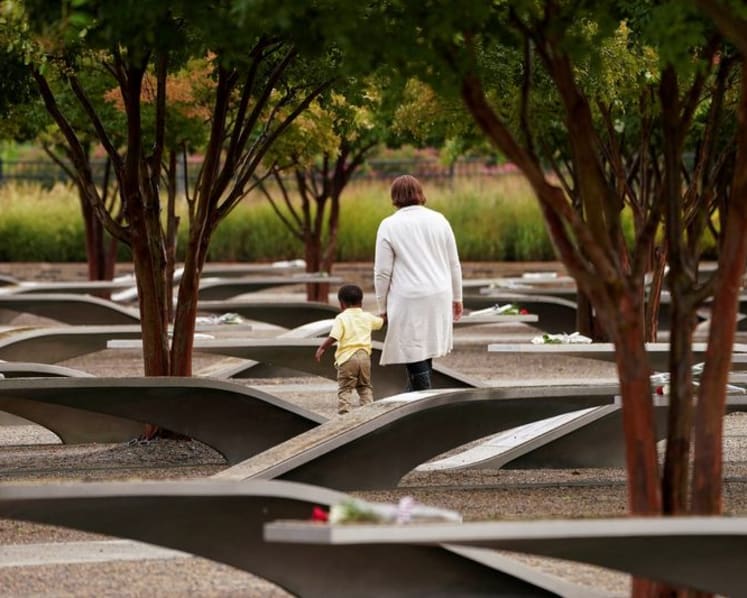
Flowers amongst the names on the North Pool at the 9/11 Memorial & Museum ahead of the 25th anniversary of the September 11, 2001 attacks on the World Trade Center in New York, U.S., August 31, 2026. REUTERS/Brendan McDermid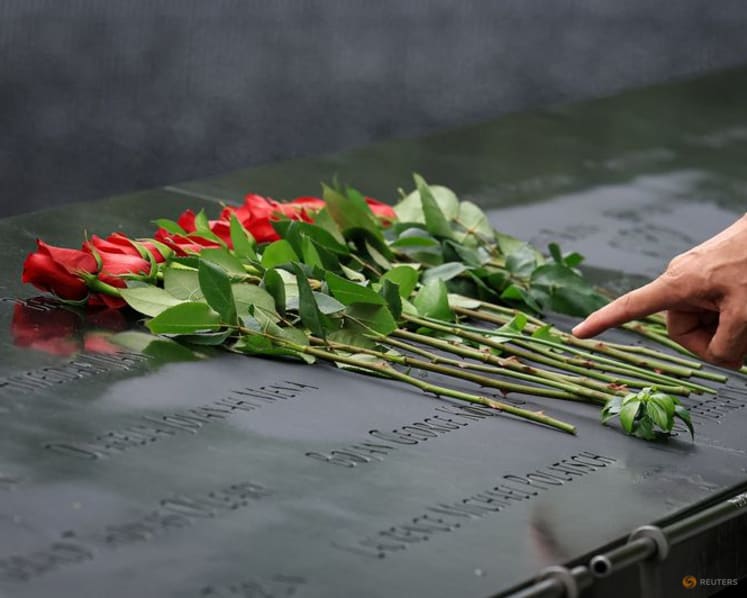
Read a summary of this article on FAST.
Get bite-sized news via a new
cards interface. Give it a try.
Click here to return to FAST
Tap here to return to FAST
FAST
MEDFORD, Massachusetts: On back-to-school night in 2005, I eagerly entered my youngest child’s first-grade classroom. The walls were festooned with brightly colored responses to the prompt: “Draw something you remember.”
I scanned for my son’s picture and was shocked when I encountered his drawing: an airplane flying into New York’s World Trade Center.
“I saw the picture you drew up on the bulletin board,” I said to him later that night. “Do you really remember seeing planes flying into the twin towers?”
He looked me in the eyes and replied: “No, Mummy. But I do remember you crying.”

Guess Word
Crack the word, one row at a time

Buzzword
Create words using the given letters

Mini Sudoku
Tiny puzzle, mighty brain teaser

Mini Crossword
Small grid, big challenge

Word Search
Spot as many words as you can
My son was not quite two years old on Sep 11, 2001. As a mother, I despaired to learn that my own reaction to that day’s tragedies had stuck with him so viscerally. As a professor and researcher of children’s media, I shouldn’t have been surprised.
My son’s memory was likely influenced not just by my emotional reaction but by the media around him that his parents and siblings consumed in the weeks and years after the attacks – a mix of TV news and content geared toward kids.
More than two decades later, children have many more ways and more platforms to encounter frightening images and stories, often without an adult nearby to help them make sense of what they see.
But the ways children’s programming such as Sesame Street responded to 9/11 offer a useful lesson: Rather than trying to shield children completely from disturbing events, adults can help them process what they’ve seen in honest, reassuring and age-appropriate ways.
YOU CAN’T SHIELD KIDS FROM WHAT’S HAPPENING
Psychologist Joanne Cantor was one of the first to study what scares children about news and how they respond to it. She concluded that what frightens children varies by their developmental stage.
Younger children tend to notice and respond to stories about natural disasters and tragedies about kids or animals. Older children are afraid of stories focusing on personal injury and physical destruction, kidnapping, disease and violence. Teens express fear of stories about random acts of violence, natural disasters and foreign conflicts.
Since Cantor first published her groundbreaking research in the 1980s, kids’ media environments have changed dramatically, with more channels, screens and platforms broadcasting images and videos of natural disasters, violence and tragedies from around the world.
One study found that young children’s exposure to news is often accidental but lasting, with many children recalling distressing images long after the fact. Another one found that violent news images take a cumulative toll on children’s mental and emotional health. And an international survey of over 4,000 children from 42 countries found that over half had been scared by stories about the COVID-19 pandemic.
More recently, the children’s media nonprofit Common Sense Media surveyed hundreds of children ranging in age from 8 to 18 and found that what kids are seeing and hearing in the news frequently makes them feel scared, sad, angry or depressed.
CHILDREN’S TV TAKES A DELICATE APPROACH
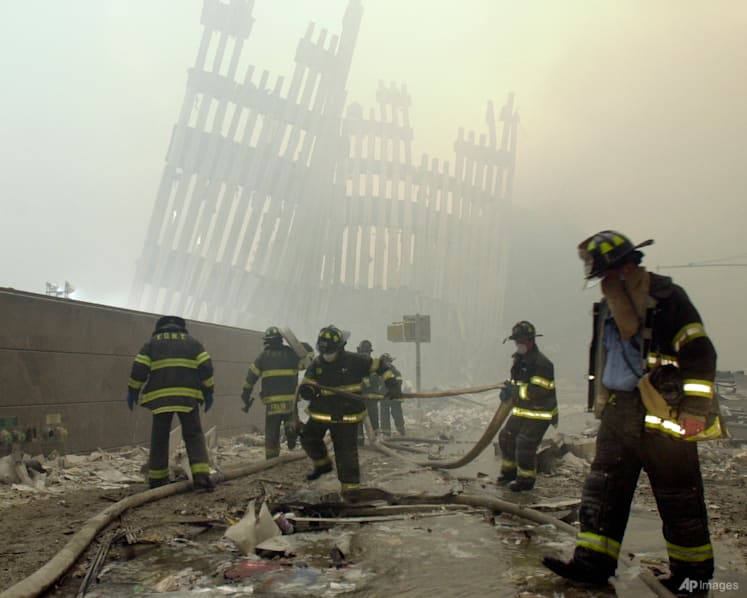
On and after 9/11, millions of children like my son either saw the images of terrorist attacks or were near adults who reacted to them.
According to Sesame Street producer Lewis Bernstein, when the 9/11 terrorist attacks happened, most of the episodes for the forthcoming season were already written. Yet writers and producers knew that children were not oblivious – that even the two- to four-year-olds comprising the core Sesame Street audience had some sense of what was going on. In response, the show’s producers collaborated with experts to create additional episodes that would address children’s fears.
In 2002, Rosemarie Truglio, vice president of education and research for Sesame Street, explained how the show’s approach was to meet children where they were developmentally.
Sesame Street had already helped children process their fears through classic episodes such as Grover’s Fear of the Dark. Researchers knew part of what scared children on 9/11 were the loud sirens and the fact that trusted figures such as firefighters and police officers were hurt.
So the episode they developed in response to 9/11 made no mention of the terrorist attacks and instead centred on a fire at Hooper’s Store. Elmo is frightened by the noise of the fire alarm and subsequent sirens. The protective gear that the firefighters are wearing also scares him.
Fortunately, a kind and kid-savvy firefighter named Bill speaks to Elmo about his fears and invites him to visit the firehouse. There, he dispels some of Elmo’s concerns and dispenses advice about what children can do if they are ever in a similar situation.
The PBS show Arthur took a similar approach: Its two-part episode April 9 centres on a fire at Arthur’s school. It makes no mention of the 9/11 terrorist attacks but explores how Arthur, Sue Ellen, Binky and Buster each process the school fire differently.

Zoom, the popular PBS live-action variety show, was geared toward older kids. Just 10 days after 9/11, they aired a special half-hour episode called America’s Kids Respond. The seven cast members, all between the ages of nine and 14, shared their thoughts, fears and feelings.
Advisers knew their audience needed more than hearing other kids talk about their feelings. So they made sure the cast also discussed constructive things kids could do, such as helping with food donations or clothing drives for affected families.
A year later, Zoom followed up with another special, America’s Kids Remember, where cast members talked about how they had coped in the months after the attacks. They also read mail from viewers, including some letters written by kids who had been targeted by anti-Muslim slurs. The episode included a segment in which a cast member visited a girl in lower Manhattan whose school had been damaged. The girl explained how she was able to cope through her art and activism.
WHAT’S A PARENT TO DO?
In 2001, most children under eight were watching approximately 3.5 hours per day of television or videos on VHS.
Today, Common Sense Media reports that the amount of time kids spend watching television or videos is similar, but their total media exposure is far greater, thanks to mobile platforms and different types of media.
In a world where extreme weather events often lead local news, natural disasters routinely take place, and school shootings and acts of political violence have become all too common, parents might naturally try to shield children from these stories.
But young children pick up on the news and on cues from their parents, even when we don’t think they do.
There are many things parents and teachers can do to help mitigate children’s fears and anxieties from what they see on the news. Recognise some of the signs your child might be feeling anxious, such as sleep problems, avoidance of activities or doomscrolling. Experts suggest answering children’s questions honestly without necessarily relaying all of the gory details. It’s also okay to say: “I don’t know.”
Some of the lessons from how children’s TV dealt with 9/11 still apply.
Young children can also benefit from adults reassuring them that they are safe, by encouraging them to process a piece of news through play or art, and helping children by giving them language to express their questions and fears.
With older children and teenagers, experts suggest avoiding labels, such as blaming something on “the bad guys”. It’s important to give kids facts and context and provide them with resources to answer their questions. Older children can benefit from outlets to express their concerns and feel agency, whether through journaling or art, or the kind of volunteerism promoted on Zoom.
Finally, it’s important to acknowledge and explain our own emotions to our children, as I learned on that back-to-school night nearly two decades ago.
Julie Dobrow is Teaching Professor at the Eliot-Pearson Department of Child Study and Human Development, Tufts University. This commentary first appeared on The Conversation.
Source: Others/sk
Sign up for our newsletters

Get the CNA app
Stay updated with notifications for breaking news and our best stories
Get WhatsApp alerts
Join our channel for the top reads for the day on your preferred chat app

Get bite-sized news via a new
cards interface. Give it a try.
Click here to return to FAST
Tap here to return to FAST
FAST