


Saudis shut down oil pipeline as Houthis tighten grip on Red Sea shipping
The world’s largest crude oil exporter said it temporarily closed the pipeline as a precaution after a drone attack originating from Iraq, where Iran-backed militants operate.
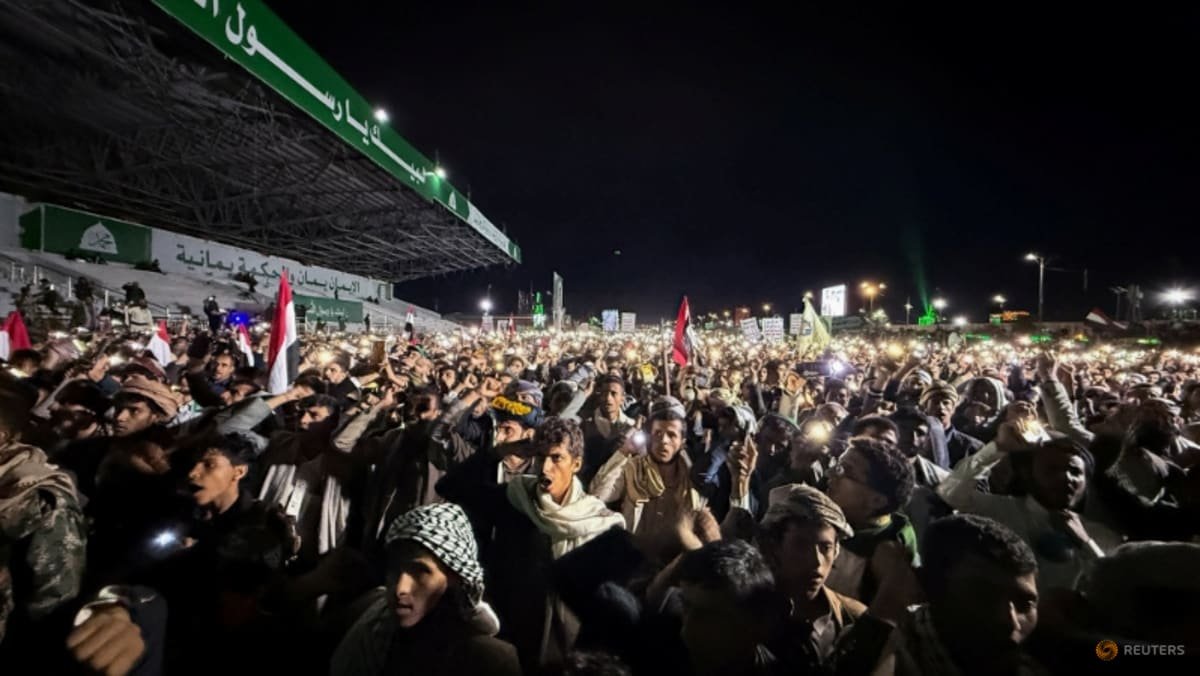
Houthi supporters shout slogans as they celebrate advances made by Houthi forces in fighting with government forces along Yemen’s Red Sea coast, in Sanaa, Yemen, Sep 11, 2026. Picture taken with a mobile phone. (Photo: REUTERS/Adel Al Khader)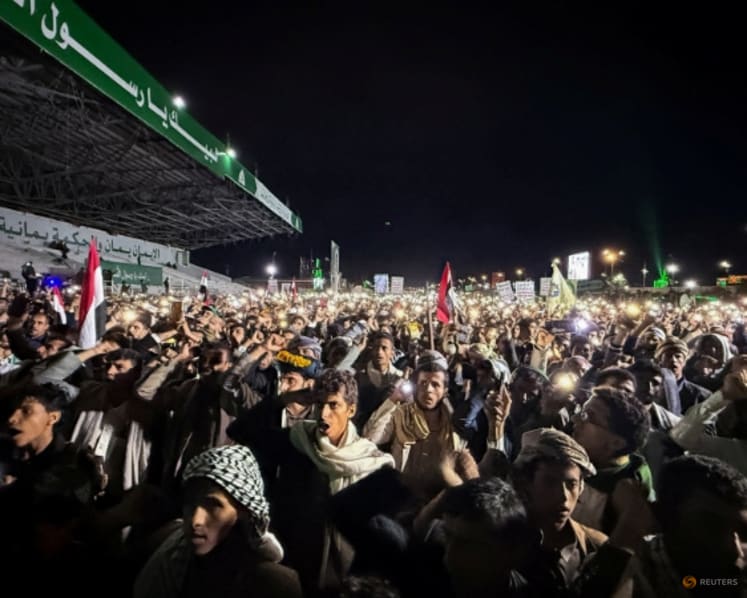
Read a summary of this article on FAST.
Get bite-sized news via a new
cards interface. Give it a try.
Click here to return to FAST
Tap here to return to FAST
FAST
ADEN/DUBAI: Saudi Arabia has shut down its East-West pipeline, after the vital oil conduit came under aerial attack in the widening Middle East war, threatening to send energy prices even higher.
The world’s largest crude oil exporter said it temporarily closed the pipeline as a precaution after a drone attack that both Baghdad and Riyadh said had originated in Iraq, where Iranian-backed militias operate. Iraq dismissed a military commander on Saturday (Sep 12) in response to the attack.
The 1,200 km pipeline running across the Arabian Peninsula has served as the main route out for global supplies of Middle East oil for the past six months while the Strait of Hormuz has been largely shut by war. It has been moving 4 million to 5 million barrels per day, amounting to 4 percent to 5 percent of global supply, sparing Saudi Arabia the brunt of the disruption that has crippled other Gulf oil and gas exporters.
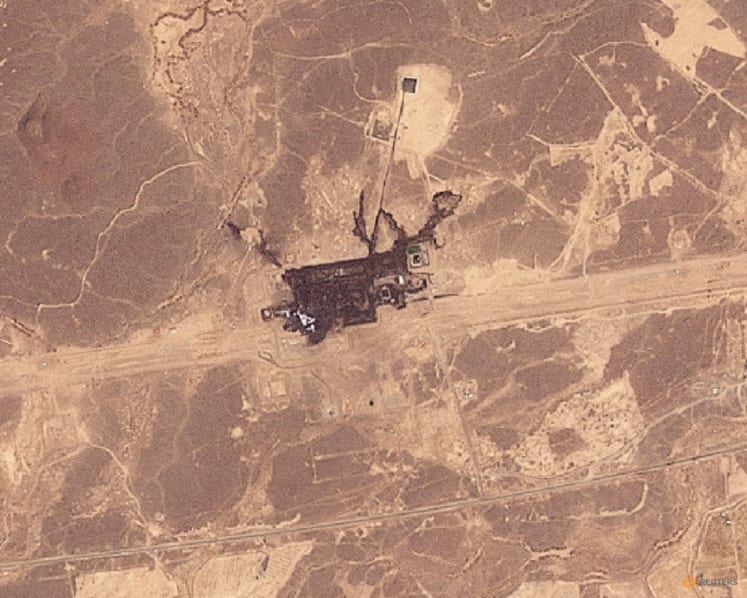
There was no immediate claim of responsibility for the strikes. Satellite images showed black smoke rising from an area of the pipeline south of Medina. The attack resulted in some injuries and damage that was being assessed, the Saudi Foreign Ministry said without detailing the impact on exports.

Guess Word
Crack the word, one row at a time

Buzzword
Create words using the given letters

Mini Sudoku
Tiny puzzle, mighty brain teaser

Mini Crossword
Small grid, big challenge

Word Search
Spot as many words as you can
US President Donald Trump, visiting Ireland to attend a golf tournament at one of his resorts, said Iran was probably to blame.

SAUDI LEADER ASKS FOR MILITARY HELP
Oil prices shot up over the past week and the retail price of diesel in the United States surged past a record US$6 a gallon, as the United States and Iran both fired on tankers and the Iran-aligned Houthis in Yemen advanced along the Red Sea, potentially extending disruption to another major oil route.
Washington now faces a dilemma over whether to help the Saudis fight the Houthis, risking further expansion of the war.
Saudi Arabia’s de facto ruler, Crown Prince Mohammed bin Salman, phoned Trump on Thursday and asked for US military help fighting the Houthis, three sources told Reuters. They said the prince was told that Washington would not intervene directly for now but would help with intelligence.
Trump confirmed on Saturday that he had spoken to the crown prince, and said the Houthis had also phoned his administration and asked Washington not to become directly involved in the conflict.
Four Yemeni government sources told Reuters that the Houthis had seized the strategic island of Perim on Friday in the middle of the Bab el-Mandeb Strait, the “Gate of Tears” at the mouth of the Red Sea.
IRANIAN OFFICIAL PLAYS DOWN OMAN MEETING
There have been no talks between the United States and Iran to end the conflict since a June agreement that collapsed within weeks.
In a post on X on Saturday, Ebrahim Azizi, head of the Iranian parliament’s national security committee, said: “As long as the American side does not accept all of Iran’s conditions, dialogue and negotiation are of no use.”
Iran’s foreign ministry announced on Friday that Iran would be attending a meeting with Gulf Arab states in Oman on Monday, at which the future of the Strait of Hormuz would be discussed.
But a senior Iranian official, speaking to Reuters on condition of anonymity on Saturday, played down the chances of a breakthrough, saying the meeting, called at Oman’s initiative, was intended to discuss issues including the strait but was not expected to yield a signed agreement.
An agreement on routes through the Strait of Hormuz between Iran and Oman will be presented at the meeting on Monday, which will also be attended by Iraq, but the strait will not reopen unless seven conditions conveyed by Iran to the U.S. are met, a source told Tasnim news agency, without elaborating.
Oman has not officially announced the meeting, and other Gulf countries have remained silent. Bahrain said on Saturday it would not attend meetings with Iran.
Iran wants its control of the Strait of Hormuz to be recognised, allowing it to collect fees from ships that use it, which Washington rejects. Oman, which controls the opposite bank of the strait, says it is negotiating with the agreement of other regional states.
The apparent launch of the attack on the Saudi pipeline from Iraq puts additional pressure on the Baghdad government, which is unique in the region for maintaining close political and military ties with both the United States and Iran.
Iraq dismissed the military commander and police chief in Maysan province near the Iranian frontier, long regarded as an area where Iran-backed Shi’ite militias operate and maintain influence, and shut the main border crossing there.
Saudi Arabia, which previously struck pro-Iranian militia in Iraq, has opted not to retaliate so far, following a request from the Iraqi prime minister, the Saudi Foreign Ministry said in a statement.
Saudi crude supply fell to the lowest levels in more than three decades, the International Energy Agency said on Friday, partly due to attacks on ships transiting Bab el-Mandeb by Houthi-linked groups.
In Yemen, Saudi-backed forces of a government based in the south indicated they would try to retake areas captured this week in the lightning offensive by the Houthis, mountain fighters who seized the capital 12 years ago and withstood years of deadly Saudi airstrikes during Yemen’s civil war.
Reuters reported on Thursday that the dramatic Houthi advance down Yemen’s Red Sea coast came with direct guidance from Iran’s Revolutionary Guards.
Iran describes the Houthis as an ally but publicly denies giving them military direction. The Houthi military spokesperson, Yahya Saree, said maritime navigation remained safe for all shipping except Saudi vessels subject to a previously announced ban.
Source: Reuters/fs
Sign up for our newsletters

Get the CNA app
Stay updated with notifications for breaking news and our best stories
Get WhatsApp alerts
Join our channel for the top reads for the day on your preferred chat app

Get bite-sized news via a new
cards interface. Give it a try.
Click here to return to FAST
Tap here to return to FAST
FAST







