NParks seizes 101 illegally kept wildlife in islandwide raid; 14 animals dead
Six individuals face probe over illegal sale and possession of wildlife in one of NParks’ largest seizures in recent years.
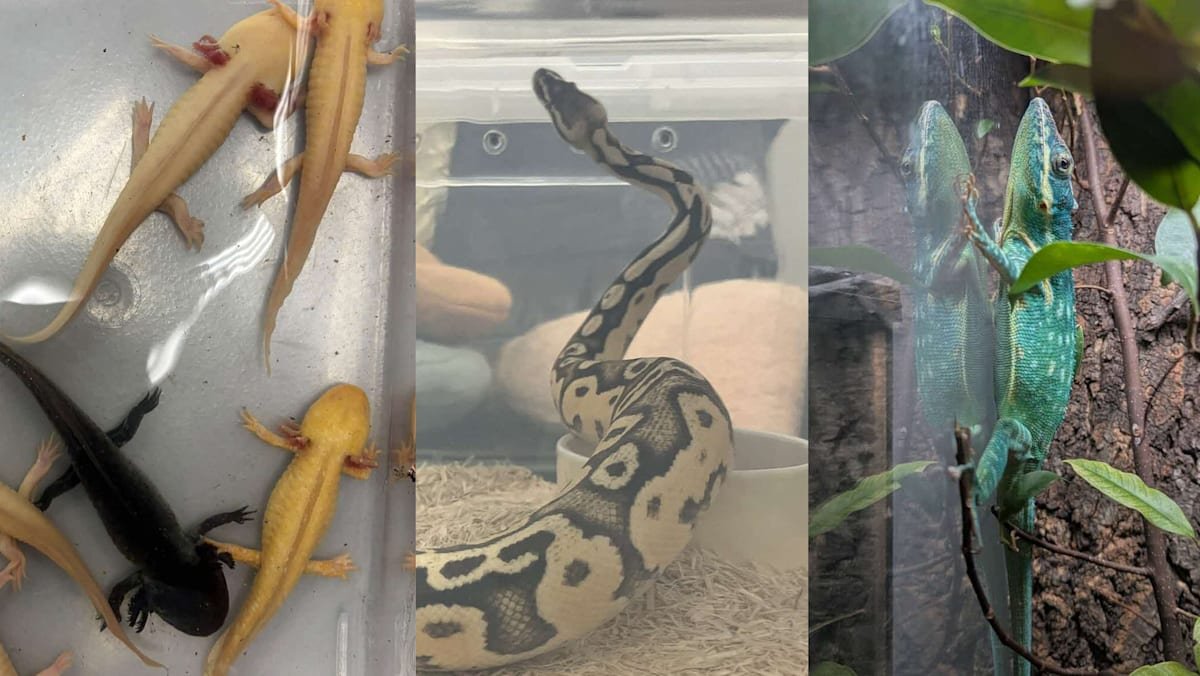
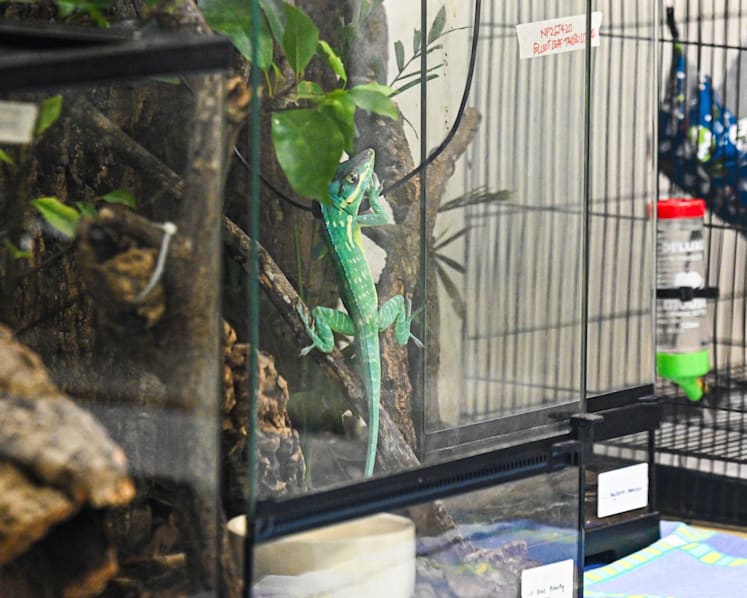
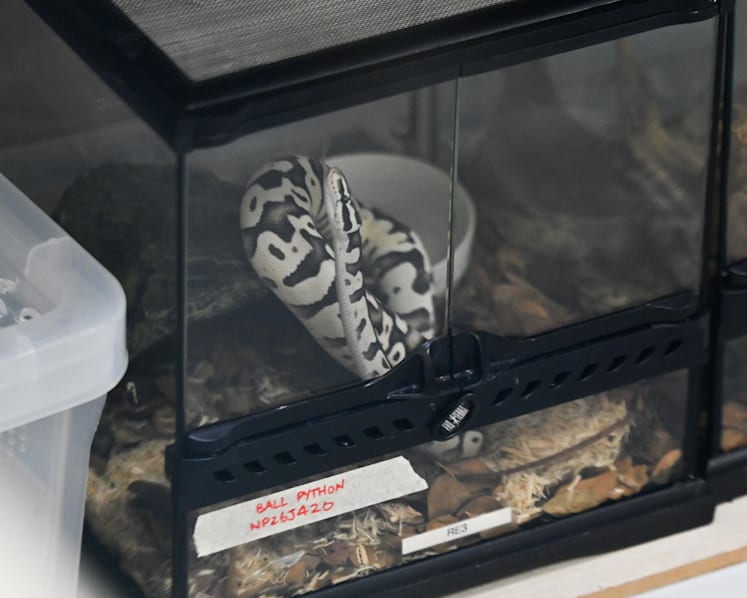
Seized axolotls (left), a ball python (centre), and a blue beauty anole. (Photos: National Parks Board)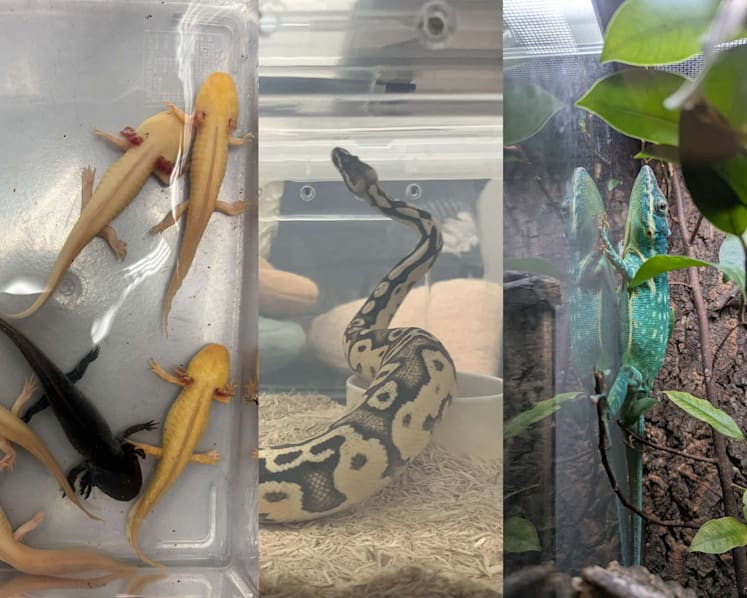
New: You can now listen to articles.

This audio is generated by an AI tool.

Read a summary of this article on FAST.
Get bite-sized news via a new
cards interface. Give it a try.
Click here to return to FAST
Tap here to return to FAST
FAST
SINGAPORE: A total of 101 non-native wildlife species were seized in a series of raids across Singapore on Monday (Sep 14), with 13 animals found dead at the premises and one needing to be euthanised due to poor health.
The National Parks Board (NParks) conducted simultaneous raids on the residences of six individuals believed to be involved in the sale or possession of wildlife. They had also advertised the wildlife species for sale, or posted about the animals on online platforms.
The six are currently under investigation. NParks did not say if their cases are linked to each other.
The operation marks one of NParks’ largest seizures of illegally kept wildlife in recent years, the authority said on Wednesday. It is the largest haul in a single operation since 2021, when about 120 wild animals were seized.
The seizure included newts, lizards, pythons, tarantulas and turtles. None were allowed to be sold, offered for sale or kept as pets in Singapore.

Guess Word
Crack the word, one row at a time

Buzzword
Create words using the given letters

Mini Sudoku
Tiny puzzle, mighty brain teaser

Mini Crossword
Small grid, big challenge

Word Search
Spot as many words as you can
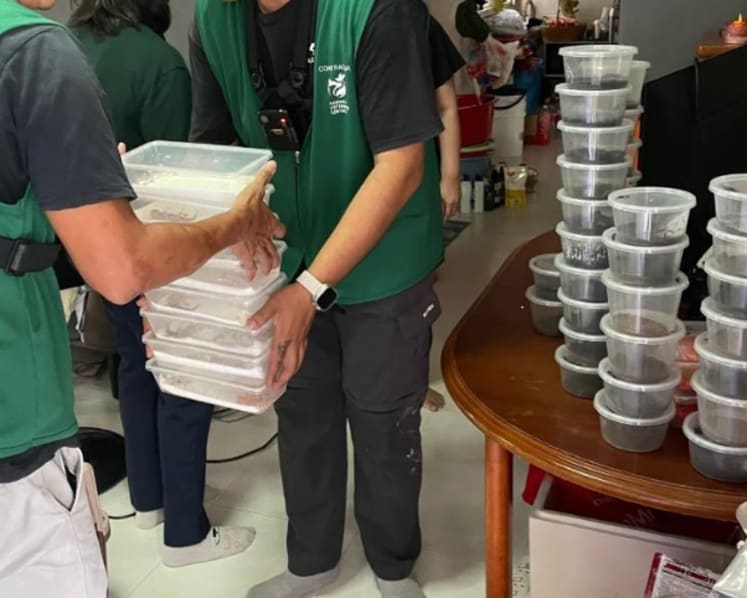
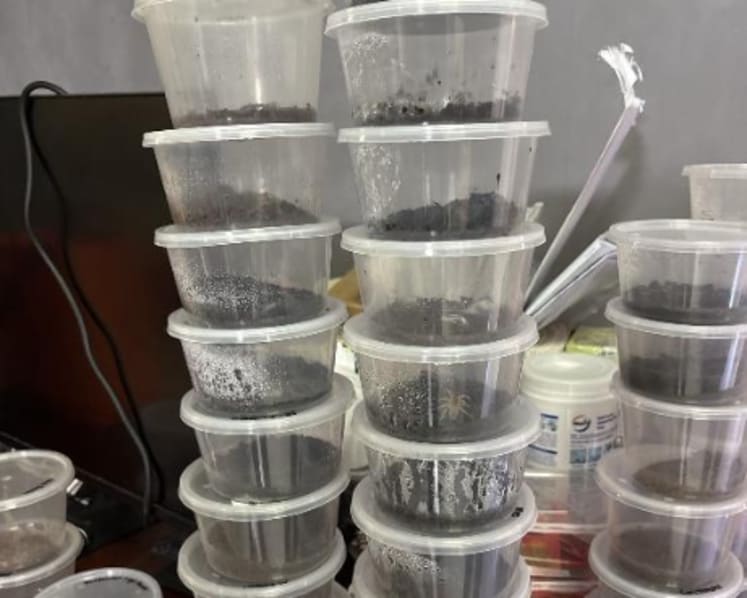
Several of the species found are protected under the Convention on International Trade in Endangered Species of Wild Fauna and Flora (CITES), including the armadillo girdled lizard, axolotl, ball python, pig-nosed turtle and rosy boa.
NParks said the deaths of 13 animals were possibly due to poor or unsuitable living conditions, such as insufficient space and ventilation, as well as inadequate access to food and water.
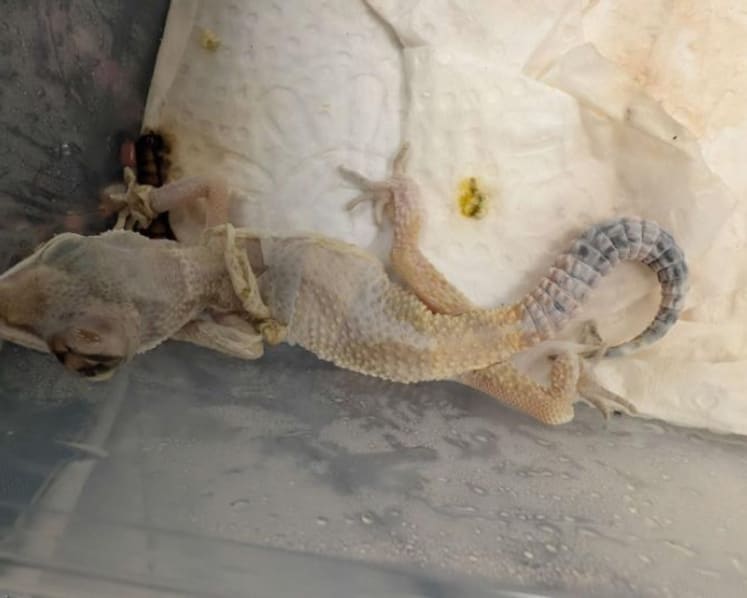
Many of the animals were in poor health, with one leopard gecko found with a ruptured and infected eye. It was also unable to fully shed its skin.
“These conditions are highly indicative of a long period of time captive under poor conditions. A few other leopard geckos and axolotls were also found to be very lethargic and in poor body condition,” NParks said.
“As a result, one leopard gecko had to be euthanised on animal welfare grounds.”
The 87 remaining animals are being housed and cared for at NParks’ Centre for Wildlife Rehabilitation.
As their origins are unknown and may carry diseases that can infect other animals or humans, each animal will undergo a mandatory quarantine period before being evaluated for repatriation to their native countries. They may also be donated to animal establishments, such as zoos.
As a last resort, the animals may also be euthanised, said NParks.
“Smuggled animals are also often kept and transported in cramped, poorly ventilated conditions. In some cases, they are heavily sedated to minimise noise and movement to avoid detection by the authorities, and such conditions may cause death,” said NParks.
“Even if the animals survive, they may have to be euthanised on welfare grounds, due to poor health or injury.”
NParks seized 16 wildlife specimens from six premises across Singapore in a similar operation in 2025. In 2022, the agency seized around 60 wildlife specimens.
ZERO TOLERANCE
The operation is part of NParks’ ongoing efforts to combat the illegal wildlife trade. Nevertheless, enforcement alone is not enough as public education plays an equally important role, it said.
NParks Director of Enforcement and Investigation Joshua Teoh said buying illegally imported or smuggled wildlife fuels demand and could eventually push endangered species to extinction.
He added that smuggled animals may carry zoonotic diseases that can be transmitted to humans, posing significant public health risks.
If released, these illegally imported species could have a serious impact to the local biodiversity and the damage could be permanent, Mr Teoh said.
Mr Teoh said animal welfare is another concern, as smuggled wildlife is often kept and conveyed in cramped and poorly ventilated conditions.

Outlining its “zero tolerance” approach to tackle the illegal sale and possession of wildlife, NParks said it works with other agencies to conduct security checks at Singapore’s borders, monitors physical and online marketplaces and carries out operations and enforcement action against illegal trade activities.
“Illegal wildlife trade threatens the survival of endangered species and contributes to habitat destruction around the world. Singapore is a signatory to CITES and is committed to curbing illegal wildlife trade to ensure the long-term survival of these animals,” said NParks.
Under the Wildlife Act, offenders who illegally sell or export wildlife may be fined up to S$50,000 (US$39,300), jailed up to two years or both.
Those who illegally import wildlife may be fined up to S$10,000, jailed up to a year or both.
In addition, under the Endangered Species (Import and Export) Act, offenders convicted of illegally importing CITES species that are threatened with extinction face a fine of up to S$100,000 per specimen – capped at S$500,000 or the total market value, whichever is higher – and up to six years’ jail.
For other CITES species that are currently not threatened with extinction or are identified as being in need of international trade controls, the maximum penalty is a S$50,000 fine per specimen and four years’ imprisonment.
Source: CNA/wt(nj)
Sign up for our newsletters

Get the CNA app
Stay updated with notifications for breaking news and our best stories
Get WhatsApp alerts
Join our channel for the top reads for the day on your preferred chat app

Get bite-sized news via a new
cards interface. Give it a try.
Click here to return to FAST
Tap here to return to FAST
FAST