Air quality in three Singapore regions in unhealthy range
As of 9pm, the PSI readings for the central, southern and western regions were 108, 105 and 101 respectively.
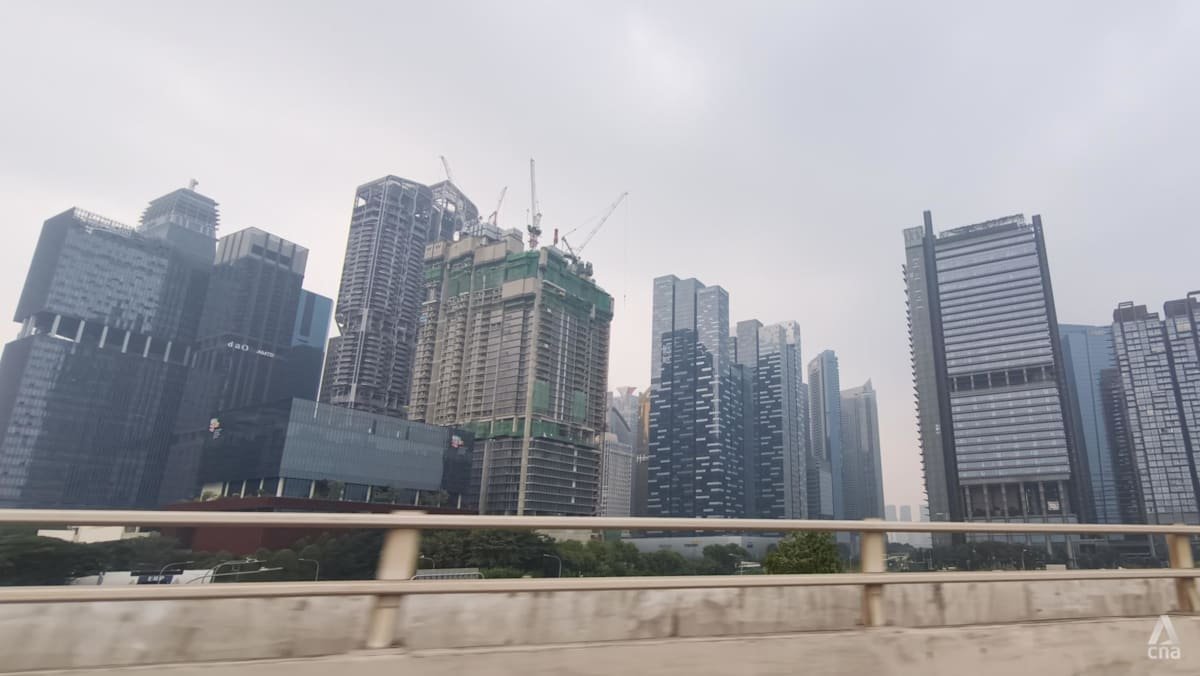
Haze situation over the Central Business District, on Sep 14, 2026. (Photo: CNA/Raydza Rahman)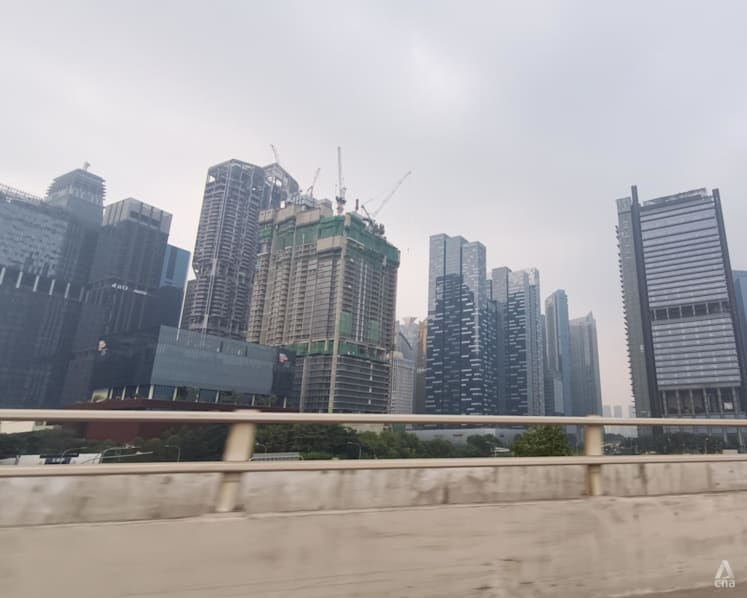
New: You can now listen to articles.

This audio is generated by an AI tool.

Read a summary of this article on FAST.
Get bite-sized news via a new
cards interface. Give it a try.
Click here to return to FAST
Tap here to return to FAST
FAST
SINGAPORE: Air quality in the central, southern and western parts of Singapore entered the unhealthy range on Monday (Sep 28).
The 24-hour Pollutant Standards Index (PSI) readings for the central and southern regions first hit 104 and 103 respectively at 8pm.
The air quality in the western region joined the unhealthy range at 9pm, with a PSI reading of 101.
The readings for the northern and eastern regions remained in the moderate range.

Guess Word
Crack the word, one row at a time

Buzzword
Create words using the given letters

Mini Sudoku
Tiny puzzle, mighty brain teaser

Mini Crossword
Small grid, big challenge

Word Search
Spot as many words as you can
As of 9pm, the PSI readings for the central and southern regions are 108 and 105 respectively.
PSI readings have dipped in and out of the unhealthy range over the past weeks.
In its latest media advisory on Monday evening, the National Environment Agency (NEA) said that the 24-hour PSI was forecast to be in the high moderate to mid-unhealthy range for the next 24 hours.
Moderate to dense smoke haze from fires in southern Sumatra and Kalimantan has drifted to Singapore, said NEA.
While some showers are forecast in Singapore on Tuesday, there remains a risk of smoke haze affecting Singapore, with the prevailing winds expected to blow from the east or southeast.
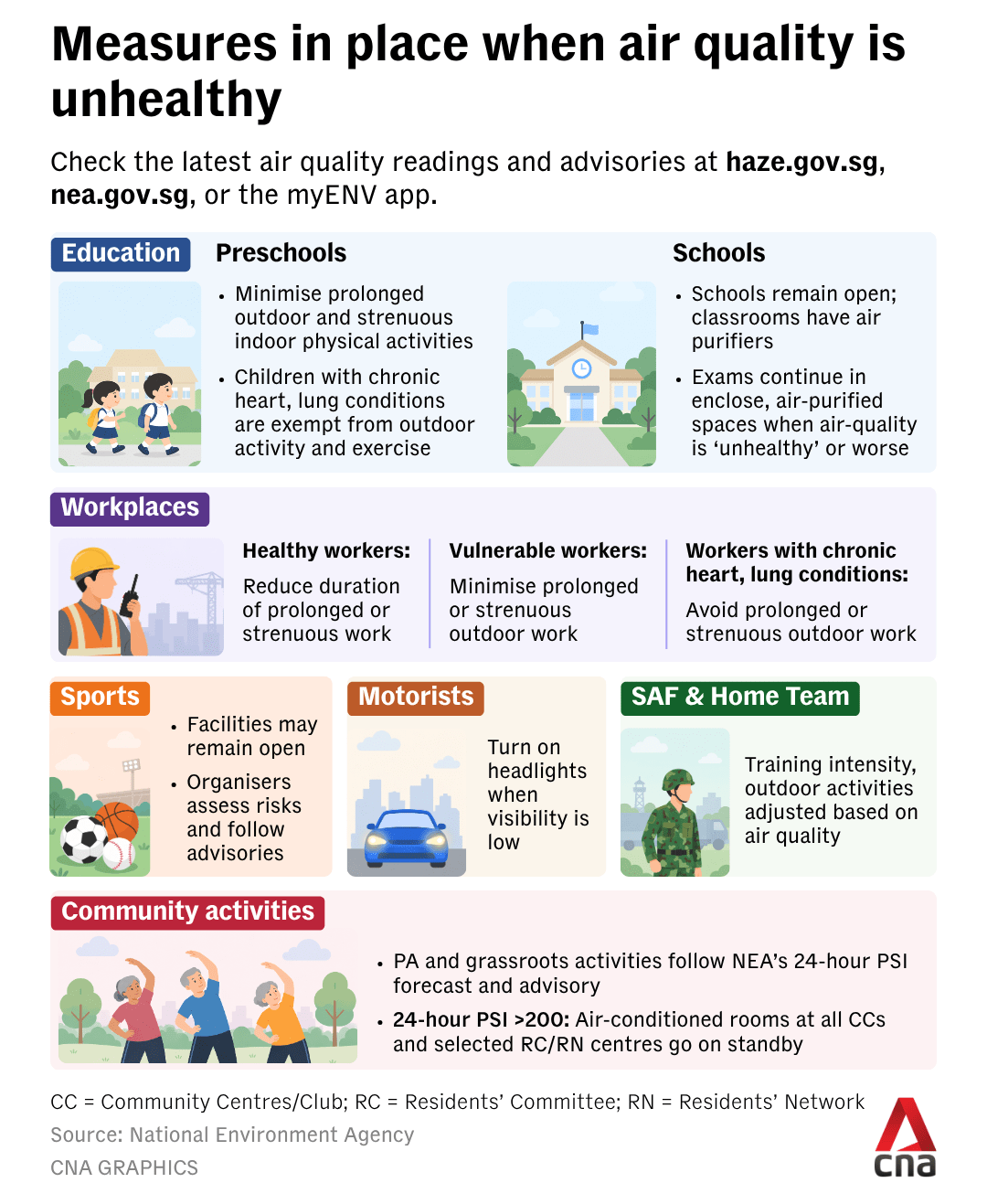
The 24-hour PSI is Singapore’s indicator of daily air quality and forms the basis of NEA’s daily health advisories. It is calculated using six air pollutants – PM2.5, PM10, ozone, sulphur dioxide, nitrogen dioxide and carbon monoxide.
The 1-hour PM2.5 reading, on the other hand, is the hourly average of the PM2.5 pollutant levels. PM2.5 is fine particulate matter with a diameter of 2.5 micrometres or shorter, and is the dominant pollutant during haze that causes harm to health.
While the 24-hour PSI is an average of the past 24 hours, the one-hour PM2.5 reading reflects the air quality at a single point in time.
A 24-hour PSI reading is considered “unhealthy” when it is in the 101 to 200 range, “very unhealthy” when it is within the 201-300 range, and “hazardous” when it goes over 300.
Source: CNA/fh/dc
Sign up for our newsletters

Get the CNA app
Stay updated with notifications for breaking news and our best stories
Get WhatsApp alerts
Join our channel for the top reads for the day on your preferred chat app

Get bite-sized news via a new
cards interface. Give it a try.
Click here to return to FAST
Tap here to return to FAST
FAST